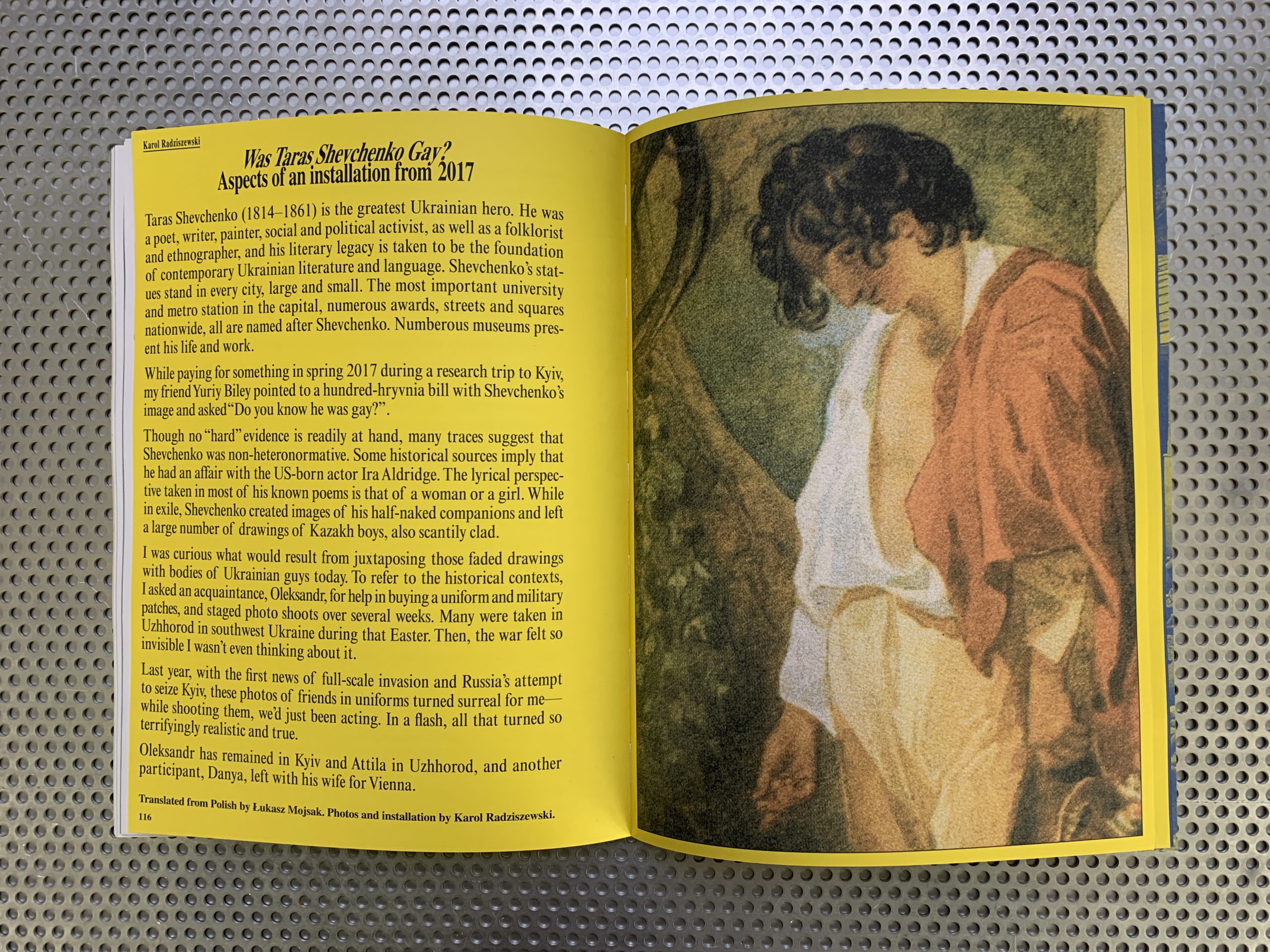
Artist Federico Hewson describes, accompanied by botanical drawings, how roses have been tools and symbols for activists and movements around the world throughout and today.
In 2019, Karolin Meunier presented the performance Aller-retour et aller for the first time at Arsenal Cinema in Berlin. This was followed by a screening of the film Wanda (1970) by Barbara Loden, one of the most important works of independent filmmaking by female directors. For HaFI 017, Meunier documents her performance script. Among other references, she engages with Nathalie Léger’s book Supplément à la vie de Barbara Loden (2012) by translating text excerpts in dialogue with a friend. In this essayistic novel, Léger follows the traces of the film in her search for the actress and director Barbara Loden.
In HaFI 017: Aller-retour et aller, Meunier’s artistic gestures of experimental translation echoes the intertwining of these three women’s quest by dissolving the biographies of the film character, the actress, and the novelist: “A woman telling her own story through that of another woman.” (Nathalie Léger). The pamphlet includes an afterword by Clio Nicastro.
Texts by Brad Feuerhelm, Juri Marian Gross, Marija Repšytė, and Nele Ruckelshausen Edited by Philippe Gerlach and Agnė Juodvalkytė Design by Marijn Degenaar
Through photographs of the studio process and visual sketches the first publication ANSKA by artist Agnė Juodvalkytė offers an overview of the artist’s studio practice from the past years while creating a sensory world of recollection. The book marks the conclusion of the ANSKA cycle in her work.
“In Agnė Juodvalkytė’s work, the weave that is bound by cloth, ash, dirt, and dye, invokes memory, utility, and hand-infused labor. The stains, folds, and strained fraying edges of her chosen material are also infused, caked, and distressed to provide new readings of production. There is something familiar in her use of textiles. Each fold of fabric is detailed by a weave birthed from the center spiraling out in an obstinate mosaic of emotion wrought from the plunder of self.” — Brad Feuerhelm
“When asked what were my early influences in music, I get reminded of my teenage years in Parisian suburbs, simultaneously discovering from public libraries two important French record labels: OCORA and GRM. Then the roots of my interest in traditional music and electroacoustic experiments grew into doing it myself, recording ethnic minorities of the Zomian plateau of south-east Asia and composing a soundscape around it. This is what is happening here.” — Laurent Jeanneau aka Kink Gong
Kink Gong works with what is unknown to him, as an artist who’s attracted by beauty and strangeness. Like a stranger, he has been deeply curious about recording ethnic minority music isolated from dominating cultures within South-east Asia, thus working with musicians taking part in specific cultural communities to make almost 200 albums. Like an artist, he has been leaning towards strange marriages, building on these raw materials. They are lived moments that combine space, people and music, as if they were blocks made out of the same material.
— I 14 TUBES MOUTHORGAN PAKSE LAOS + BULANG LAWA 3 STRINGED LUTE (NIU TUI QIN) AND VOICE OF 2 OLD LAWA MEN + VOICES OF 3 AKHA WOMEN YUNNAN CHINA, FOREST LAO CAI HMONG WOMEN VOICES + ELECTRONIC MOUTHHARP (CHUNGJA) SAPA VIETNAM + BULANG LAWA MAN & DRUNK WIFE + ELECTRONIC MALIMBA TANZANIA + LUE WOMAN VOICE PHONGSALY LAOS + DONG PIPA 4 STRINGED LUTE GUIZHOU CHINA + LUE WOMAN VOICE NORTH VIETNAM + HMONG 6 TUBES MOUTHORGAN HA GIANG VIETNAM + YI NISU WOMAN VOICE + YI NISU SIXIAN 4 STRINGED LUTE YUNNAN CHINA
— II BRAO WOMAN VOICE ATTAPEU LAOS + ELECTRONIC + METALLIC TOUPIE + UYGHUR DAP HAND PERCUSSION + BRAO MAN VOICE RATANAKIRI CAMBODIA + OIRAT MONGOLIAN MORIN KUR 2 STRINGED CELLO XINJIANG CHINA + 14 TUBES MOUTHORGAN IN BERLIN TEUFELBERG + SHUI MIAO WOMEN VOICES GUIZHOU CHINA + SANTOOR IRANIAN DULCIMER IN BERLIN + YI NUOSU WOMAN VOICE SICHUAN CHINA + ARAK 16 TUBES MOUTHORGAN SEKONG LAOS + TRIANG 5 WOMEN VOICES + BELLS SEKONG LAOS + ELECTRONIC + MIEN WOMEN VOICES SAPA VIETNAM
ALL RECORDED BY LAURENT JEANNEAU BETWEEN 2004 AND 2014 ON LOCATION IN
. SOME INSTRUMENTS (MOUTHORGANS & SANTOOR) PLAYED & PROCESSED & RECOMPOSED BY KINK GONG, 2016
LP COVER BOY ON THE ROCK TADLO LAOS, 2013
Mastered by Raschad Becker, Berlin Cut by Frederic Alstadt, ANGSTROM STUDIO, Brussels Artwork by João Basto
The edition of 300 copies are silkscreened and individually hand numbered
Silkscreened at Atelier Ice Screen, Brussels Inside A4 risographed at Frau Steiner Studio, Brussels
You are what you eat! Food is not only a basic need, it is deeply intertwined with most aspects of our lives — as individuals and communities. Foam Magazine #63: FOOD! – The Nourishing Issue looks at what we are made of, focusing on the ways food drives us apart, brings us together and moves us further — all at the same time.
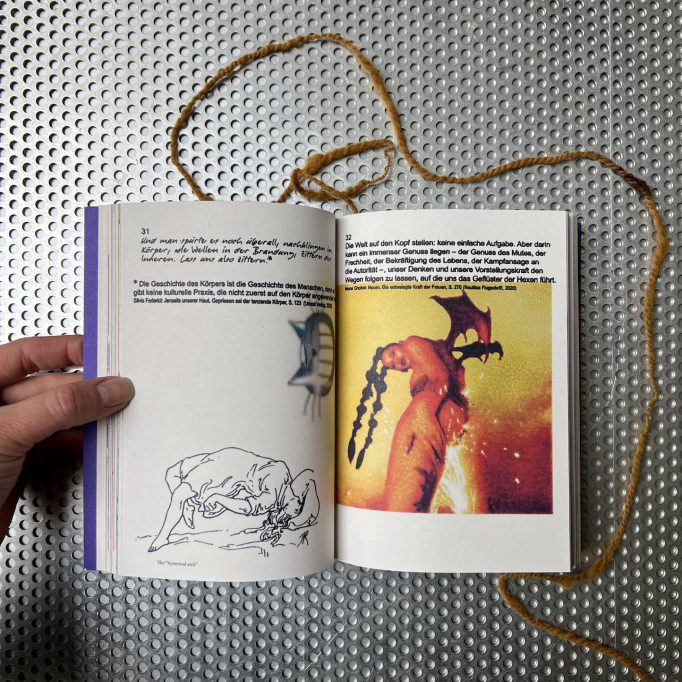
Food fuels us, heals us and brings people together. Yet there is another side to food, which is more political and complex than it appears. Nourishment, ritual, sustainability, economy, labour, culture, ecology, community, exploitation, identity, politics: The collection of portfolios included in this issue are a testament to the variety of visual strategies addressing a few of such matters.
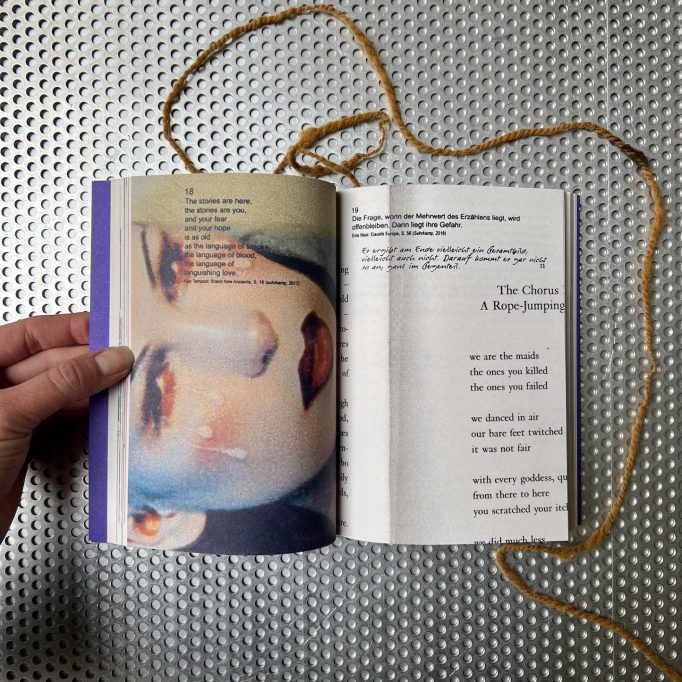
Next to 16 visual portfolios, we are thrilled to present an interview by Siddhartha Mitter with Anna-Alix Koffi on her work and the newly opened art space SOMETHING in Abidjan, Ivory Coast; a thoughtfully put together selection of Algerian photobooks in the bookshelf section by Awel Haouati; an essay on illegal labour in the food industry by Gustavo Duch; an account by Iroquois scholar Atlanta Grant on Indigenous ideas around food waste and recycling — and much much more.
CONTRIBUTING ARTISTS & WRITERS Carson Cole Arthur, Clara Barbal, Joan Biren, Nao Bustamente, Samuel Bradley, Breadface, Kat Chan, David Chickney, Nha San Collective, Maisie Cousins, Gustavo Duch, Rotimi Fani-Kayode, Laura Feliu, Gem Fletcher, Chandra Frank, Coco Fusco, Audrey Genois, Zahara Goméz Lucini, Rajyashri Goody, Atlanta Grant, Awel Haouati, Yining He, Chieri Higa, Hiên Hoàng, Hua Jin, Patricia Kaersenhout, George H. King, Kim Knoppers, Ana-Alix Koffi, Claudia Kussel, Charmaine Li, Sébastien Lifshitz, Florian Maas, Elisa Medde, Emily Hanako Momohara, Siddhartha Mitter, Paulo Nazareth. Beaumont Newhall, Ana Núñez Rodríguez, Eduardo Jorge de Oliveira, Paola Paleari, Sarah Perks, Valeria Posada-Villada, Peter Puklus, Rahee Punyashloka, Vivien Sansour, Stephanie Sarley, Zina Saro-Wiwa, Henry Rox, Amelie Schüle, Mark Sealy, George Selley, Sunil Shah, Aurélie Joycelyn Tiffy, Henk Wildschut, Guy Woueté, Gary Zhang Zhexi, Lin Zhipeng.
How to Get Rid of Pimples is Cookie Mueller’s first and only fiction publication, where she spins short, strange tales of friends healed by her miraculous acne cure. Although the stories revolve around her description of others, Cookie herself outshines her characters, with an unmistakable voice that is astute, grotesque, and undeniably hers – as if Flannery O’Connor became a New York downtown diva. With photos by Peter Hujar, Nan Goldin, and David Armstrong, How to Get Rid of Pimples conjures a vision of the remarkable world of Cookie Mueller.
Mang Mang Magazine Vol. 1 is a Chinese-language independent magazine called “莽莽 Mang Mang” (meaning wild grass). The magazine includes articles, interviews, photos, and well-researched infographics documenting the recent wave of protests in China and in Chinese communities throughout the world that has led to the ending of the draconian Zero-Covid policy in China. Mang Mang Magazine Vol. 1 also deals with broader political and social issues (feminism, LGBTQ) and supports protests in Iran and Hong Kong, just to name a few.
“I’m interested in the resonances, the re-habitualizations, and the echoes of that historical moment in the contemporary.”
For more than three decades, Tony Cokes (b. 1956, Richmond, USA; lives and works in Providence, USA) has been exploring in his work the ideology and affect politics of media and popular culture as well as their social impact. Starting from a fundamental critique of the representation and visual commodification of African-American communities in film, television, advertising, and music videos, Cokes has developed a unique form of video essay that radically rejects representational imagery. These fast-paced works consist of found text and sound material from diverse sources such as critical theory, online journalism, literature, and popular music.
The US artist’s first institutional solo exhibition in Germany also marks the first comprehensive collaboration between Kunstverein München and Haus der Kunst. The thematic starting point for Cokes’s new productions is the ideological and propagandistic entanglements of both exhibition venues during the Nazi era as well as their cultural-political role in the context of the 20th Olympic Games in Munich in 1972.
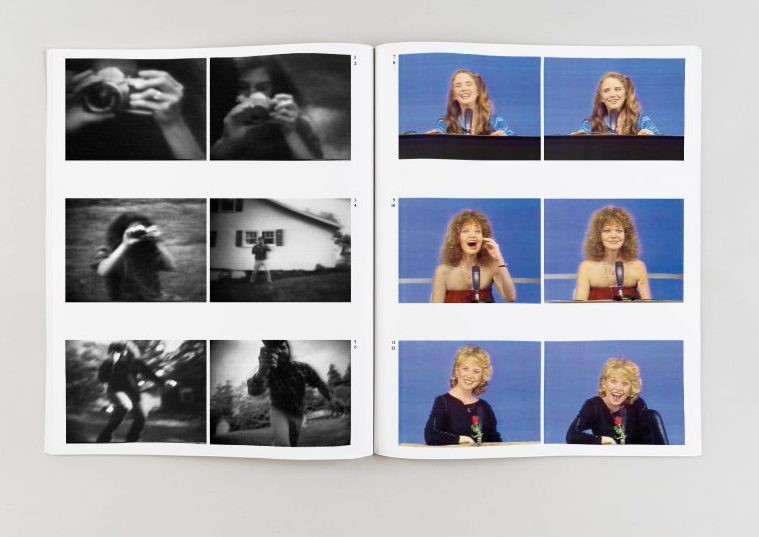
The publication Fragments, or just Moments accompanies the eponymous exhibition and translates stills from the newly produced video essays into a book format while examining the significance of Cokes’s work in terms of a contemporary approach to institutional critique. The essays are written by Tina M. Campt and Tom Holert, with an introduction by Emma Enderby and Elena Setzer (Haus der Kunst) as well as Maurin Dietrich, Gloria Hasnay, and Gina Merz (Kunstverein München).
Please join us for the book launch of ANSKA with author Agnė Juodvalkytė and a performance by Tania Elstermeyer.
Friday 17 February 2023 from 6 pm
Motto (im Hinterhaus) Skalitzer Str. 68 Berlin, 10997
Agnė Juodvalkytė (b. 1987, Vilnius, Lithuania) is a visual artist currently living in Berlin and Vilnius. Her practice is focused on abstract painting and textiles mostly. She received BA in Painting at the Vilnius Academy of Arts (2010) and studied Visual Arts in Spain at the Universidad de Castilla La Mancha (UCLM, Cuenca) (2009). Her recent shows include solo exhibition Tools for the Future (ANSKA) at Galerie Bernau, Bernau bei Berlin (2022); Sweet Dreams Foundation at Nida Art Colony, Nida (2022); ‘Gathering’ at Atletika, Vilnius (2021); ANSKA at Blake & Vargas, Berlin (2021); group show Audra at Pamario gallery, Juodkrantė (2021); Terpė at (AV17) gallery, Vilnius (2020).
Tania Elstermeyers textual compositions bring registers of lyrical writing to mind, which are performed in alliance to a distinctive kind of music beyond established genres. During her performances, sceneries resemblant of theater backdrops are created, ultimately by operating with a vocabulary that is minimalism. Her work slivers traditional outlines of narrator and spectatorship by luring oneself into spaces of intimacy that attract interest and cause discomfort. (Text by Oliver Wellmann)
Authors: Agnė Juodvalkytė Publisher: Year: 2023 Pages: 224 Dimensions: 17 x 24 cm Language: English ISBN: 978-3-00-074288-0
Edited by Philippe Gerlach and Agnė Juodvalkytė Design by Marijn Degenaar Texts by Brad Feuerhelm, Juri Marian Gross, Marija Repšytė, and Nele Ruckelshausen
Through photographs of the studio process and visual sketches the first publication ANSKA by artist Agnė Juodvalkytė offers an overview of the artist’s studio practice from the past years while creating a sensory world of recollection. The book marks the conclusion of the ANSKA cycle in her work.
“In Agnė Juodvalkytė’s work, the weave that is bound by cloth, ash, dirt, and dye, invokes memory, utility, and hand-infused labor. The stains, folds, and strained fraying edges of her chosen material are also infused, caked, and distressed to provide new readings of production. There is something familiar in her use of textiles. Each fold of fabric is detailed by a weave birthed from the center spiraling out in an obstinate mosaic of emotion wrought from the plunder of self.” — Brad Feuerhelm