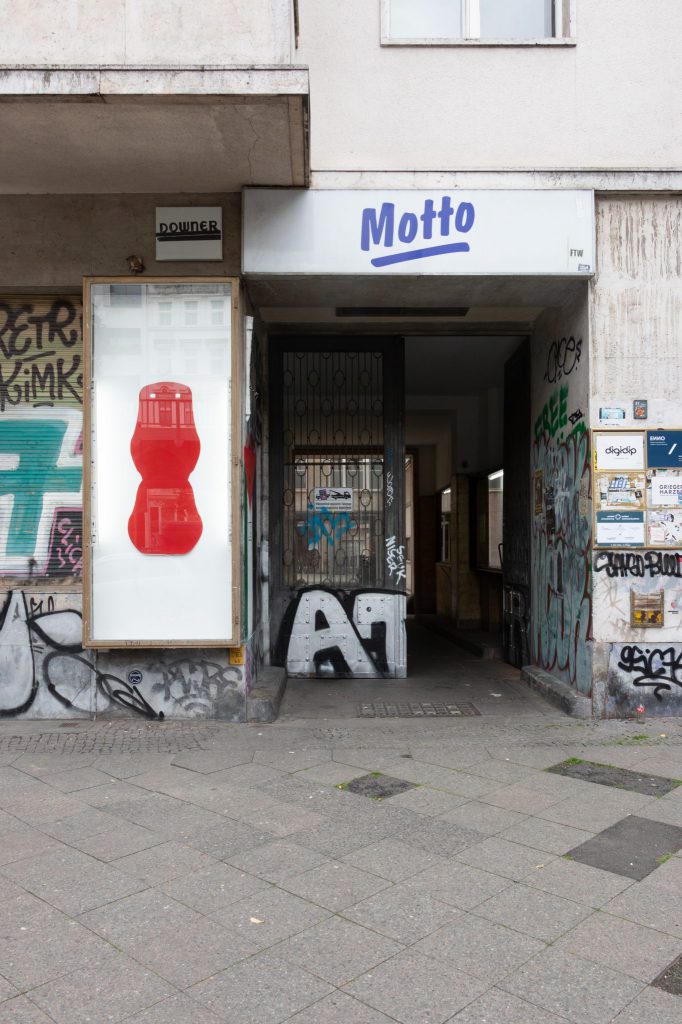
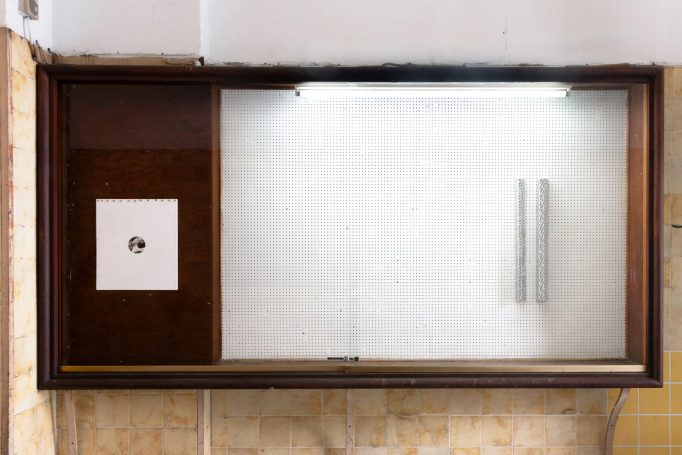
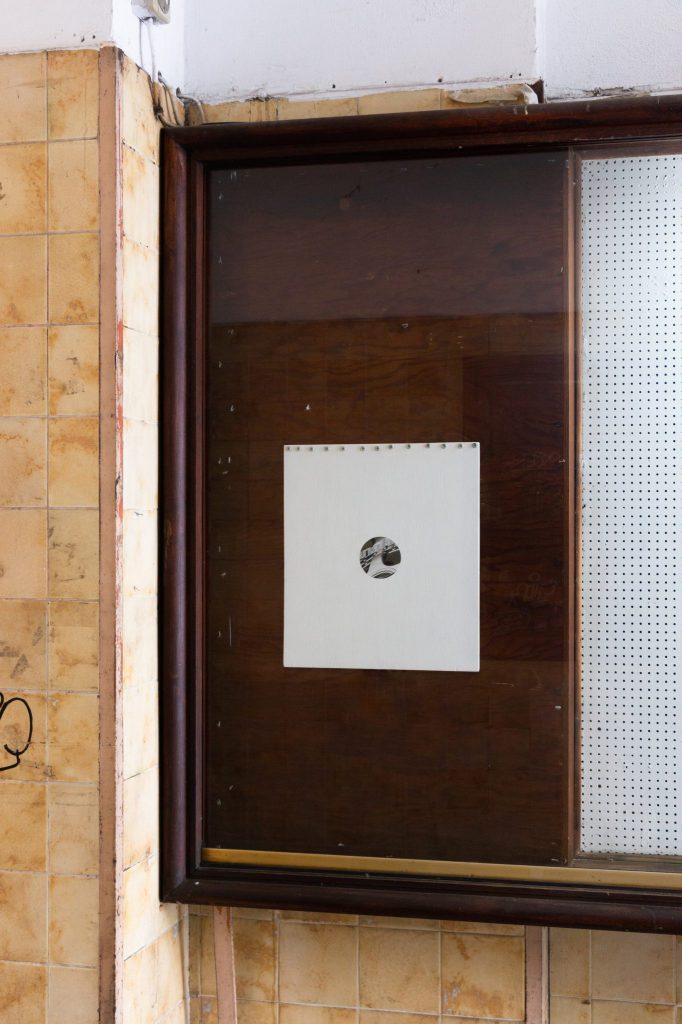
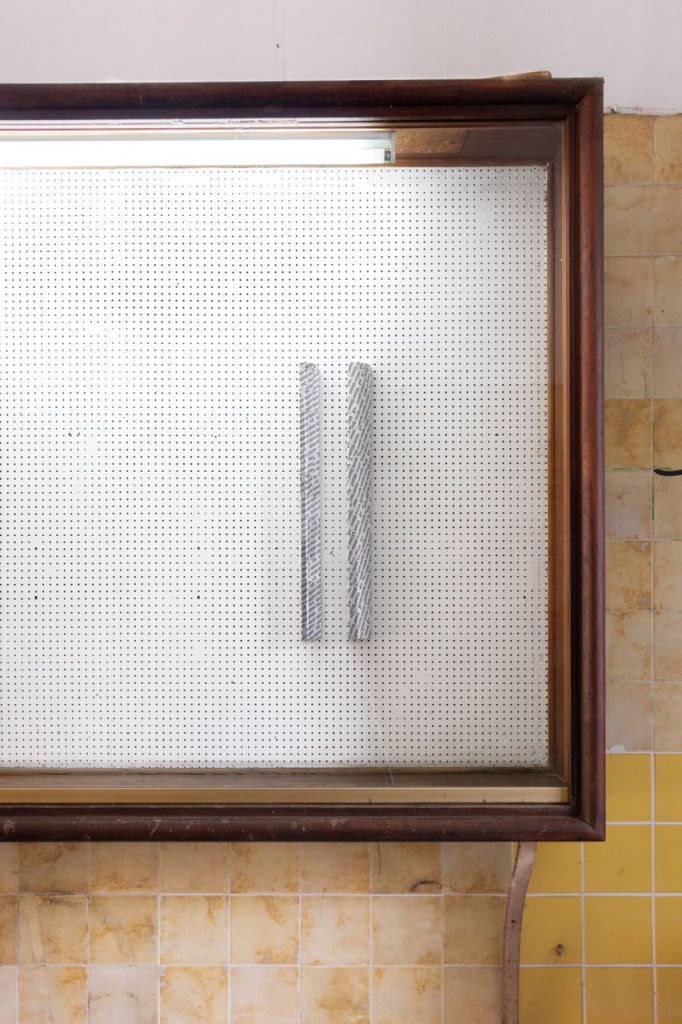
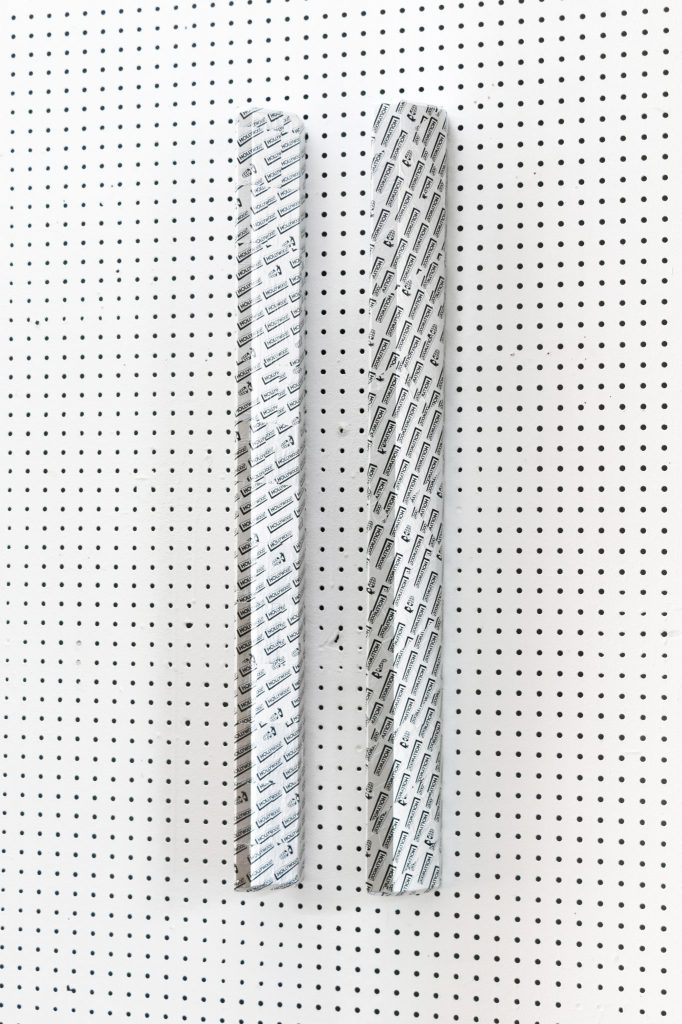
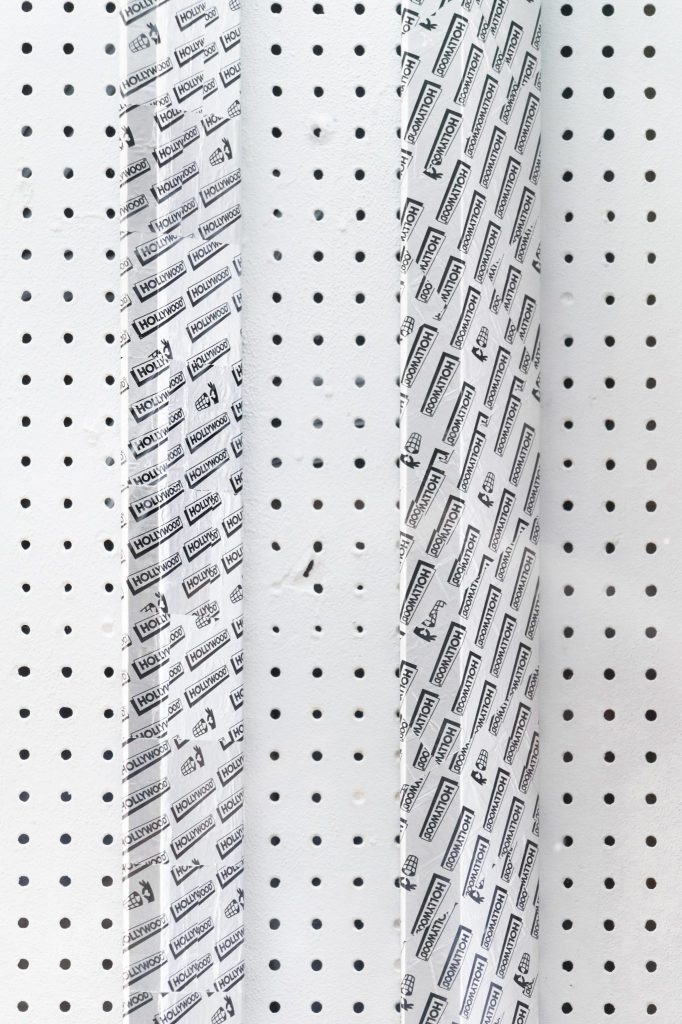
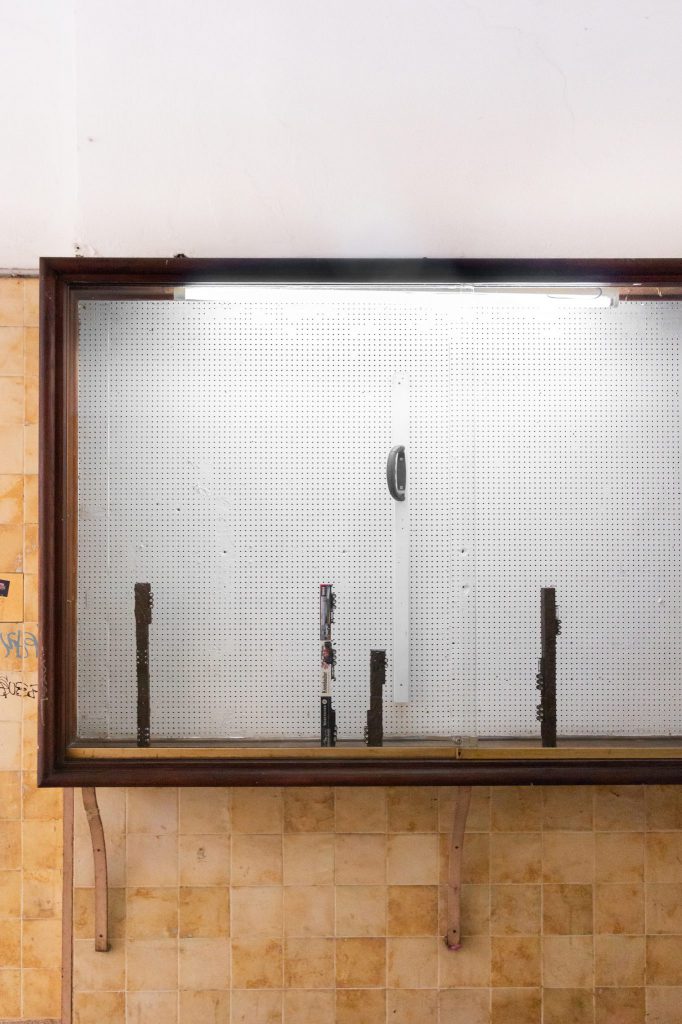
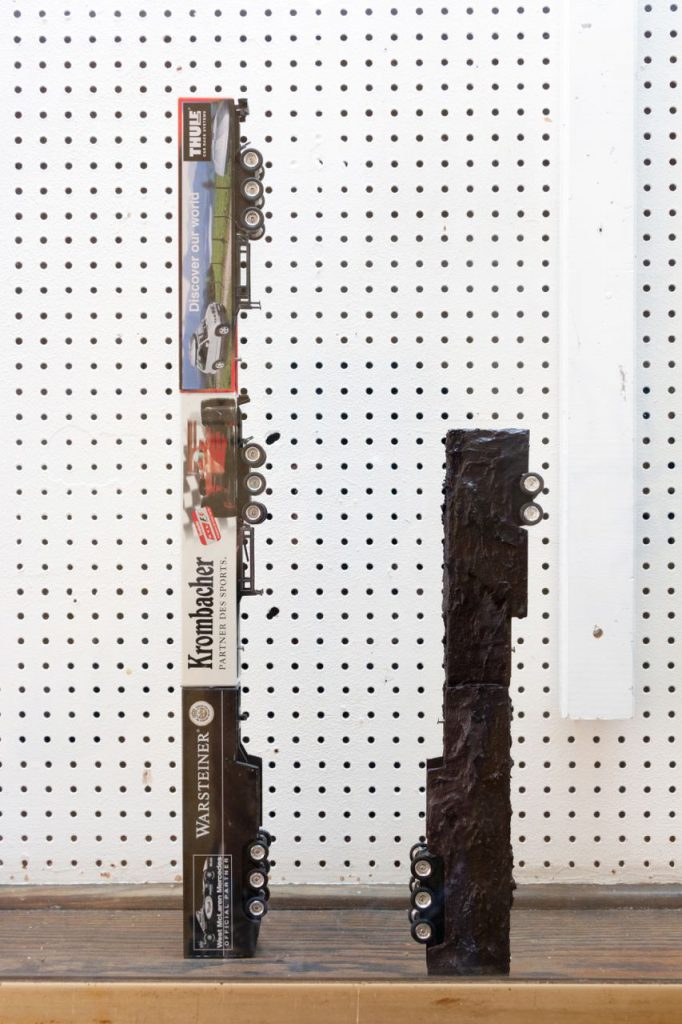
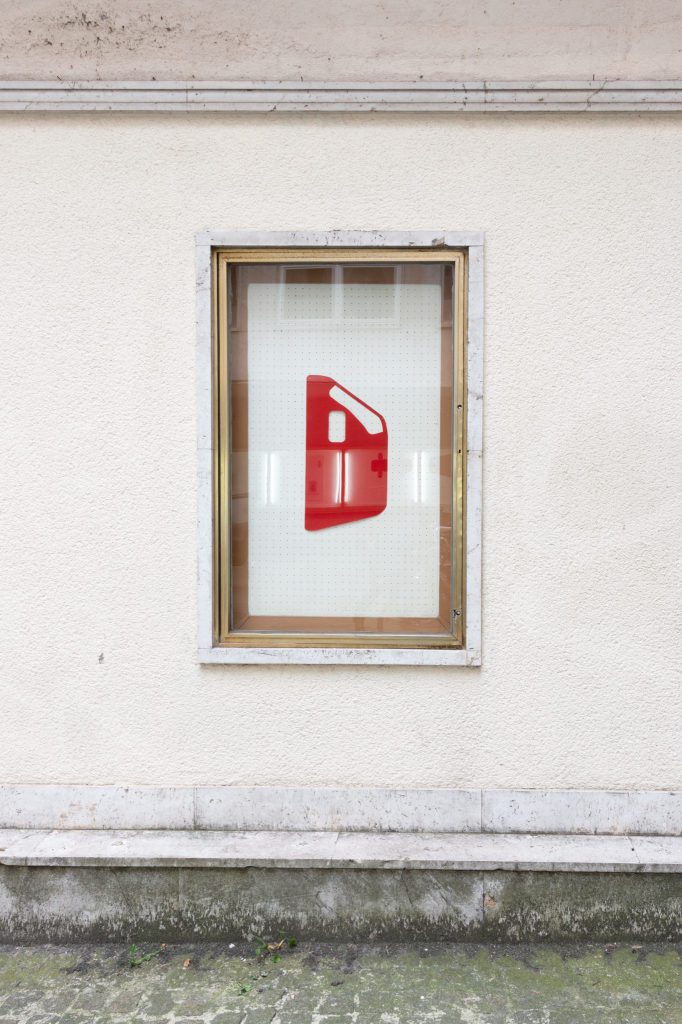
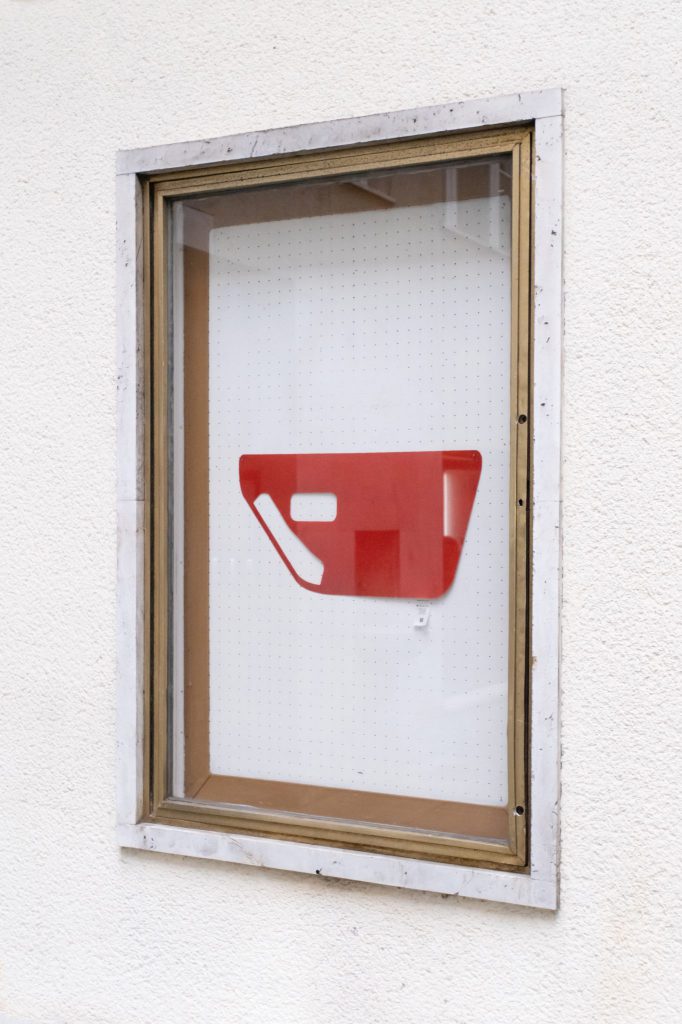
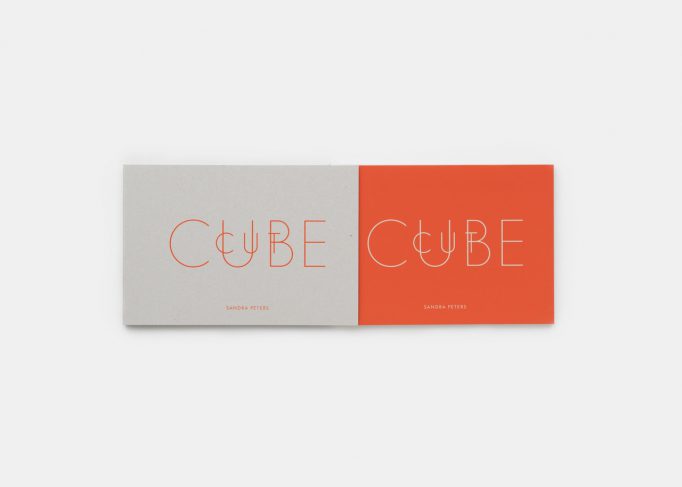
please join us on August 2, 2023 at 7:00pm at Motto Books, Berlin for a conversation with Sandra Peters and Adam Feldmeth to present Peters’ new book Cut Cube.
The book Cut Cube, (2022) results from Sandra Peters’ interest in the graphic interplay between two- and three-dimensional structures. The 11 possible ways to unfold a cube are laid out on white paper, whereas the seven cuts that make it possible to unfold a cube are printed on transparent paper and related to each of the six sides of each flattened cube. Turning pages generates a flow of information to make the viewer aware of the complex interplay between both types of structures.
The book is published with Motto Books, Berlin/Lausanne. A book signing will follow the discussion.
–
Sandra Peters is an artist, writer, and educator based in Abu Dhabi, UAE. In her work she focuses on architecture and urban space. She is working towards a reciprocal integration of sensual, structural, and conceptual factors.
Peters has widely presented her work in Europe, the US, and the United Arab Emirates, including Performing the City at the NYUAD Project Space in Abu Dhabi (2023); Un–folded Cube (landscape mode) at Foyer-LA, Los Angeles (2023); Bilateral, Diagonal, Cubical at the Gallery Aanant & Zoo, Berlin (2012) and participated in the group exhibition Erschaute Bauten. Architektur im Spiegel zeitgenössischer Kunstfotografie at the MAK—Österreichisches Museum für angewandte Kunst/Gegenwartskunst (2011). She is teaching at New York University Abu Dhabi since 2014 in the Art and Art History Program, where she is Co-program head since 2021.
Adam Feldmeth lives in Los Angeles and Berlin. His work engages the social elasticity of art through situational discourse with those involved in its materialization. Critical contributions have been included at the Luminary Projects, St. Louis, Missouri; Contemporary Art Daily; the MAK Center, Los Angeles; Kunstbibliothek Sitterwerk, St. Gallen, Switzerland; Overgaden Institute for Contemporary Art, Copenhagen; the Guggenheim Gallery at Chapman University; and the 53rd Venice Biennale of Art. In 2008, he co-authored, “Nomad Post School,” with Guan Rong and in 2020 “Some Pedagogies of the Southland Institute” with Joe Potts
He is co-director of the Southland Institute in Los Angeles, teaches Film/Media studies at Polytechnic School in Pasadena, California, and is a doctoral student at the European Graduate School where he is considering the cobblestone as a mediator of momentum at the confluence of urban space and cinematic montage.
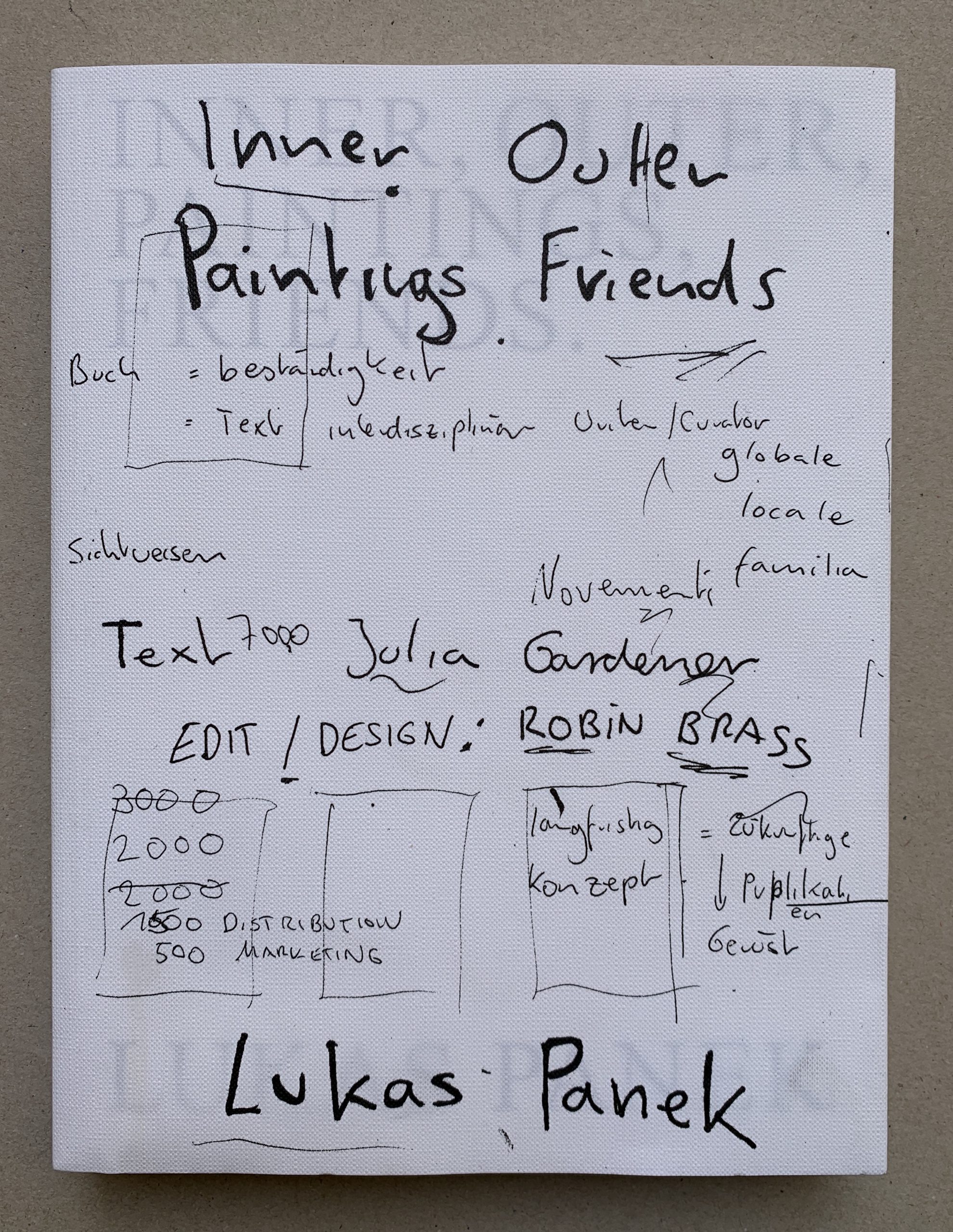
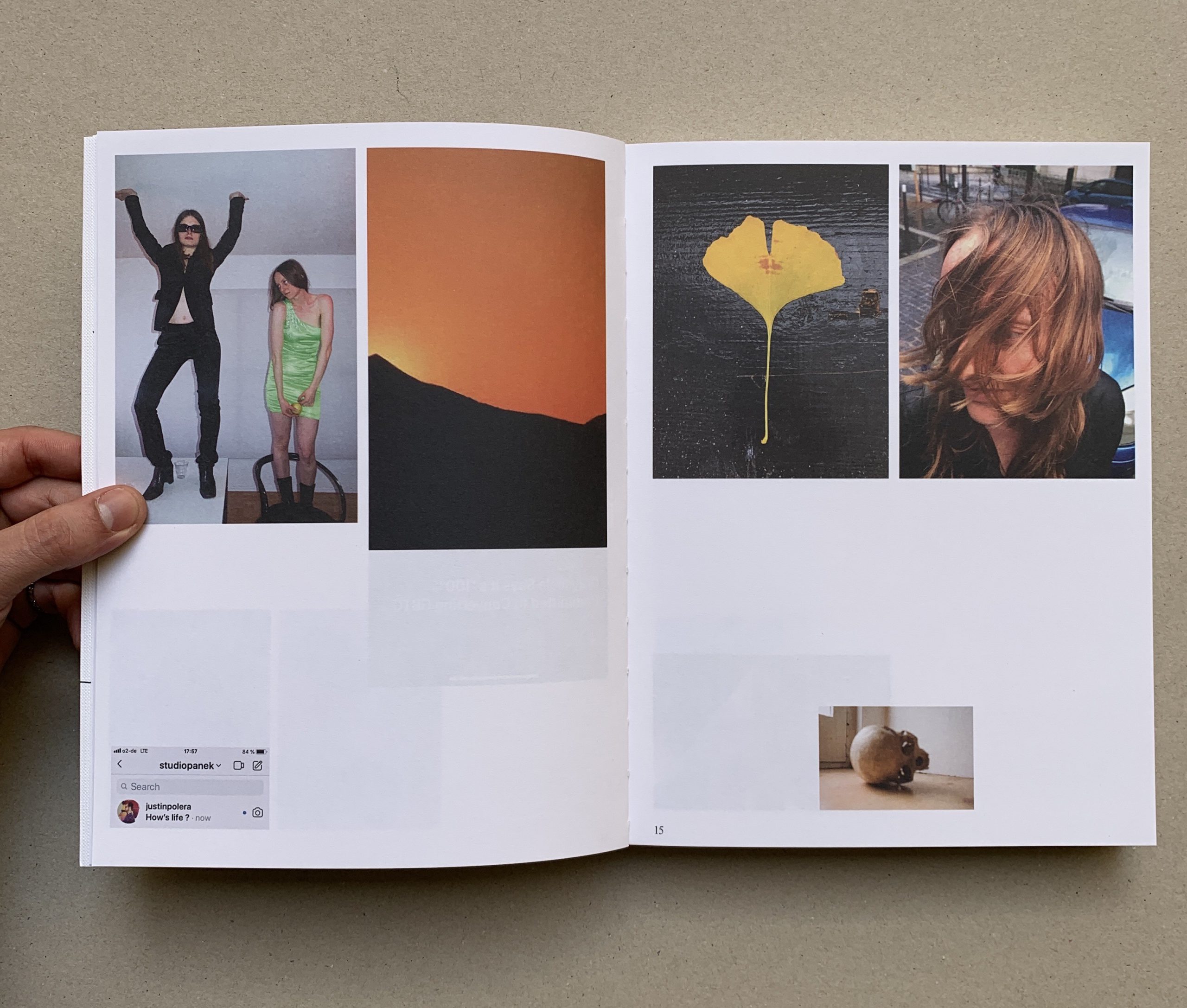
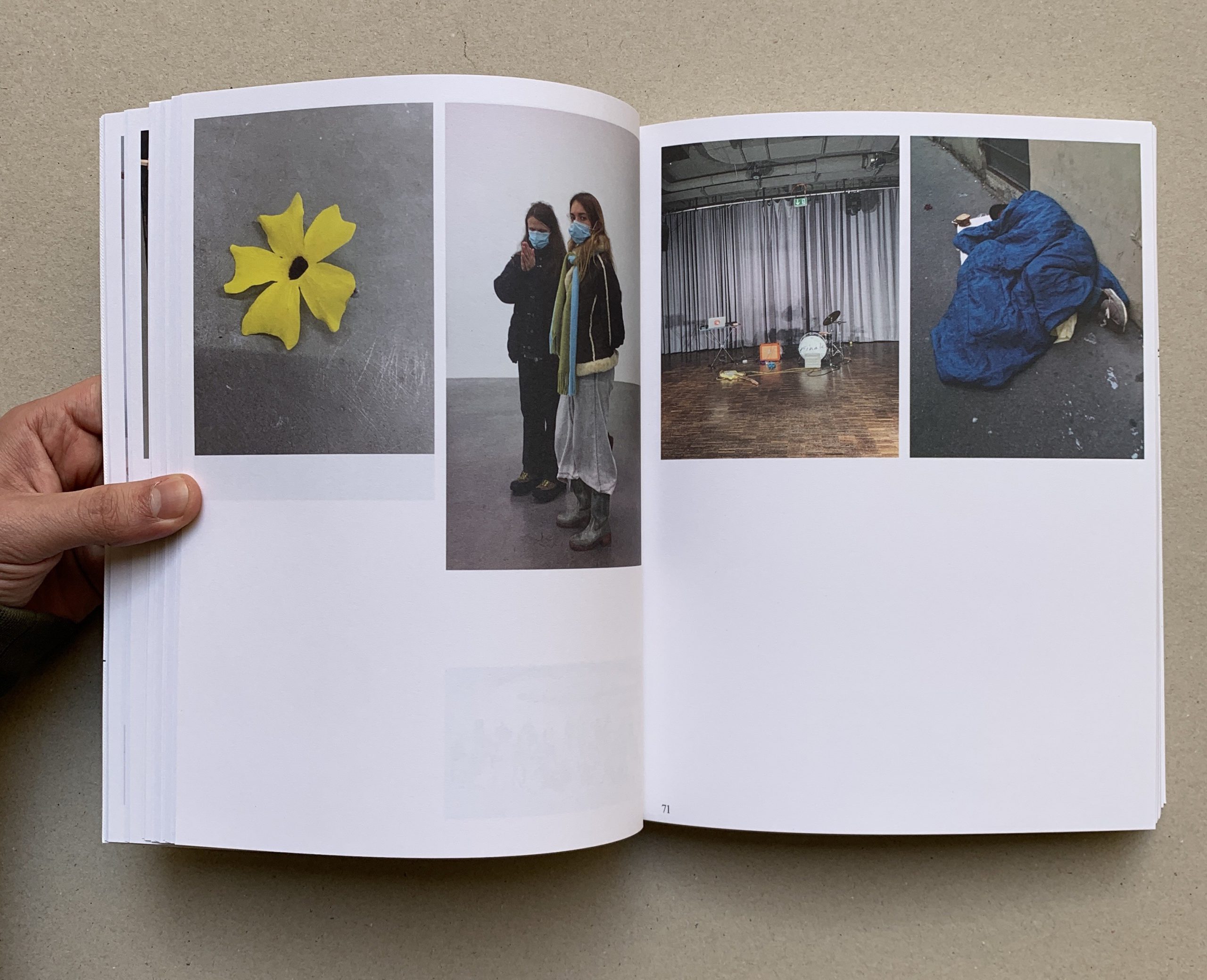
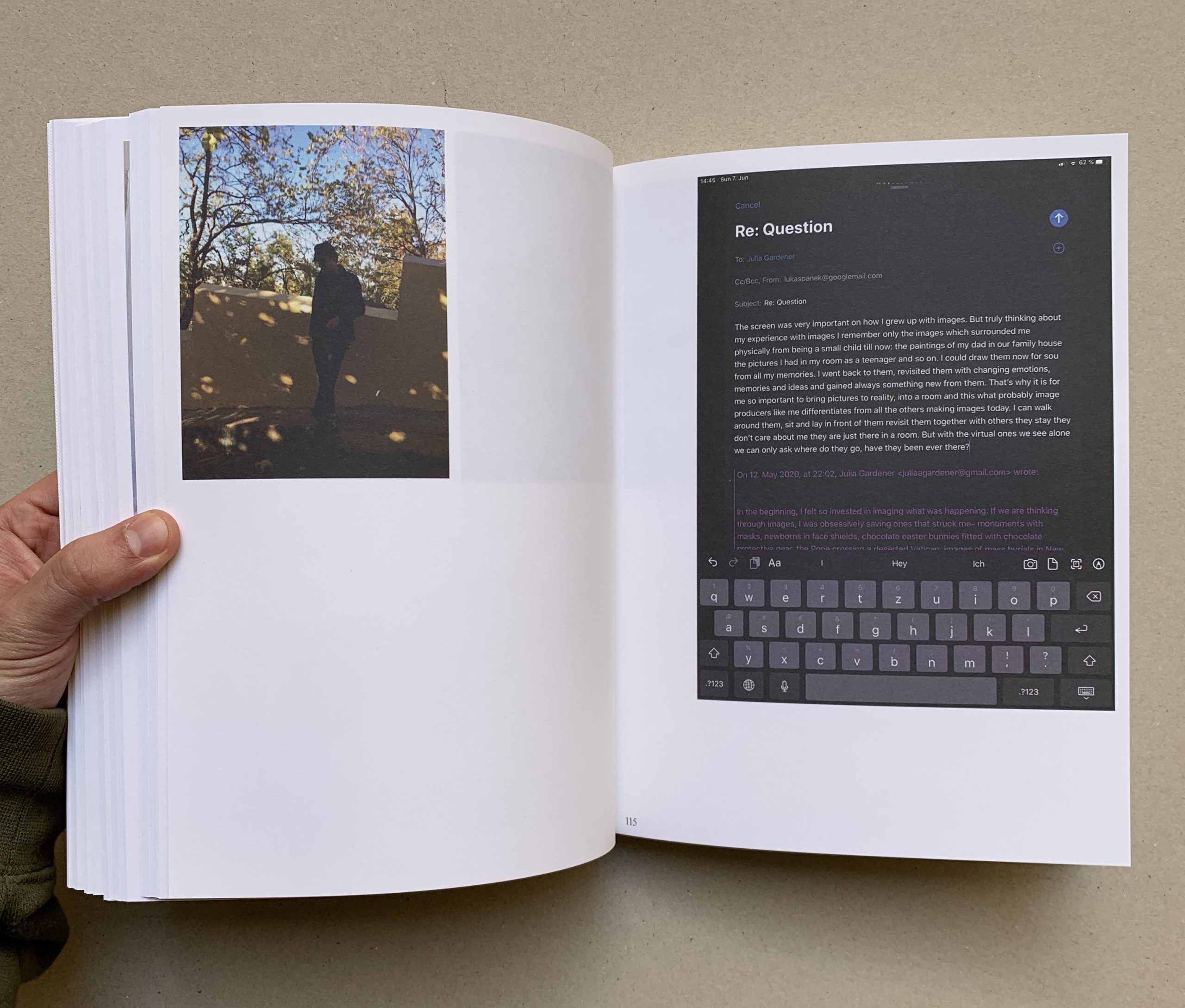
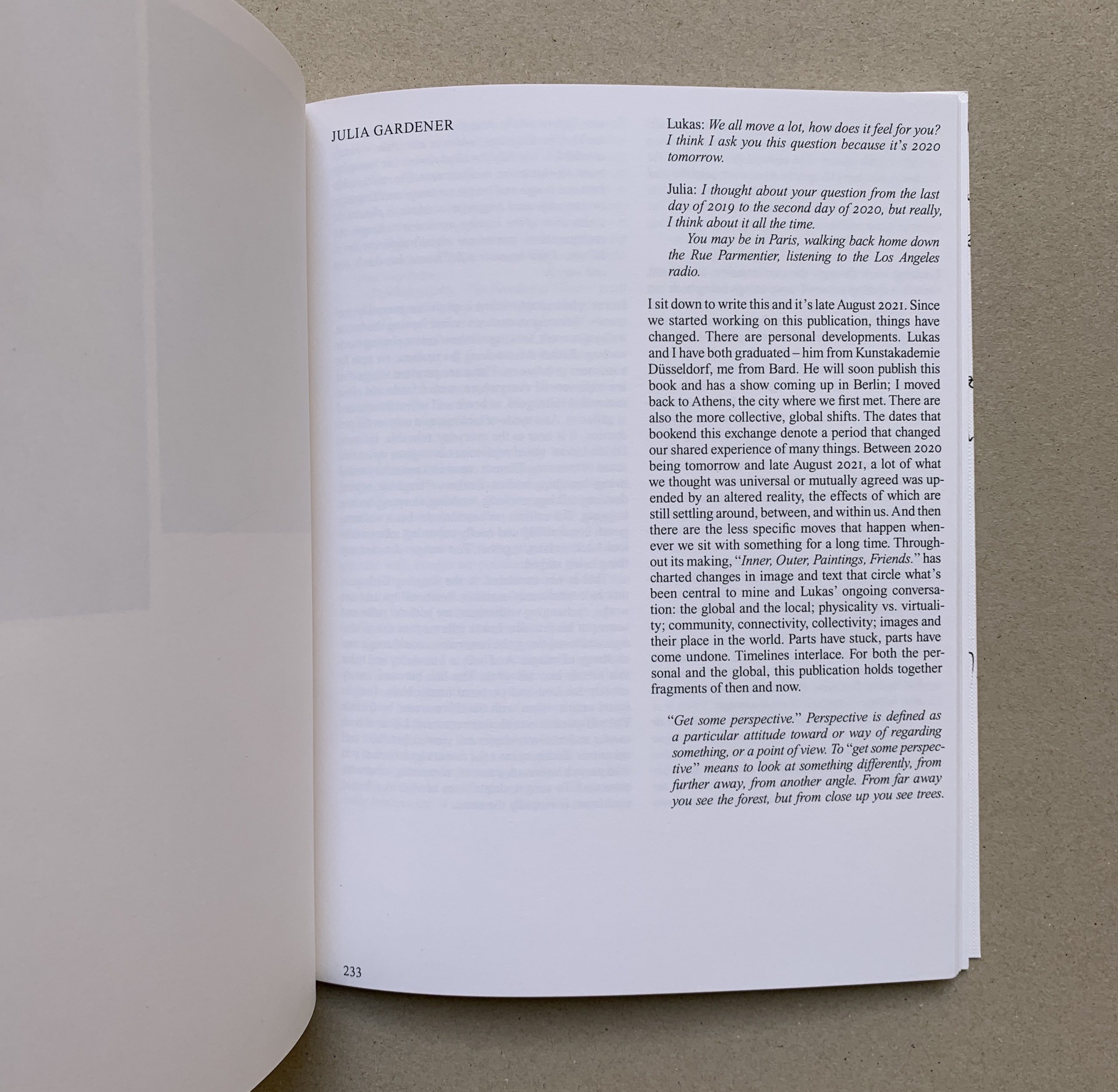
Lukas Panek’s Inner, Outer, Paintings, Friends is an archive, a collection of everyday photographs, moments of intimacy, anonymous images from the internet, and the artist’s own work sessions. Through this exploration, which constitutes his playground, he documents the variety of representations in today’s online culture. Registers intermingle and create ambiguous narratives.In the process, familiar forms of narrative are deliberately undermined and the reader is immersed and drawn into the flow of images. Inner, Outer, Paintings, Friends thus gathers more than 500 images and presents in its second part the paintings of Lukas Panek. Selected from this flow, they are both extracts of a global experience common to all, and a reflection of a personal world. This book plunges us into the abundant, vibrant and playful work of this young Berlin artist, a graduate of the Dusseldörf school, and offers us an extremely current vision of contemporary photography.
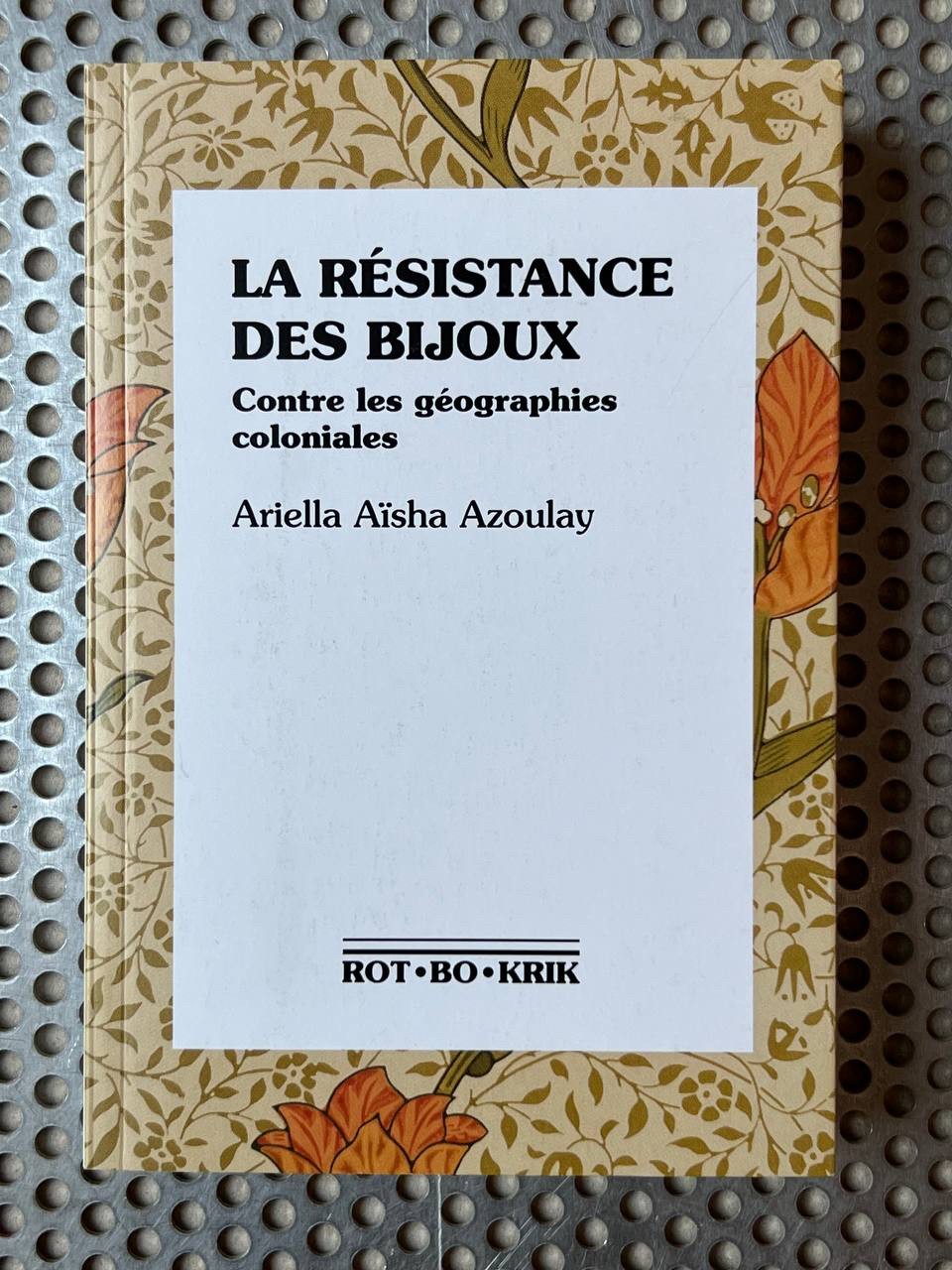
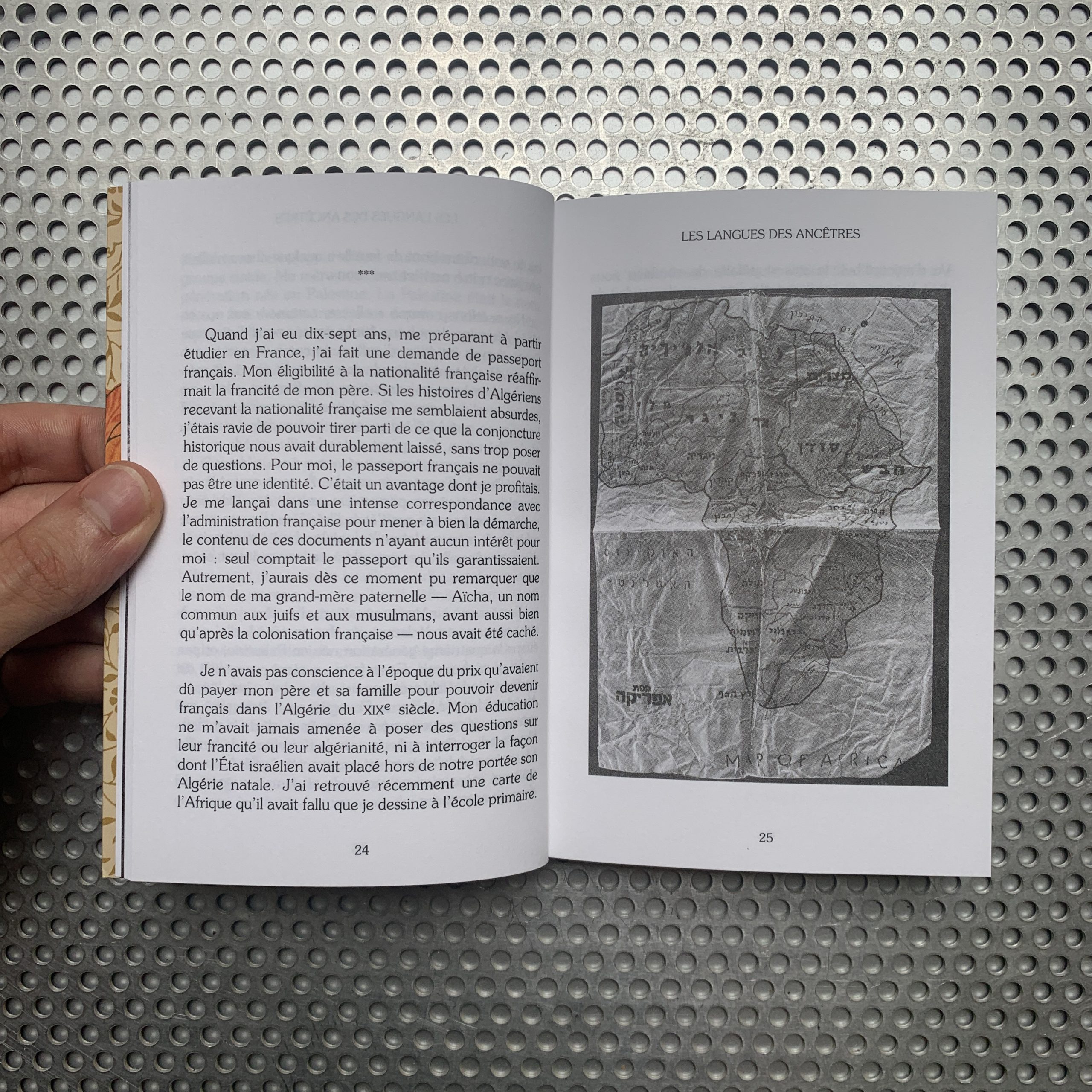
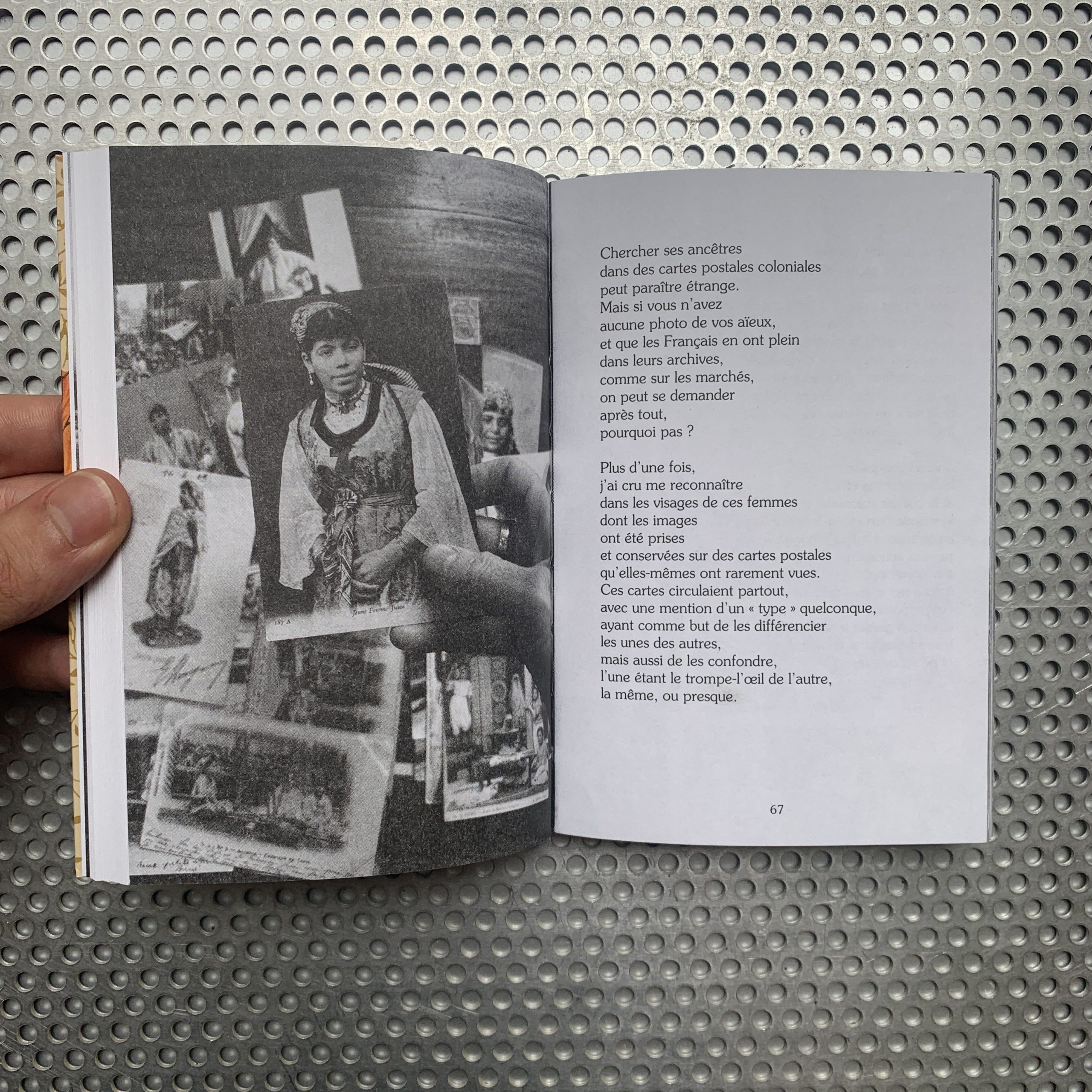
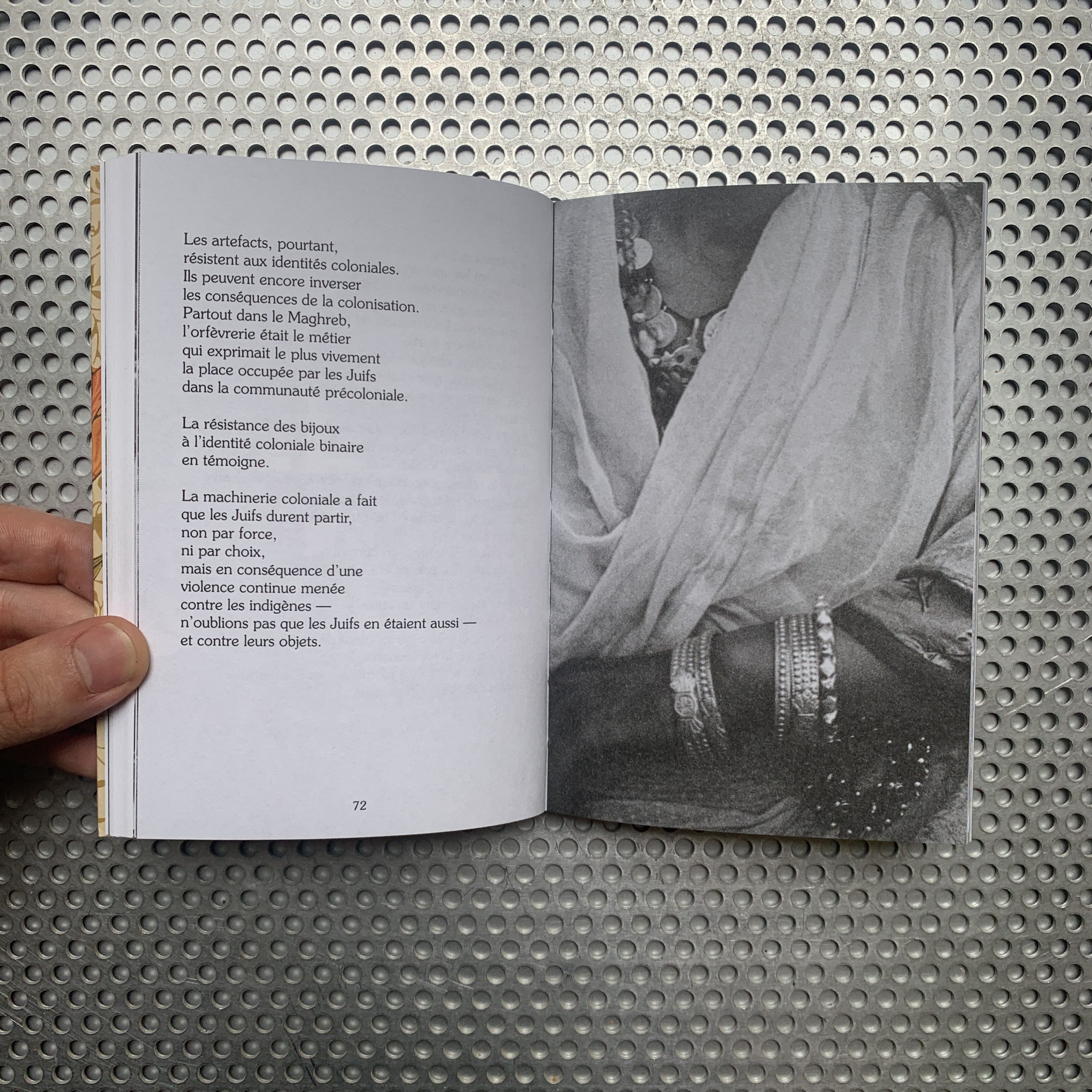
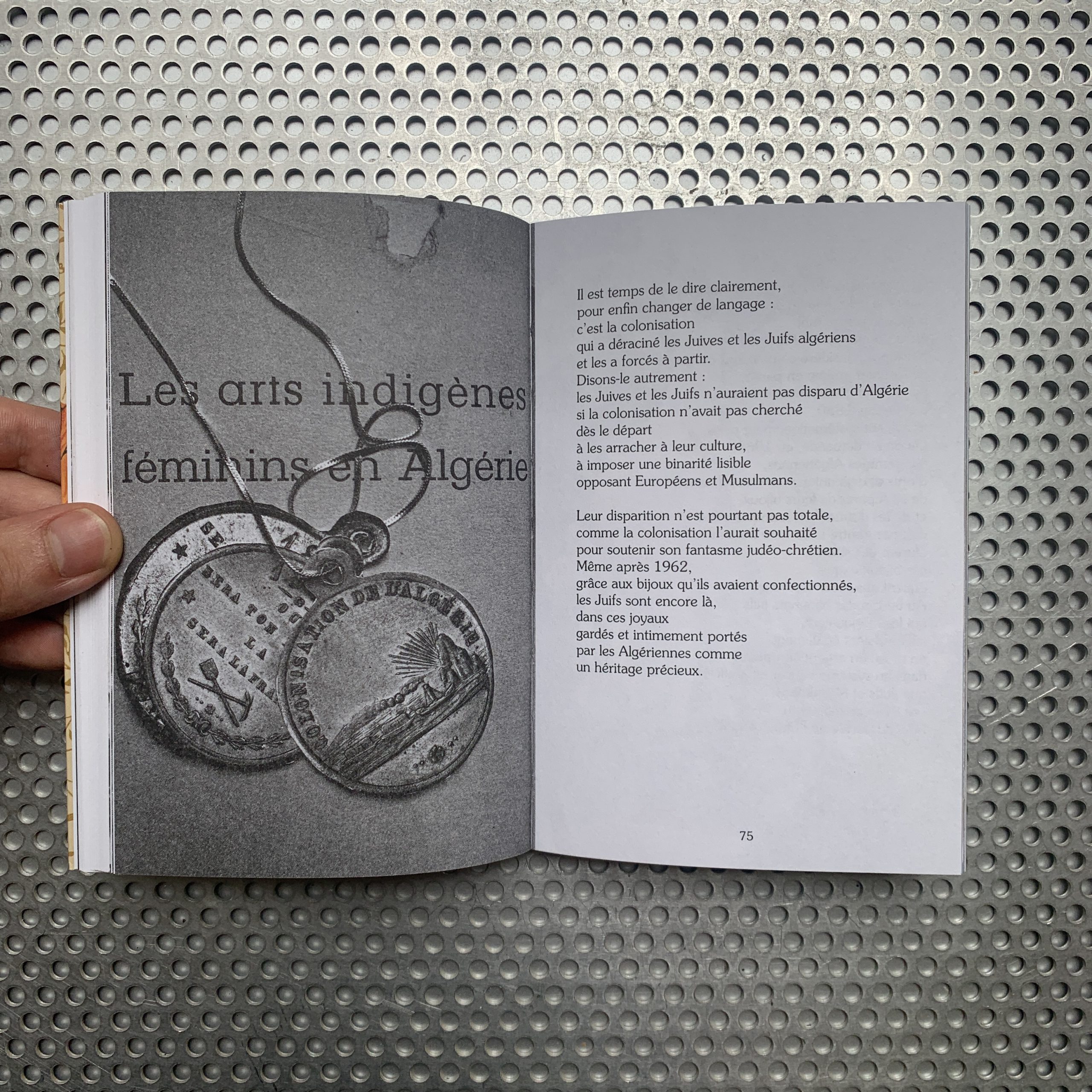
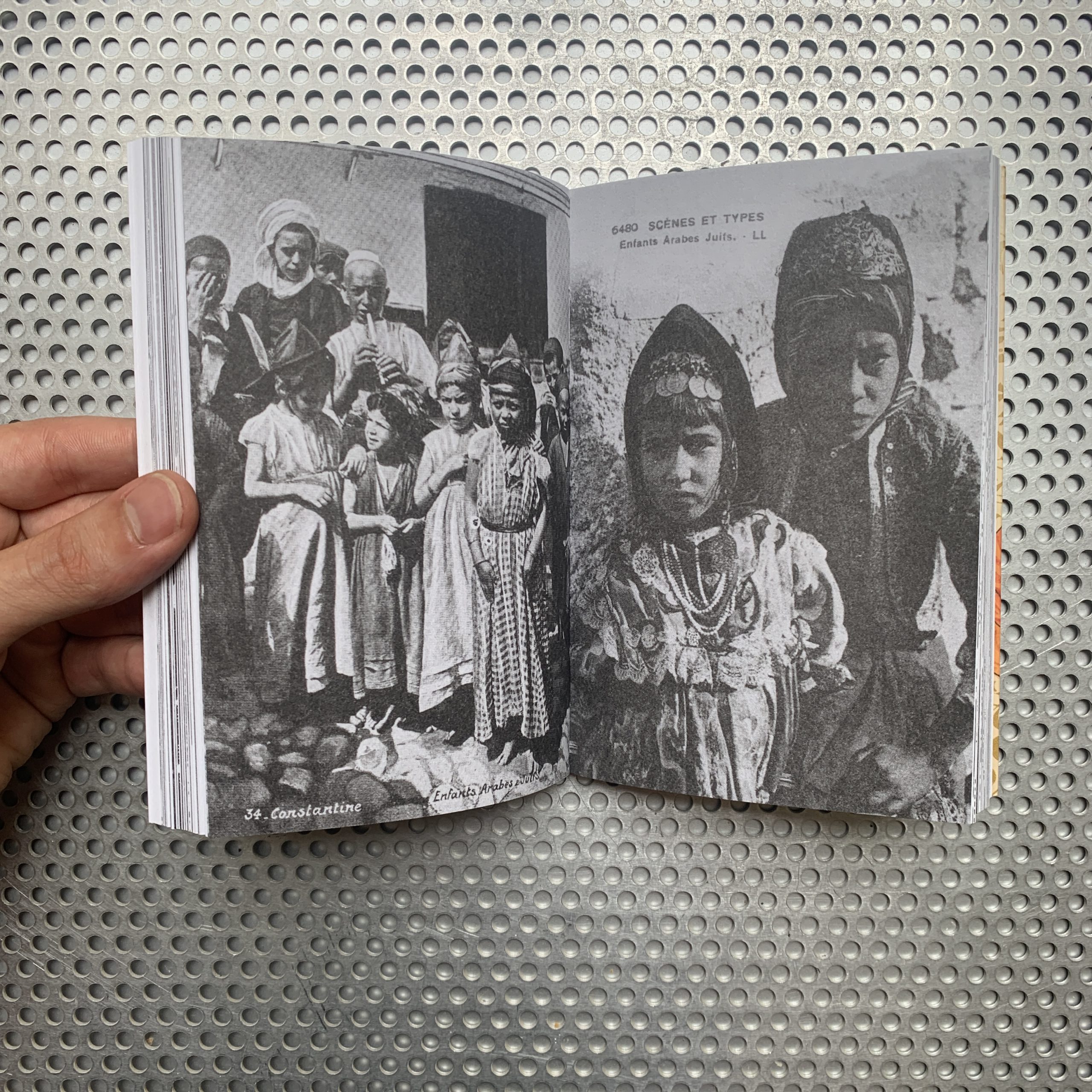
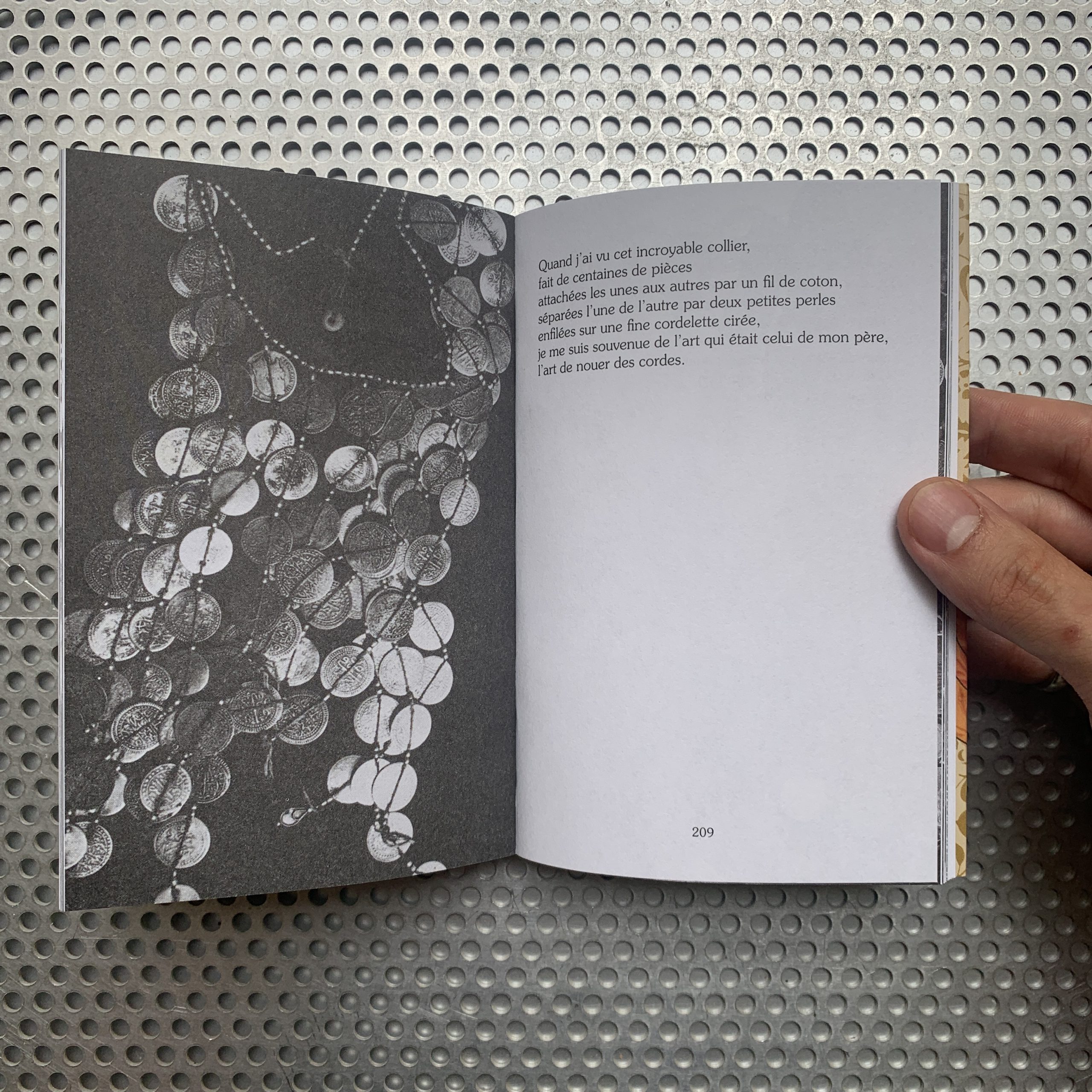
À la mort de son père, Juif d’Oran naturalisé français puis israélien, Ariella Azoulay découvre dans un document que sa grand-mère portait le prénom Aïcha. En deux récits mêlant autobiographie et théorie politique, l’autrice serpente entre les catalogues de bijoux, les photos trouvées et les collections d’objets pillés, pour déployer par fragments l’histoire de sa famille et mettre en parallèle les colonialismes français en Algérie et sioniste en Palestine. Entre ces projets impériaux, elle saisit bien des continuités, à commencer par la volonté obstinée de détruire l’enchevêtrement séculaire des mondes juifs, arabes et berbères, un entrelacs qu’elle revendique pour mieux le restaurer.
-
Ariella Aïsha Azoulay est écrivaine, chercheuse, cinéaste expérimentale et commissaire d’archives anticoloniales. Née en 1962 dans la colonie sioniste de Palestine, elle est professeure à l’université Brown où elle enseigne la théorie politique, la résistance aux formations impériales et les imaginaires anticoloniaux réclamant le retour, la restitution et le tikkoun olam, la réparation du monde. Autrice d’une dizaine de livres parus dans de nombreux pays, elle a publié entre autres Potential History: Unlearning Imperialism (Verso, 2019) et From Palestine to Israel: A Photographic Record of Destruction and State Formation (Pluto Press, 2011). Inédit, La Résistance des bijoux est son premier livre traduit en français.
Is your business secured in the case of ecological collapse? Or are you unsure?
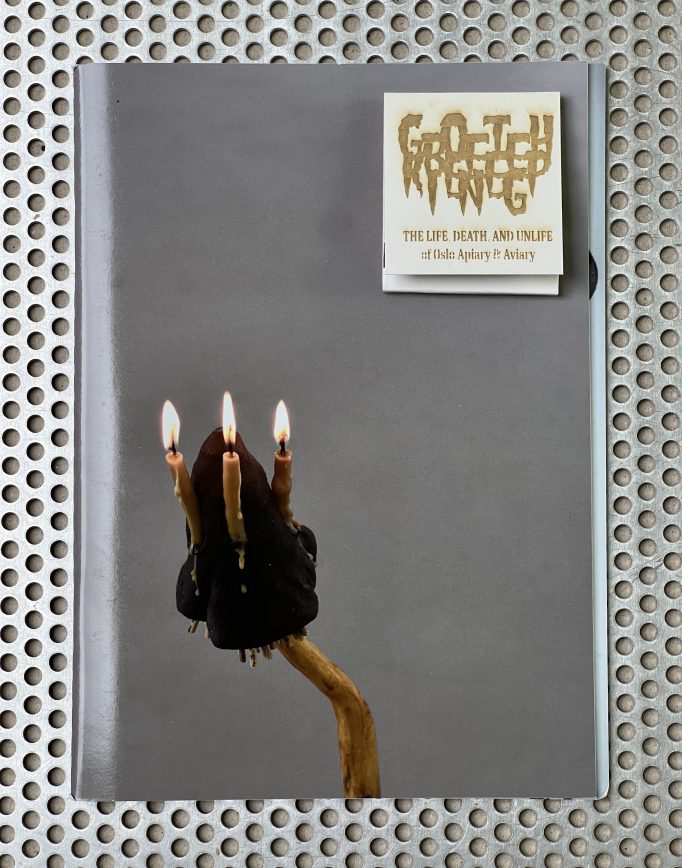
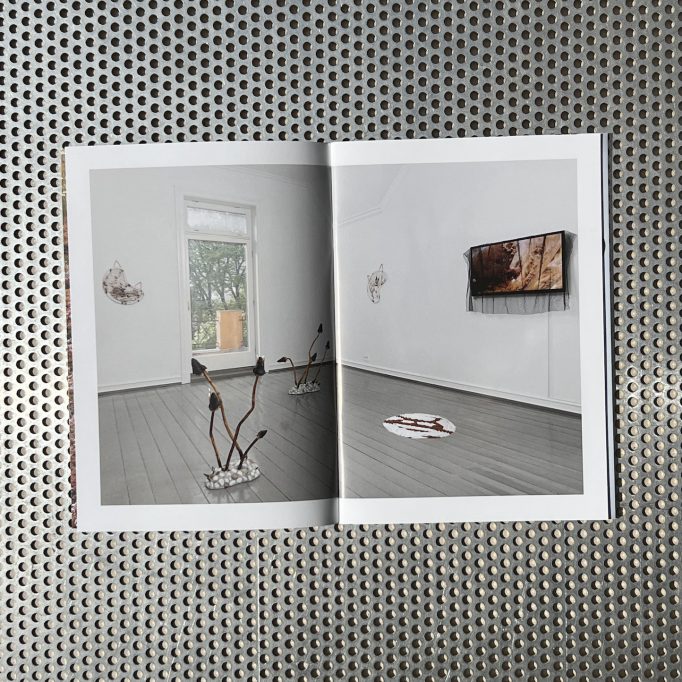
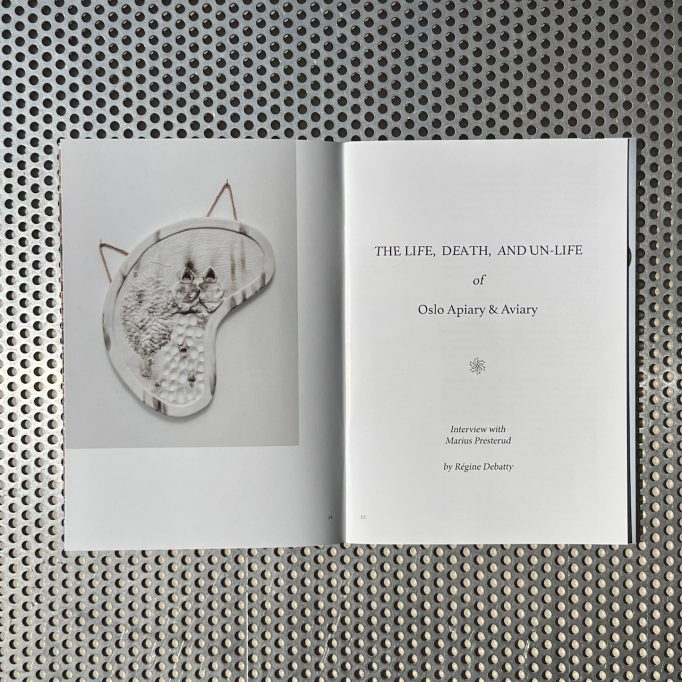
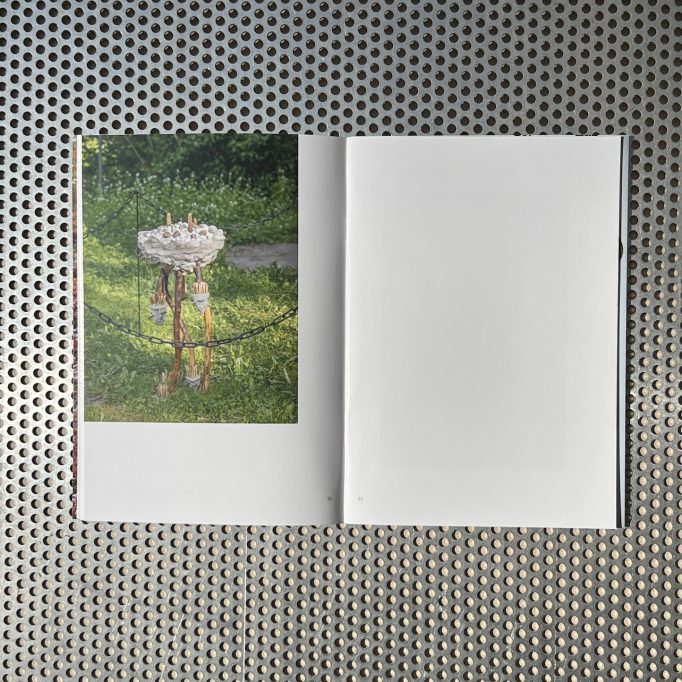
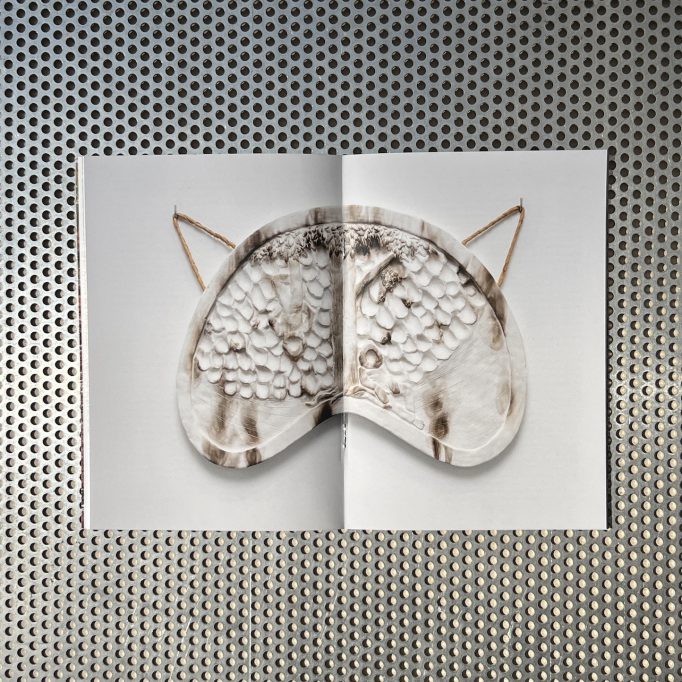
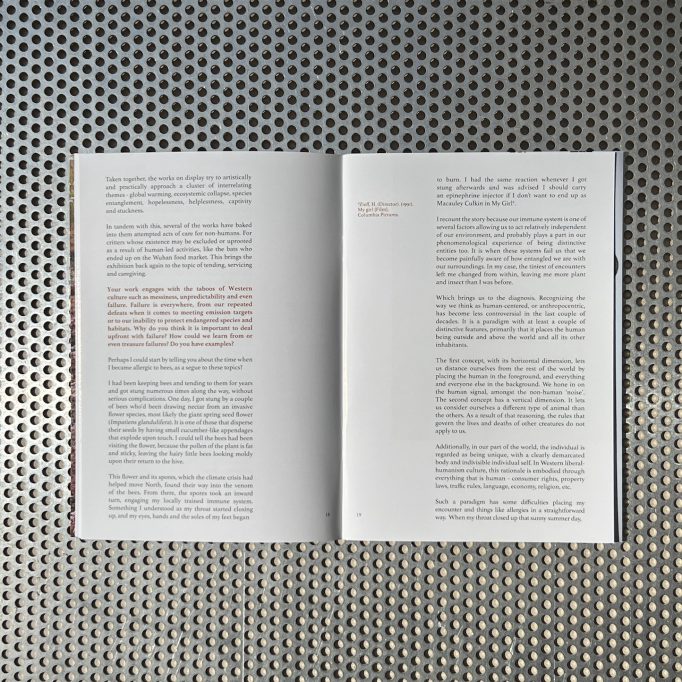
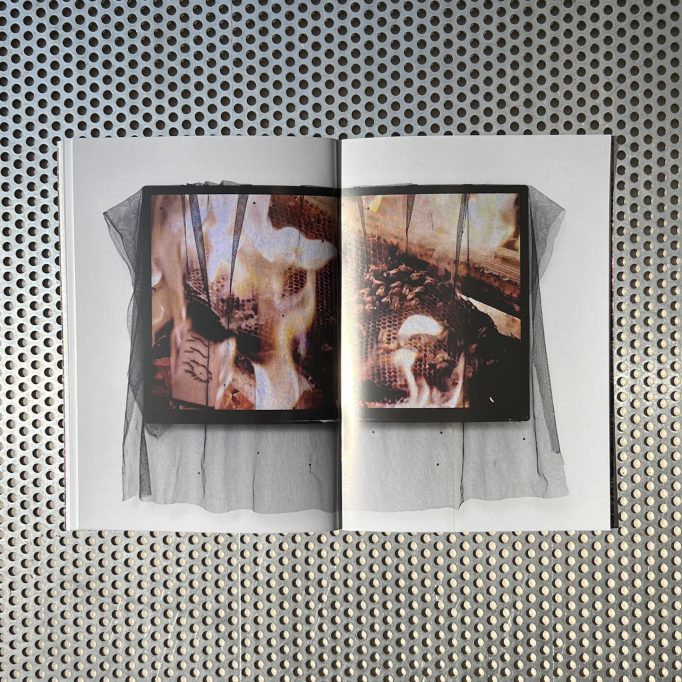
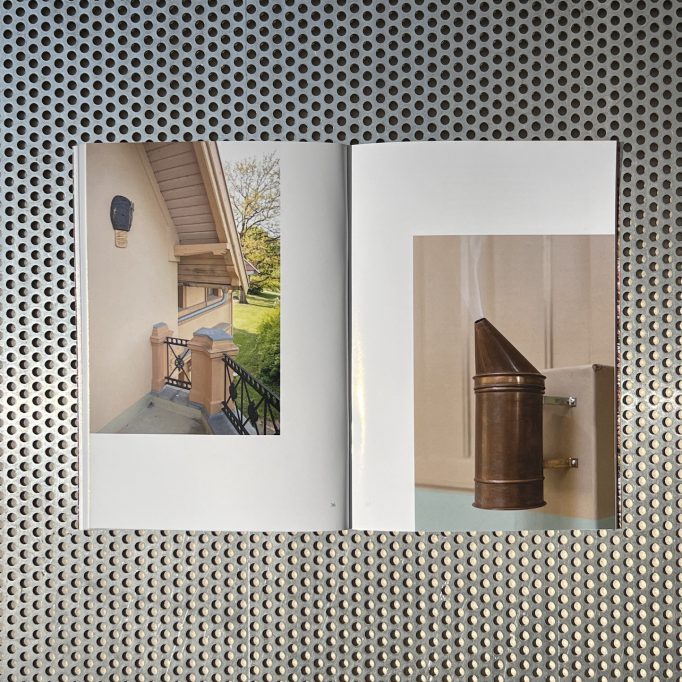
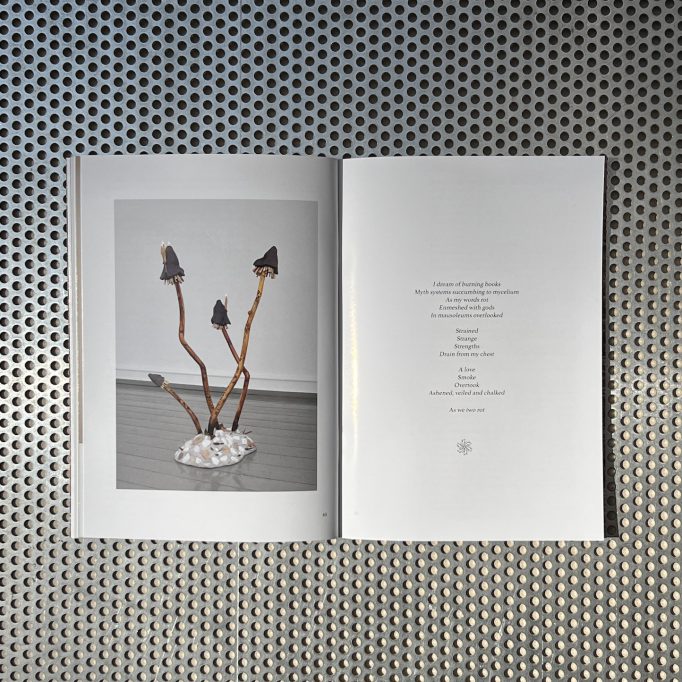
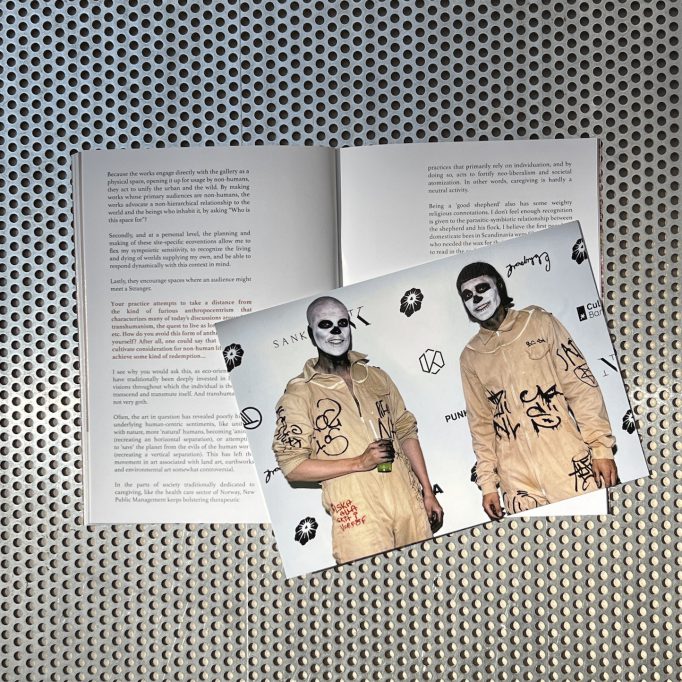
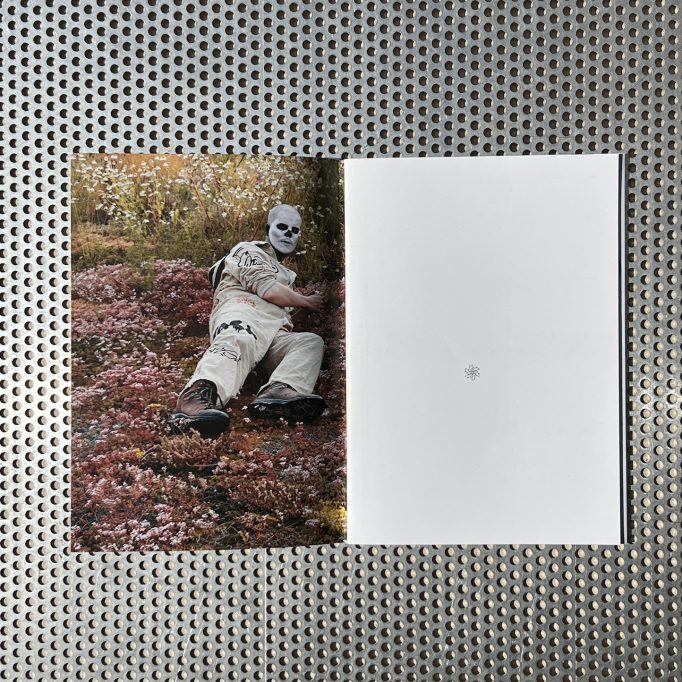
Oslo Apiary & Aviary is a provider of dark-ecological tools, goods and services. We work in the overlap between art and ecosystemic change, specializing in urban husbandry, feeding birds, growing worms, keeping bees, tending trees.
A consistent activity throughout our work is the inspection of how the domains ‘urbanity-nature’ and ‘private-public’ are expressed and separated: By caring for plants, birds and insects in the city, we question what types of life belong where. By subjugating ourselves to urban husbandry, we revitalize mutually dependent modes of being. Our entanglement allows for moments of enlivenment in a time of atomizing individuation. We are in this together! Through our embedded practice we try to get a sense of the city’s ontology – how the post-sustainable city is constituted and can, or can’t, be reconstituted.
Currently, ‘can’t” is in the lead, gothifying our practice. Drawing on strategies traditionally associated with the multi-roled artist, we find ourselves simultaneously planting trees as well as branching out into survivalist prepping: an entrepreneurial doomsday cult for hire, toiling in the ruins of humancentrism.
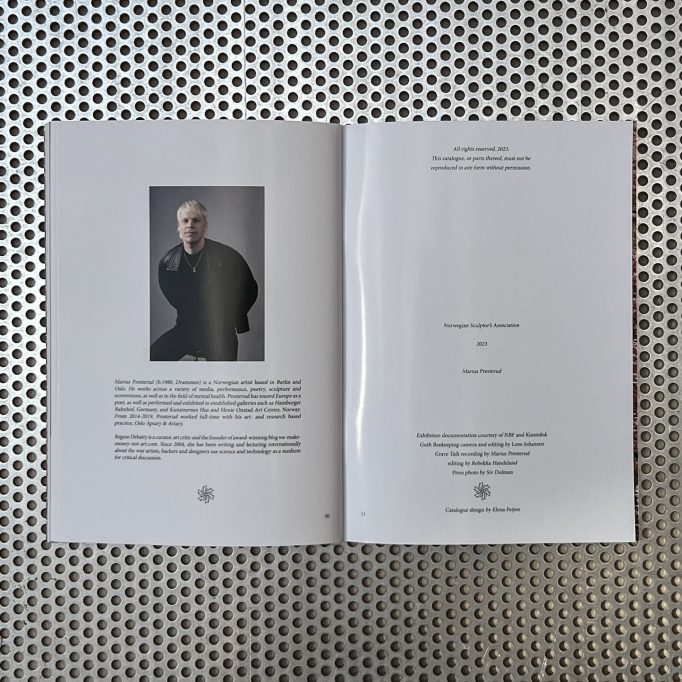
Marius Presterud (b.1980, Drammen) is a Norwegian artist based in Berlin and Oslo. He works across a variety of media; performance, poetry, sculpture and ecoventions, as well as in the field of mental health. Presterud has toured Europe as a poet, as well as performed and exhibited in established galleries such as Hamburger Bahnhof, Germany, and Kunstnernes Hus and Henie Onstad Art Center, Norway. From 2014-2019, Presterud worked full-time with his art- and research based practice, Oslo Apiary & Aviary.
Régine Debatty is a curator, art critic and the founder of award-winning blog we-make- money-not-art.com. Since 2004, she has been writing and lecturing internationally about the way artists, hackers and designers use science and technology as a medium for critical discussion.
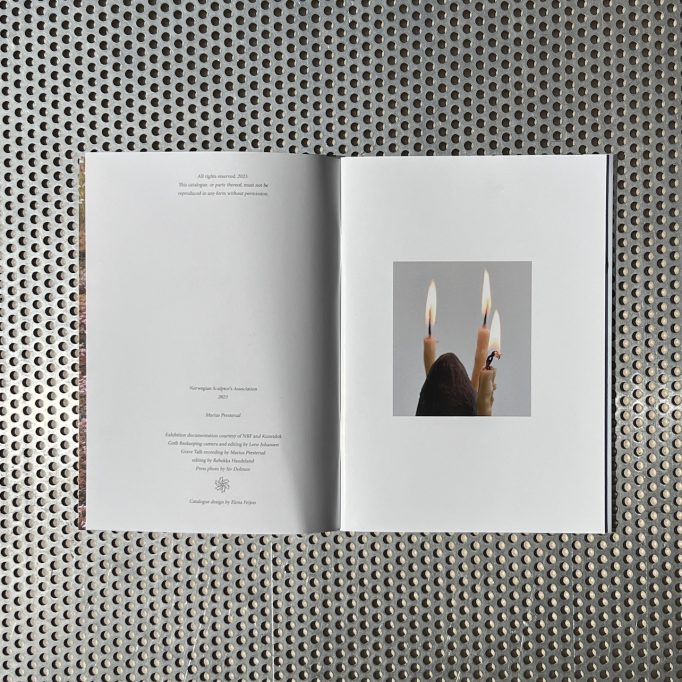
Norwegian Sculptor’s Association 2023 Exhibition documentation courtesy of NBF and Kunstdok Goth Beekeeping camera and editing by Lene Johansen Grave Talk recording by Marius Presterud editing by Rebekka Handeland Press photo by Siv Dolmen Catalogue design by Elena Feijoo
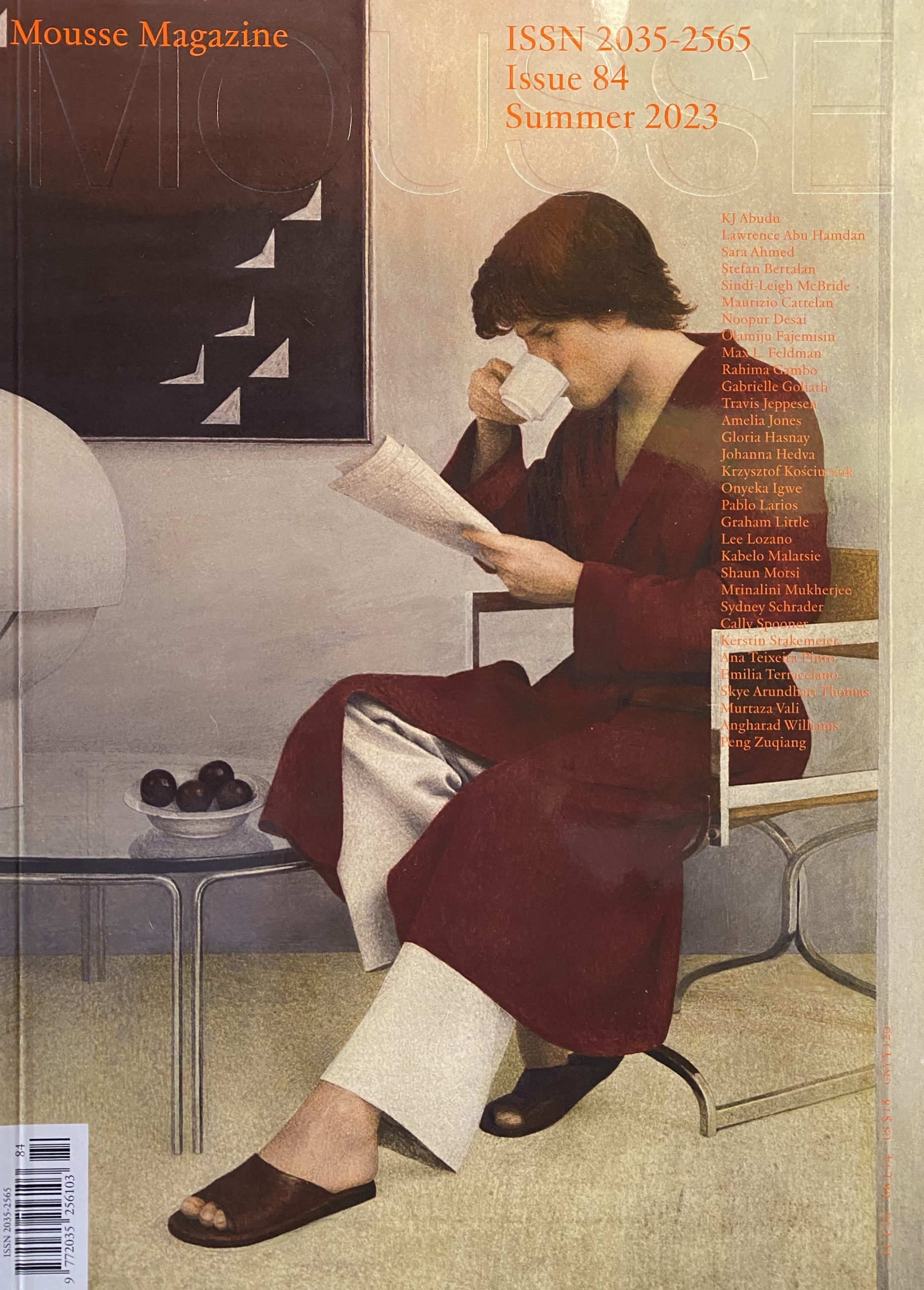
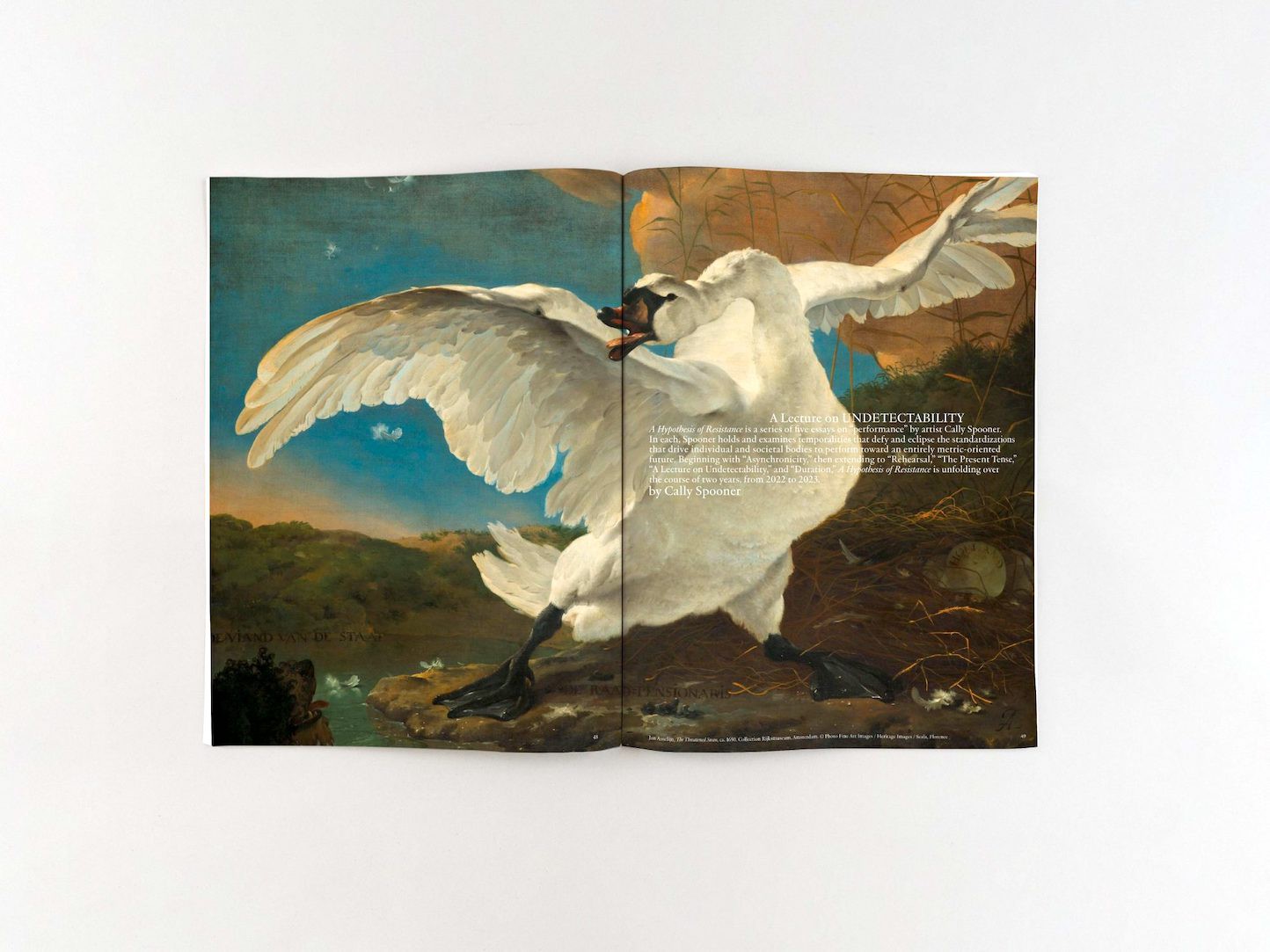
A HYPOTHESIS OF RESISTANCE—PART FOUR: A LECTURE ON UNDETECTABILITY Cally Spooner
Survey MRINALINI MUKHERJEE (A) Overgrowth Noopur Desai, Emilia Terracciano, Murtaza Vali (B) Less a Thing Than the Trace of a Movement Skye Arundhati Thomas
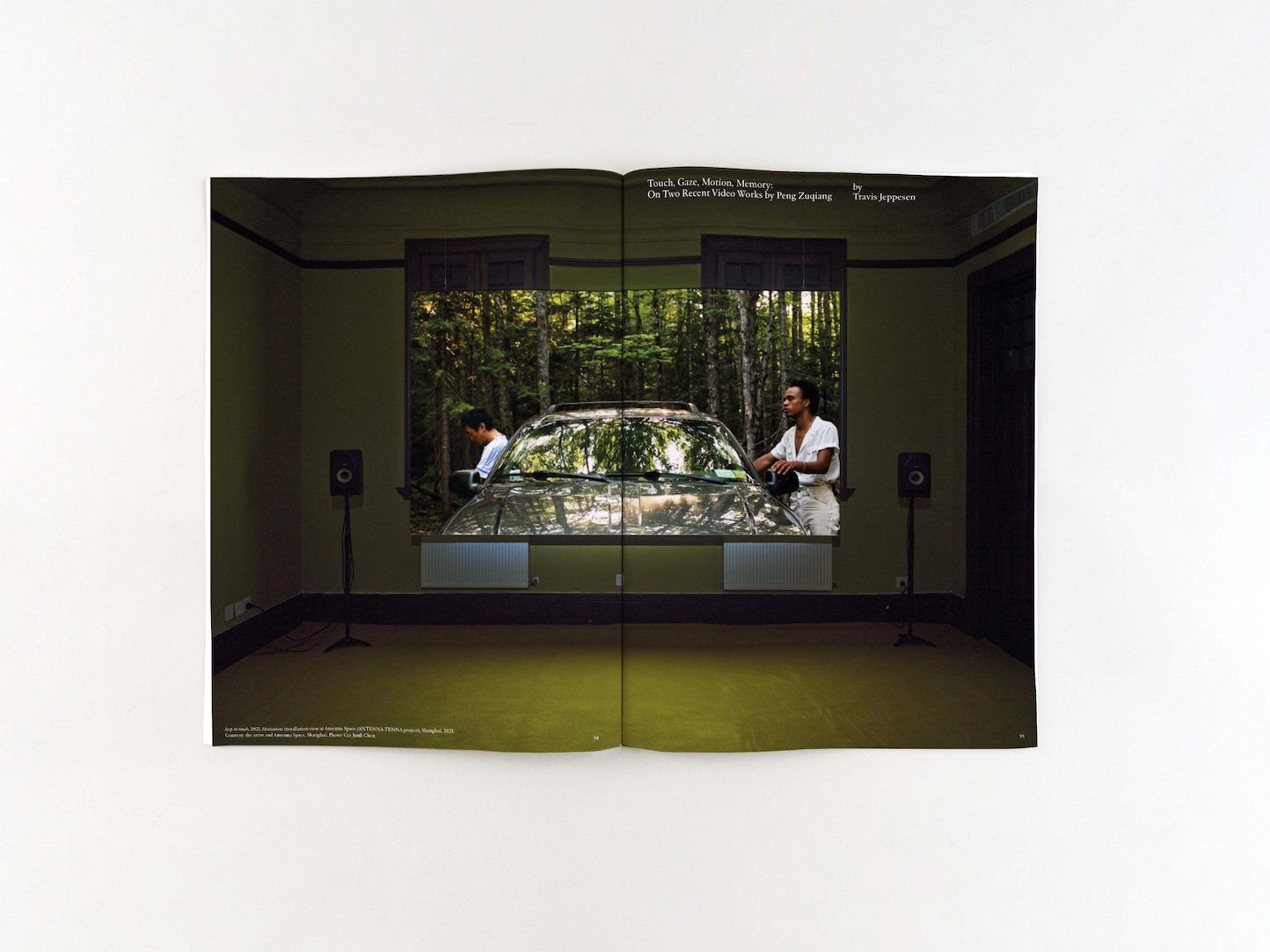
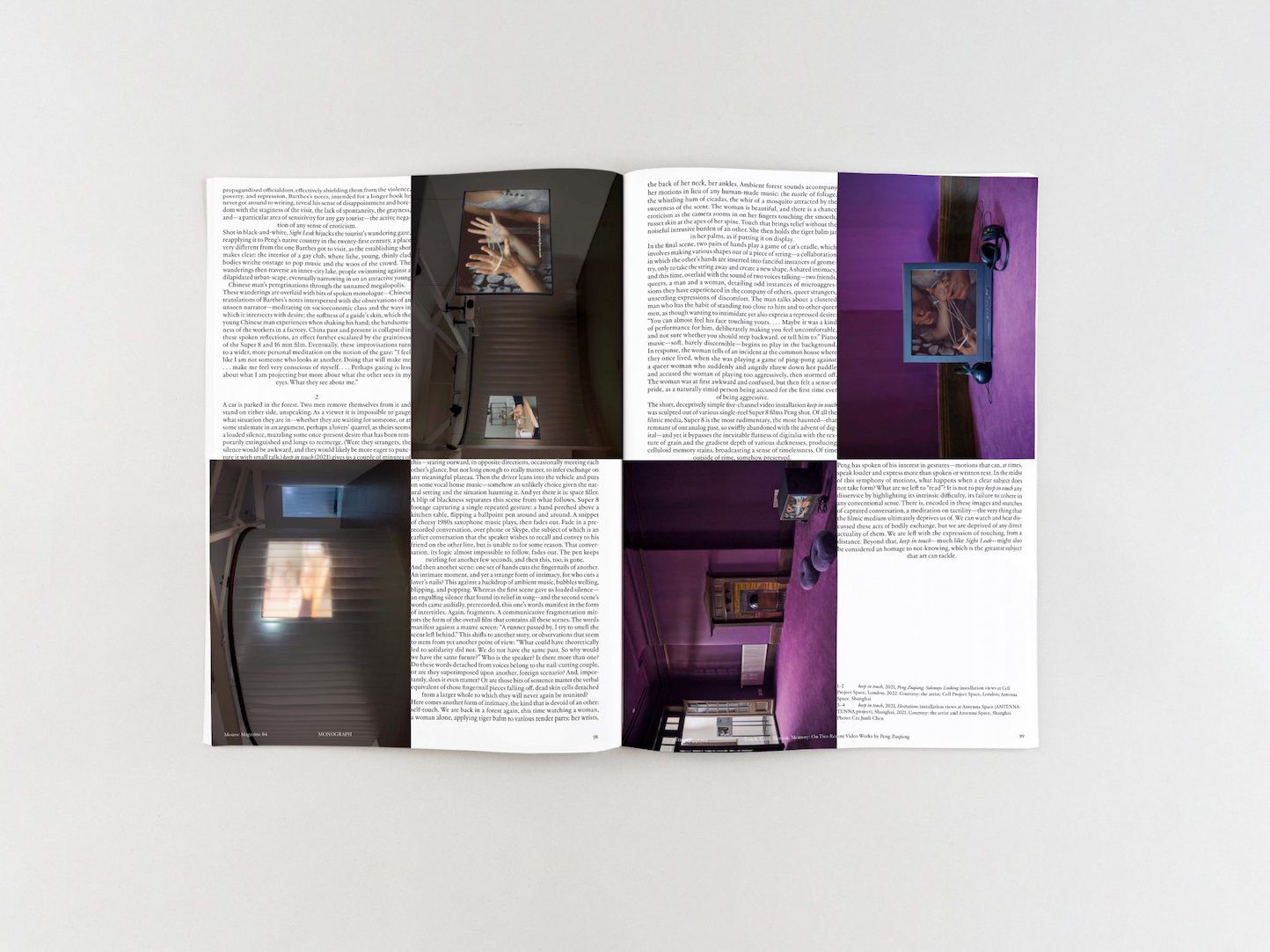
Monograph PENG ZUQIANG Touch, Gaze, Motion, Memory: On Two Recent Video Works by Peng Zuqiang Travis Jeppesen
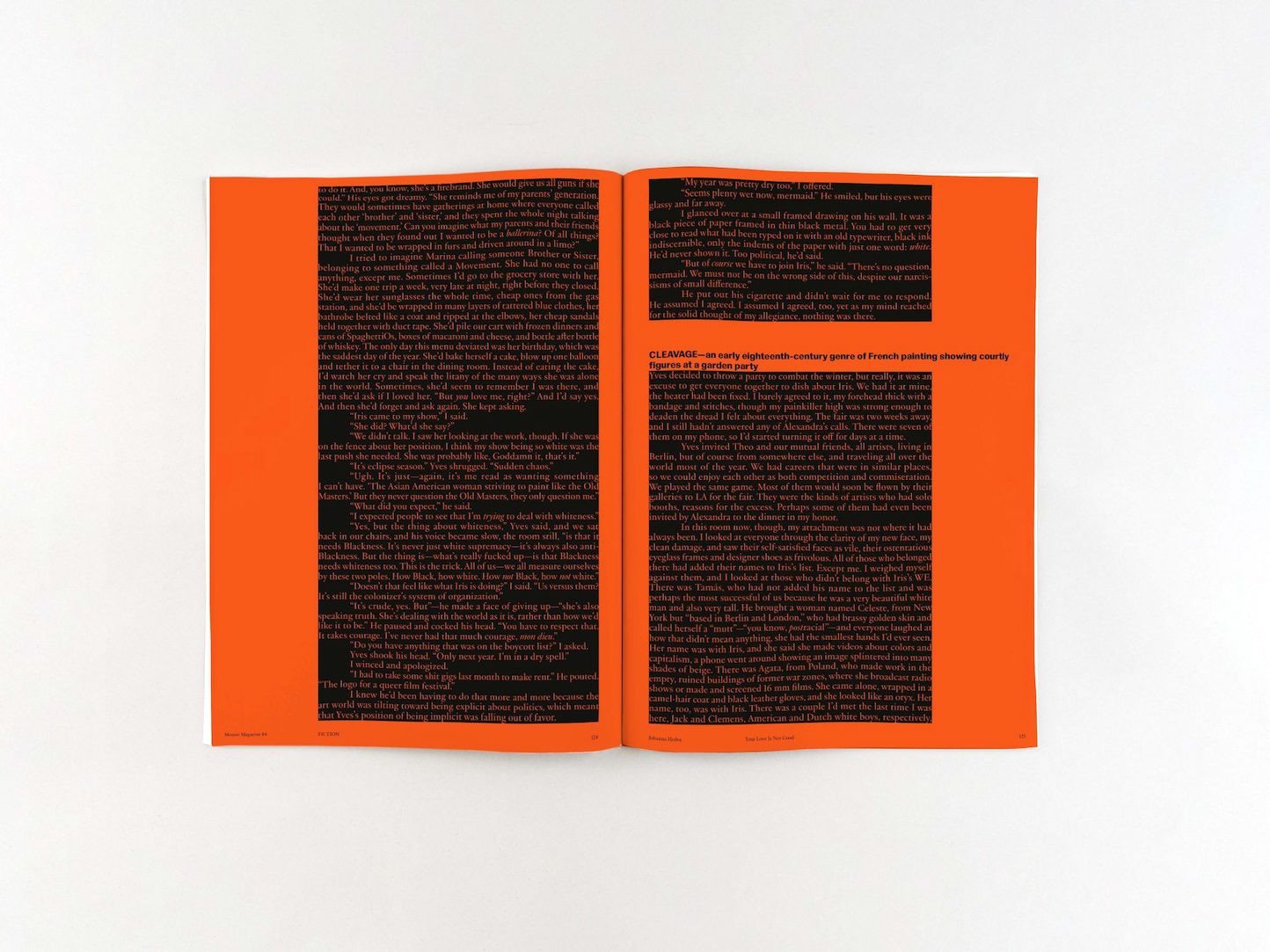
Fiction YOUR LOVE IS NOT GOOD Johanna Hedva
Monograph LEE LOZANO Lee Lozano’s Tools and the “Self as Center” Amelia Jones
Visual ANGHARAD WILLIAMS Cars, 2022 Angharad Williams, Maurizio Cattelan
Books Gabrielle Goliath
Tidbits Graham Little by Max Feldman Onyeka Igwe by KJ Abudu Shaun Motsi by Olamiju Fajemisin Sydney Schrader by Gloria Hasnay Rahima Gambo by Sindi-Leigh McBride Ştefan Bertalan by Krzysztof Kościuczuk
Thinkers SARA AHMED: ARCHIVING UNHAPPINESS Ana Teixeira Pinto
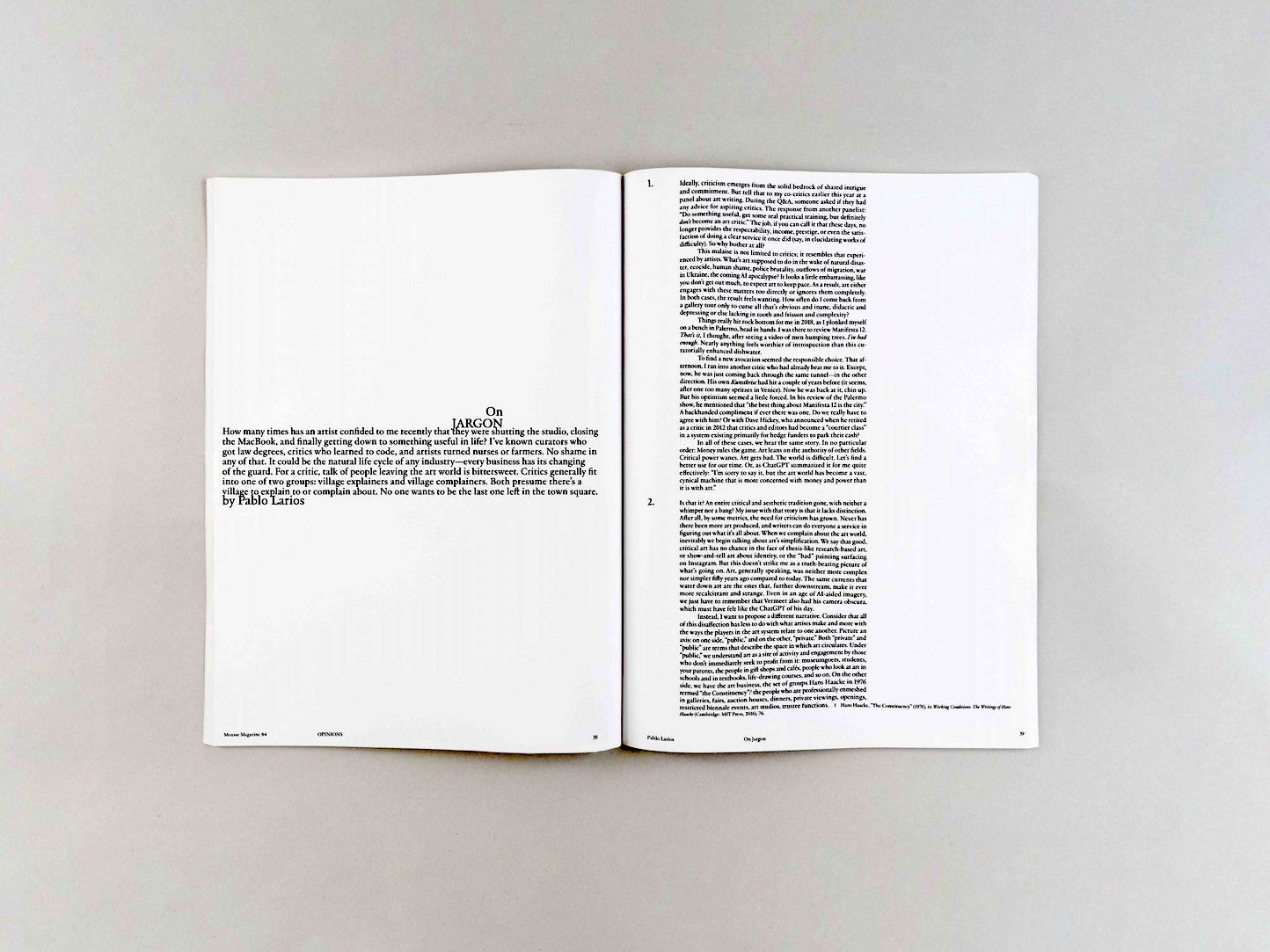
Criticism I’M WITH FANTASY Kerstin Stakemeier
Reprint REINCARNATION AND BIOLOGY: A CONTRIBUTION TO THE ETIOLOGY OF BIRTHMARKS AND BIRTH DEFECTS Ian Stevenson Lawrence Abu Hamdan
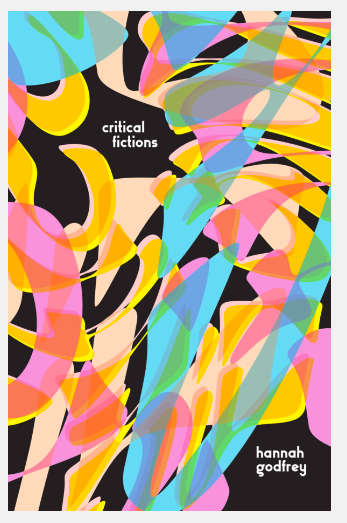
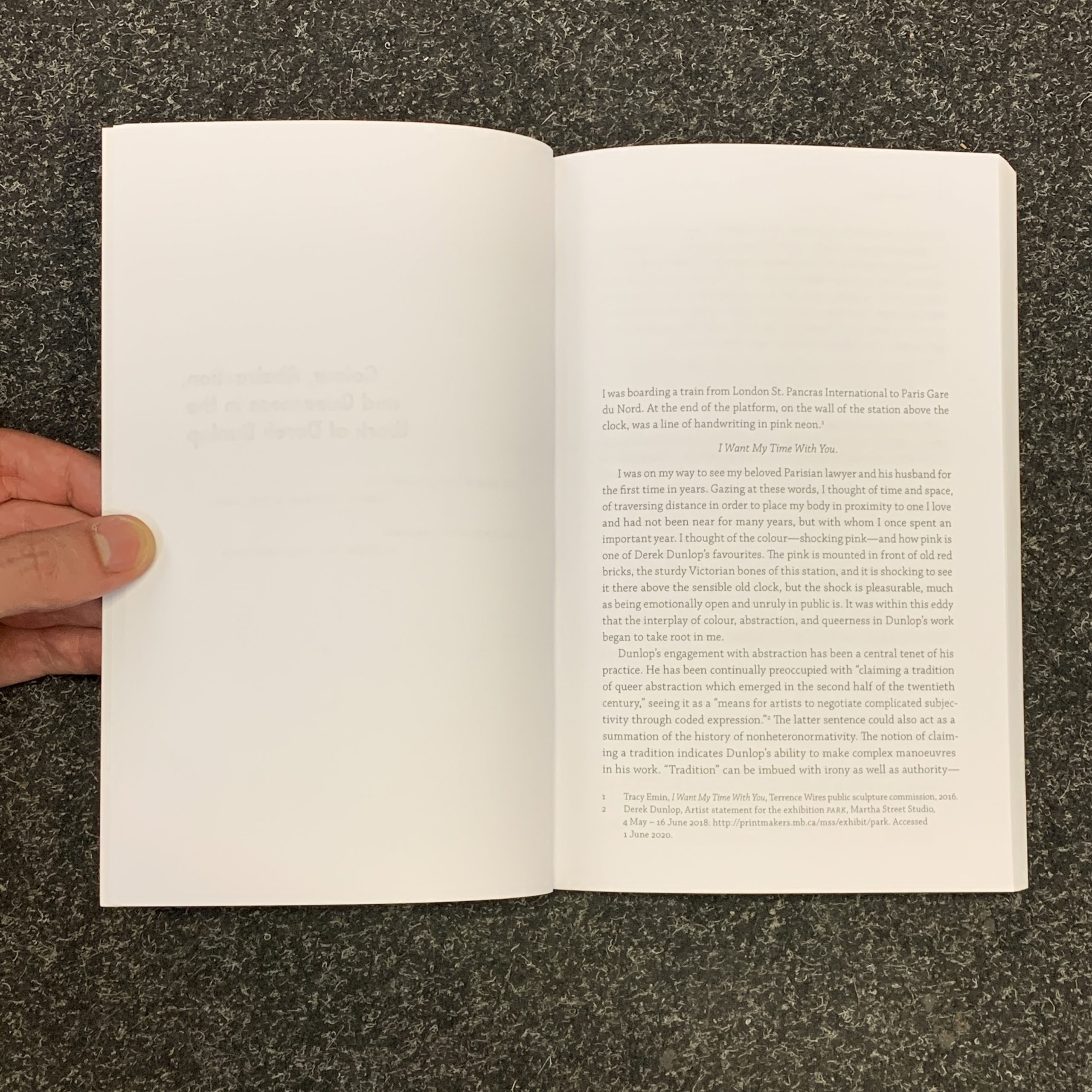
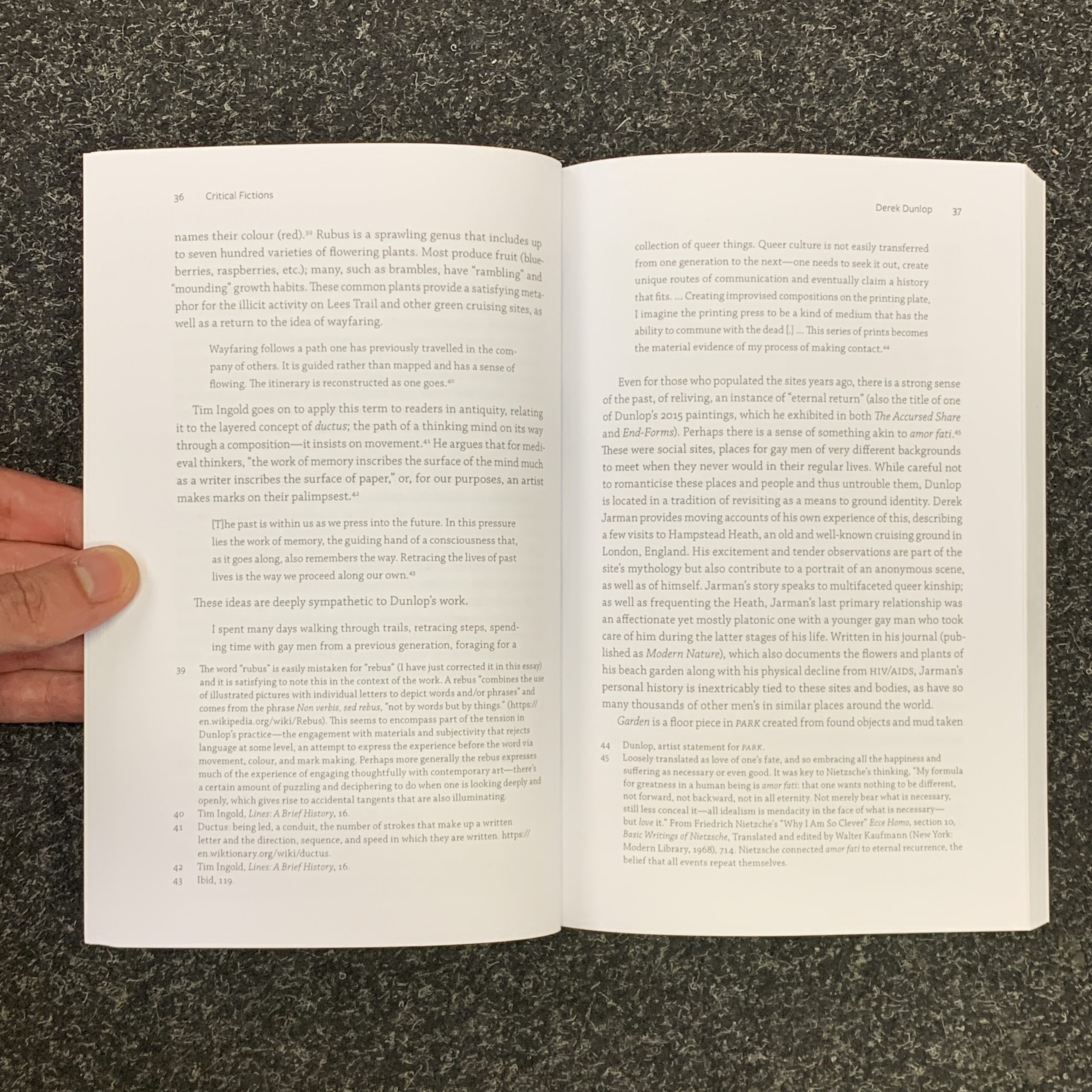
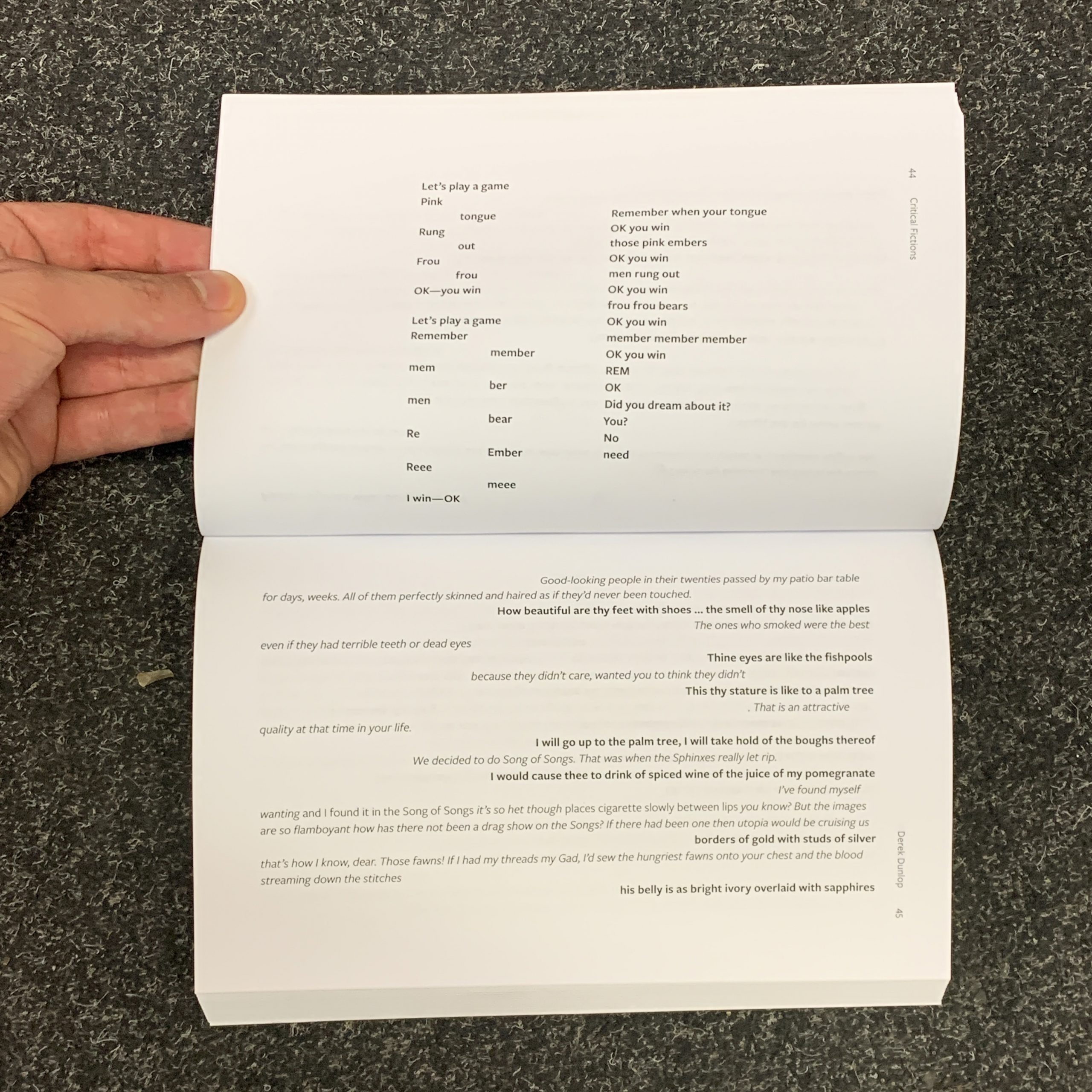
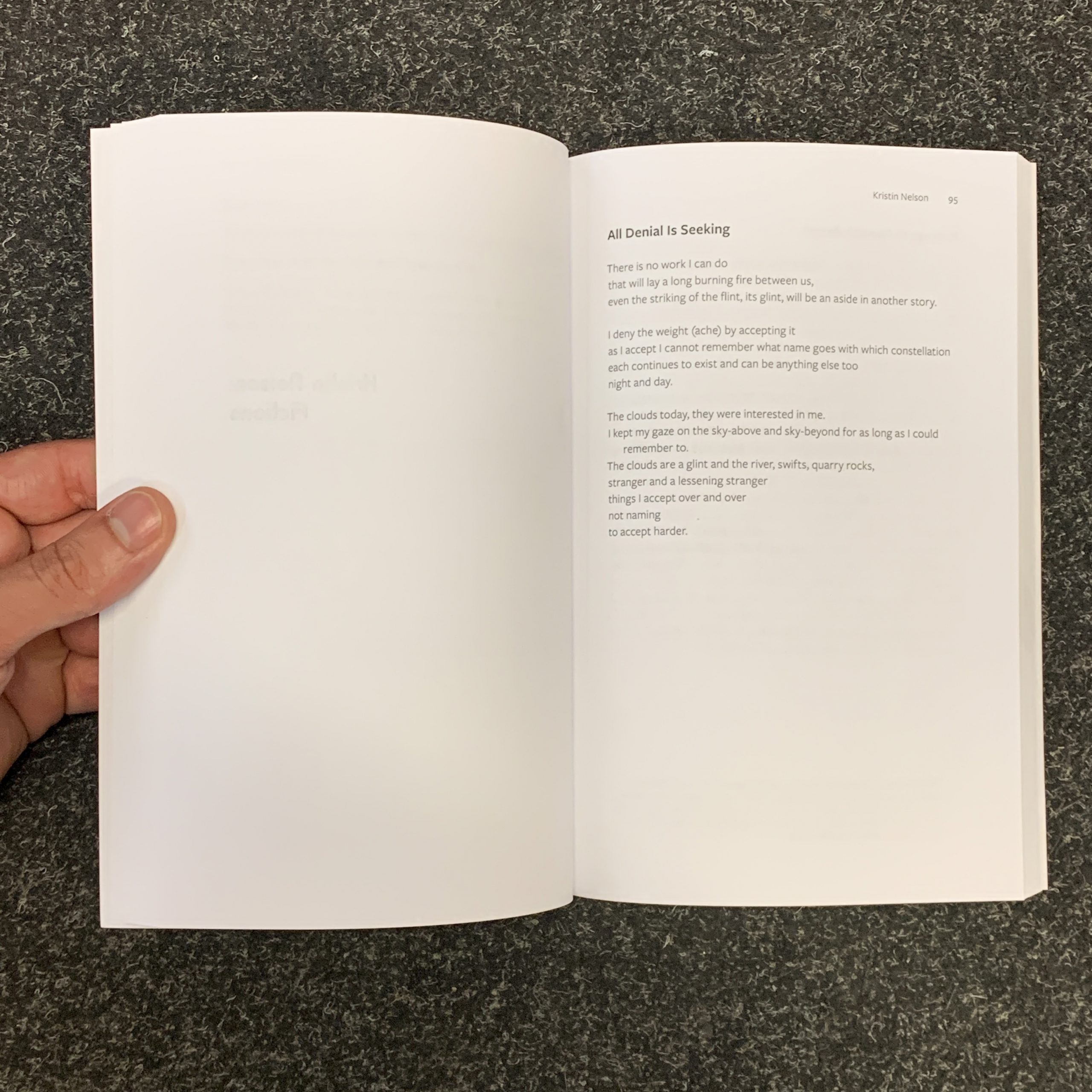
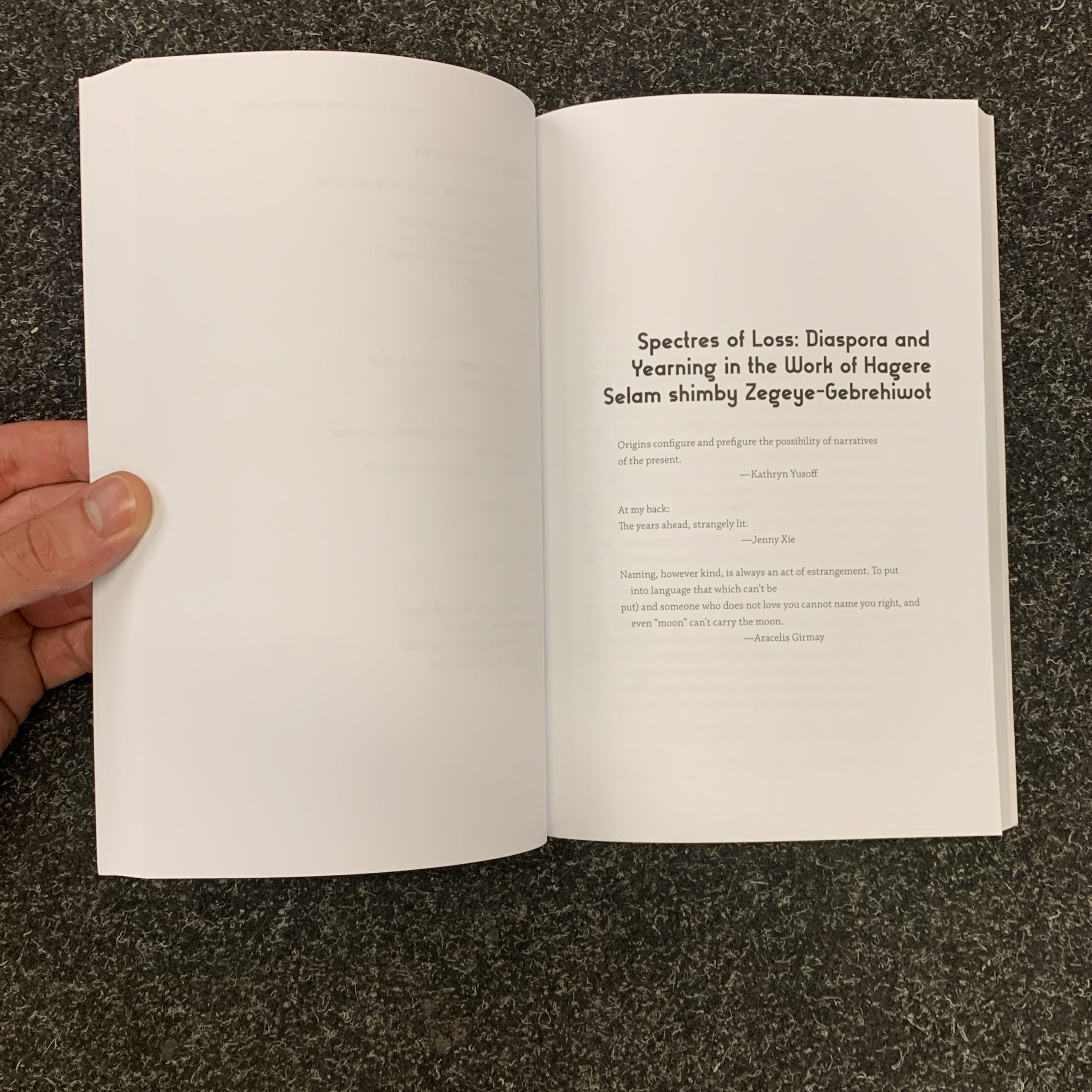
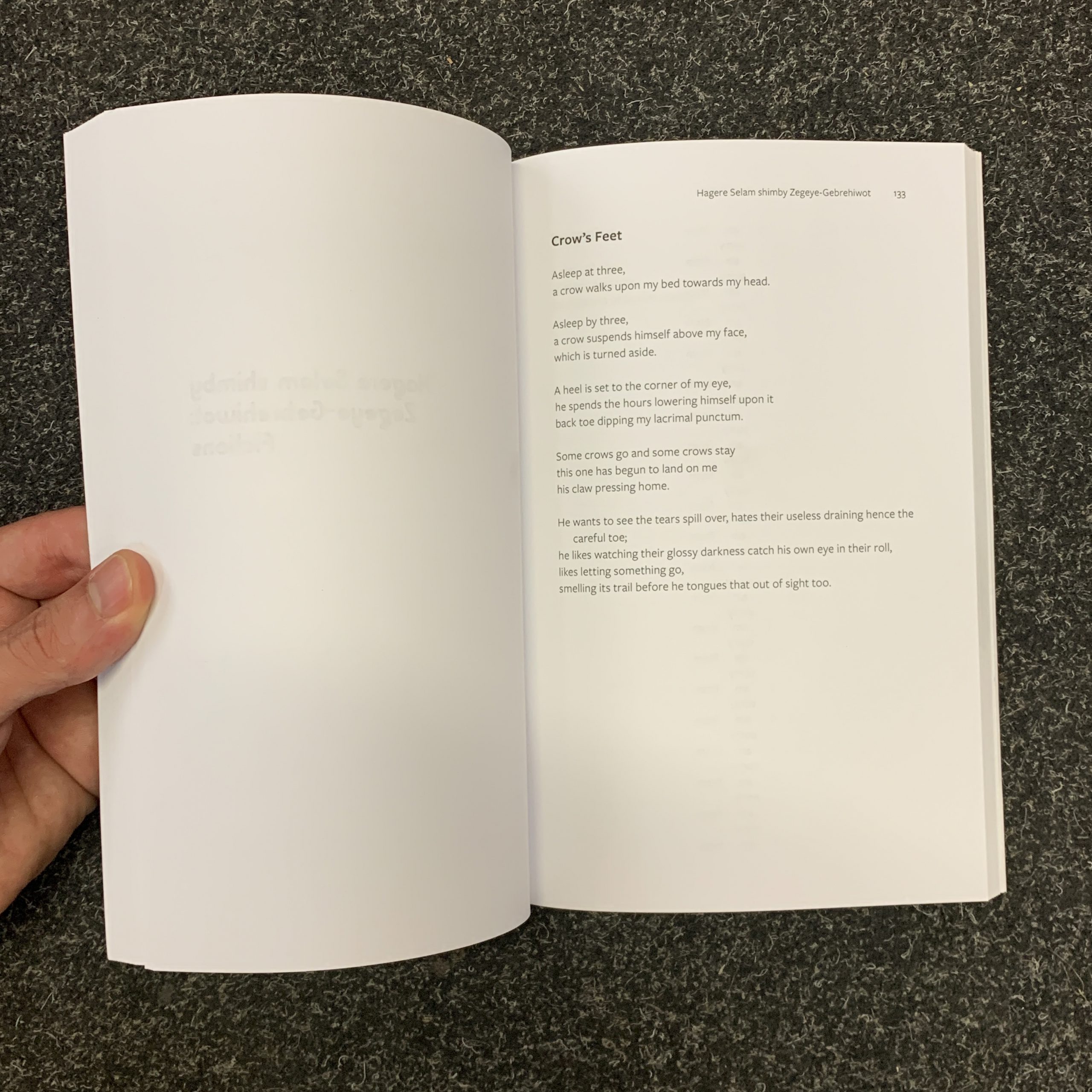
In her bold departure from conventional art criticism, Hannah Godfrey looks to the work of five contemporary queer visual artists, with attention to, and affection for, the wit, subversion, and many complexities of each of their practices. Shifting through written forms as experiential coves, Critical Fictions is a collection of inventive responses that are delicately linked, and devoted to their subjects.
Alongside the five artists—Derek Dunlop, Kristin Nelson, Hagere Selam shimby Zegeye-Gebrehiwot, Andrea Oliver Roberts, and Logan MacDonald—Godfrey shares a keen interest in intricacies of queer power, the body, and abstraction. Her varied approach to criticism embraces stories, poetry, essays, and other textual formations as means of wayfaring through the work of art. In these pages the reader will find not only celebrations of the depth, beauty, and acuity of the artworks discussed, but explorations of the imaginative thoroughfares they open up.
“It’s with a unique, caring voice that Godfrey speaks about, to, and with the artists in this collection. Even if the reader is familiar with an artist’s practice, the writing, in both its abstract and critical forms, offers the time and space so desperately needed to cover the complicated and intimate relationship of a critic engaging with artwork. Critical Fictions is a special, caring, and necessary book where art criticism is written, challenged, turned on its head and back again, interlacing the varying concepts of the featured artists’ practices like thread in a loom. Only when the reader reaches the end does it become apparent the threads have become a tapestry—a rare and beautiful process that will stay with you into the real world.” —Lauren Lavery, Editor of Peripheral Review
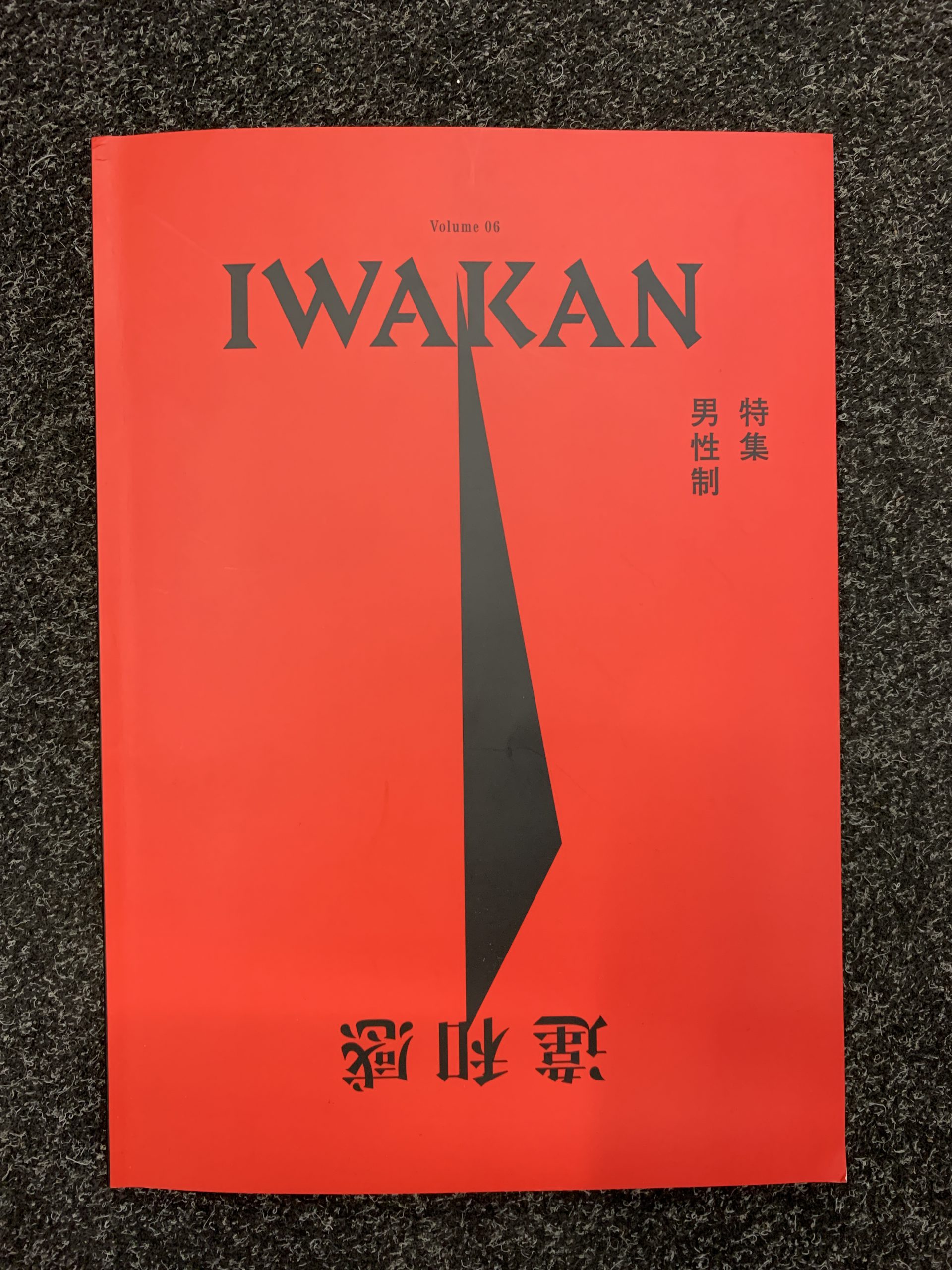
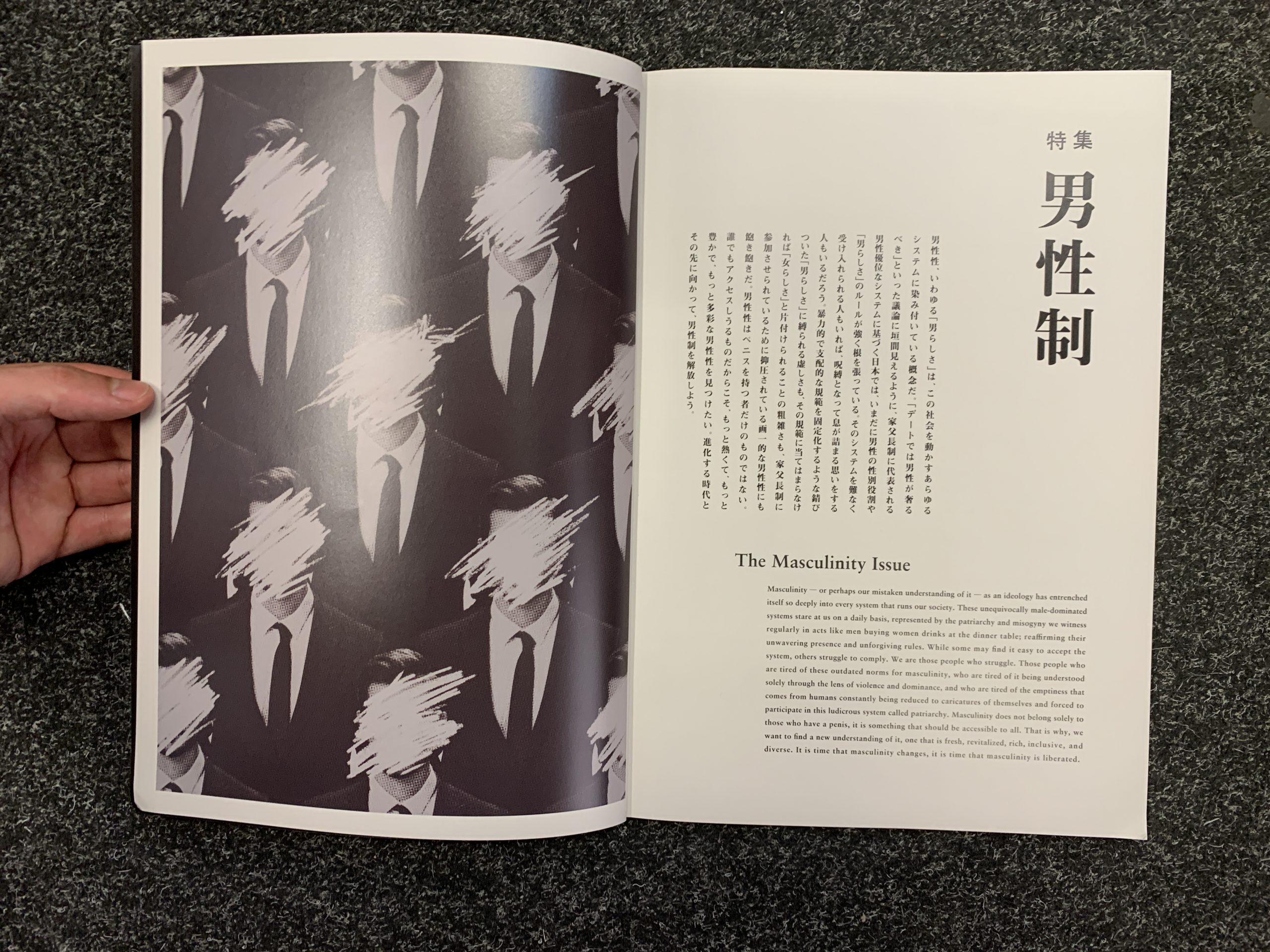
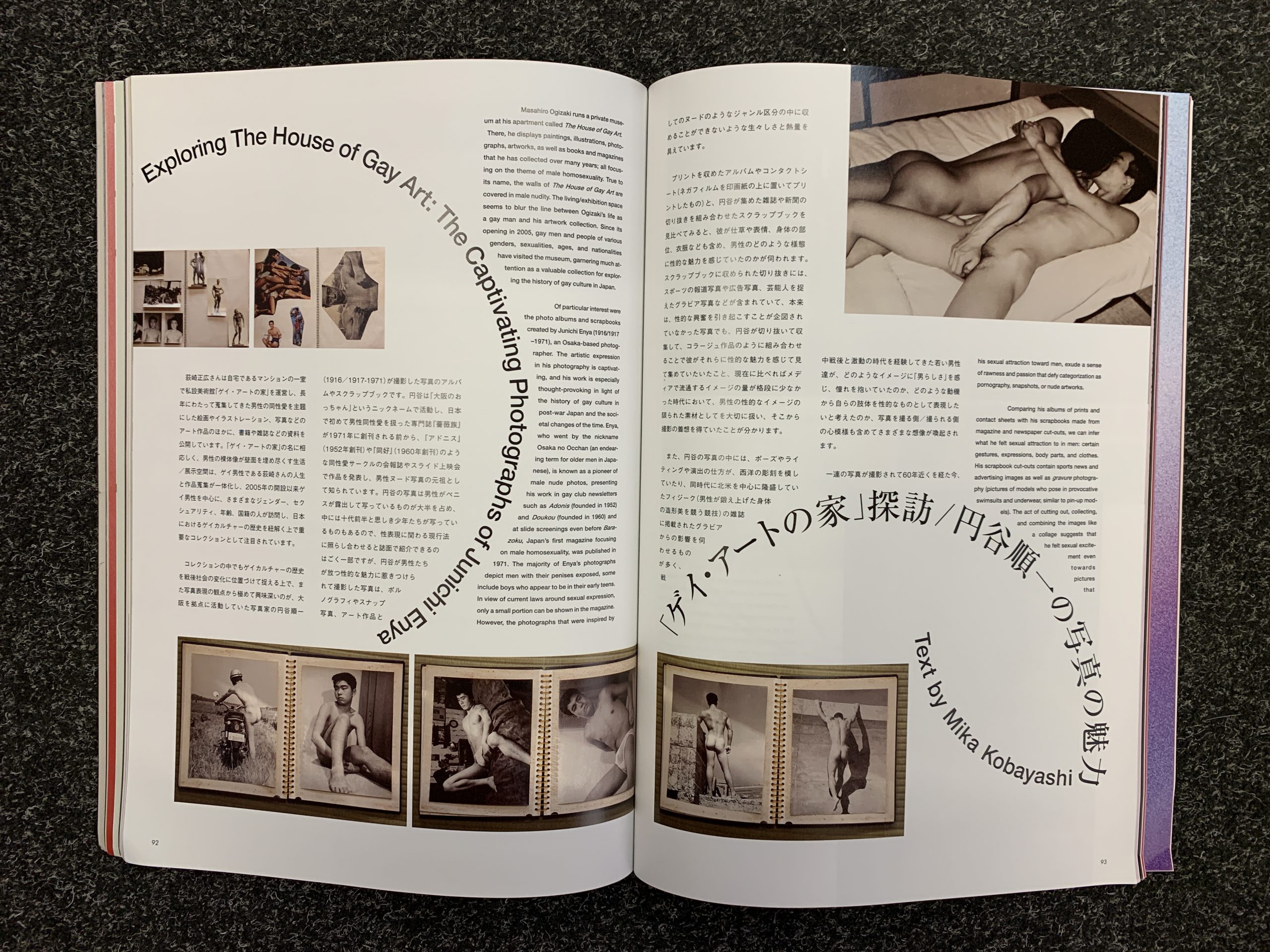
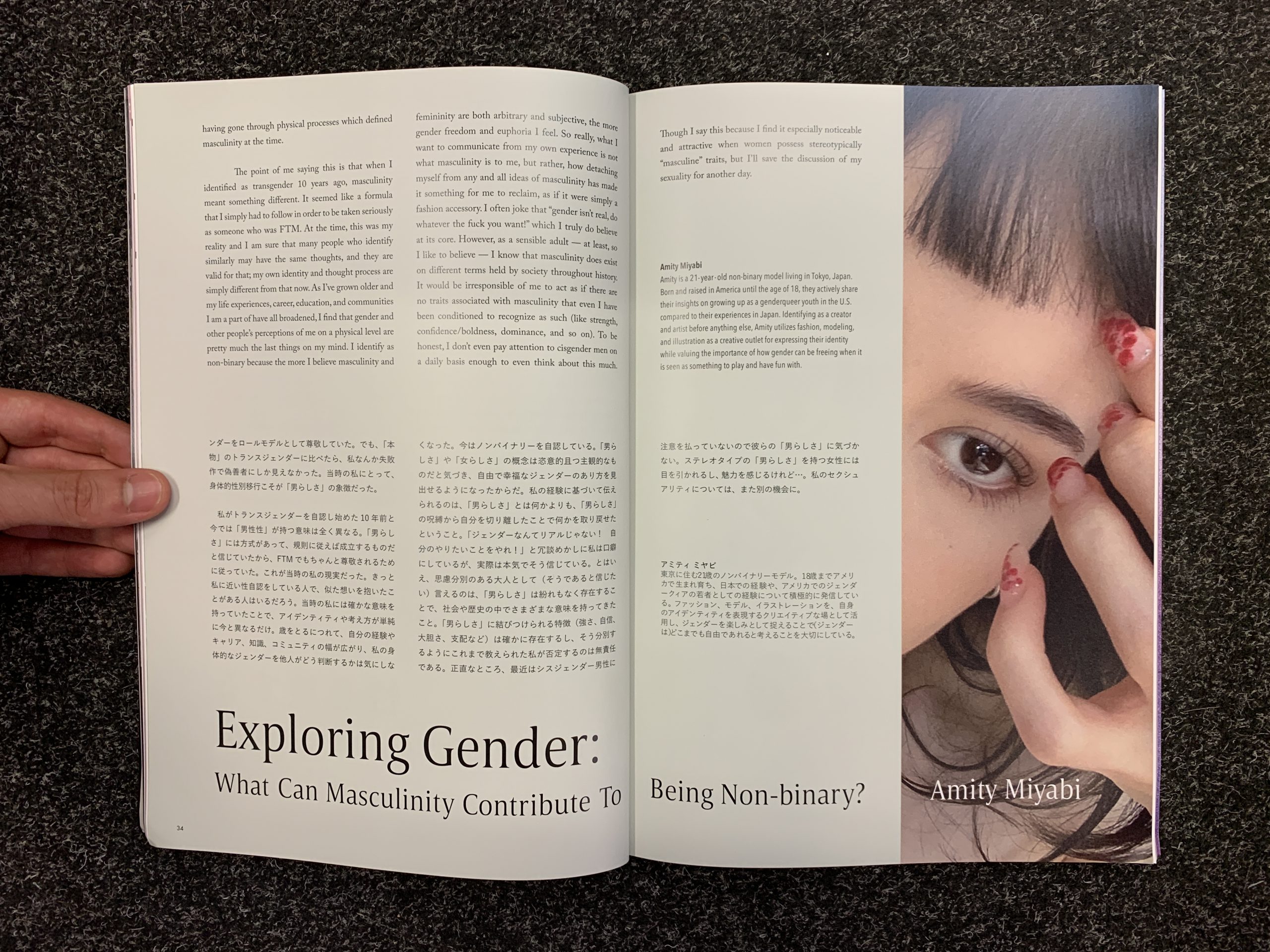
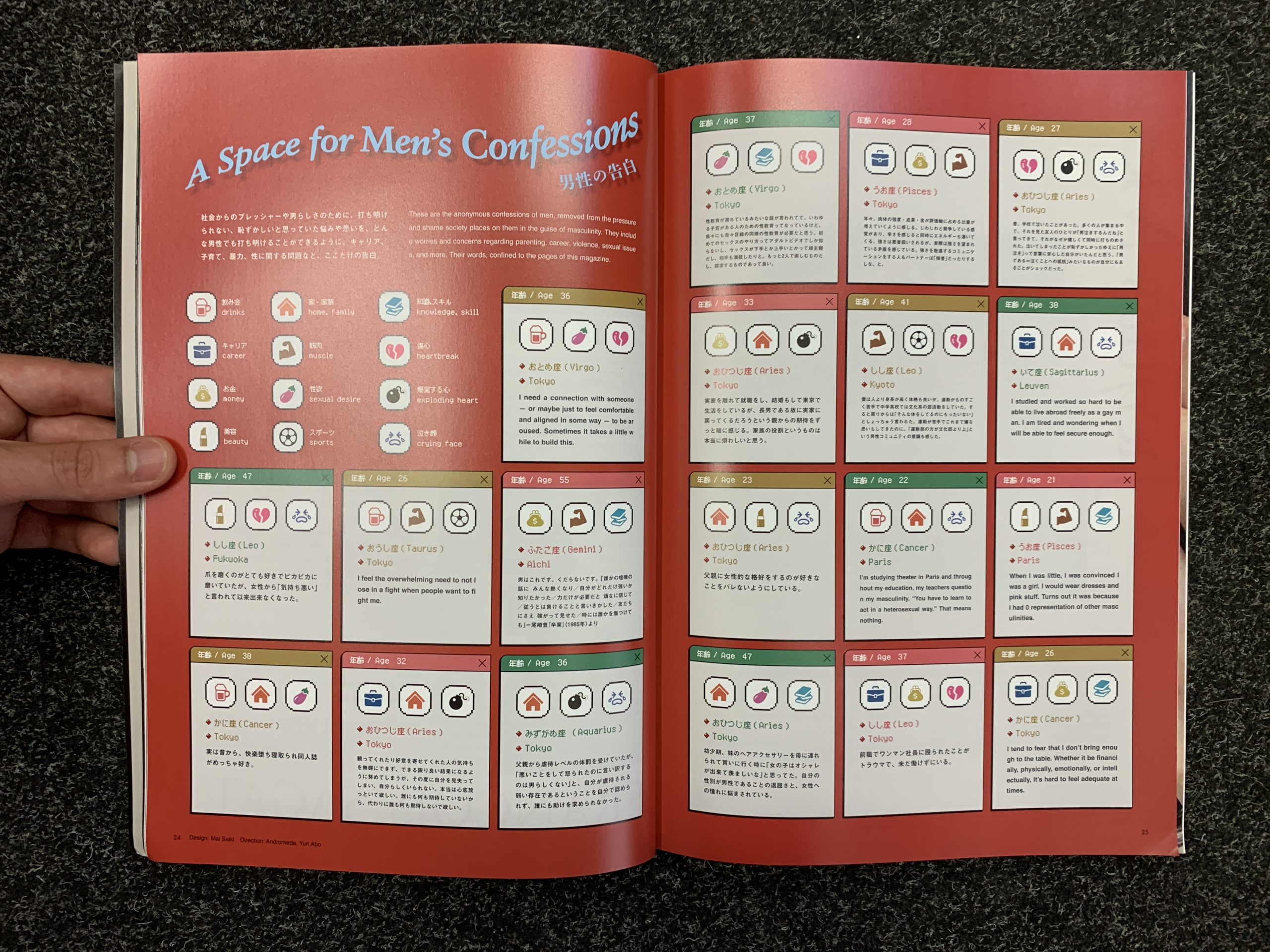
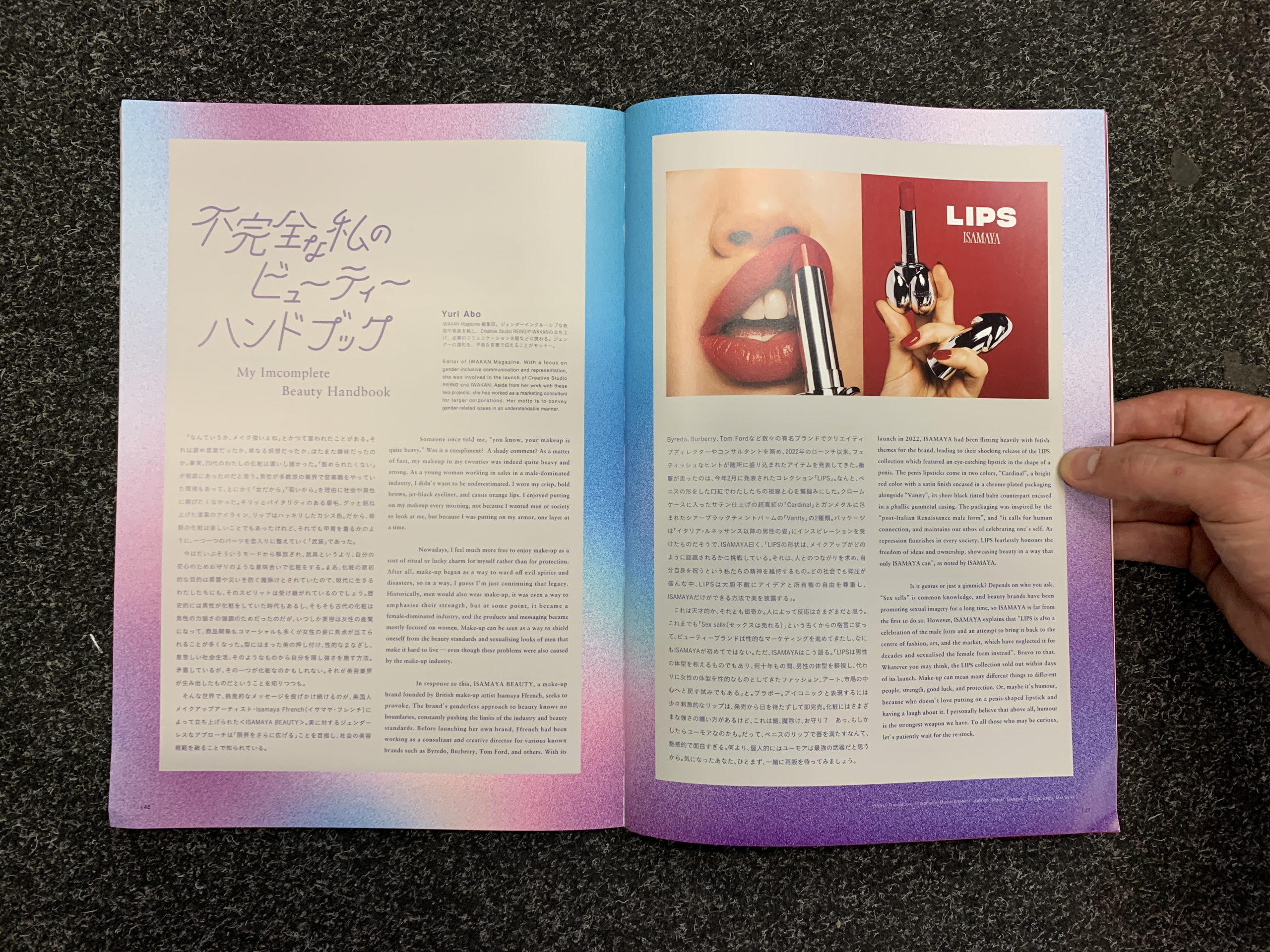
Masculinity — or perhaps our mistaken understanding of it — as an ideology has entrenched itself so deeply into every system that runs our society. These unequivocally male-dominated systems stare at us on a daily basis, represented by the patriarchy and misogyny we witness regularly in acts like men buying women drinks at the dinner table; reaffirming their unwavering presence and unforgiving rules. While some may find it easy to accept the system, others struggle to comply. We are those people who struggle. Those people who are tired of these outdated norms for masculinity, who are tired of it being understood solely through the lens of violence and dominance, and who are tired of the emptiness that comes from humans constantly being reduced to caricatures of themselves and forced to participate in this ludicrous system called patriarchy. Masculinity does not belong solely to those who have a penis, it is something that should be accessible to all. That is why, we want to find a new understanding of it, one that is fresh, revitalized, rich, inclusive, and diverse. It is time that masculinity changes, it is time that masculinity is liberated.
Features
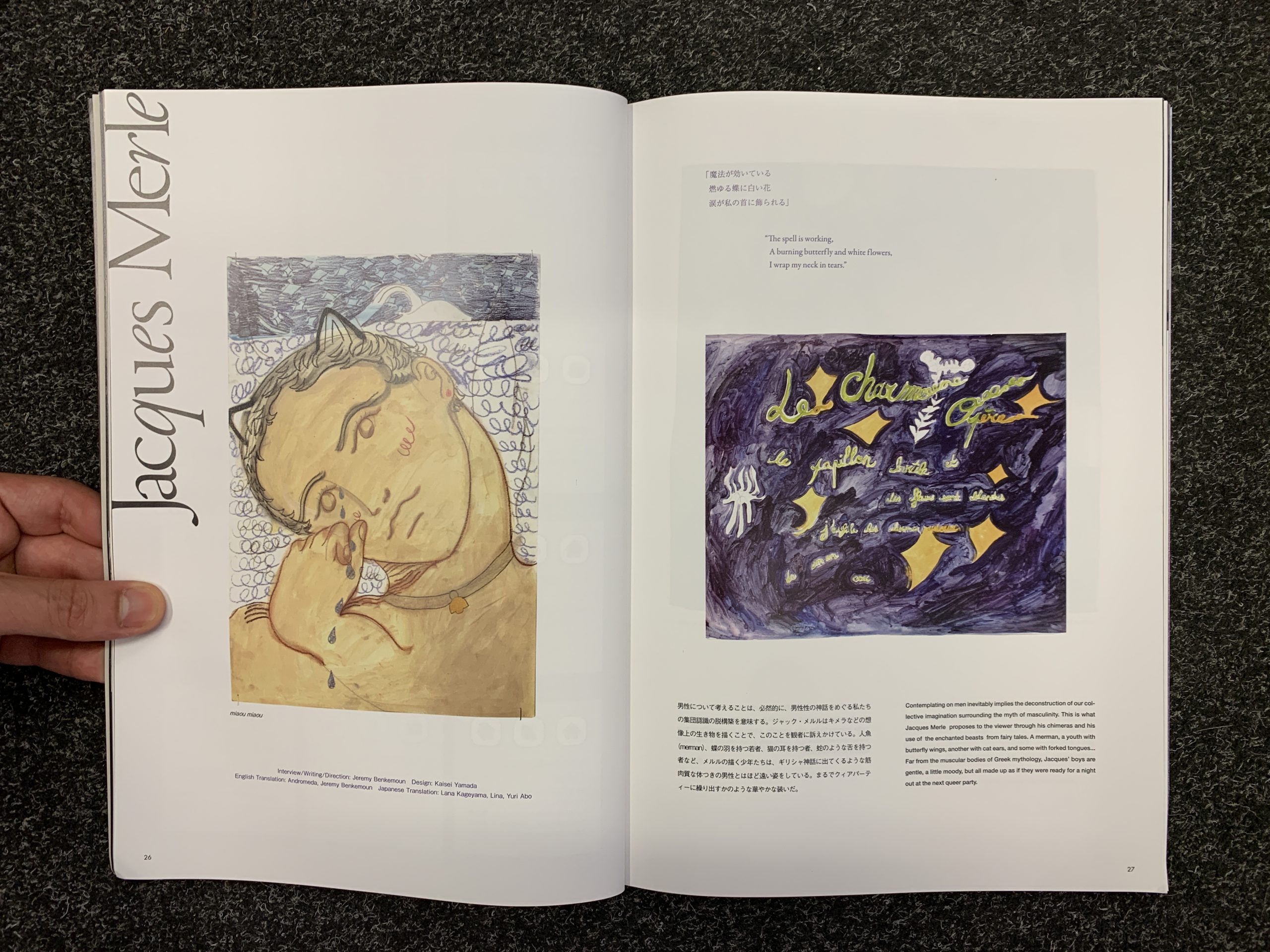
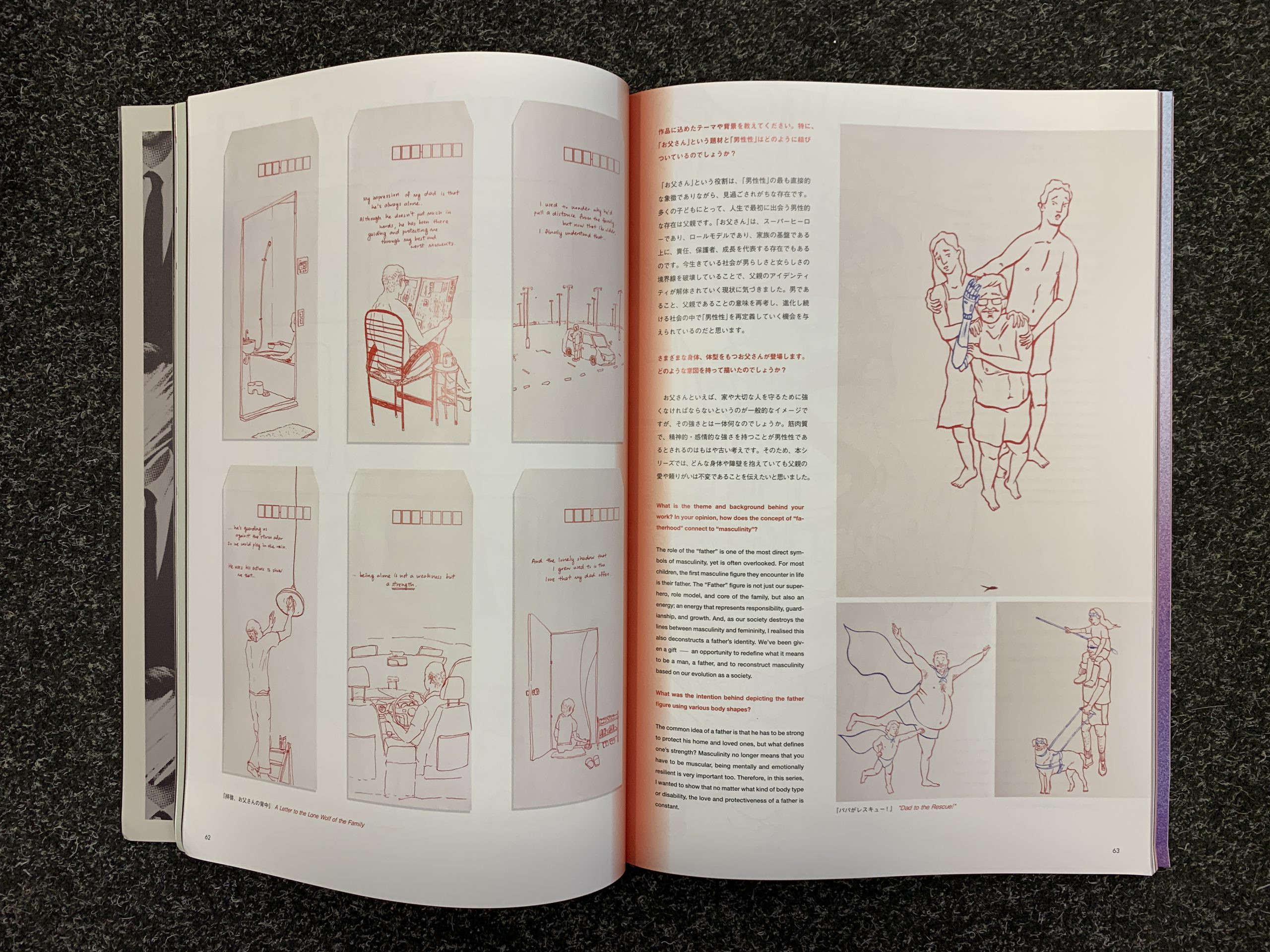
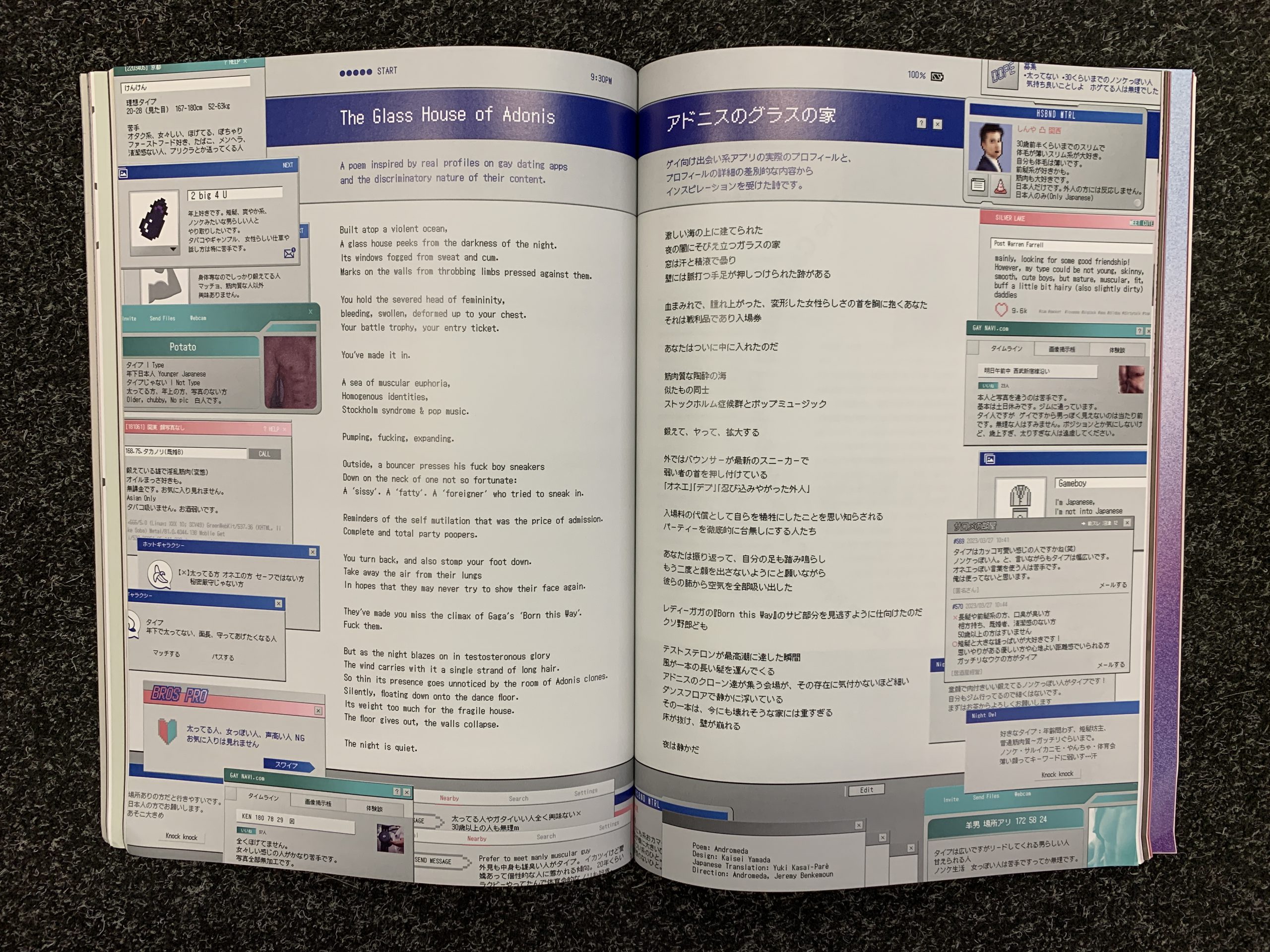
The Masculinity Issue 06 違和感瞬間 男 14 Producing Sex: Images of Masculinity in the Gay Porn Industry/François Sagat 24 A Space for Men’s Confessions 32 Exploring Gender: What Can Masculinity Contribute to Being Non-binary?/Amity Miyabi 36 An Unwavering Heart Reaching for the Light/Sennosuke Kataoka 48 Imagining New Masculinities Through Music: an Interview with NoSo, Ichi Takashi, and Aisho Nakajima 52 PEOPLE VOICE OPINION Let the people speak! 60 The Unspoken Tenderness/Nelson Hor 66 Our Career Choices: A Message For the Future From a Parenting Adviser and an Obstetrician-Gynaecologist/Keito Kawanishi, Singh Ikebukuro 74 STUDY OUR ISSUE: Is “Masculinity” a Good Enough Excuse for Violence?/Noriko Yamaguchi 78 Pity for Men: the Agonies and Contradictions of Unpopular Boys./Kai Nishii 90 The Glass House of Adonis/Andromeda 92 Exploring The House of Gay Art: The Captivating Photographs of Junichi Enya/Mika Kobayashi 96 Is Coffee Masculine? A Conversation About Coffee and Masculinity/Keita Nakamura, Yuki Shibata, Mako 108 Redefining “Realness”: Exploring the Implications and Possibilities of “Male Genital” Prosthetics/Prosthesisman.Stp.Japan 112 Disobedience, Deconstruction, and Desire: Re-Defining Bodies Through Clothing and Art/Bárbara Sánchez-Kane 122 Decoding Performance and the Body Through the Works of Kento Terada and Sota Kodera/Mika Kobayashi 128 The Exquisite Corpse of Likeness/Yuki Kasaï-Paré 137 Recognising ‘Domination’: The Beginning of Resistance/Hanae Takahashi 138 Vol.4 IWAKAN OPEN ART CONTEST 141 Radically Moderate/Nonoka Sasaki 142 A Diary of Secret Dialogues/Mitsu Tachibana 144 My Incomplete Beauty Handbook/Yuri Abo 146 Asian Gaze/Yo Katami from loneliness books 148 Let’s Talk About Politics/Ana 150 Stopped Making Sense/Noemi Minami 152 Recommendations from Contributors Cover Design: 福岡南央子
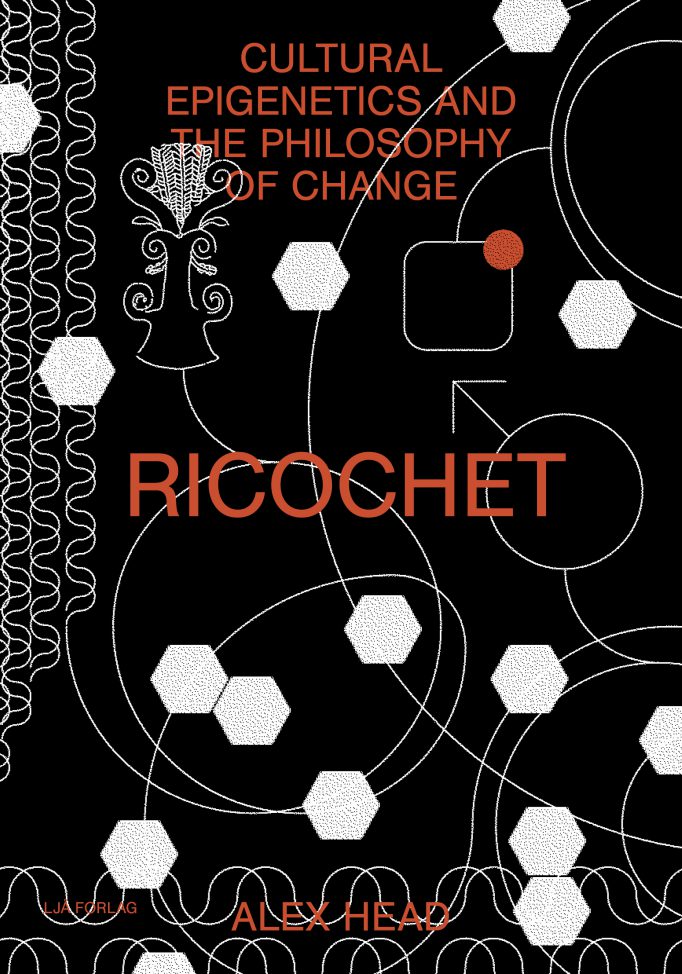
Reflecting on discoveries and debates that have occurred in the two years since its publication, artist Alex Head will read from current works in progress to highlight specific aspects within his ambitious book Ricochet to discuss the architecture of power.
It is now well documented that cults have been used to disseminate disinformation. For example the extremist cults of MAGA, The Oath Keepers and Proud Boys who’s recruitment pipeline has been funded by Big Oil and crypto libertarians in an attempt to overthrow the United States and crash their and the world’s economy.
But what about the arts more widely, is there a form of culture that is transparent about its ideology, particularly in today’s hyper-accelerate media vortex? Are all cultural institutions not also in some way cultish? The cult of patriarchy being just one obvious example that transcends both religious and cultural institutions.
Focussing on specific evidence of how cults have been used to spread disinformation and other historical data the artist will discuss the central motif to his work Ricochet, – the Sacred Date Palm Tree – as a expression of the anti-rhizome. Are we, the unwitting public being continuously gaslit by Sacred Date Palm tree’s in the form of neoclassical architecture? And if so, what can we do to review and refocus personal and political objectives as users navigate the web architecture of the app?
Join us at Motto Berlin on Thursday, 13th of July for an insightful talk where we will explore the profound themes of Ricochet and run across topics like January 6th, Classical Architecture, White Supremacy, BND Building Berlin, Mental Health, Libertarianism, Bitcoin, Gold Standard, Going Offline, Art, Publishing, Design, Cultural Epigenetics, Memory, Witnessing and Social Media.
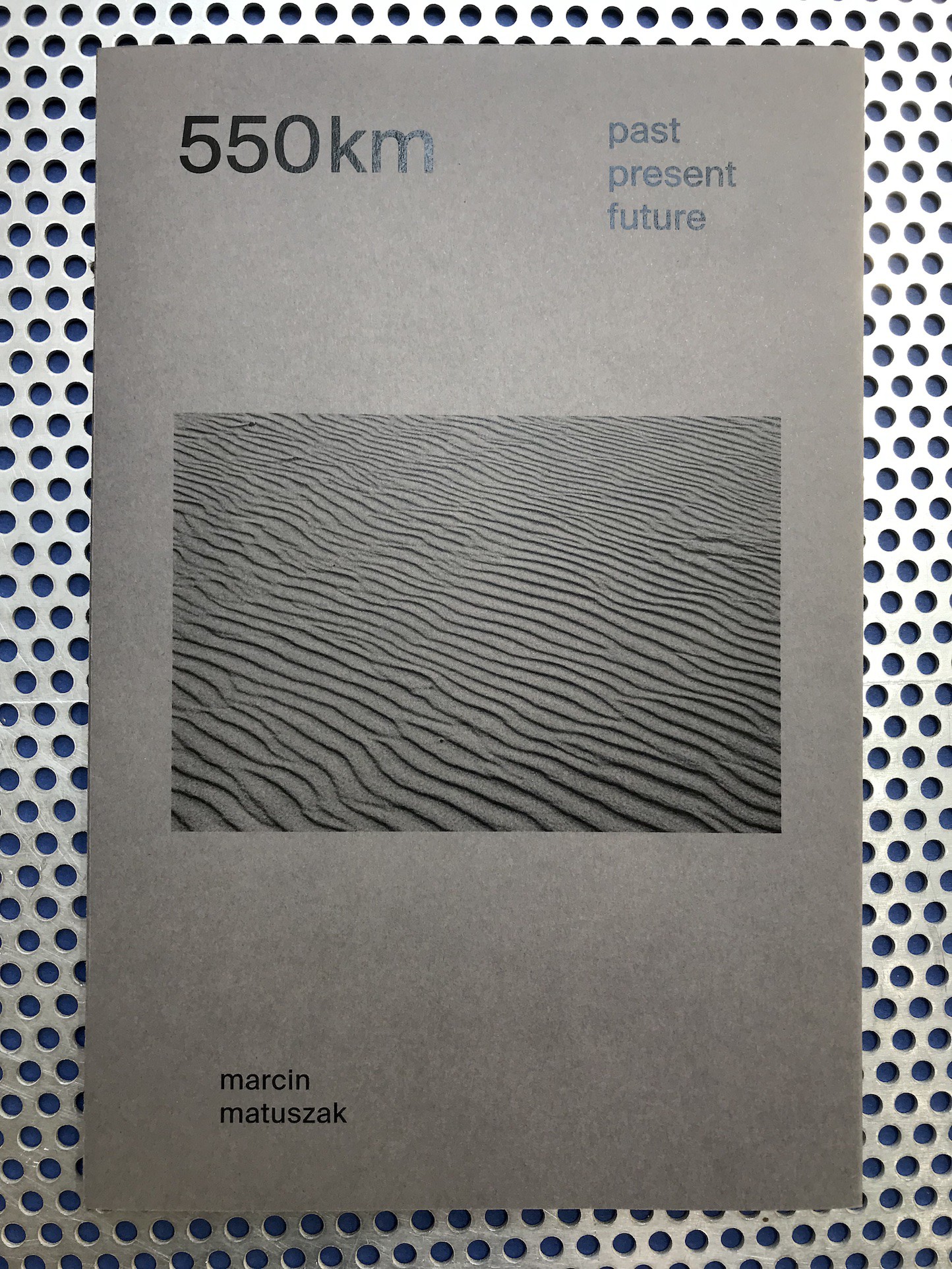
In mere 100 years from now, the Baltic coastline as we know it will be nothing more than a beautiful memory lost somewhere in history – according to the leading experts studying climate change. The melting glaciers will swallow up Swinoujscie, whilst turning Gdańsk into the modern day Atlantis and Poznan (the author’s hometown in the Western Poland) into a slowly submerging seaside resort town.
In view of these predictions and out of sheer curiosity, Marcin Matuszak, Poznan-based designer and artist (accompanied by his friend, Tomasz Peukert – music producer who was collecting the field recordings), decided to walk along the entire current Polish seaside, to document the current state of it and to prepare a photo album from the material collected during the journey: “500km”.
The project of the year-long walk, divided into 12 stages of several days was called “550 km” – as the estimated coastline of the Polish Baltic Sea. After walking the entire length, it turned out to be nearly 607 km from the German to the Russian border.
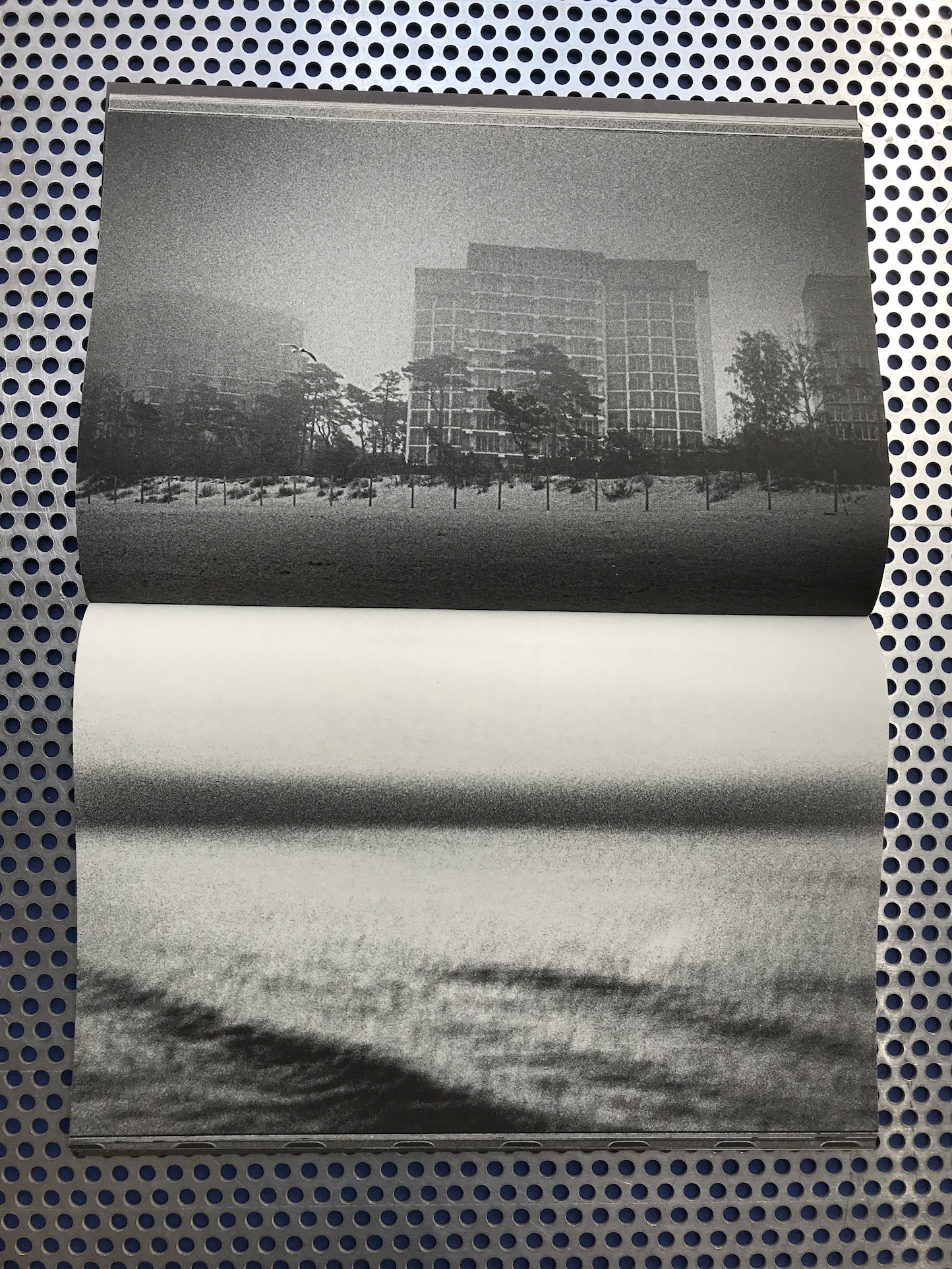
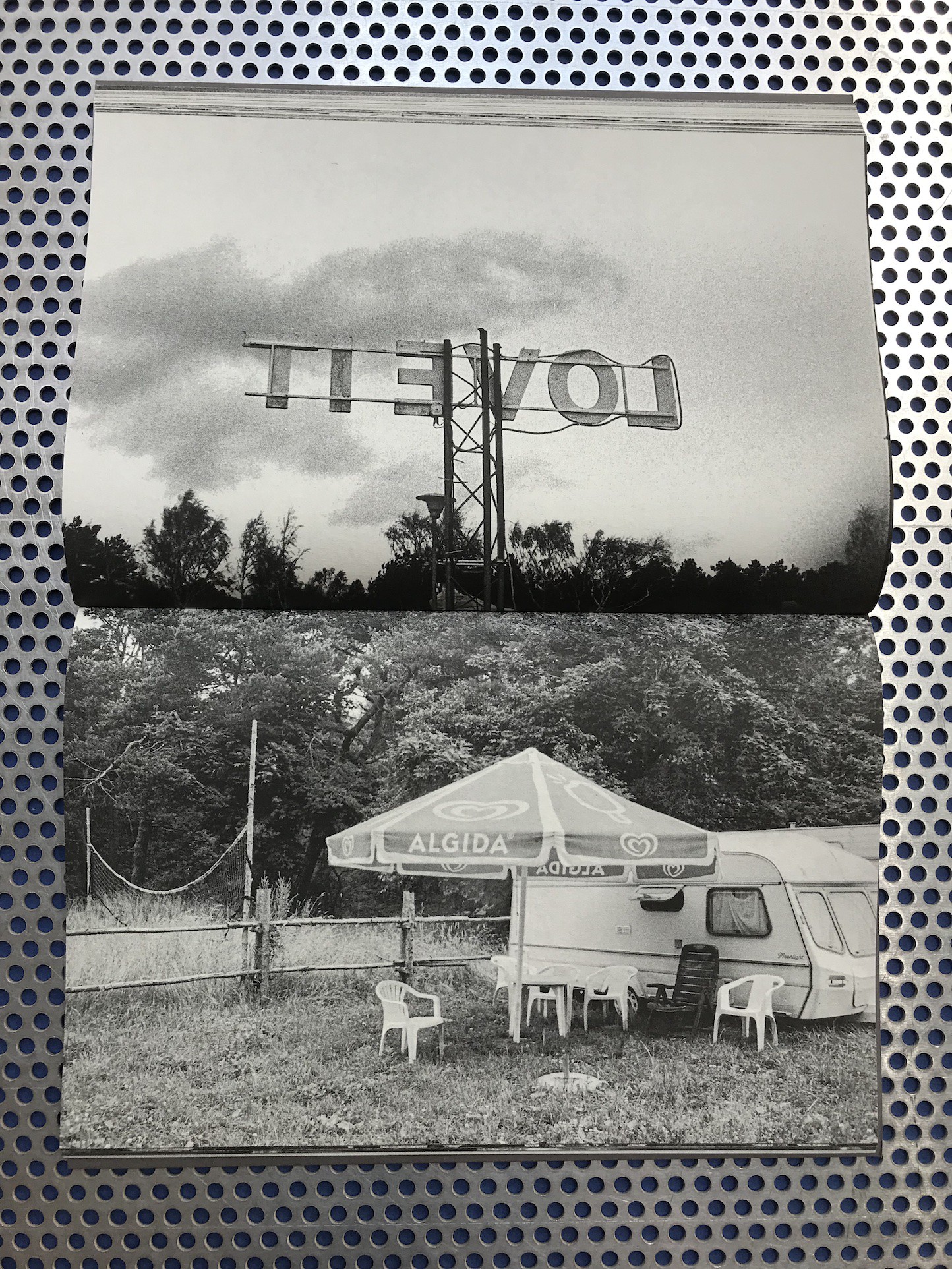
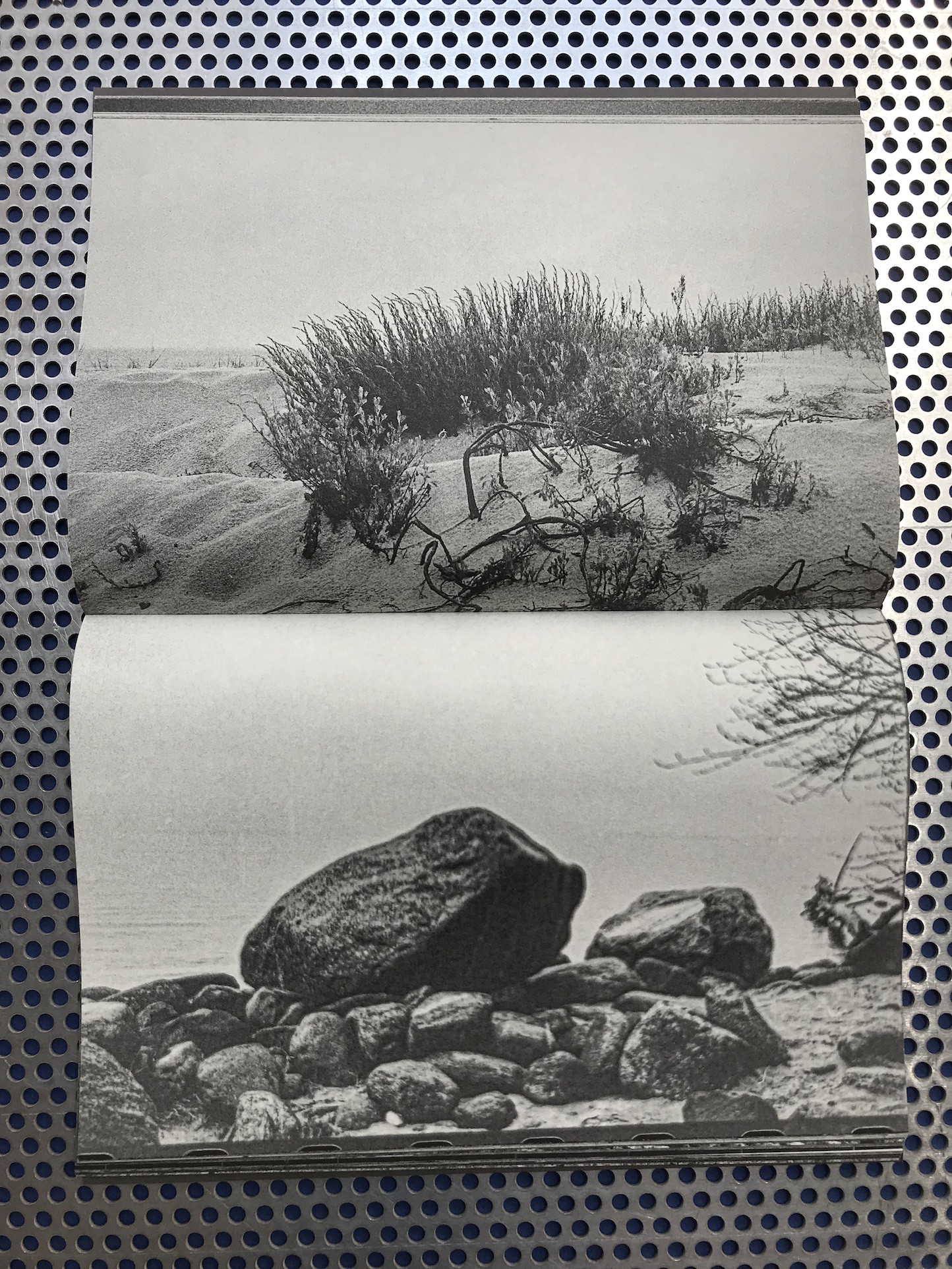
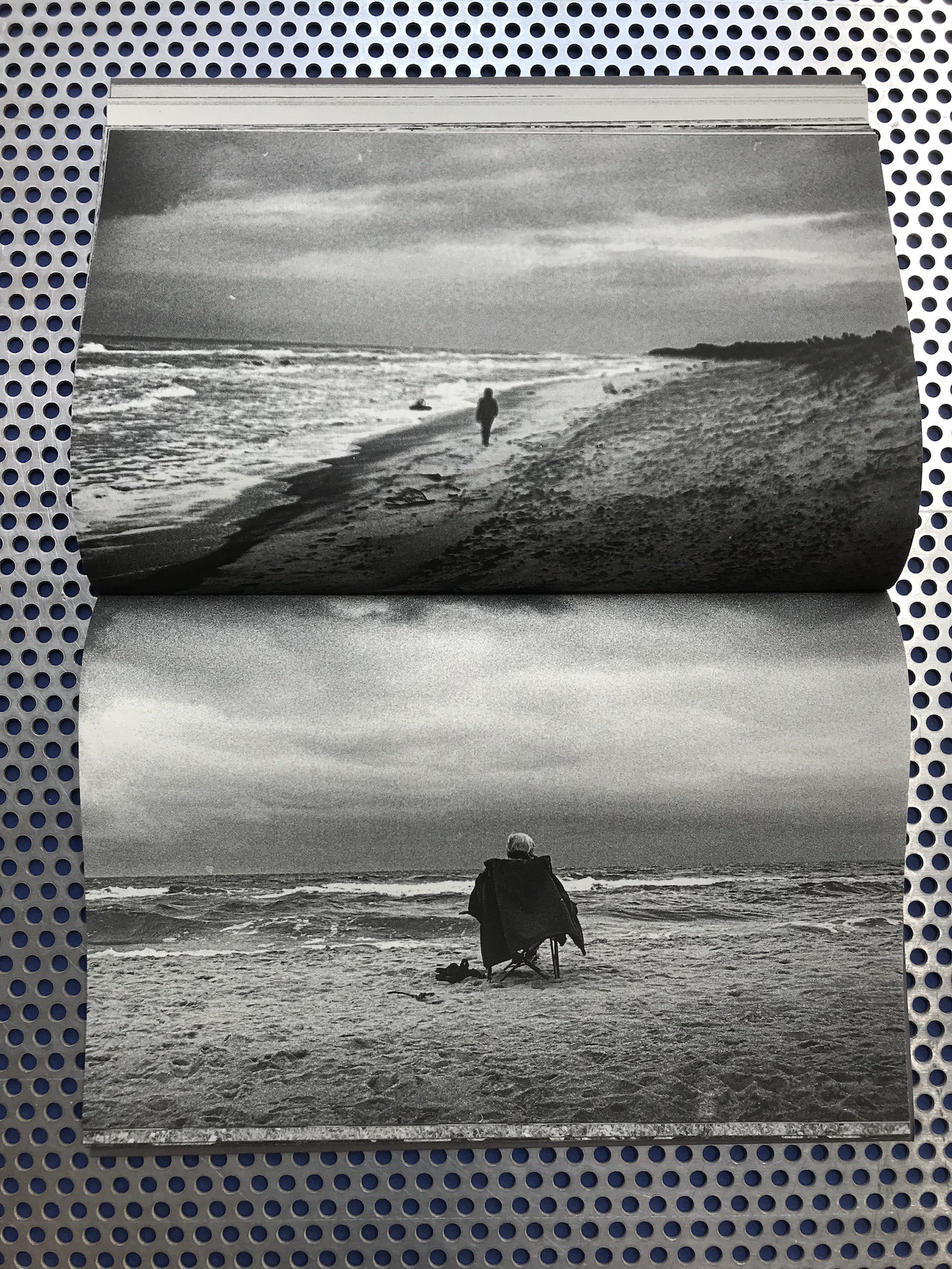
The project documents the Baltic Sea through four seasons, in the full sun and when it rains, with the wind and against the wind, with stormy horizons and calming sunsets. Against this backdrop, the sand, the shells, the seals, and also the cliffs breaking off with tree roots tell the story of the shifting coastline.
The material presented, however, is not purely documentary. It is a photo record of a moment. A maximum of a three-second pause. A snapshot that cuts the future from the past.