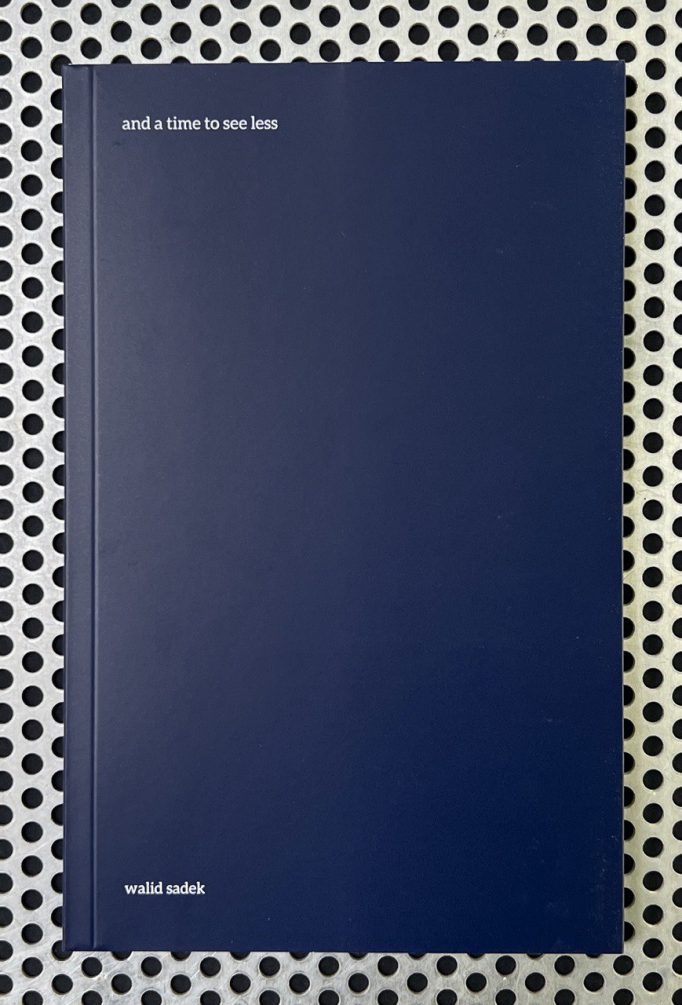
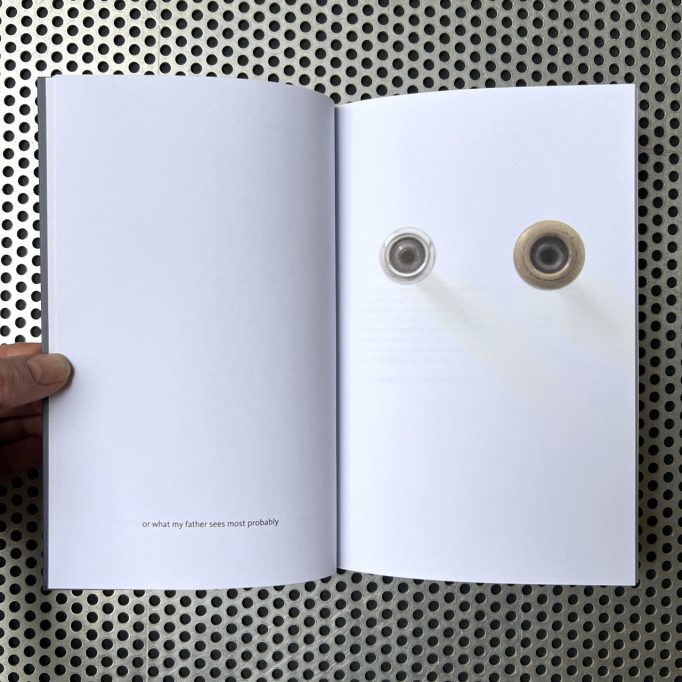
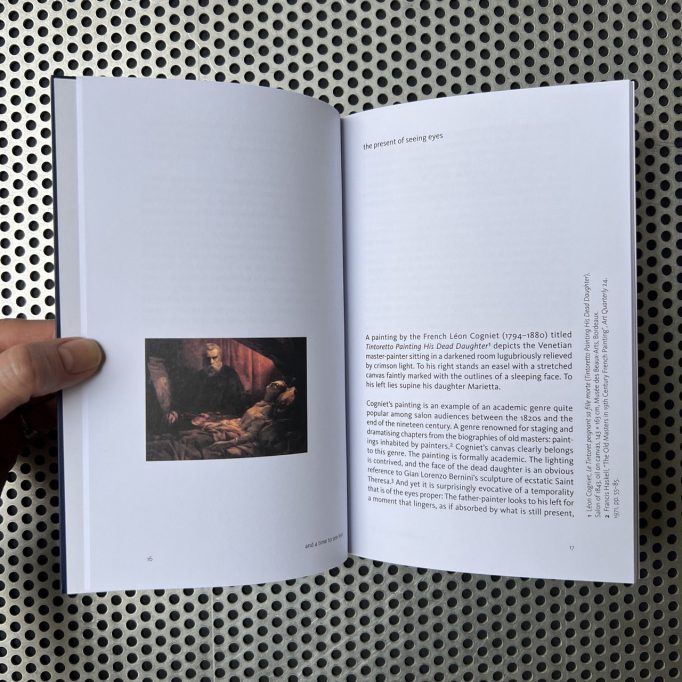
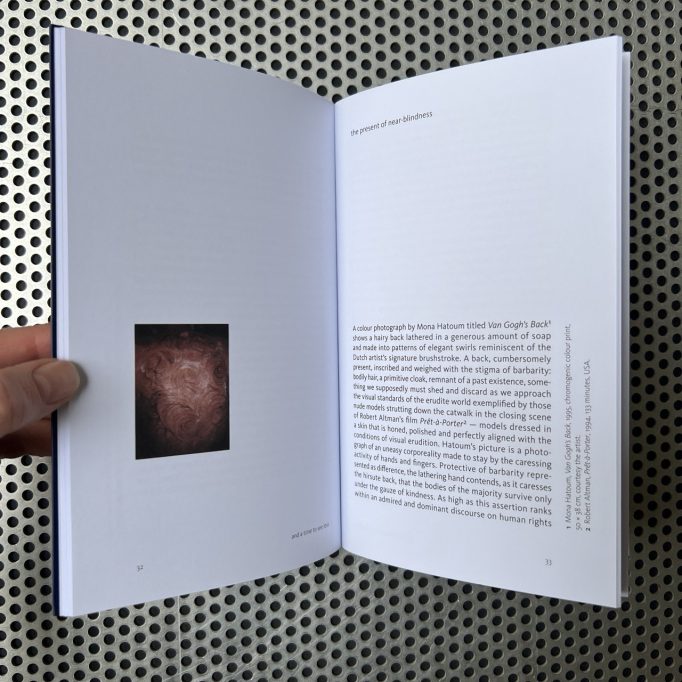
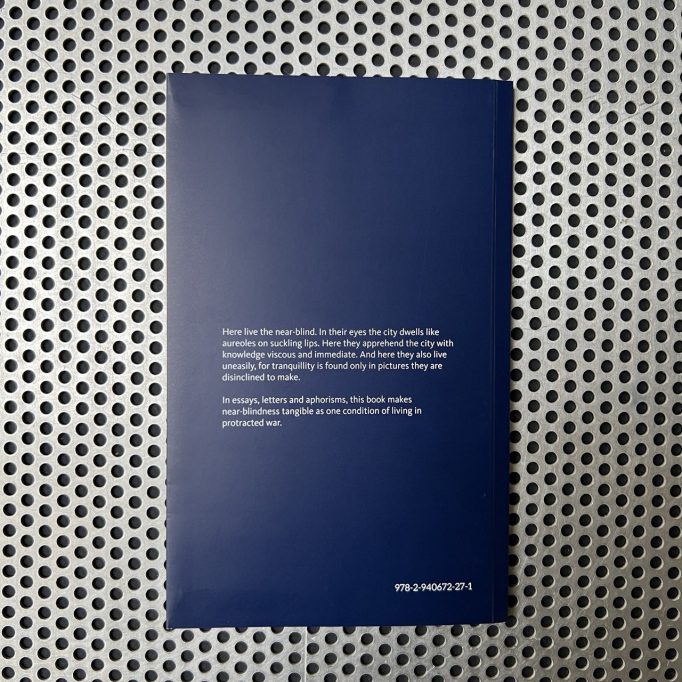
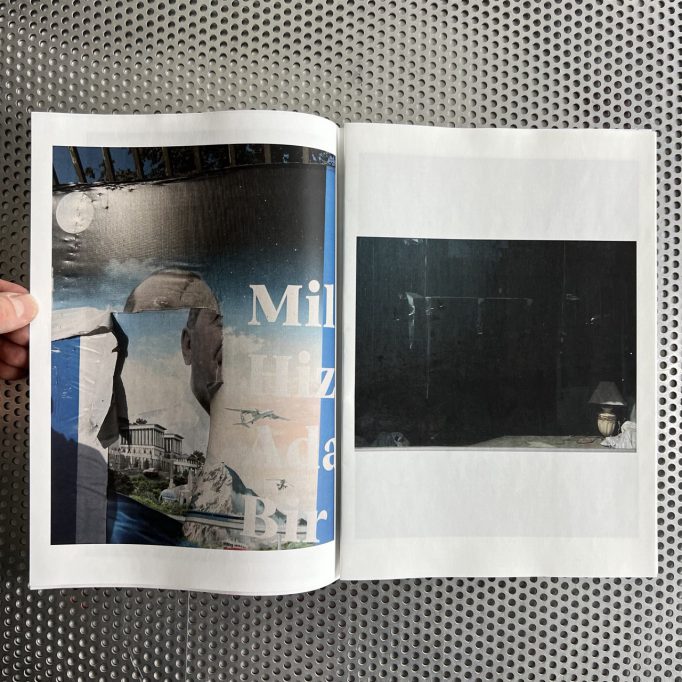
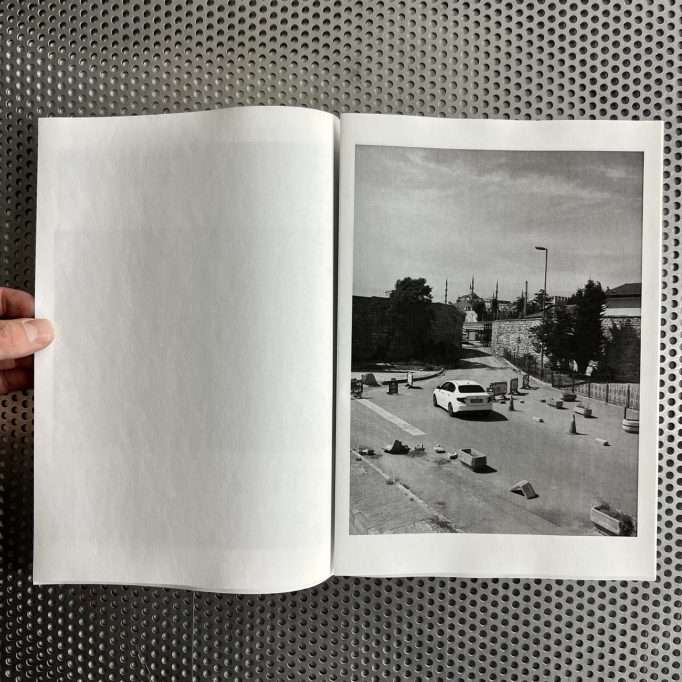
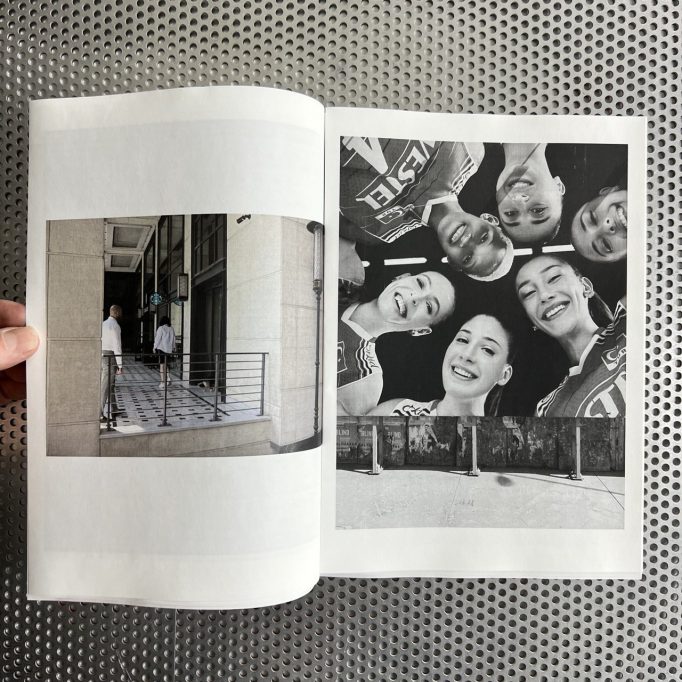
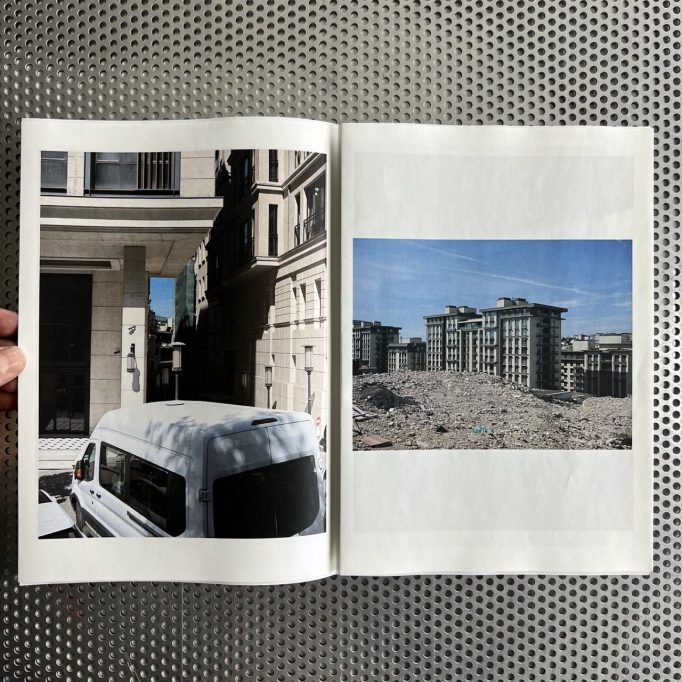
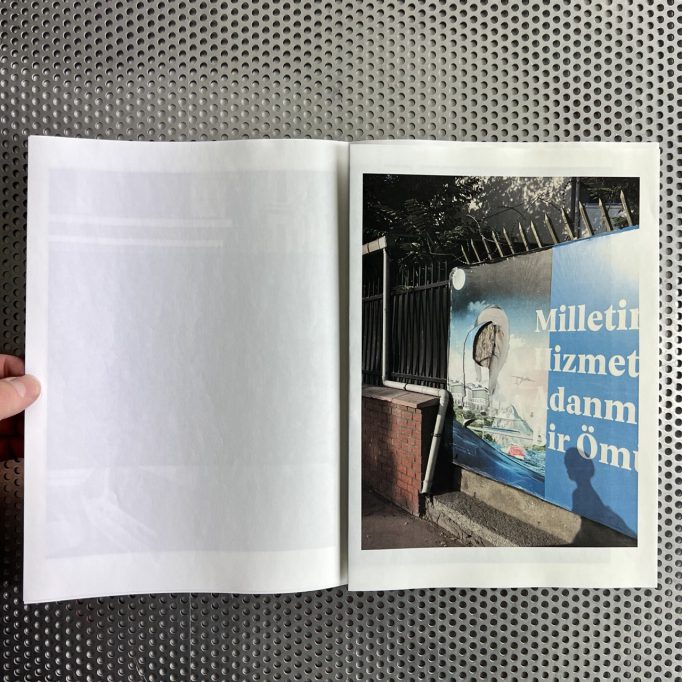
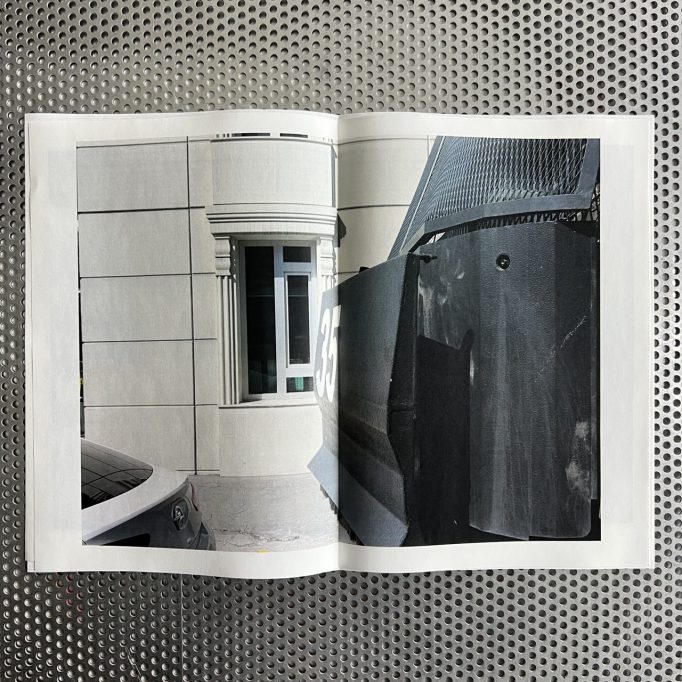
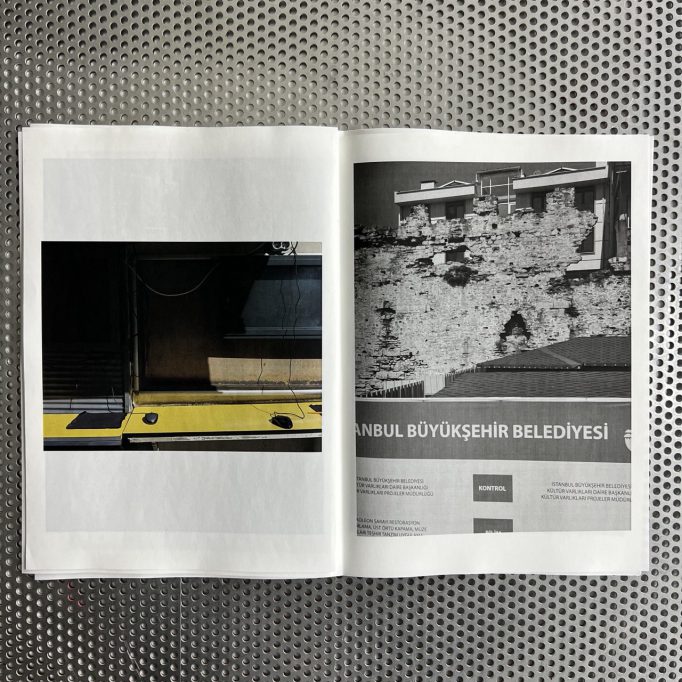
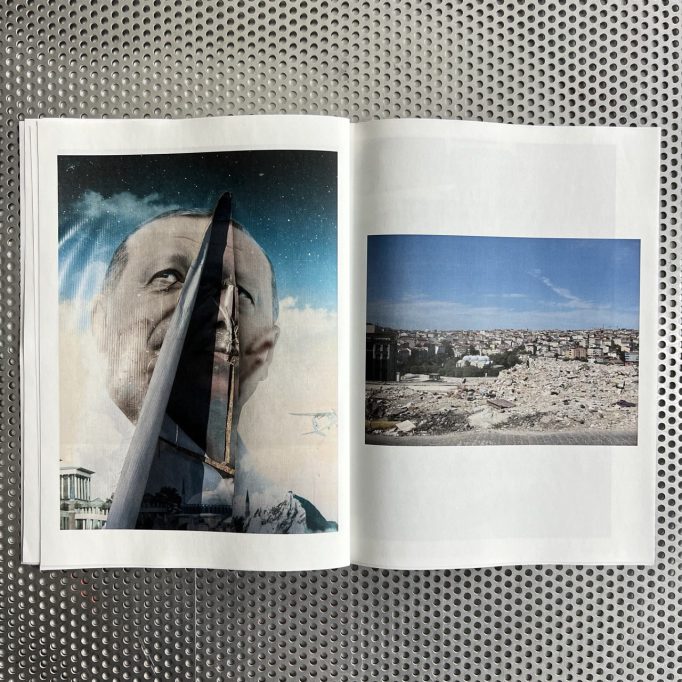
Here live the near-blind. In their eyes the city dwells like aureoles on suckling lips. Here they apprehend the city with knowledge viscous and immediate. And here they also live uneasily, for tranquillity is found only in pictures they are disinclined to make.
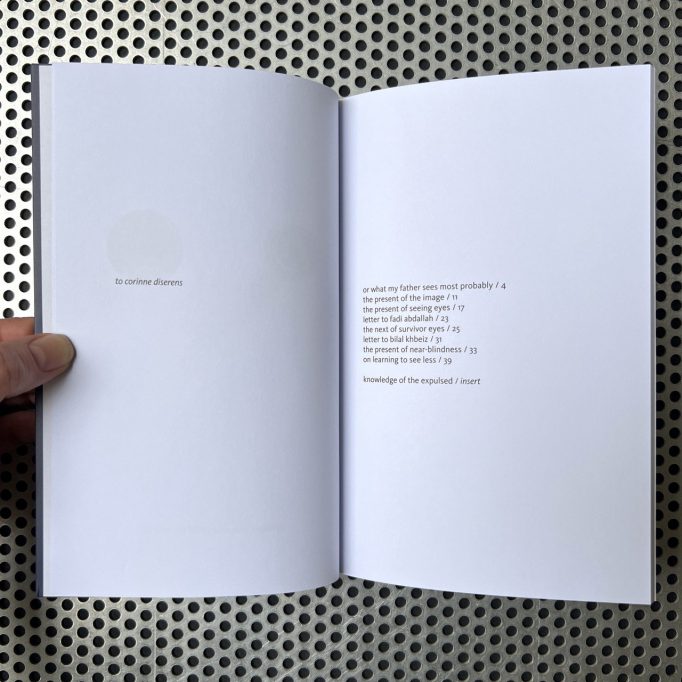
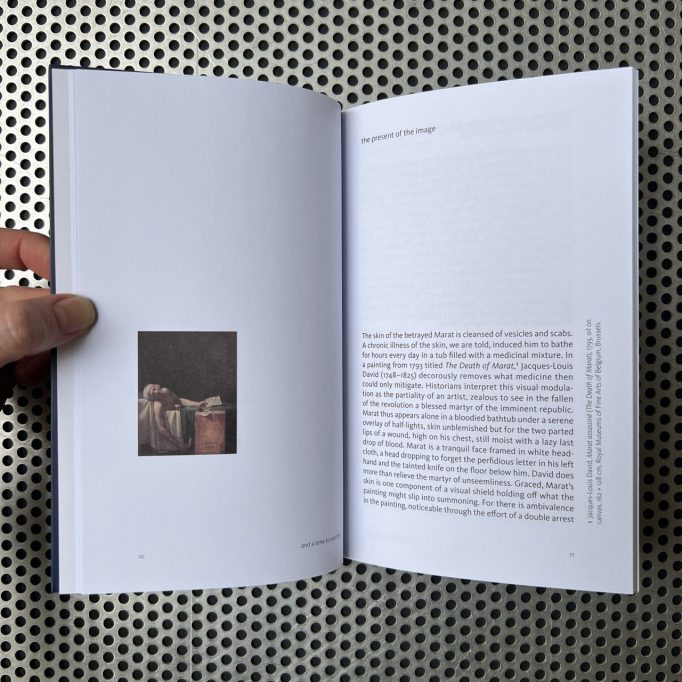
In essays, letters and aphorisms, this book makes near-blindness tangible as one condition of living in. protracted war.
Author: Walid Sadek
Published and distributed by Motto Books Co-published by Agial Art Gallery Text editing: Mika Hayashi Ebbese
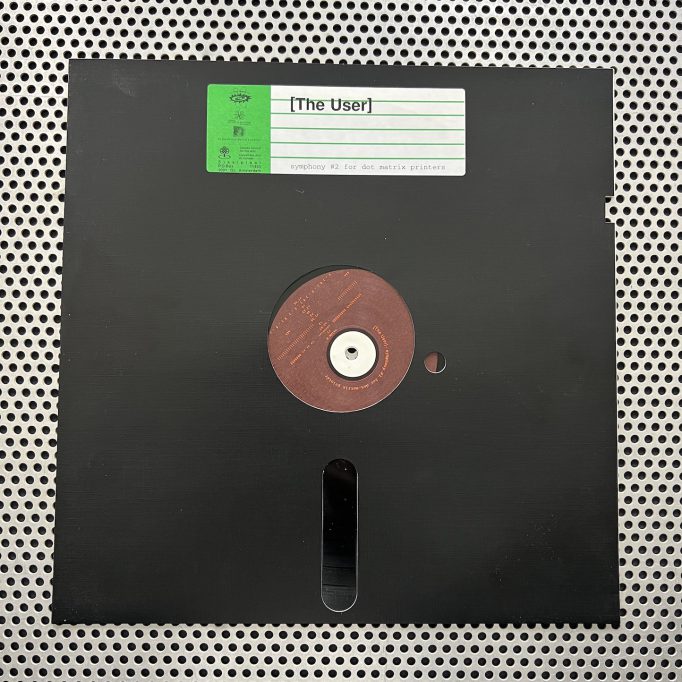
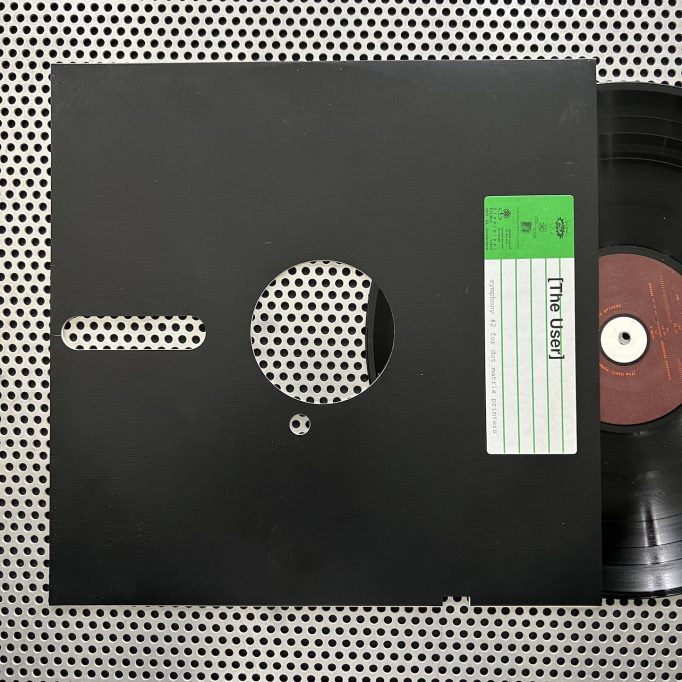
Symphony #2 includes reworkings and remixes from Symphony #1 and new material composed while in residency at Hull Time Based Arts, UK 1999 and on tour 1999-2001.
Performance for fourteen dot matrix printers played by an orchestra of personal computers from the early nineties and conducted by a similarly obsolete file server, based on text files composed and orchestrated beforehand.
Track 12 (in keeping with the concept of the cd) is not simply an untitled track. The printers are not printing anything – the track simply consists of the amplified hum of all 14 printers, and then they are all manually switched off, one by one. credits released June 1, 2020
“After two organ albums dedicated to combinations of sound, rhythms and auditory illusions, here is a very different object. These 4 pieces are basically improvisations based on skeletal micro-compositions, generally less than a dozen chords. Played on the same organ as my previous recordings, I tried this time to emphasize the harmonic colours, the choice of registers and inversions, the intonation, the textures and modulations. Composed in the morning and recorded in the evening the same day, I let myself go as the takes went by towards a more and more vaporous and melancholic universe. The album is played entirely on the Italian style organ built by Jean Daldosso. It was harmonized in the church, which allowed the organ builder to optimize the power and the sound balance of the organ in relation to the building. A simple microphone in the middle of the church.”
Part of me is this poor architect dealing with the prob lem of existing structures in the city, part of me is this amateur dancer or performer who wants to return ideas of rhythm to the activity of building, or of re-appropriating the built environment. Building is also un-building, re cycling or improvising new uses for what’s already been set up in places like New York, Berlin or Stockholm, whether in a museum or in my own apartment, and th ques tion of re-appropriating privatized, urban space always somehow begins with the body, its ways of moving and the temporalities it engages when it goes to work or opens up spaces of non-work in work. There is an idea of play that prefers not to decide what is and what isn’t work, what is and what isn’t useful in the activity of building. Use, most of the time, means diverting materials or spaces from their prescribed functions, inventing ways of making these things improper again. Aside from my interventions in galleries and museums, I have done things like set up a year-long, free postal service in Stockholm, built an underground house on city property in Berlin, removed ad Vertisements from downtown areas, made music with my house keys and moonwalked around Lower Manhattan.
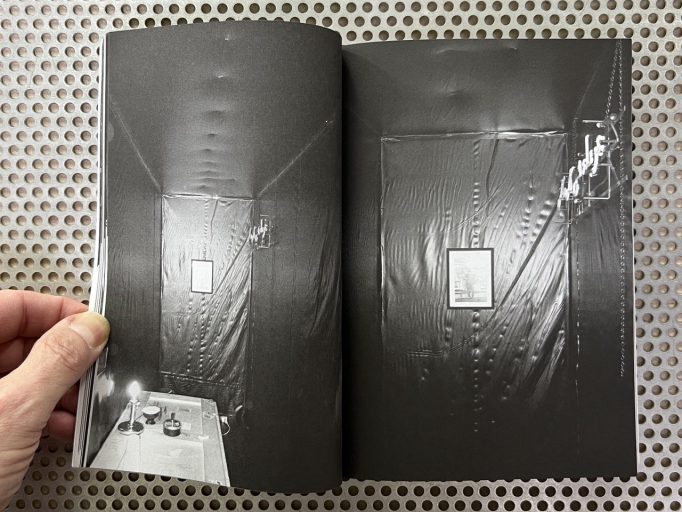
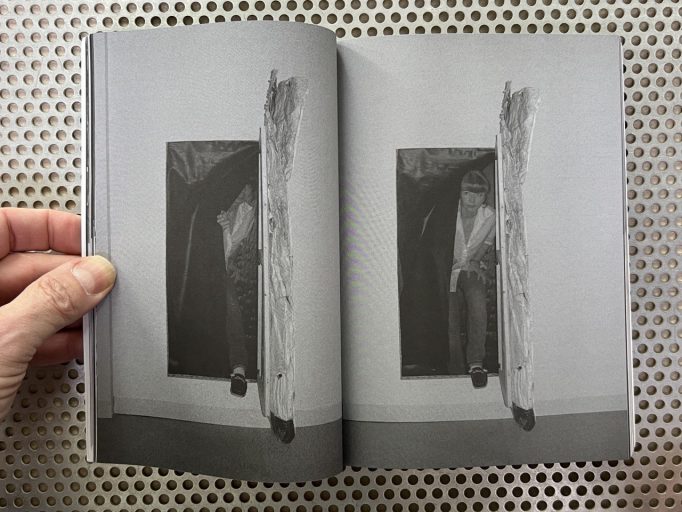
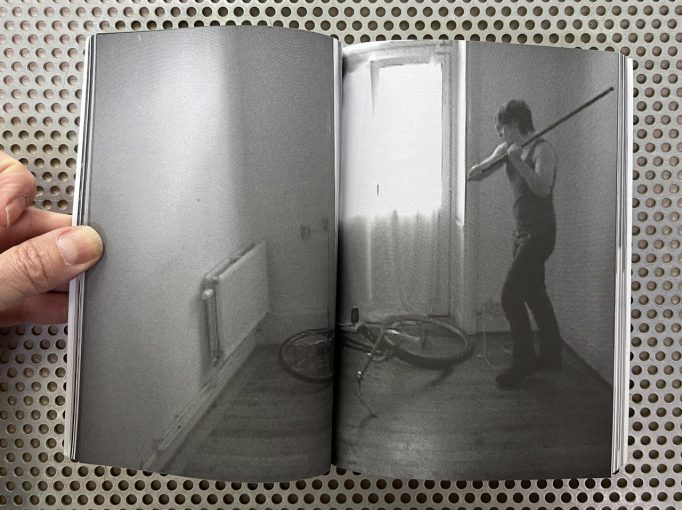
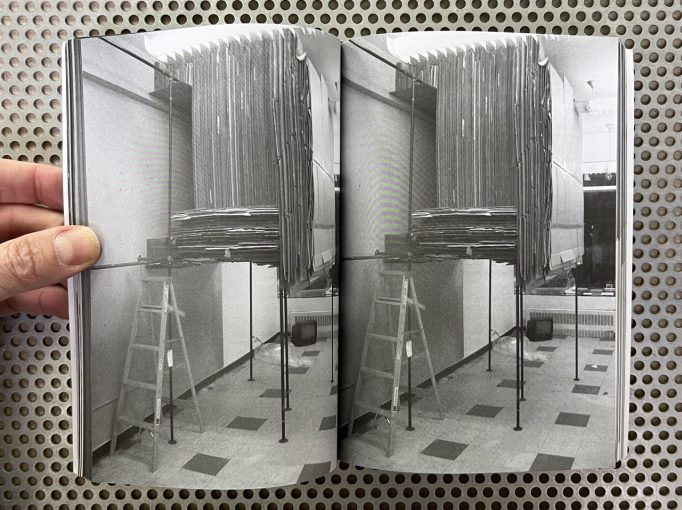
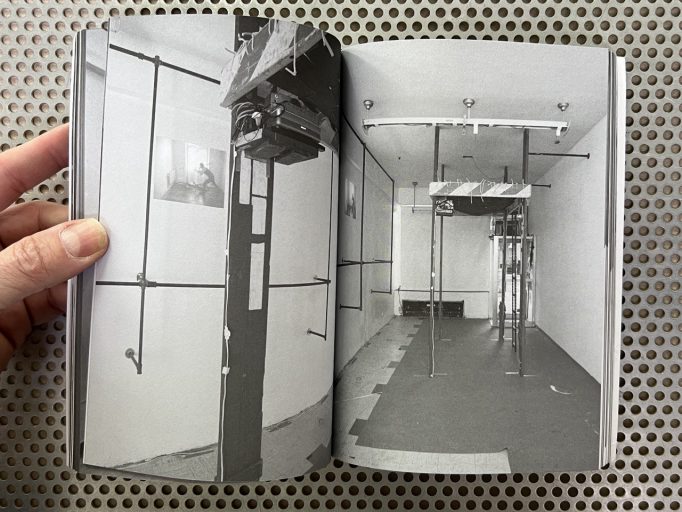
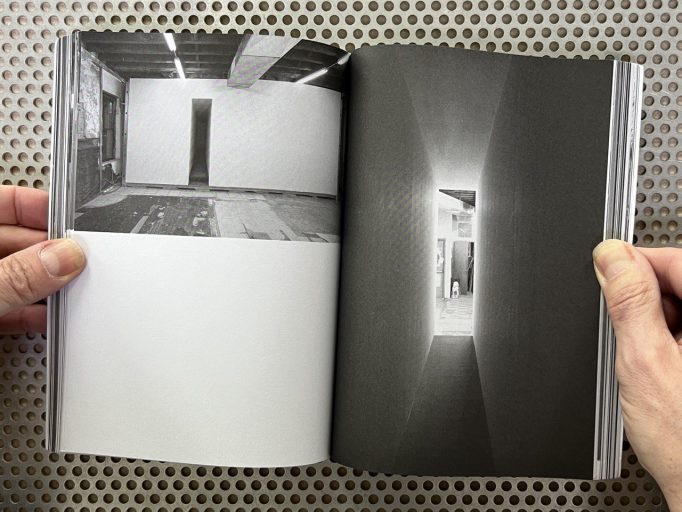
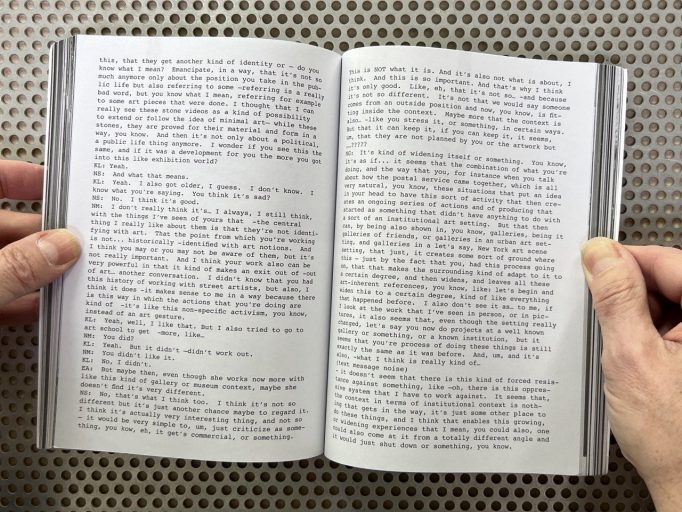
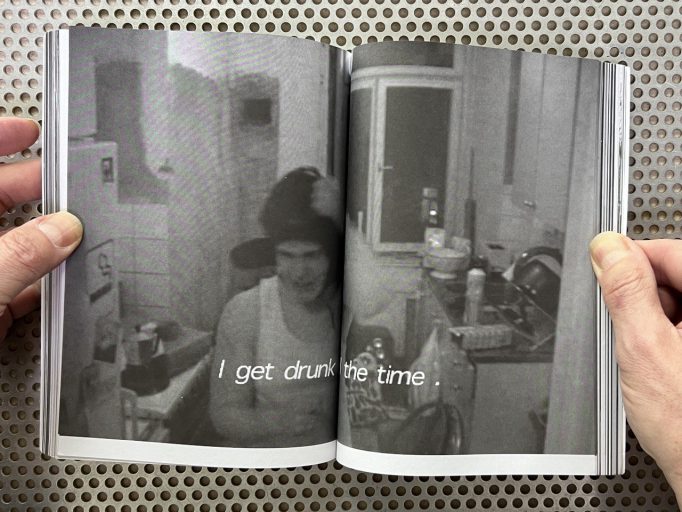
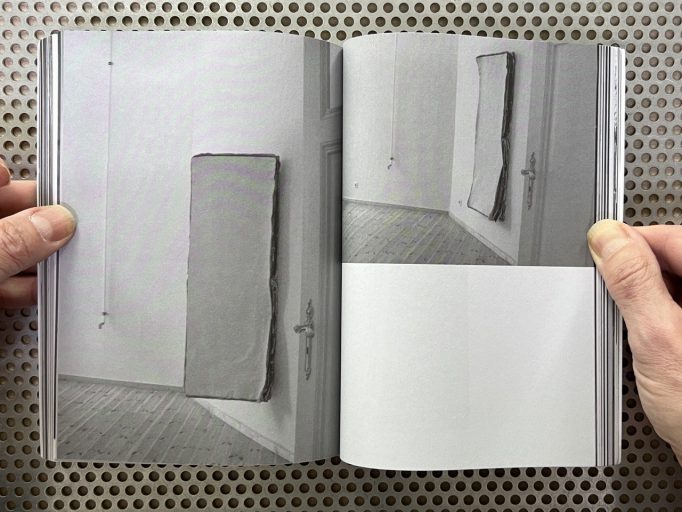
Artist book on the occasion of the exhibition Non-solo show, Non-group show, interview with Ei Arakawa, Nikolas Gambaroff, Nick Mauss, Nora Schultz and Klara Liden (Engl.), 236 pp. with 200 b/w images, Verlag der Buchhandlung Walther König, Cologne, 2010. The book is a joint project by the artists Ei Arakawa, Nikolas Gambaroff, Nick Mauss and Nora Schultz, realized on the occasion of their exhibition Non-solo, Non-group show in Zurich in 2009. It s the first monograph on Klara Liden and documents her works from the recent years – performances, videos and installations, that often incorporate found materials to explore the conditions of physical as well as of psychic spaces. It choses a form between artist book and catalogue, that draws on the DIY-aesthetic of Liden’s works and gives an overview of her artistic practice.
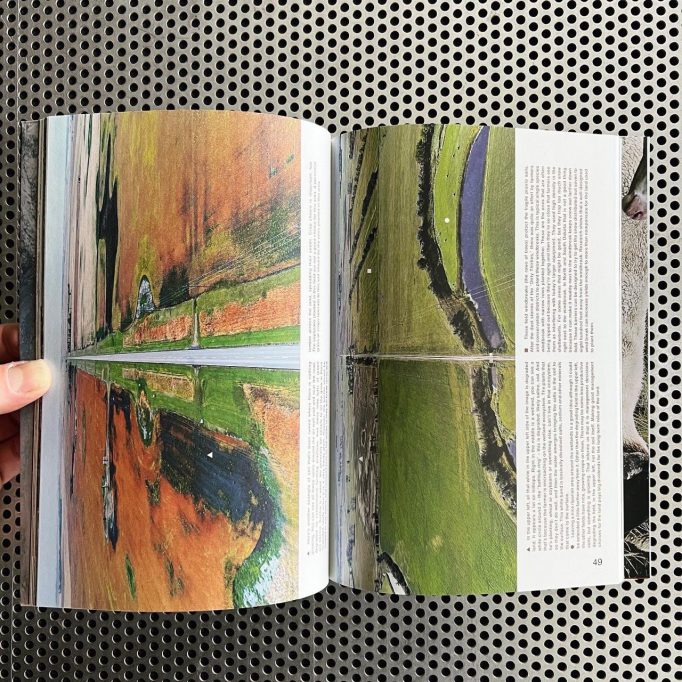
Seeing the Landscape Janna Bystrykh and Paul Overby
Watery Constellations Sara Frikech
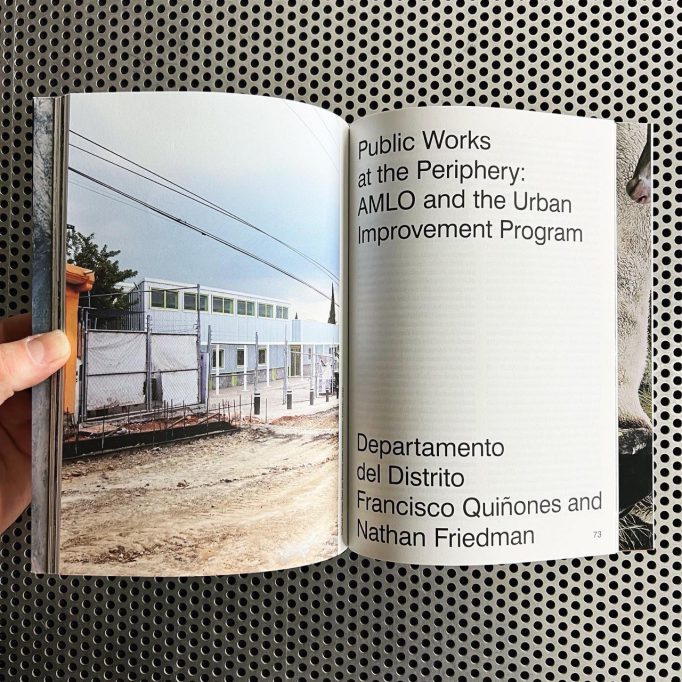
Public Works at the Periphery: AMLO and the Urban Improvement Program
Departmento del Distrito Francisco Quiñones and Nathan Friedman
Reviews: David Gissen, “The Archies tres ¡Disabilitv: Buildings, Cities, and Landscapes beyond Access. by Jos Boys.
Anna Bokov and Steven Hillyer Curators, “Vkbylemas: Laboratgry of Modernism, 1920-1930. Expibition’at the Arthur A, Houghton J, Gallery, The’Cooper Union, by Dan Jonas-Roche
Patricio del Real, “Constructing Latin America: Architecture, Politics, and Rad at the Museum of Modem Art,” by Luis E. Carranza
Adam Nathaniel Furmandigshua Mardell, eds., *Queef Spaces: An Atlas of LGBTQ+ Places and Stories, by Jätter Kolb
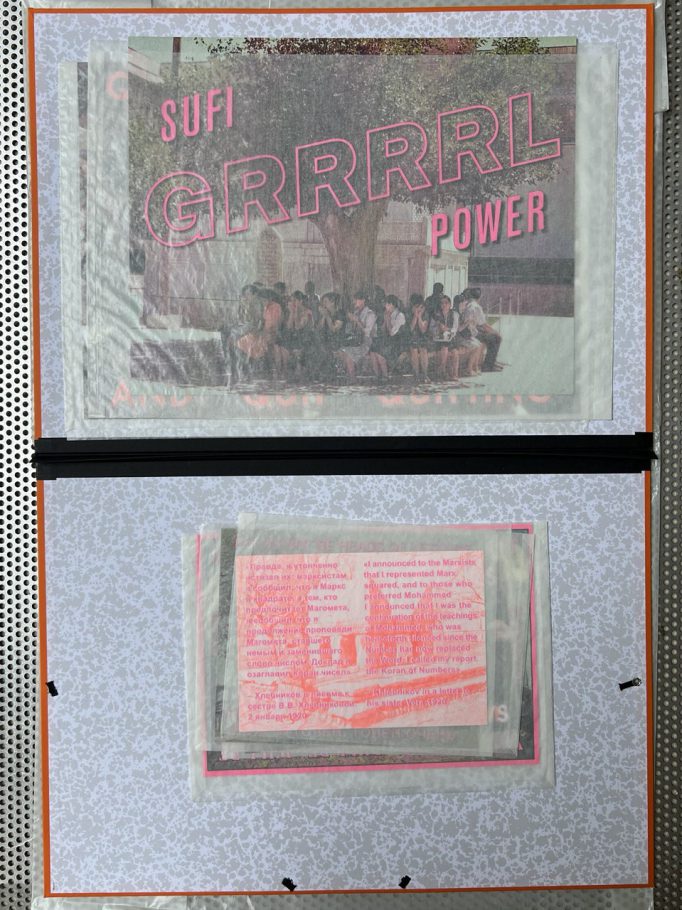
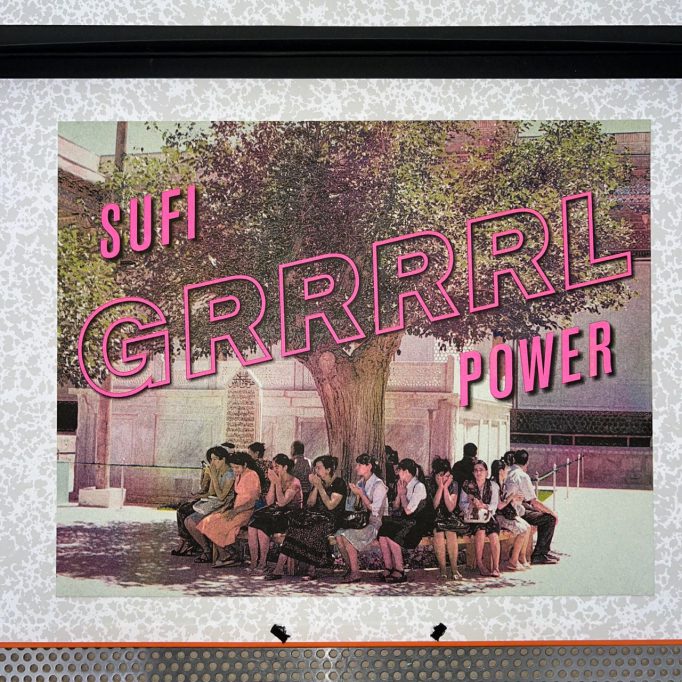
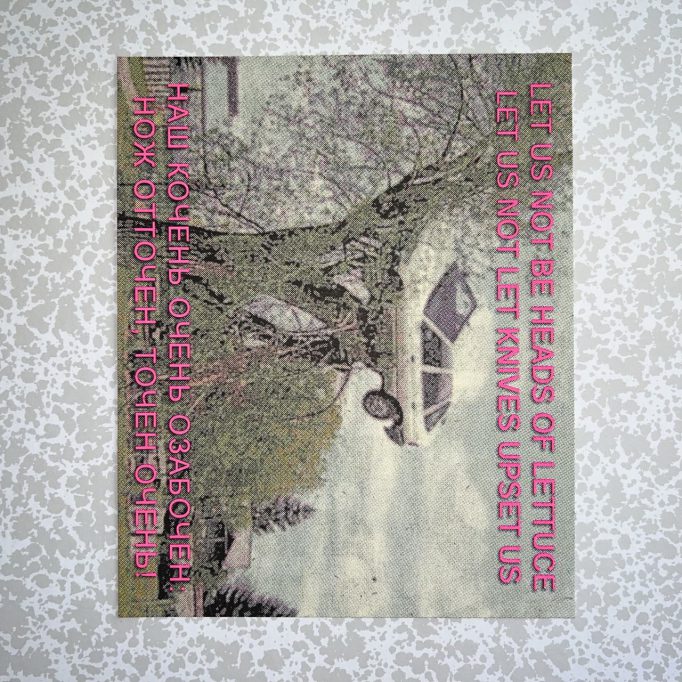
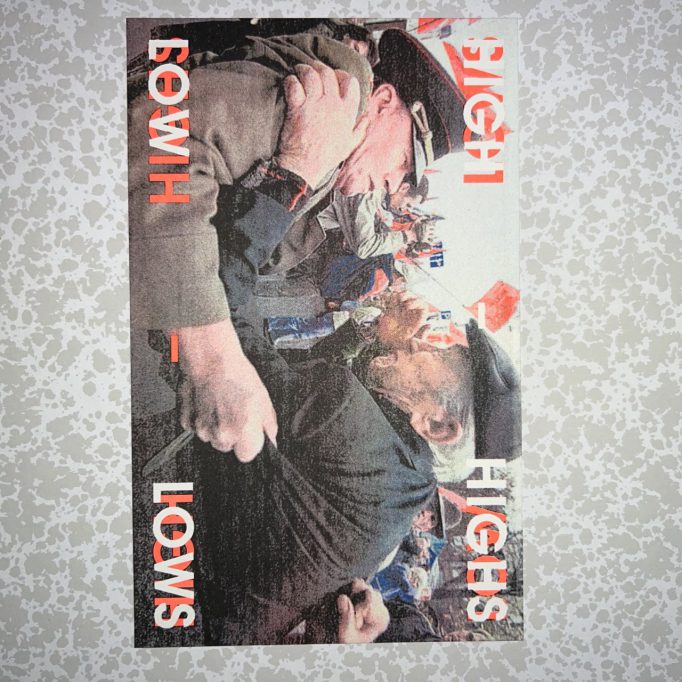
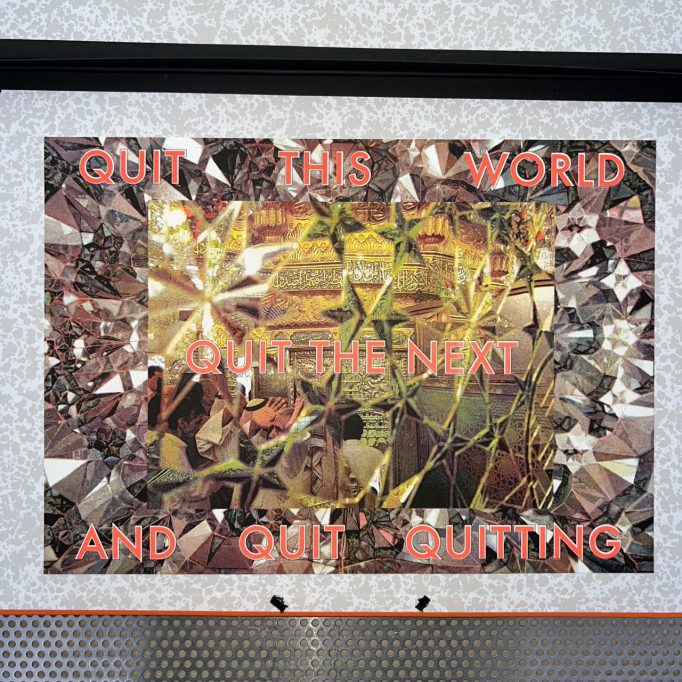
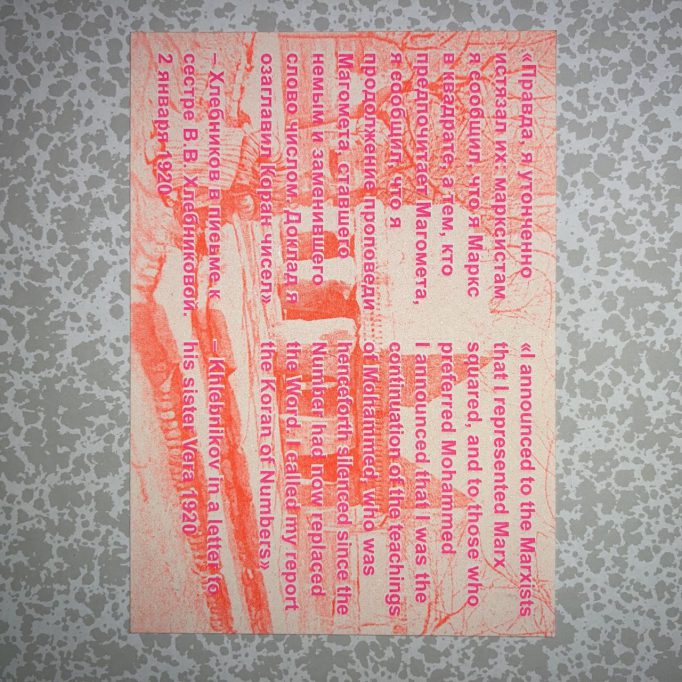
A series of prints on the overlooked story of mysticism within modernity, made to accompany Beyonsense, Slavs and Tatars’ Projects 98 exhibition at the Museum of Modern Art in New York.
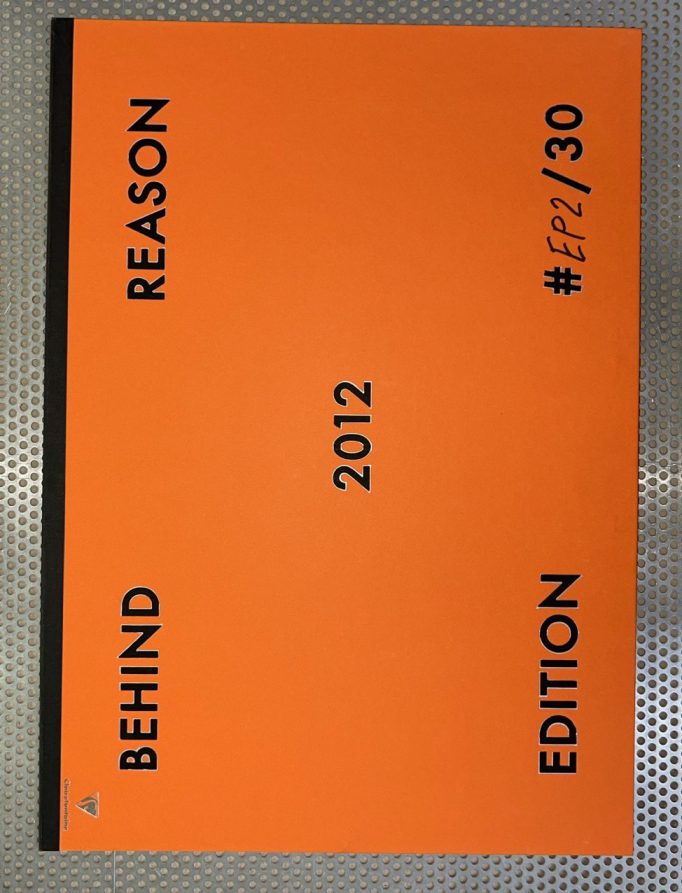
2012 mimeograph print, dimensions variable (if framed 70 x 100 cm) edition of 30 (+1 AP), numbered
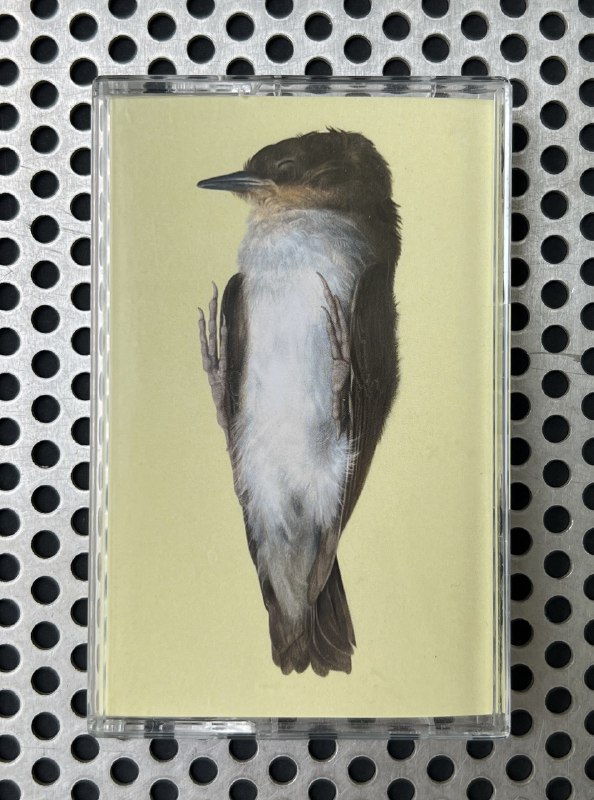
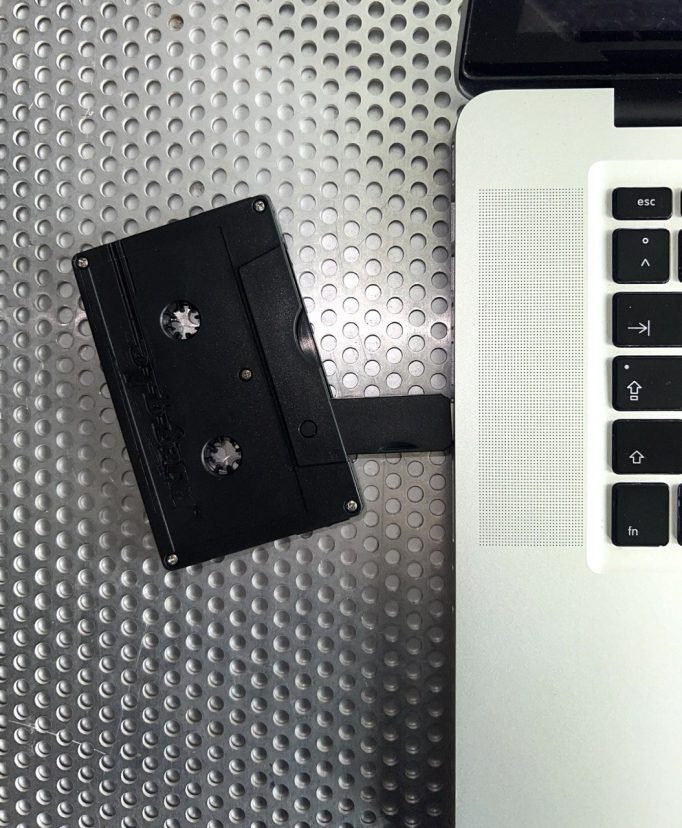
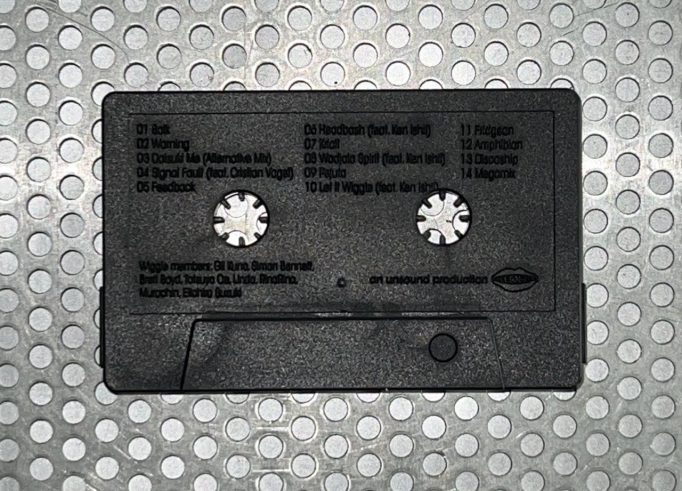
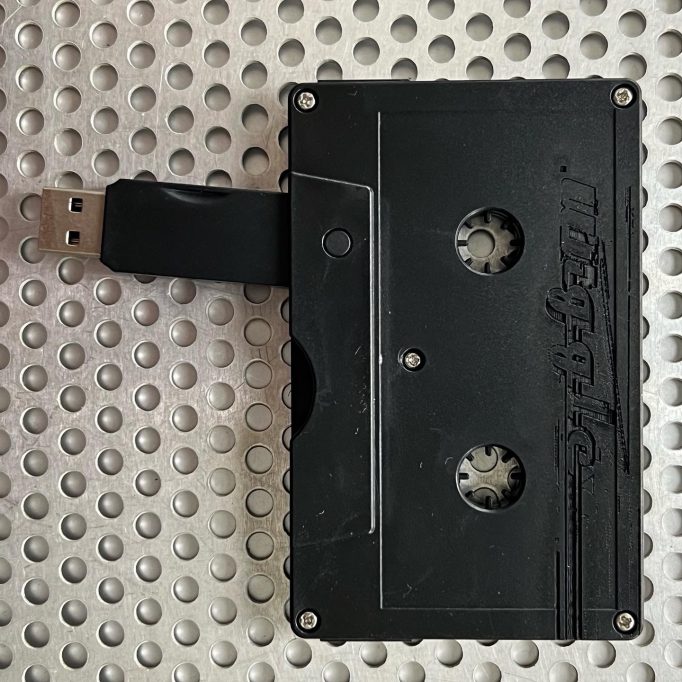
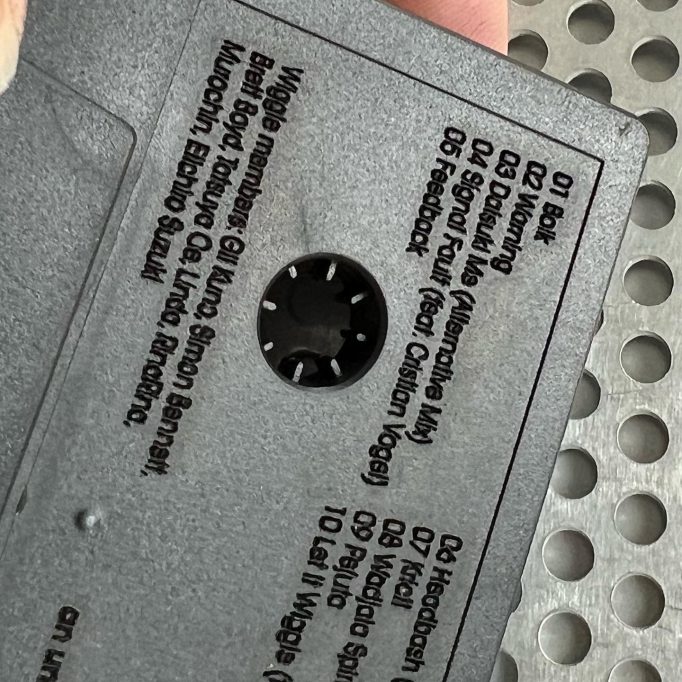
Wiggle “Best of” USB Drive A USB drive disguised as a cassette tape created for the Berlin concert at Panke Gallery in 2023. Contains tracks selected from all of their releases to date (1996-2023) as well as a megamix of most of their songs.
Handmade by Gil Kuno using glitching techniques on a laser cutter.
Wiggle “Best of 1996-2023”
01 Boik 02 Warning 03 Daisuki Me (Alternative Mix featuring Sexy Funko) 04 Signal Fault (featuring Cristian Vogel) 05 Feedback 06 Headbash (featuring Ken Ishii) 07 Krictl 08 Wadjala Spirit (featuring Ken Ishii) 09 Pejuta (featuring Tatsuya Yoshida [Ruins]) 10 Let It Wiggle (featuring Ken Ishii) 11 Fridgeon 12 Amphibian 13 Discoship 14 Megamix
Wiggle members (past and present): Gil Kuno, Simon Bennett, Brett Boyd, Tatsuya Oe, Linda, RinaRina, Murochin, Eiichiro Suzuki
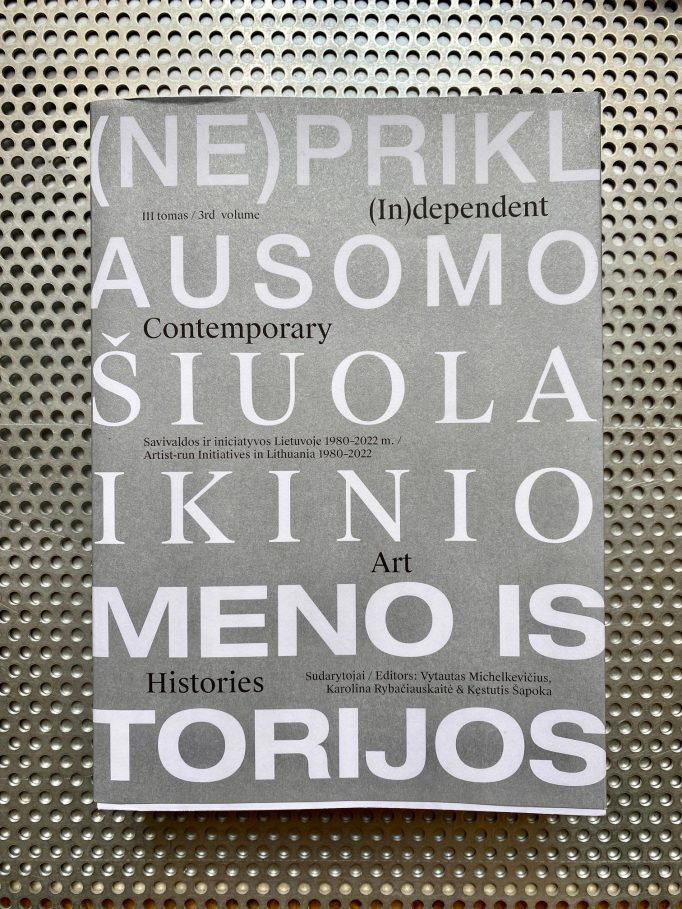
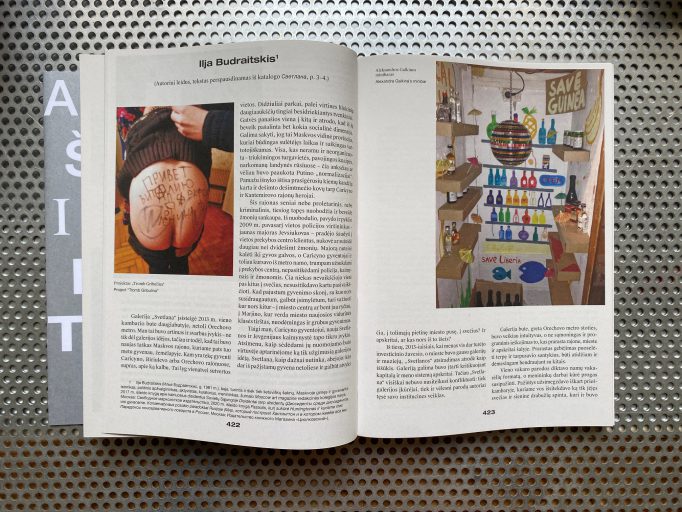
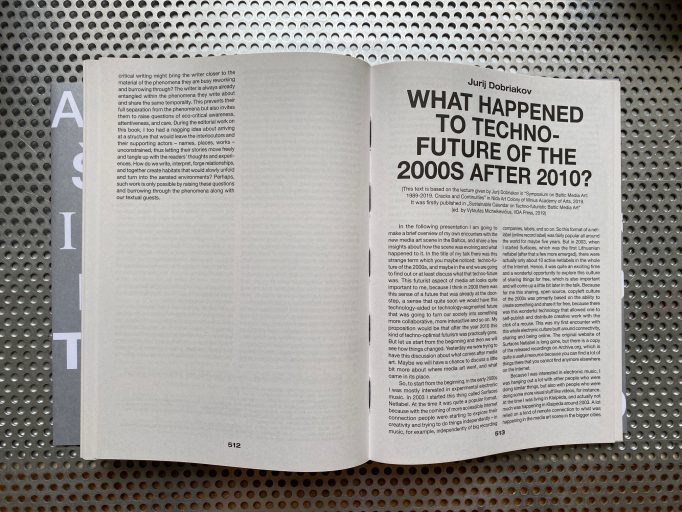
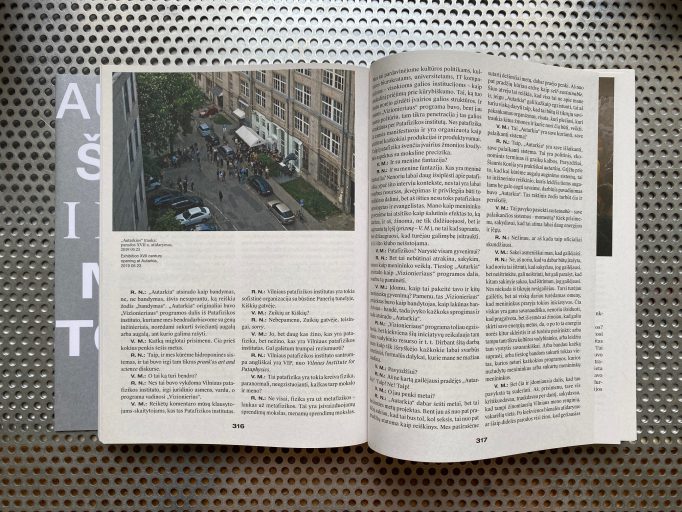
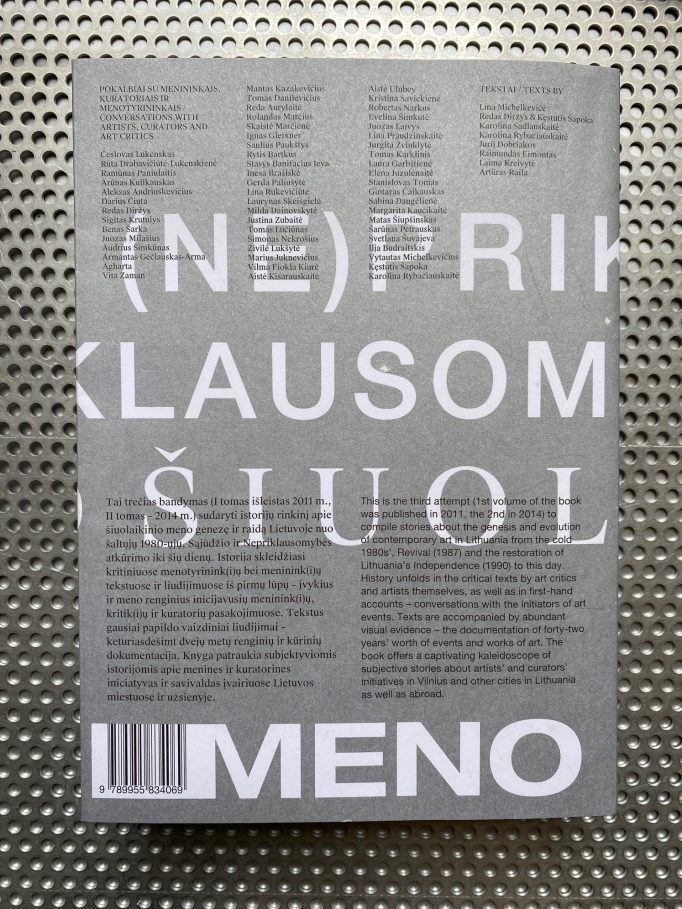
(In)dependent Contemporary Art Histories Artist-run initiatives in Lithuania
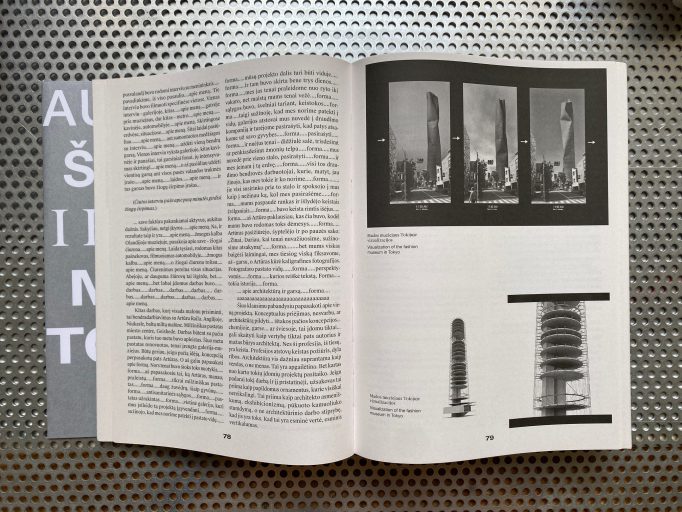
This is the third attempt (1st volume of the book was published in 2011, the 2nd in 2014) to compile stories about the genesis and evolution of contemporary art in Lithuania from the period of cold 1980s, Revival (1987) and the restoration of Lithuania’s Independence (1990) to this day. History unfolds in the critical texts by art critics and artists themselves, as well as in first-hand accounts – conversations with the initiators of art events. Texts are accompanied by abundant visual evidence – the documentation of forty-two years’ worth of events and works of art. The book offers a captivating kaleidoscope of subjective stories about artists’ and curators’ initiatives in Vilnius and other cities in Lithuania as well as abroad.
–
Tai trečias bandymas (I tomas išleistas 2011 m., II tomas – 2014 m.) sudaryti istorijų rinkinį apie šiuolaikinio meno genezę ir raidą Lietuvoje nuo šaltųjų 1980-ųjų, Sąjūdžio ir Nepriklausomybės atkūrimo iki šių dienų. Istorija skleidžiasi kritiniuose menotyrinink(i)ų bei meninink(i)ų tekstuose ir liudijimuose iš pirmų lūpų – įvykius ir meno renginius inicijavusių meninink(i)ų, kritik(i)ų ir kuratorių pasakojimuose. Tekstus gausiai papildo vaizdiniai liudijimai – keturiasdešimt dvejų metų renginių ir kūrinių dokumentacija. Knyga patraukia subjektyviomis istorijomis apie menines ir kuratorines iniciatyvas ir savivaldas įvairiuose Lietuvos miestuose ir užsienyje.
Conversations with artists, curators and art critics / Pokalbiai su menininkais, kuratoriais ir menotyrininkais
Česlovas Lukenskas, Rūta Drabavičiūtė-Lukenskienė, Ramūnas Paniulaitis, Arūnas Kulikauskas, Aleksas Andriuškevičius, Darius Čiuta, Redas Diržys, Sigitas Krutulys, Benas Šarka, Juozas Milašius, Audrius Šimkūnas, Armantas Gečiauskas-Arma Agharta, Vita Zaman, Mantas Kazakevičius, Tomas Danilevičius, Reda Aurylaitė, Rolandas Marčius, Skaistė Marčienė, Ignas Gleixner, Saulius Paukštys, Rytis Bartkus, Stasys Banifacius Ieva, Inesa Brašiškė, Gerda Paliušytė, Lina Rukevičiūtė, Laurynas Skeisgiela, Milda Dainovskytė, Justina Zubaitė, Tomas Lučiūnas, Simonas Nekrošius, Živilė Lukšytė, Marius Juknevičius, Vilma Fiokla Kiurė, Aistė Kisarauskaitė, Aistė Ulubey, Kristina Savickienė, Robertas Narkus, Evelina Šimkutė, Juozas Laivys, Lina Praudzinskaitė, Jurgita Žvinklytė, Tomas Karklinis, Laura Garbštienė, Elena Juzulėnaitė, Stanislovas Tomas, Gintaras Čaikauskas, Sabina Daugėlienė, Margarita Kaučikaitė, Matas Šiupšinskas, Šarūnas Petrauskas, Svetlana Šuvajeva, Ilja Budraitskis, Vytautas Michelkevičius, Kęstutis Šapoka, Karolina Rybačiauskaitė