With KORAZON, we want to dive into topics previously discussed by Amauta’s writers within the current context of cultural activities no longer being subsidized by the government, but rather turned into for-profit projects. In this mag, we want to show how crucial identity and collective culture are to a country and how important it is to invest in us as a multicultural territory. This platform’s aim is to bring attention to issues that affect us as Peruvians, especially those that we hardly emphasize and pinpoint as oppressive or holding us back as a community.
Attached is a collection of texts that document a diverse range of artworks made by Jessie Bullivant (AU/FI) over the past decade. By replacing the default photographic documentation with written accounts, the artist raises questions about how immaterial artworks are preserved, accessed and ultimately remembered, allowing space for nuances often lost in photographic documentation. As an incomplete survey of the artists’ work, the book blurs the boundaries between art and its documentation, between a conventional monograph and an experimental artist’s book. It gives an exciting glimpse into a committed artistic practice tackling a variety of issues from representation, power and access to subtle social interactions.
Published on the occasion of the exhibition “Latefa Wiersch. Original Features”, Kunsthaus Langenthal, 25 August – 13 November 2022.
All texts and images originally published on Instagram @artpop_insta between 2018 and 2022.
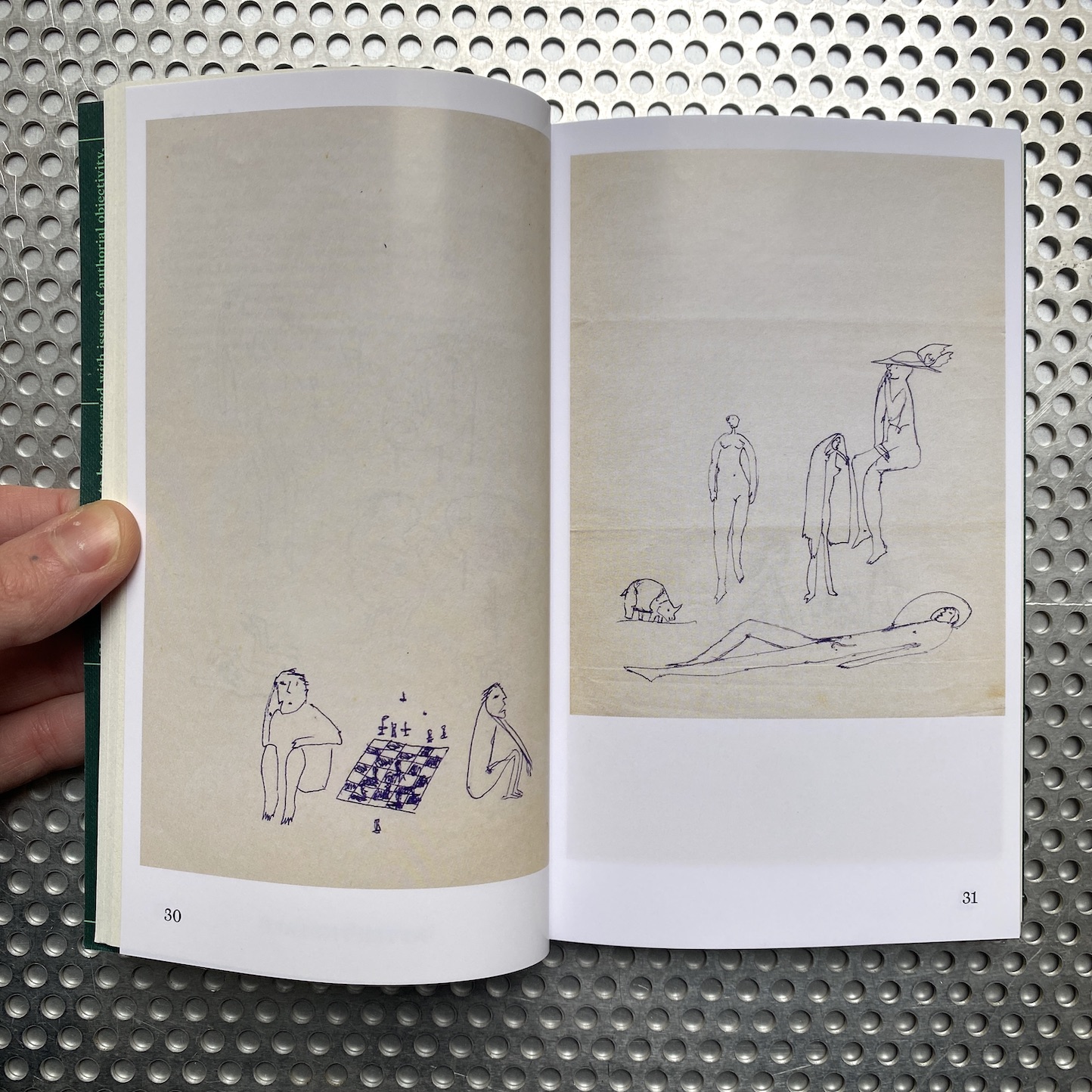
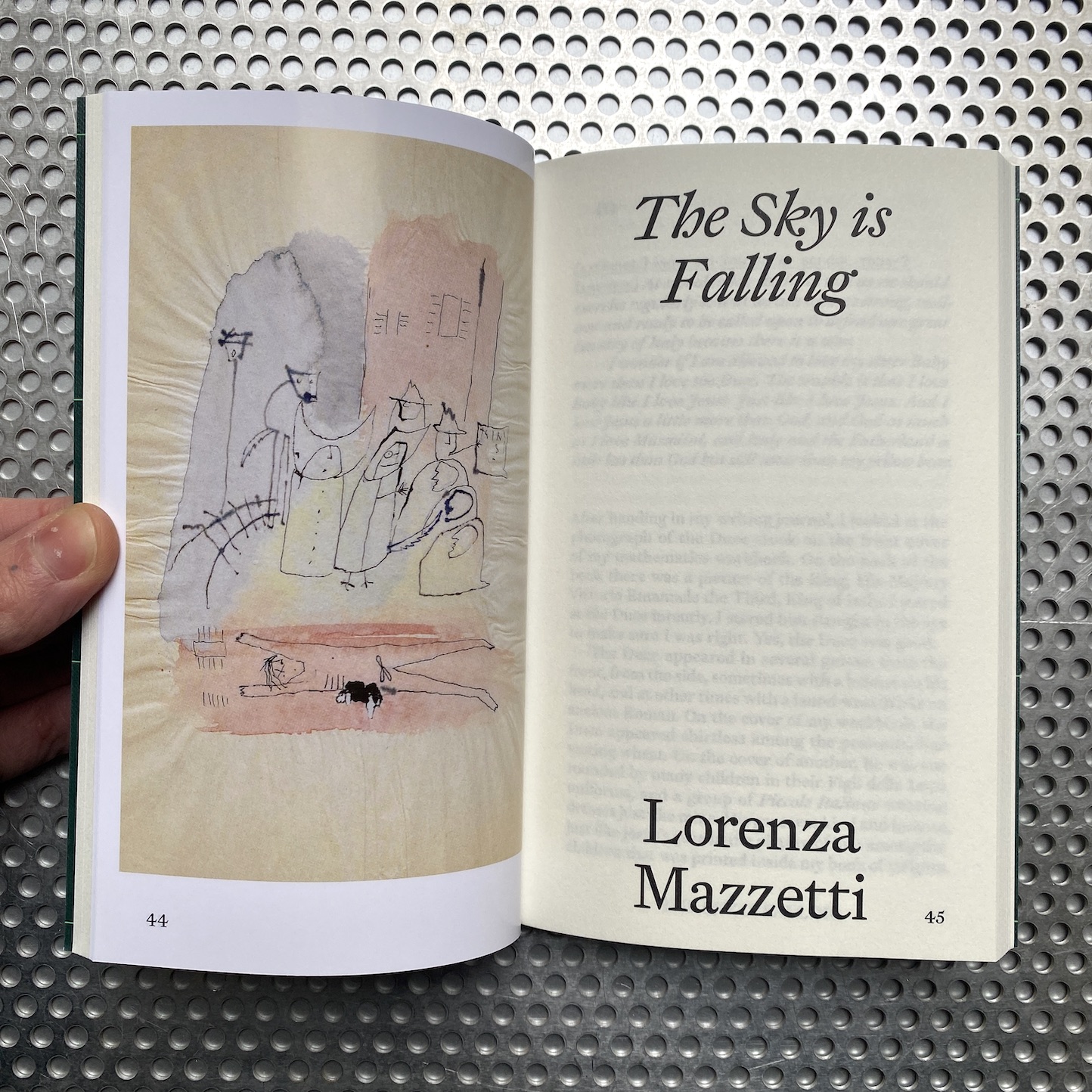
The Kunsthaus Langenthal presents the first institutional solo exhibition of the work of Latefa Wiersch (*1982 in Dortmund, Germany, lives and works in Zurich). Her work is populated by liminal beings that combine elements of human and animal, plant, object, and machine, and that pupate and transform. Drawing on observations of everyday life and a provocative sense of humor, these figures tell stories about social realities and the life of the artist. Against the background of current discourses on identity, Latefa Wiersch confronts the gaps in her own history. The centerpiece of the exhibition is a performance with the Dandara Modesto and Rhoda Davids Abel.
Text & Images: Latefa Wiersch Graphic Design: Dorothee Dähler Editing: Eva-Maria Knüsel Proof Reading: Thomas Skelton-Robinson
In Nazi Germany, at least 10.000 physically and mentally disabled children and adolescents, including orphans, misfits, and other ethnic groups were murdered as part of an ideology based on social Darwinism. For the first time in history physicians, nurses, and midwives killed by lethal injection, gas poisoning or starvation. It predated the genocide of European Jewry by approximately two years. A rehearsal for the planners of the final solution. NUMB is a study of the forgotten children of World War II.
French artist duo, Wolfsko, use mediums of expression such as photography, text, drawing, painting and collage. Their work is a long study in the world of unhappy childhood, exploring themes such as love, fear, and survival. Wolfsko currently live and work in Berlin.
How lawsuits around intellectual property in Brazil and India are impacting the patentability of plants and seeds, farmers’ rights, and the public interest.
Over the past decade, legal challenges have arisen in the Global South over patents on genetically modified crops. In this ethnographic study, Karine E. Peschard explores the effects of these disputes on people’s lives, while uncovering the role of power—material, institutional, and discursive—in shaping laws and legal systems. The expansion of corporate intellectual property (IP), she shows, negatively impacts farmers’ rights and, by extension, the right to food, since small farms produce the bulk of food for domestic consumption. Peschard sees emerging a new legal common sense concerning the patentability of plant-related inventions, as well as a balance among IP, farmers’ rights, and the public interest.
Peschard examines the strengthening of IP regimes for plant varieties, the consolidation of the global biotech industry, the erosion of agrobiodiversity, and farmers’ dispossession. She shows how litigants question the legality of patents and private IP systems implemented by Monsanto for royalties on three genetically modified crop varieties, Roundup Ready soybean in Brazil and Bt cotton and Bt eggplant in India. Peschard argues that these private IP systems have rendered moot domestic legislation on plant variety protection and farmers’ rights. This unprecedented level of corporate concentration in such a vital sector raises concerns over the erosion of agricultural biodiversity, farmers’ rights and livelihoods, food security, and, ultimately, the merits of extending IP rights to higher life forms such as plants.
Local Stickerbook is an independent magazine exhibiting works of contemporary Ukrainian artists. For each edition, around twenty artists are selected to represent their creations through the sticker format. The project was launched in February, 2021 as an initiative of Kyiv-based artists and curators. Since that time, the team successfully hosted several multi-format events uniting various local musicians, artists and enthusiasts to explore metamodernistic ideas and approaches.
The Local Stickerbook team also provides artists and their families with financial aid. The team intends to create a special financial support foundation giving a part of the profits and donations to the Ukrainian artists in need. Together we make a difference!
Since the 2010s, the line between public and private, online and offline have increasingly become blurred by digitalization and social media. In contemporary art, digitality has assumed a new type of presence—no longer only as a virtual sphere of sociality, but increasingly as a technological interface that structures our embodied experiences. What is presented in an “exhibition“? And how should we write about the new types of post-digital images we are seeing (in them)? In Passing Images: Art in the Post-Digital Age, Marie-France Rafael provides an attempt to write with art, rather than just about it. Rafael aims to retrace the living spirit of art and the procedural-performative experience of art in her writing.
Marie-France Rafael is a tenure-track professur at the Zurich University of the Arts. She studied art history and film studies in Berlin and Paris, and holds a PhD in art history. From 2011 to 2015, she was a research associate at the Free University of Berlin and until 2019 taught at the Muthesius University Kiel, Department of Spatial Strategies/Curatorial Spaces. Her interview book with French artist Brice Dellsperger, On Gender Performance, was published with Floating Opera Press in 2019.
A selection of tracks from albums included in Motto’s November 2022 music newsletter, featuring sounds from:
Mads Emil Nielsen Nile Koetting Significant Soil Raed Yassin Muslimgauze MAI MAO Alfred Panou & The Art Ensemble of Chicago Oswaldo Lares Crème de Hassan
Motto is very excited to announce that Mizna Publications are now available as part of our catalogue.
//
Mission
Mizna is a critical platform for contemporary literature, film, art, and cultural production, centering the work of Arab and Southwest Asian and North African artists. For more than twenty years, we have been creating a decolonized cultural space to reflect the expansiveness of our community and to foster exchange, examine ideas, and engage audiences in meaningful art.
Named City Page’s Nonprofit of the Year in 2020 and a Regional Cultural Treasure in 2021, we publish Mizna, an award-winning SWANA lit and art journal; produce the Twin Cities Arab Film Festival, the largest and longest running Arab film fest in the Midwest; and offer classes, readings, performances, public art, and community events, having featured over 400 local and global writers, filmmakers, and artists.
Vision
Mizna seeks to be a local, national, and international leader in providing excellent artistic platforms for emerging and established SWANA artists, connecting their work to engaged and thoughtful audiences.
Through Mizna, audiences have the opportunity to engage in the work of Arab and Muslim artists on its own terms. And our community has a critical opportunity to see some facet of their own experience reflected on the page or the screen.
History
Mizna was co-founded as a grassroots organization by Kathryn Haddad and Saleh Abudayyeh who identified a need for an artistic space dedicated to Arab and Muslim writers to narrate their own stories and make work on their own terms. Along with a small group of other Arab and Muslim writers, artists, and scholars, Kathy and Saleh established Mizna during vibrant time in the ‘90s when Asian and black Twin Cities artists and activists were creating collectives and working together to imagine a more socially just and representative arts scene.
A unique fusion of comics culture and philosophical cogitation takes readers on a ride through time, space, and thought.
Approaching the comic medium as a supercollider for achieving maximum abstraction, in Chronosis artist Keith Tilford and philosopher Reza Negarestani create a graphically stunning and conceptually explosive universe in which the worlds of pop culture, modern art, philosophy, science fiction, and theoretical physics crash into one another.
Taking place after the catastrophic advent of the birth of time, Chronosis narrates the story of a sprawling multiverse at the center of which monazzeins, the monks of an esoteric time-cult, attempt to build bridges between the many fragmented tribes and histories of multiple possible worlds. Across a series of dizzying overlapping stories we glimpse worlds where time flows backward, where the universe can be recreated every five minutes, or where rigid facts are washed away by the tides of an infinite ocean of possibility.
A unique fusion of comics culture and philosophical cogitation, this conceptually and visually mind-expanding tale takes the reader on a dizzying rollercoaster ride through time, space, and thought.
This volume contains the entire Chronosis series in full color, along with additional background materials including early sketches, script notes, and alternative covers.