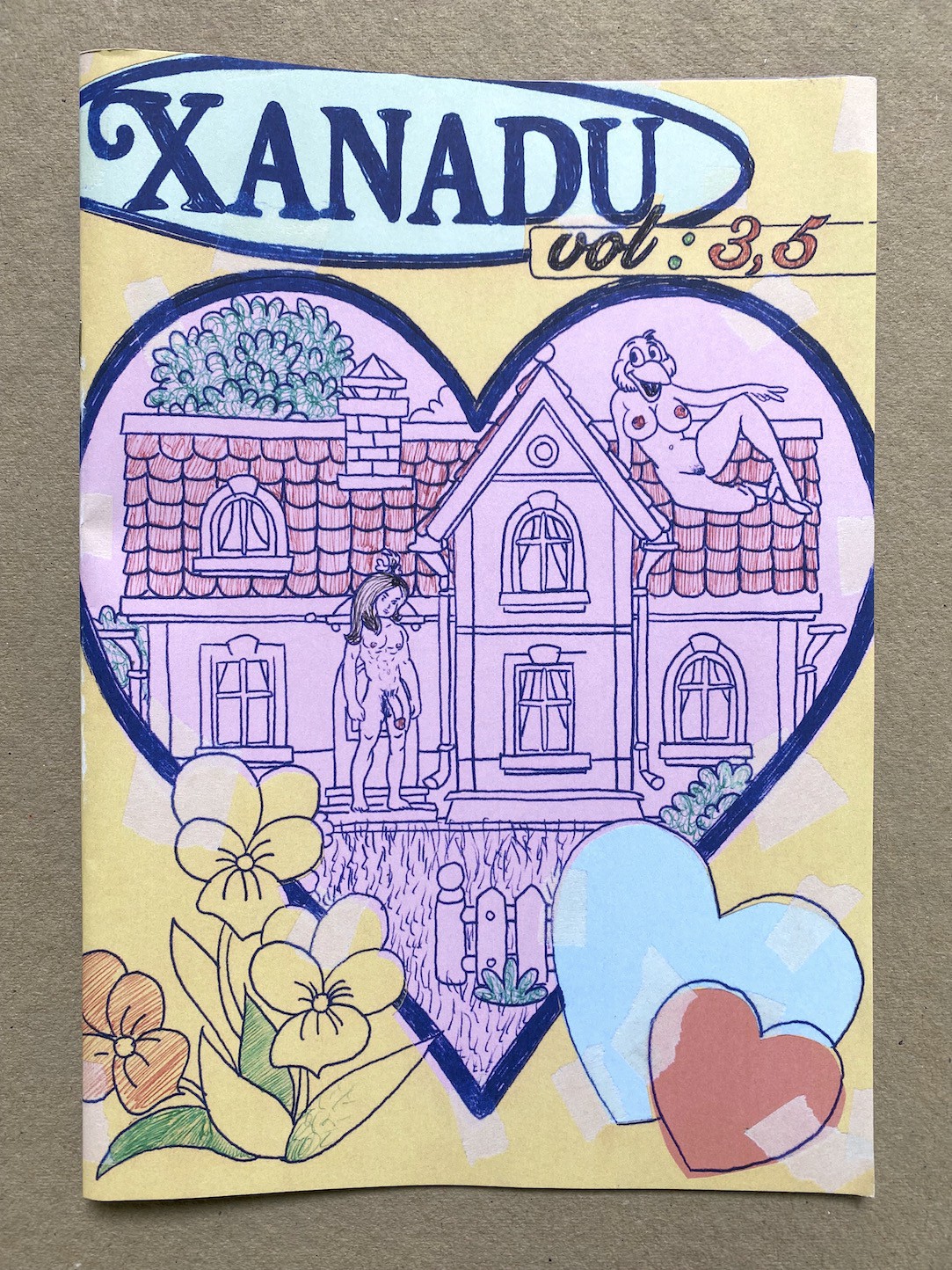
Xanadu vol.3,5. Everest (Metal907). Self published
Posted in illustration, Zines on June 23rd, 2021Tags: erotica, Everest (Metal907), fanzine, illustration, Xanadu, zine

We are happy to announce Motto’s pop-up bookstore participation at the 58th October Salon – Belgrade Biennale curated by Ilaria Marotta and Andrea Baccin, Founding Directors and Editors in Chief of CURA.; Various Venues, June 25 – August 22, 2021.


Foreword by Bill Sherman
Like a snake eating its tail, artificial intelligence exists in a circular relationship with its human creators.
The Atlas of Anomalous AI is a compelling and surprising map of our complex relationship to intelligence, from ancient to emerging systems of knowledge. A wildly associative constellation of ideas, stories, artworks and historical materials, the Atlas draws on art historian Aby Warburg’s Mnemosyne Atlas — an image map of the “afterlife of antiquity” — to approach the defining concepts of AI from an imaginative, artistic and revitalising perspective.
The Atlas presents a hyperdimensional view of the world, through a broad range of perspectives that explore the question of what AI has been and what it is becoming. Key texts on modelling, prediction and automation are brought together with stories of science fiction, dreams and human knowledge, set among visionary and surreal images.
Contributions from writers, philosophers and curators including: Blaise Agüera y Arcas, Ramon Amaro, Noelani Arista, Jorge Luis Borges, Benjamin H. Bratton, Federico Campagna, Arthur C. Clarke, Rana Dasgupta, Eknath Easwaran, GPT-2, GPT-3, Yuk Hui, Nora N. Khan, Suzanne Kite, Jason Edward Lewis, Catherine Malabou, Hans Ulrich Obrist, Matteo Pasquinelli, Archer Pechawis, Noah Raford, Nisha Ramayya, Beth Singler and Hito Steyerl.
Artworks by: Anni Albers, Pablo Amaringo, Refik Anadol, William Blake, Ian Cheng, Ithell Colquhoun, DeepDream, Federico Díaz, Susan Hiller, Hildegard of Bingen, Pierre Huyghe, C. G. Jung, Hilma af Klint, Emma Kunz, Paul Laffoley, Lucy Siyao Liu, Branko Petrović and Nikola Bojić, Santiago Ramón y Cajal, Casey Reas, Jenna Sutela and Suzanne Treister.
Order here
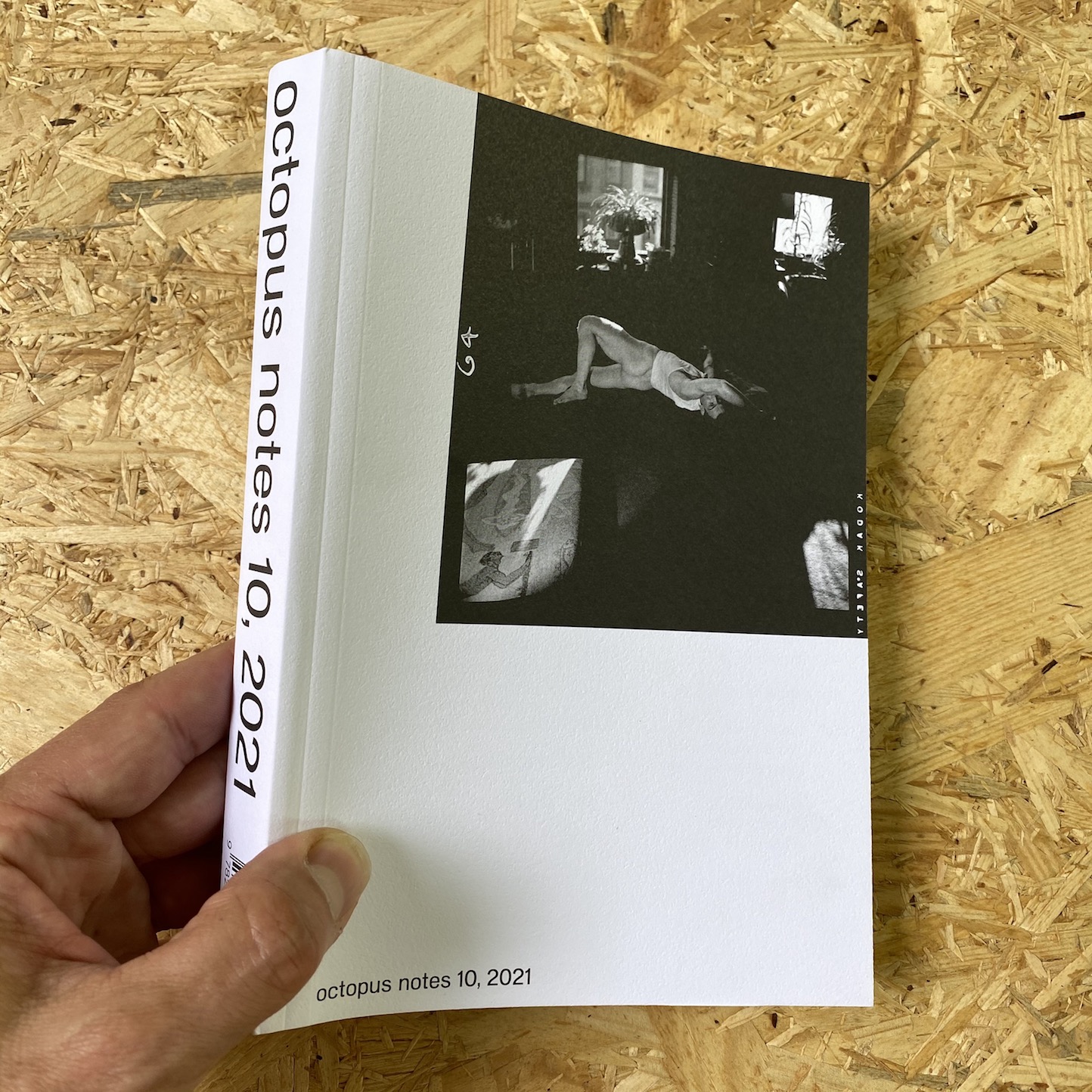


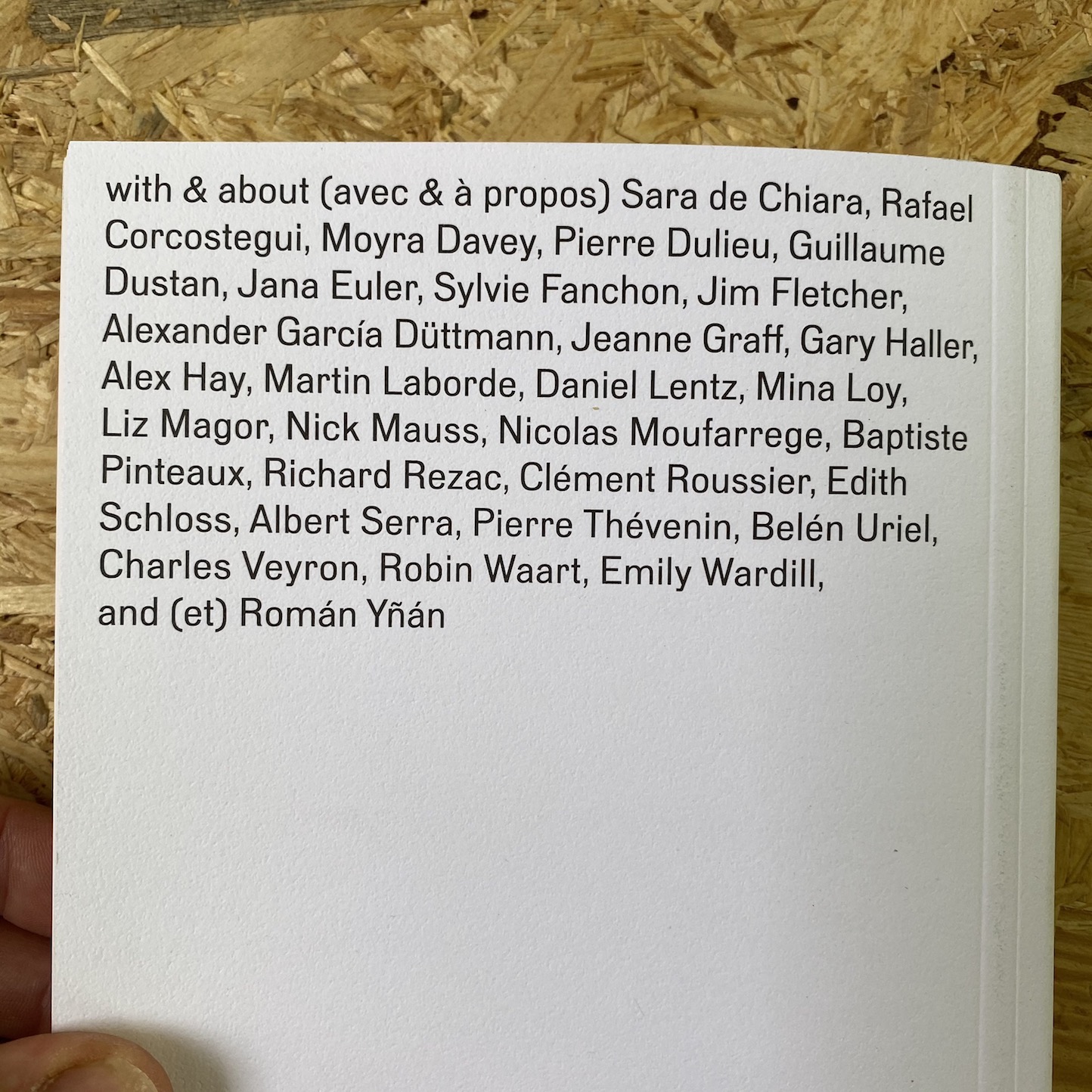
With & about Sara de Chiara, Rafael Corcostegui, Moyra Davey, Pierre Dulieu, Guillaume Dustan, Jana Euler, Sylvie Fanchon, Jim Fletcher, Alexander García Düttmann, Jeanne Graff, Gary Haller, Alex Hay, Martin Laborde, Daniel Lentz, Mina Loy, Liz Magor, Nick Mauss, Nicolas Moufarrege, Baptiste Pinteaux, Richard Rezac, Clément Roussier, Edith Schloss, Albert Serra, Pierre Thévenin, Belén Uriel, Charles Veyron, Robin Waart, Emily Wardill, and Román Yñán.
octopus notes is an annual journal that gathers critical essays, academic writing, interviews, archival documents and artists’ projects since 2013. Each issue exists without a theme, but shapes echo through its content.


Dissent Without Modification (Bergen Kunsthall), written by Grace Ndiritu, is a research book composed of interviews with radical and progressive artists and thinkers, who started their education and careers in the 1990s. Some are well-known, some are not. They are African, European, and American women working as painters, photographers, performers, hackers, activists and educators, among other roles such as Lisha Sterling, Monster Chetwynd and Kathrin Böhm.
What connects these brilliant women together, now in their late thirties, mid forties, early fifties and sixties; is that the decade of the 1990s had a culturally significant impact on their politics, career and personal life choices. The decade represented a creative coming of age for them all and their lives changed forever. The consequences of those changes are still reflected in their distinctive thoughts and practices today.
The long format interviews that comprise Dissent Without Modification are casual, meandering, philosophical conversations with a wide ranging appeal. Each person’s character is slowly revealed within a backdrop of humour, while touching on many serious universal and global subjects. Topics include pedagogy, race relations, neo-paganism, sexual violence, class warfare, interracial marriage, ecological feminism, contemporary slavery, activism, extreme tourism, African politics, terrorist practice in Western democratic states, and much more.
Dissent Without Modification illuminates the 1990s in a new way, and regards it as a pivotal point in the lineage of today’s grass-roots politics and cultural ferment. on show. The book recalls the Seattle Riots against the signing of the North American Free Trade Agreement; the recent televisual phenomenon Catfish recalling MTV’s Real World and the spread of the Occupy movement and the birth of Black Lives Matter through the recent Ferguson and Missouri uprisings. Dissent Without Modification offers first-hand perspectives on the 1990s as the decade “when shit went bad and which we never recovered from,” – to quote Hank Moody, the cantankerous main character of Californication, cult TV show.
At last in Dissent Without Modification Grace Ndiritu takes readers on a circular, revealing expedition into the recent past, sharing its impact with a new generation of readers.
Order here


A rich collection of essays tracing the relationship between art and sound.
In the 1970s David Toop became preoccupied with the possibility that music was no longer bounded by formalities of audience: the clapping, the booing, the short attention span, the demand for instant gratification. Considering sound and listening as foundational practices in themselves leads music into a thrilling new territory: stretched time, wilderness, video monitors, singing sculptures, weather, meditations, vibration and the interior resonance of objects, interspecies communications, instructional texts, silent actions, and performance art.
Toop sought to document the originality and unfamiliarity of this work from his perspective as a practitioner and writer. The challenge was to do so without being drawn back into the domain of music while still acknowledging the vitality and hybridity of twentieth-century musics as they moved toward art galleries, museums, and site-specificity. Toop focused on practitioners, whose stories are as compelling as the theoretical and abstract implications of their works.
Inflamed Invisible collects more than four decades of David Toop’s essays, reviews, interviews, and experimental texts, drawing us into the company of artists and their concerns, not forgetting the quieter, unsung voices. The volume is an offering, an exploration of strata of sound that are the crossing points of sensory, intellectual, and philosophical preoccupations, layers through which objects, thoughts and air itself come alive as the inflamed invisible.
Order here


In her long poem “The Text”, Nora Amin uses a surrealistic form of poetic writing to deconstruct gender roles, sexual trauma and patriarchal authority, while composing a humane story of creation.
This book is the result of a collaboration between Amin, the visual artist Katharina Marszewski, and the graphic design studio Eps51. Marszewski responded to “The Text” by creating cryptic drawings that reveal the movements central to Amin’s choreographic poetry. Bilingual script and artwork interpenetrate in Eps51’s unique design, which allows readers to determine the reading direction of the book, depending on their preferred language (Arabic / English).
“The Text” is accompanied by an afterword by Christian Junge, scholar of Arabic literature.
Order here


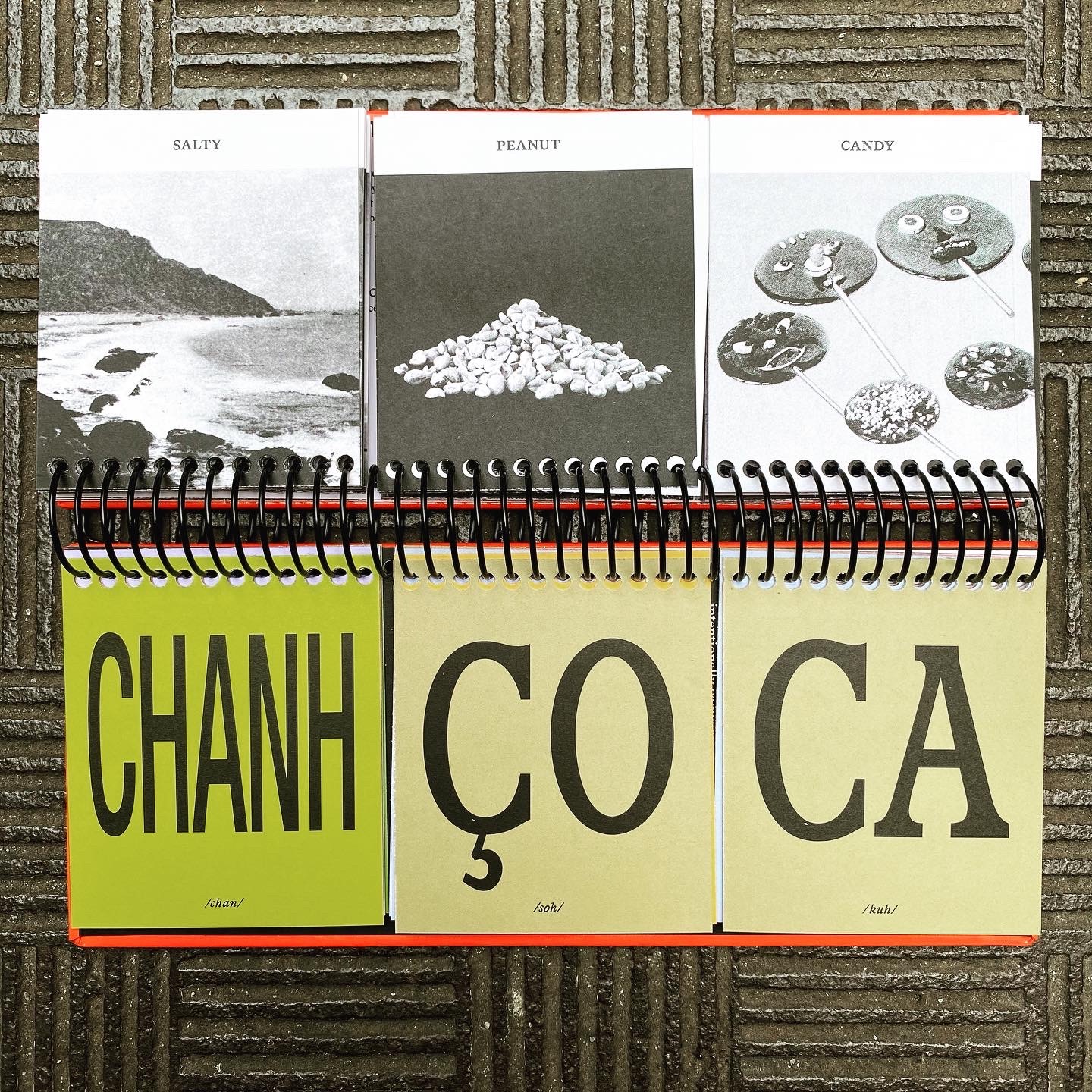
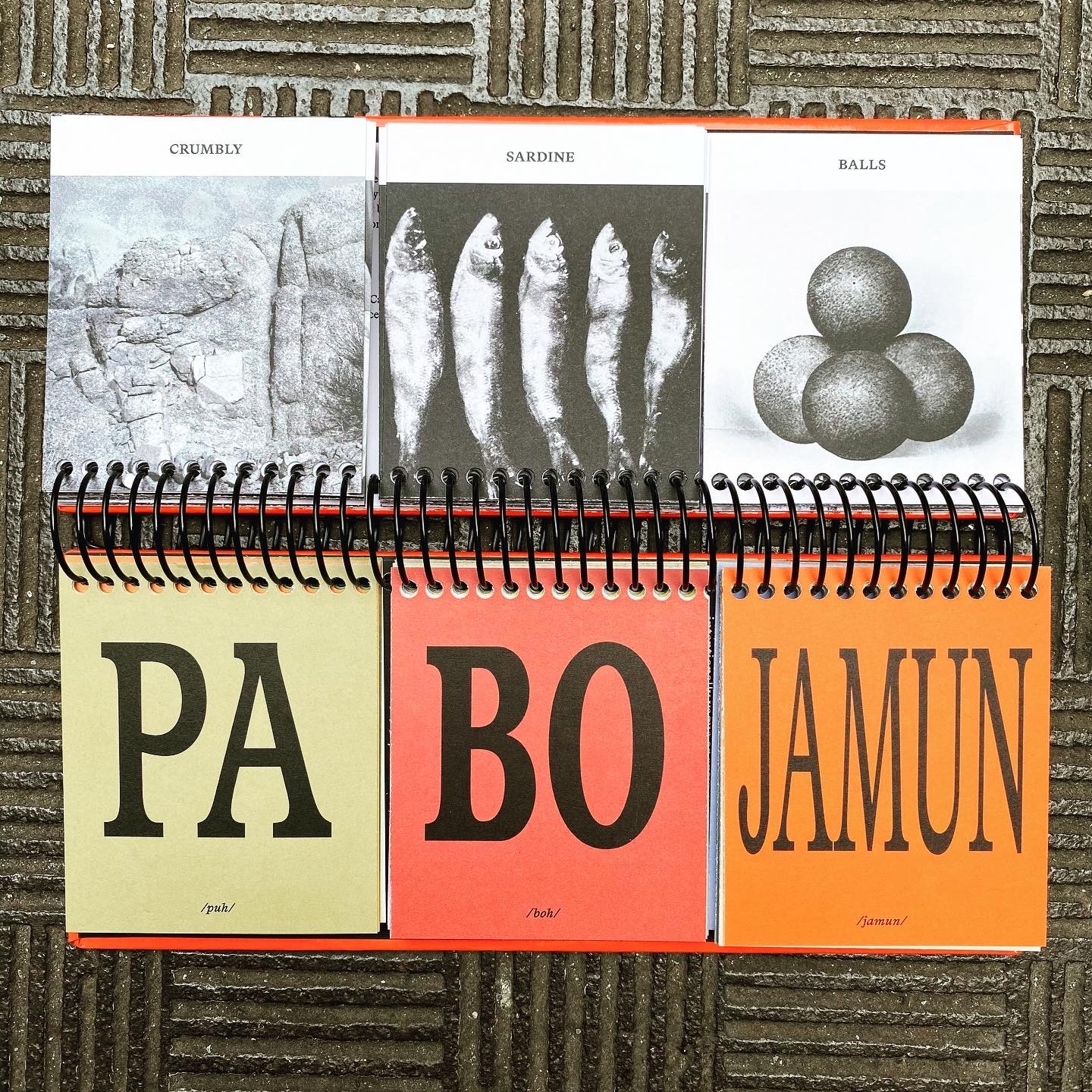
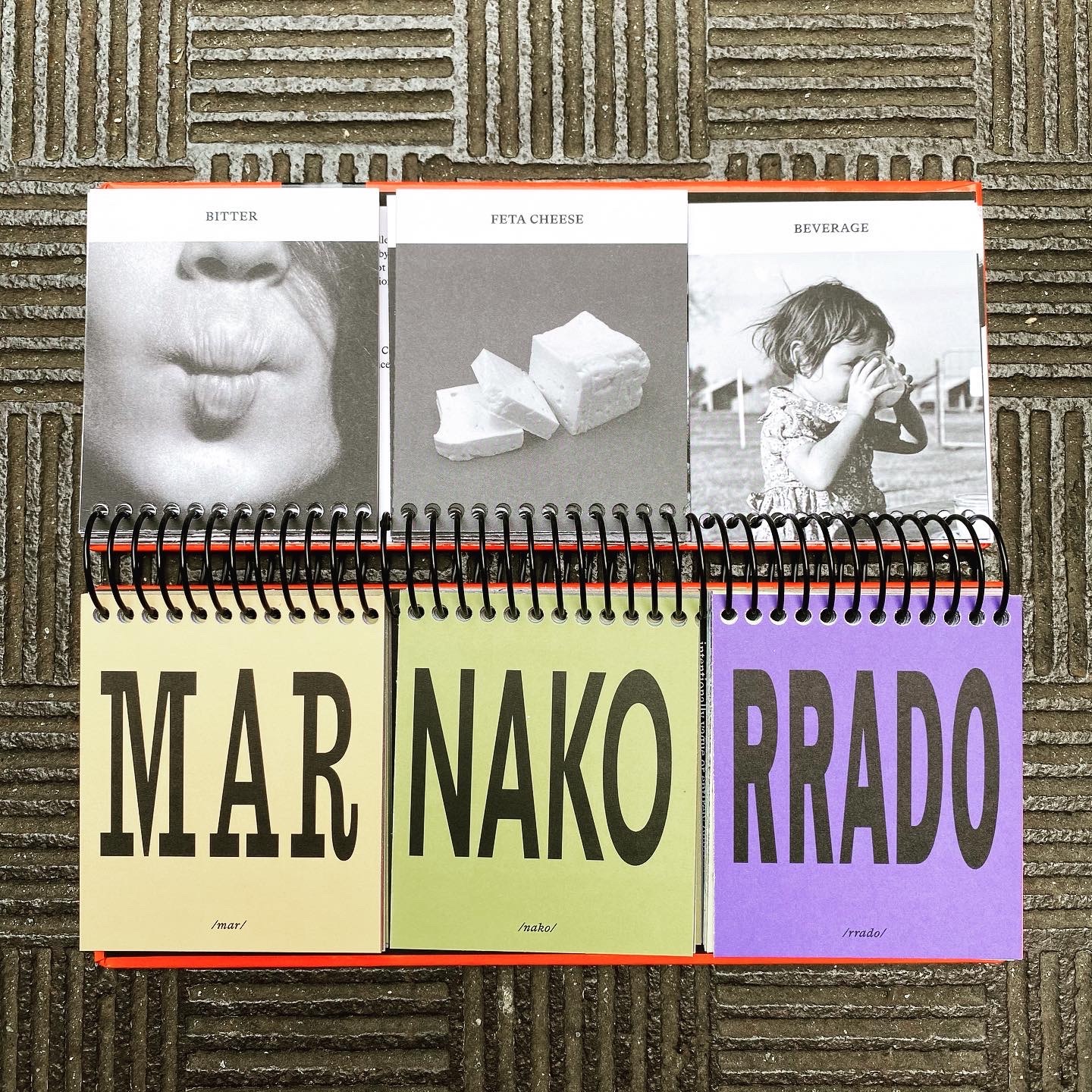
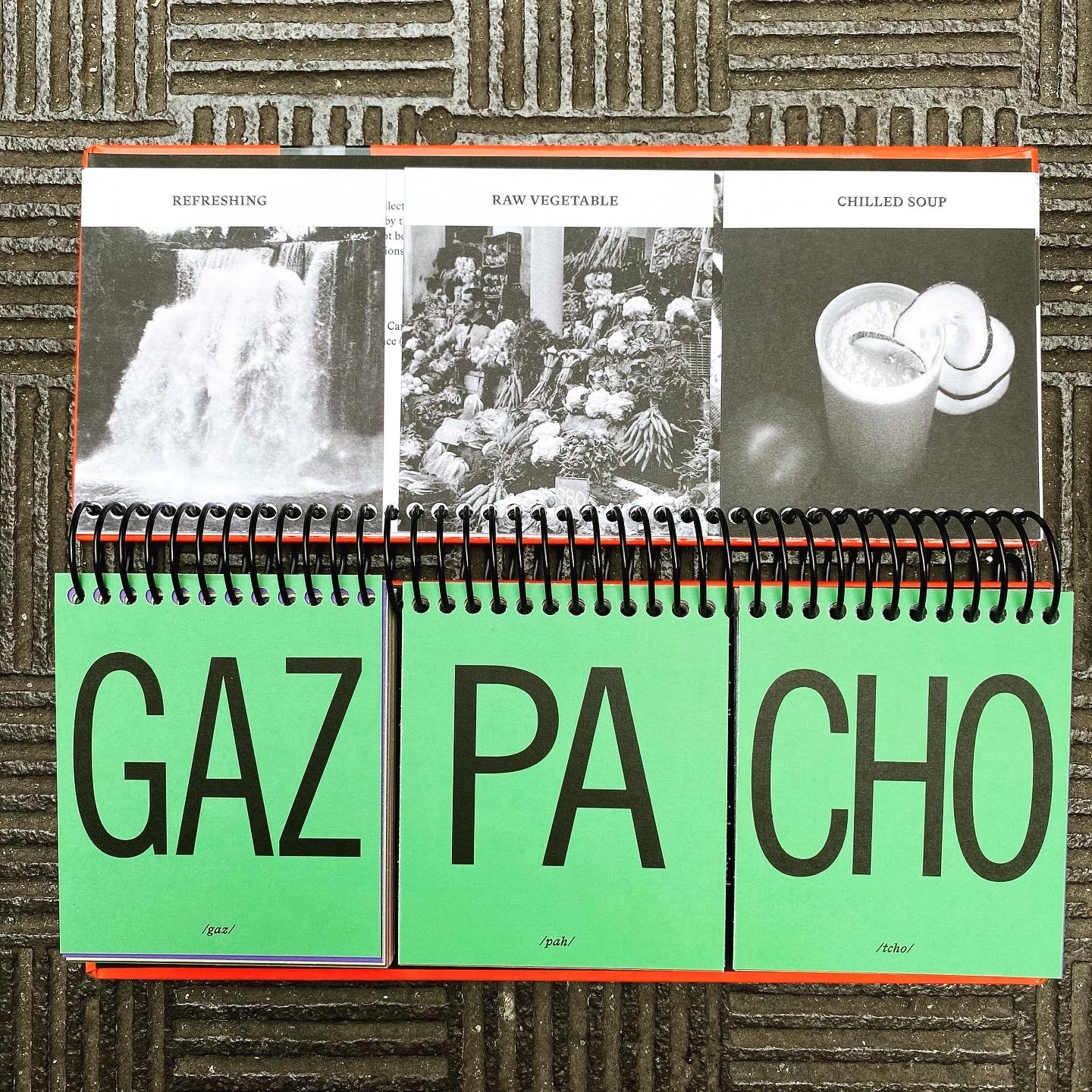
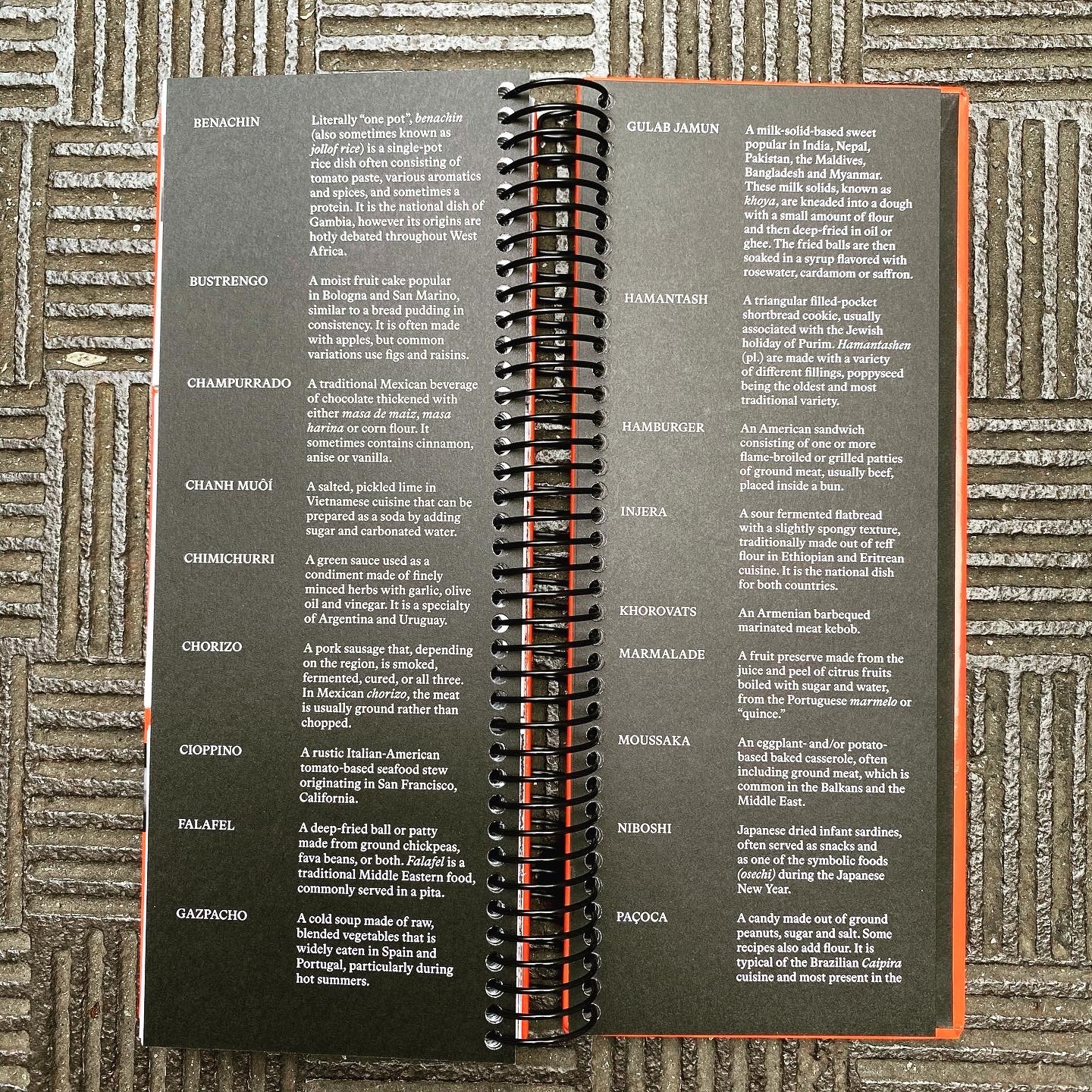
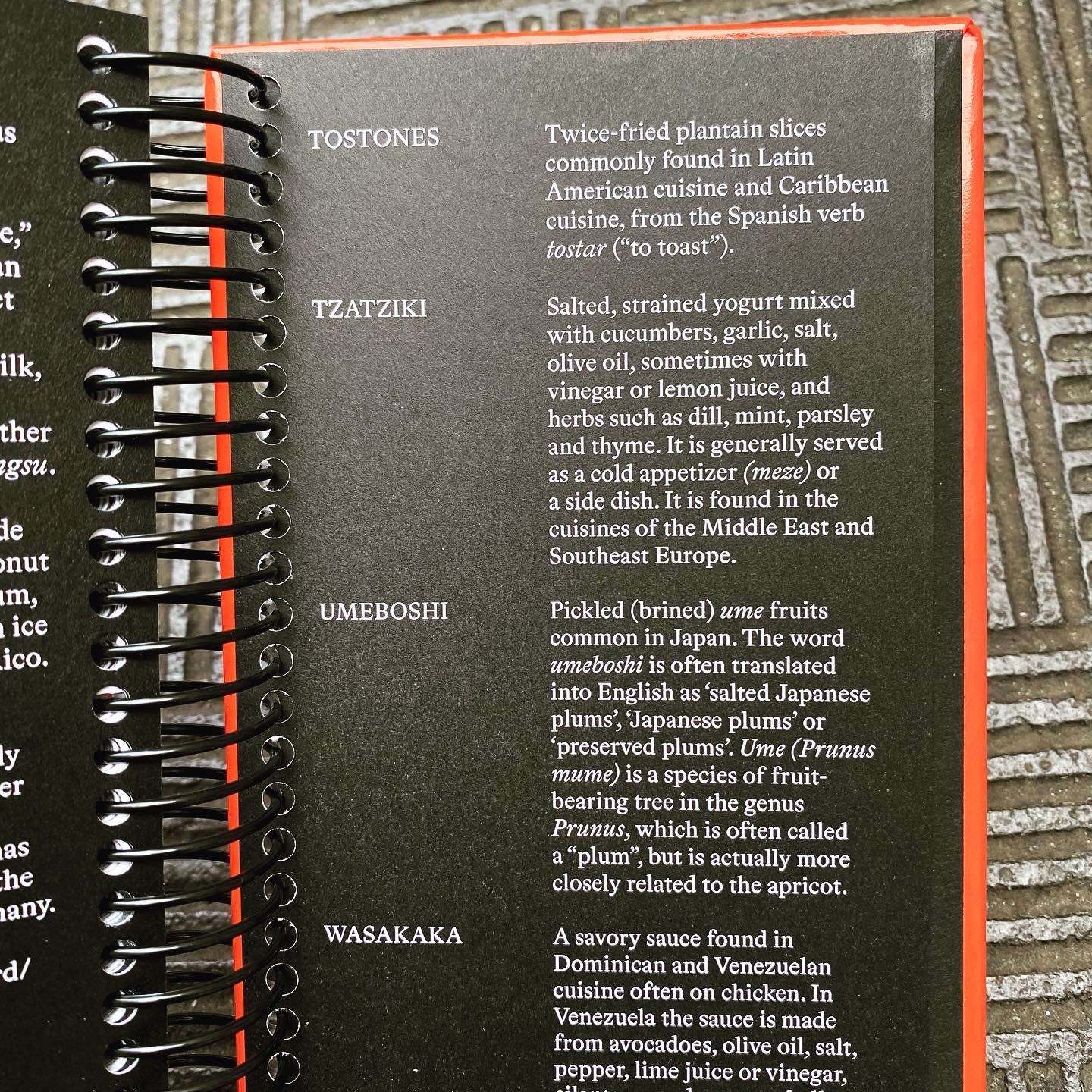
Earth Café is an interactive culinary flipbook for all ages. The book invites the reader to scramble and rearrange dishes from around the world, revealing an expansive* glossary of invented culinary creations. It offers a new knowledge of food: its locality, substances, accidents and boundaries are suddenly as fluid as the imagination itself.
The 35 dishes that make up the book– chimichurri, hamburger, chorizo, spumoni, etc.– are sourced from around the world and defined (using words and images) in very simple terms. Most typically, an adjective or flavor + a predominant ingredient + a category of dish.
Order here


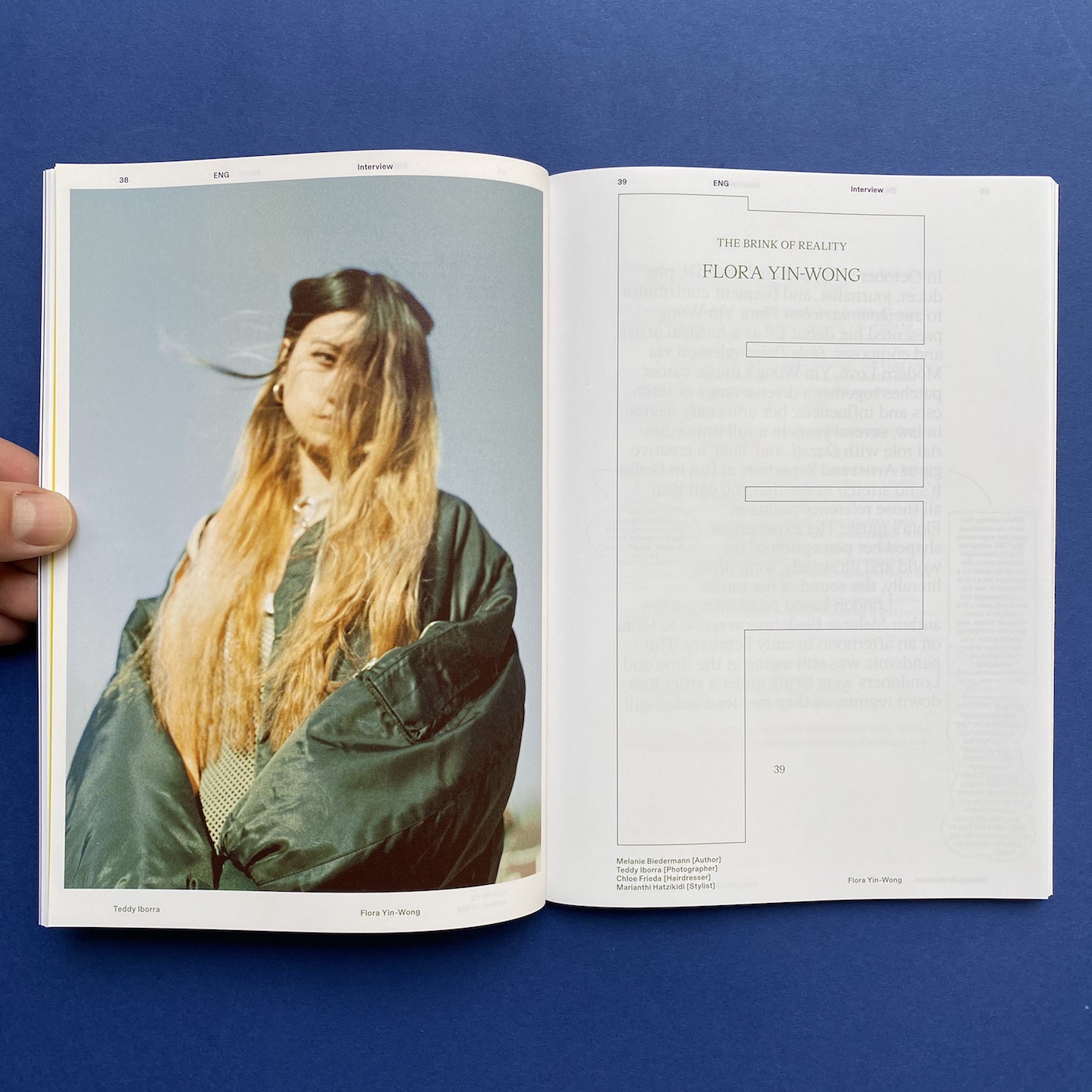


Frequent readers of zweikommasieben will know that the creative processes we highlight in our magazine are an eclectic gathering of influences that result in varied creative practices. This plurality informs a question we have repeatedly asked ourselves: what might be the common denominator connecting all the dots? For this issue, we would like to make the case for the discursive potential of personal experiences.
Once the personal is taken seriously, anecdotes provide major insights into an artist’s practice. A portrait on producer Malibu taps into memories of popular culture and traces musical experiences from her childhood to highlight the dedication she brings towards composing melodies and using samples. In their essay, the duo Space Afrika assembles recollections of their daily lives in north-west England to frame their artistic output over the years.
Highlighting subjective perspectives allows for the differentiation of what might appear similar at first. Both the collaboration of Andreas Bülhoff and Marc Matter featured in “Soundtexte” and the interview with Tygapaw refer to the use of poetry. The former condense language to its most basic units and present them as rhythmic building blocks for DJs. Taking a different approach, Tygapaw asked a poet to be the narrator of their album, expanding the tracks by embedding an additional layer of meaning.
zweikommasieben #23 also wishes to make visible the full range of its contributors. Annotations in the margins gesture towards the intuitive processes characteristic of this magazine: from an initial interest in an artist and their work, to the experience of exploring it in the context of a conversation, and to collaboratively reflect on text and photography with various people.
Full content:
-interviews with Bass Clef, Crystalmess, Flora Yin-Wong, Grand River, Ikonika, Jabu & Daniela Dyson, Meemo Comma, and Tygapaw
-portrait on Malibu
-essay by Space Afrika
-Contributes by Jessika Khazrik and Sara Berts
-columns: Soundtexte (poetry), “Art Review” (art review), and We are Time (photography)
Order here