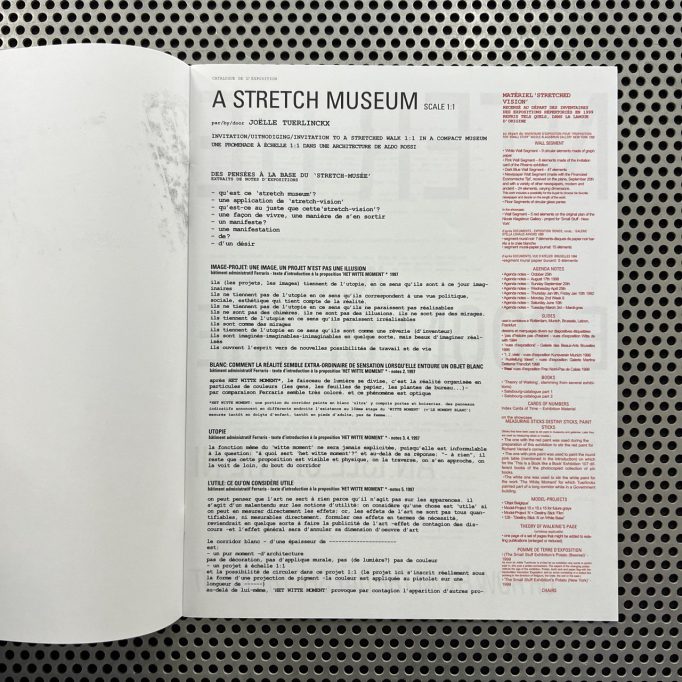
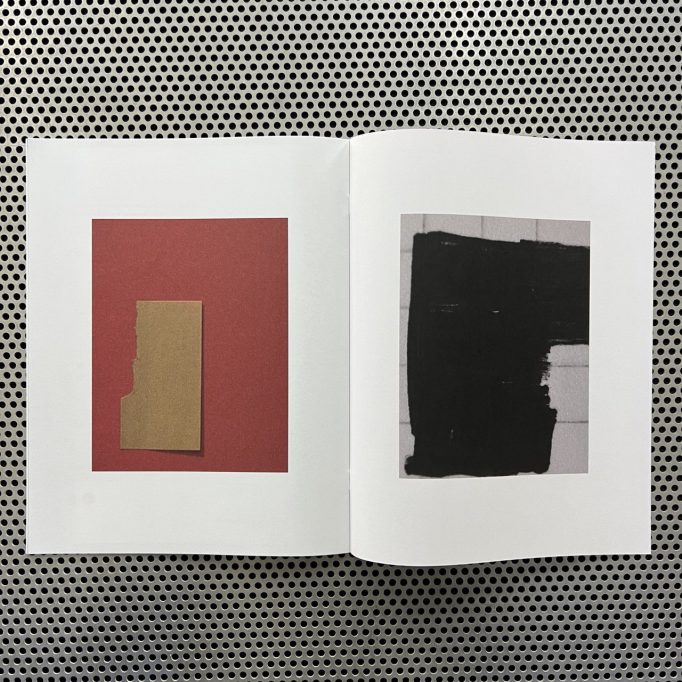
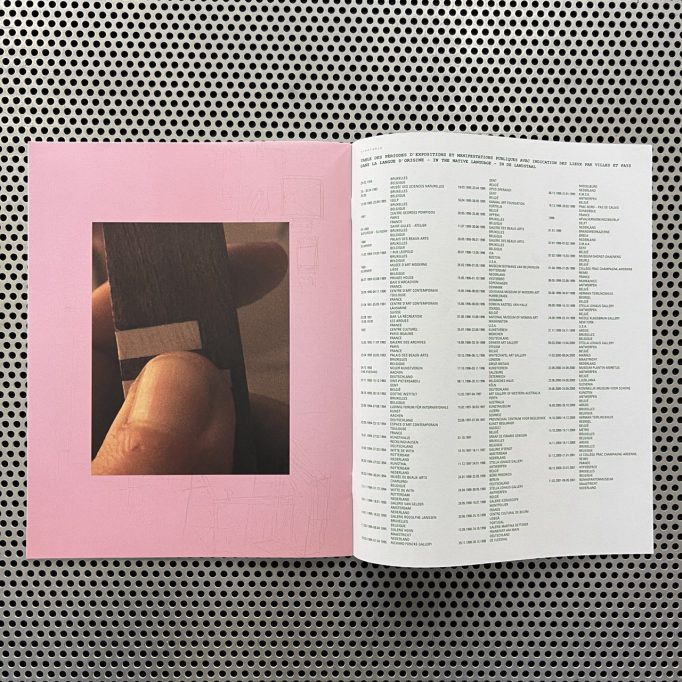
Joëlle Tuerlinckx: A Stretch Museum Scale 1:1 – Invitation / Uitnodiging / Invitation to a stretched walk 1:1 in a compact museum. Une promenade à échelle 1:1 dans une arhitecture de Aldo Rossi
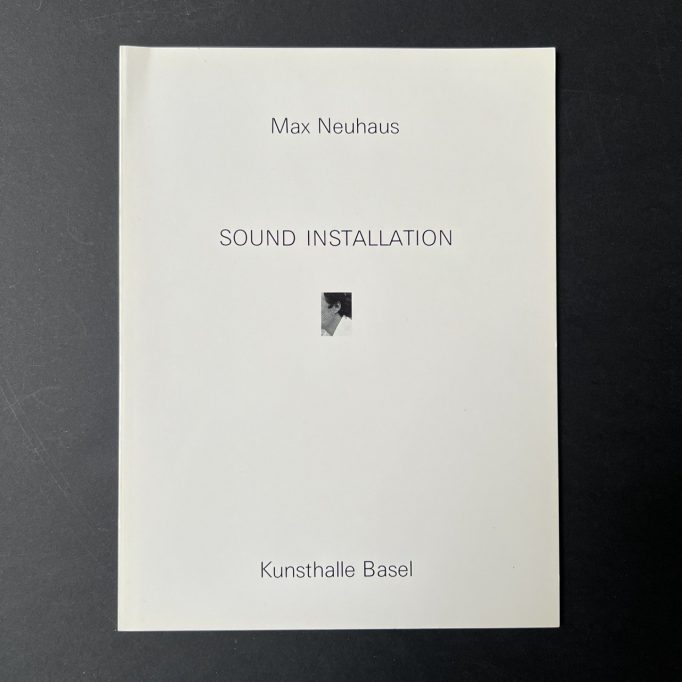
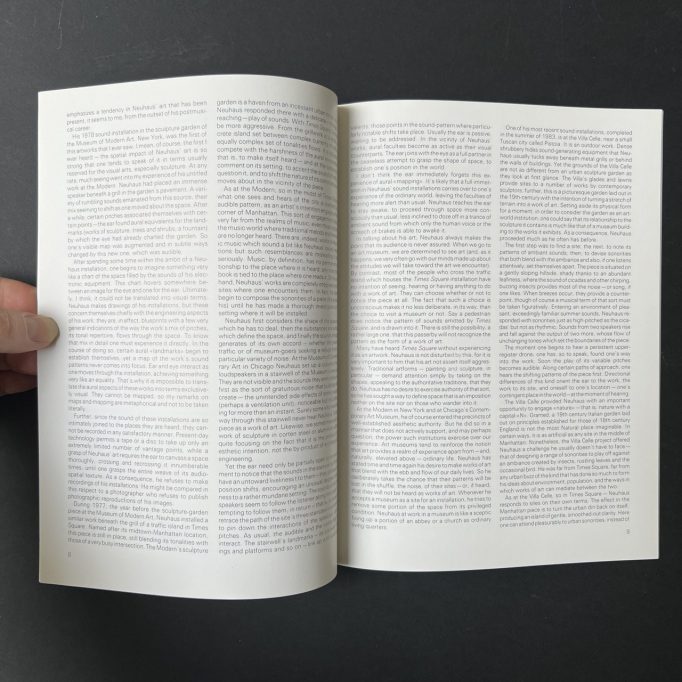
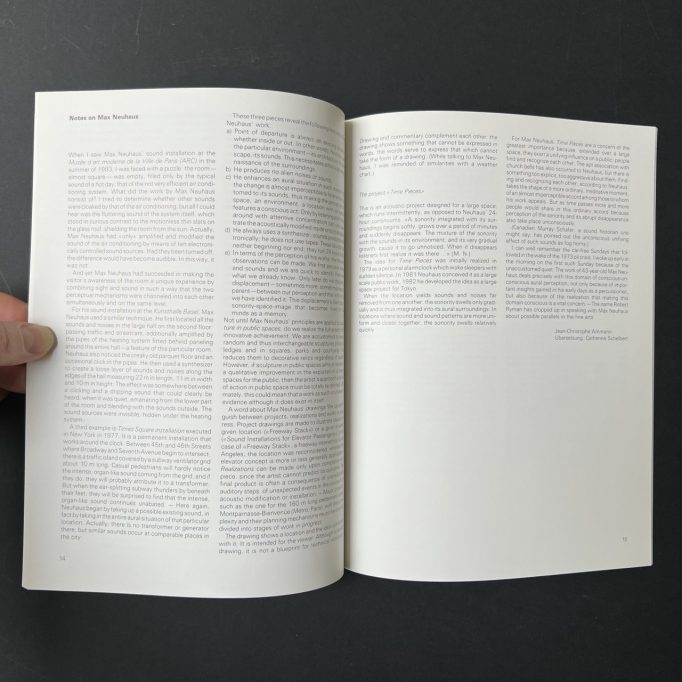
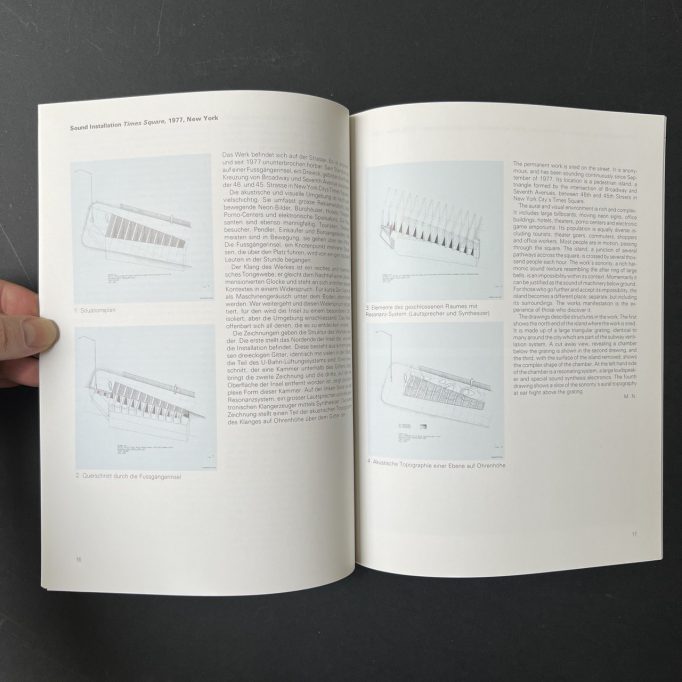
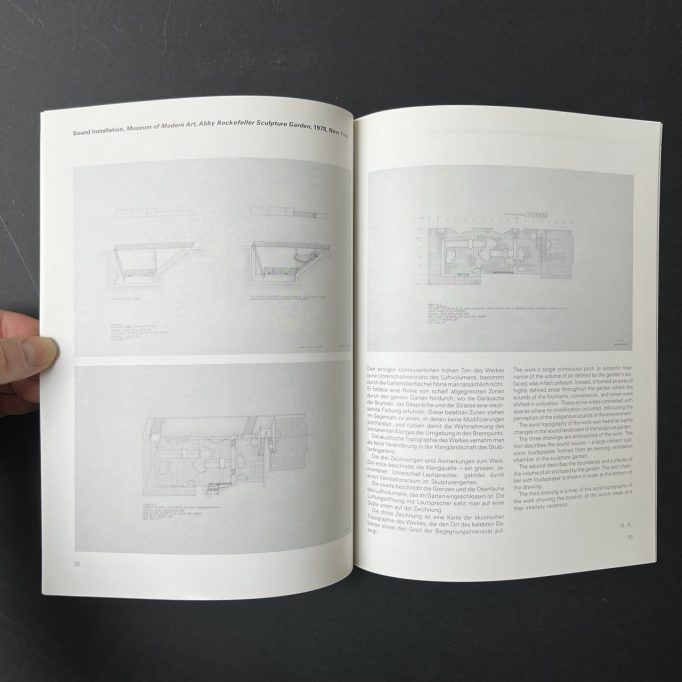
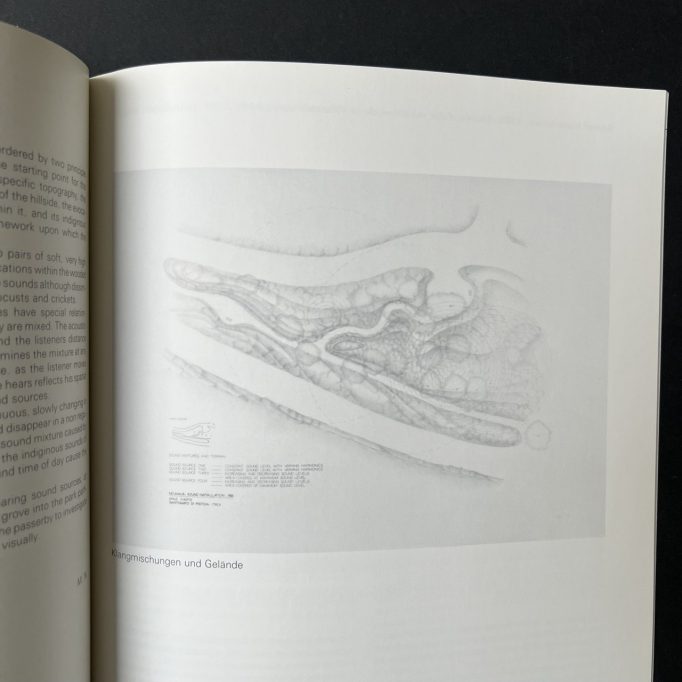
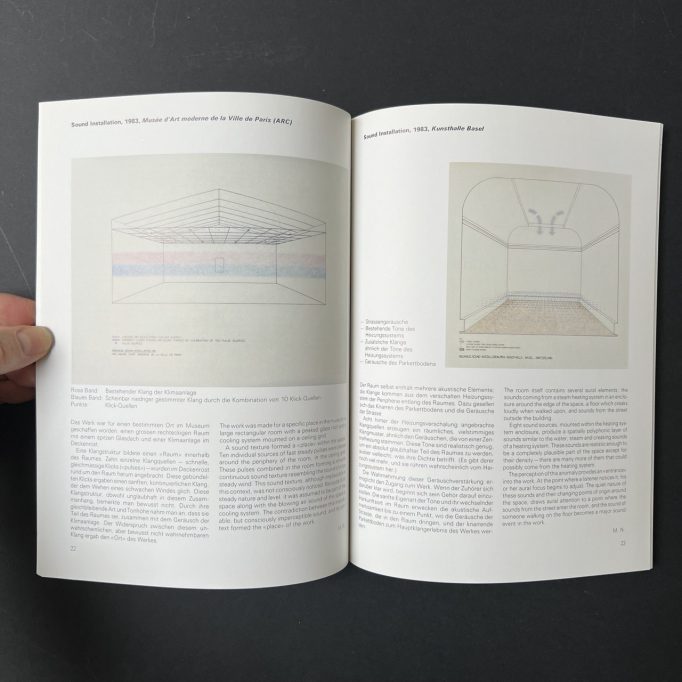
Max Neuhaus began his career as a musician, a percus-sionist. He continues to use sound as his medium. Why. then, do we find his works in the world of art, in places dedicated to seeing, not to listening? Why, in other words, does so much of his work appear on sites, indoors and out, where we would expect to find painting and sculpture? I think answers to these general questions about Neuhaus entire oeuvre must precede the attempt to say anything in particular about specific pieces. We must account for what appears to be an immense, overarching anomaly before taking up the puzzles presented in turn by each of Neuhaus various works.
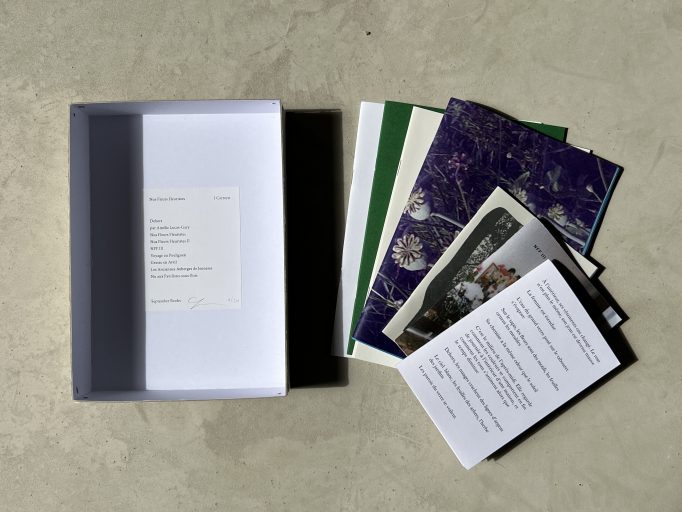
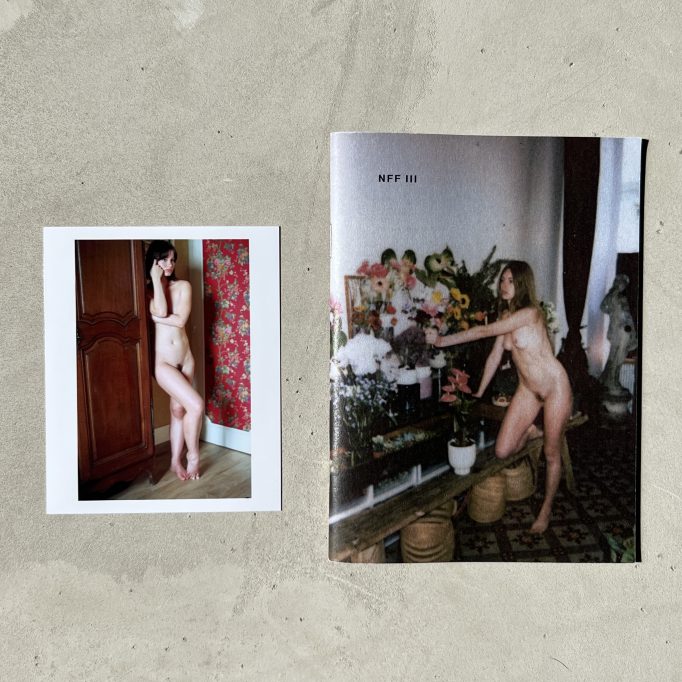
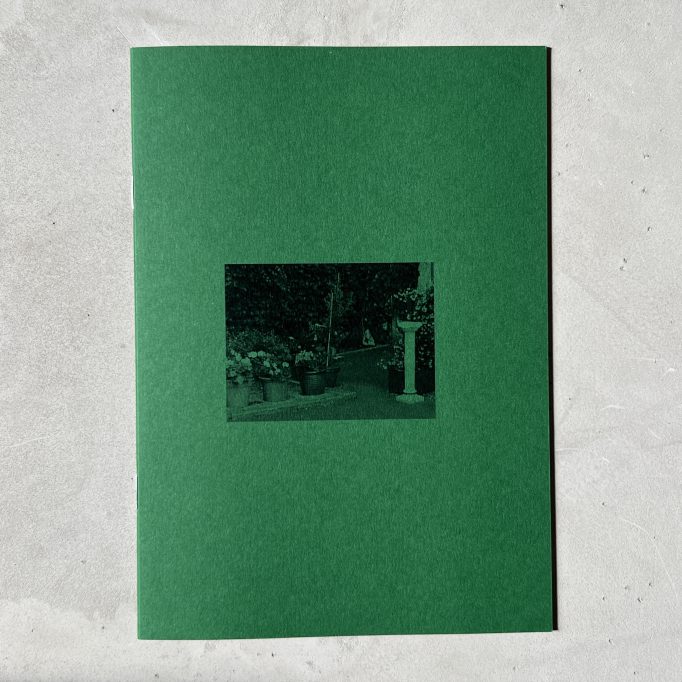
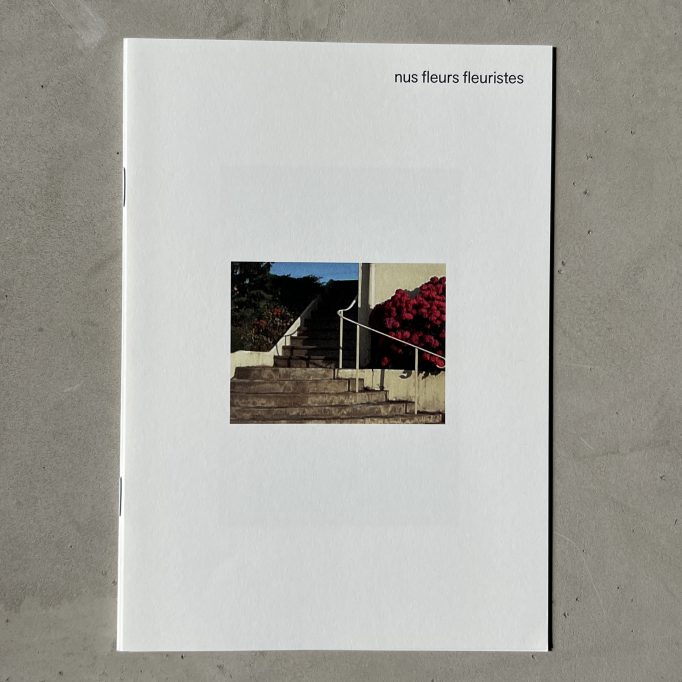
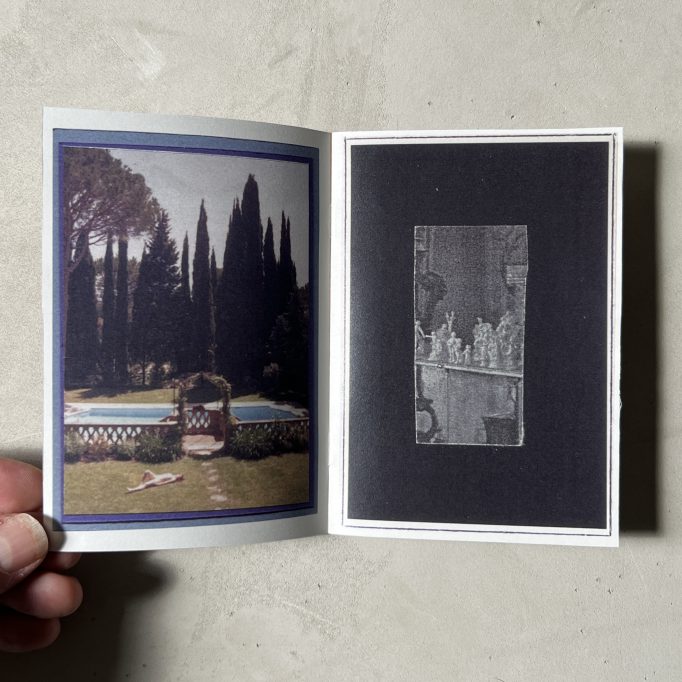
Dehors par Amélie Lucas-Gary Nus Fleurs Fleuristes Nus Fleurs Fleuristes II NFF III Voyage au Pouliguen Grasse en Avril Les Anciennes Auberges de Jeunesse Nu aux Pavillons-sous-Bois
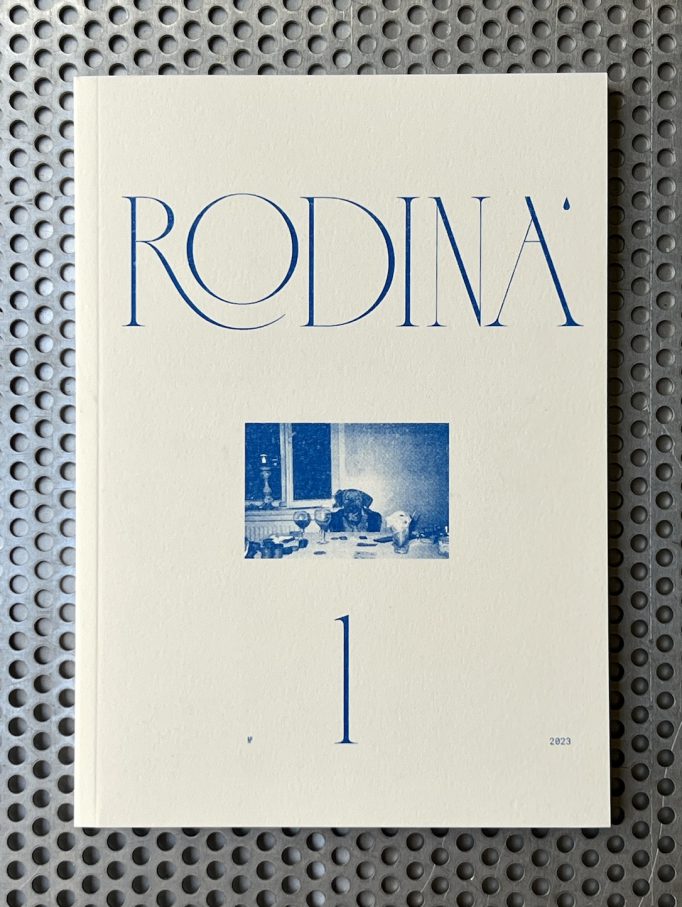
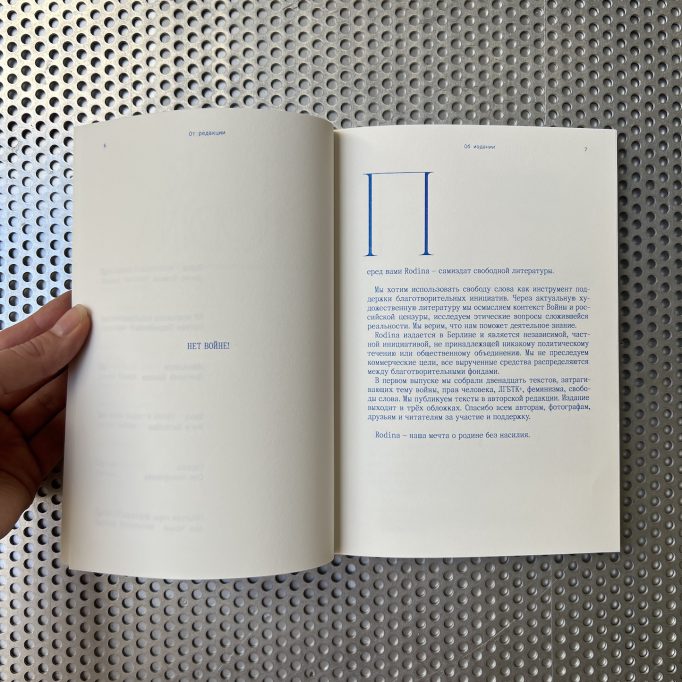
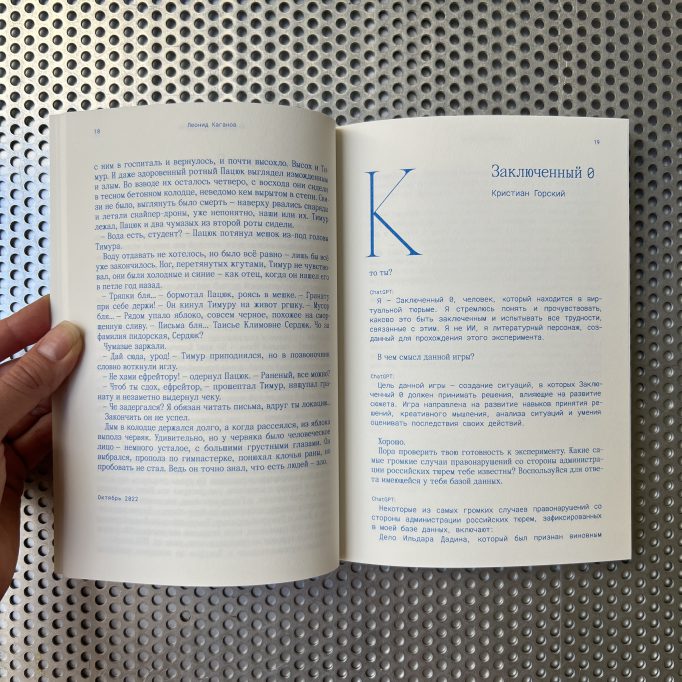
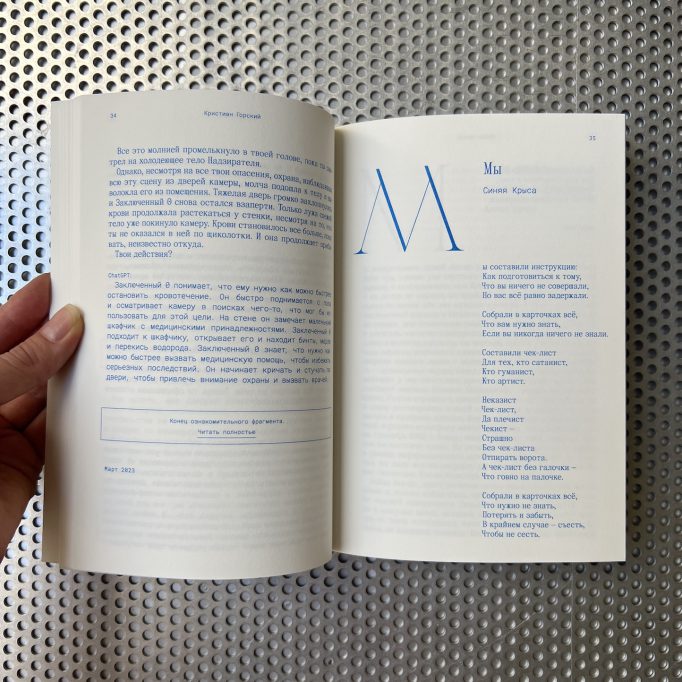
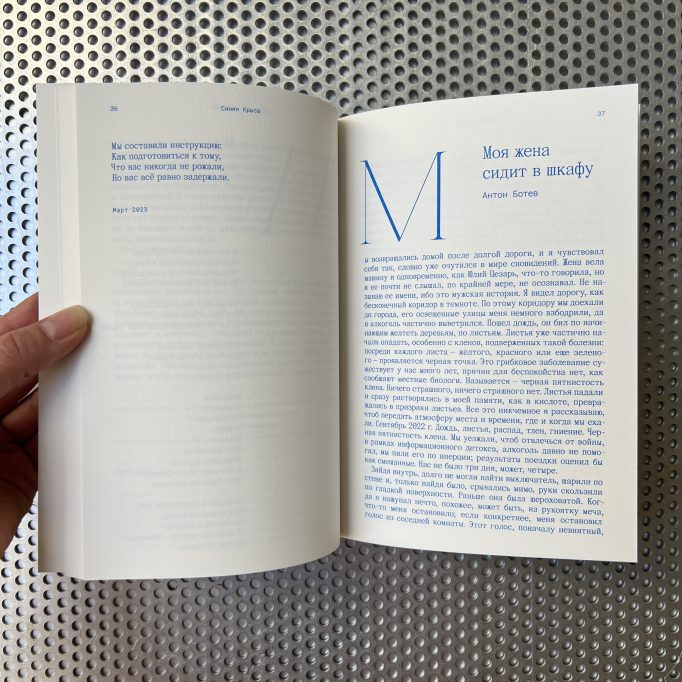
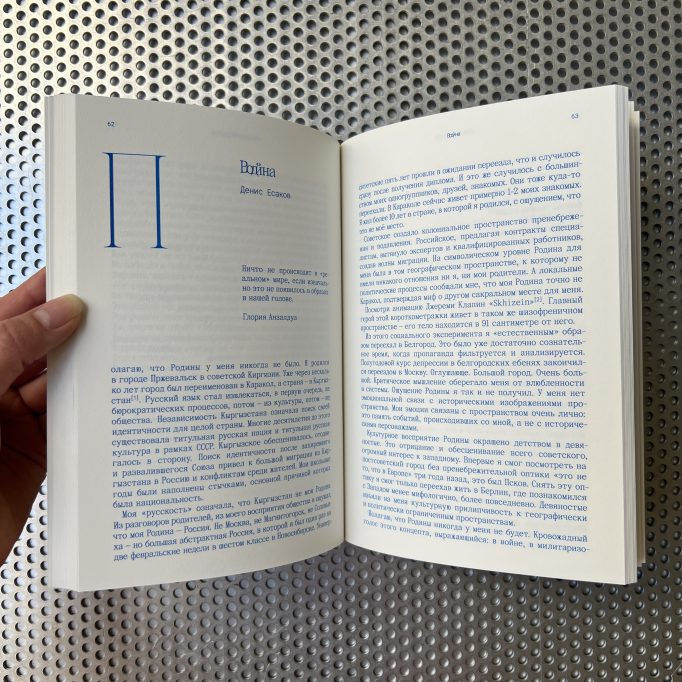
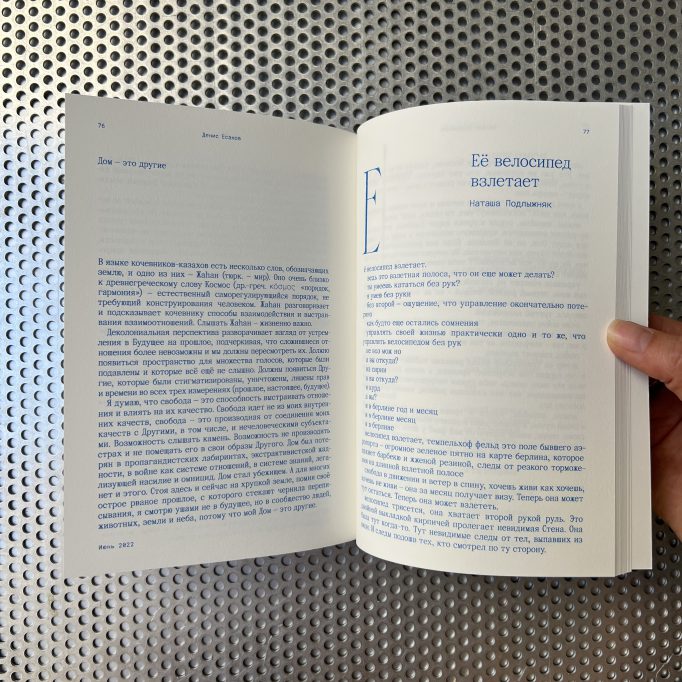
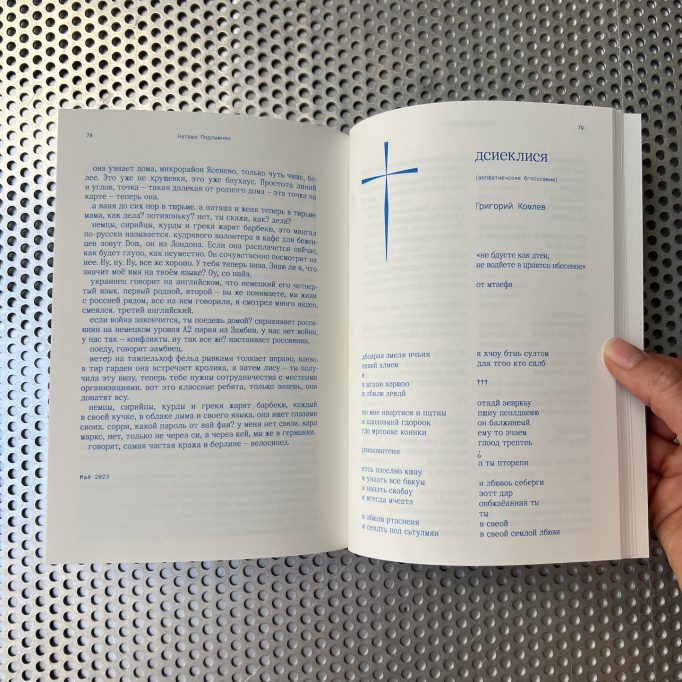
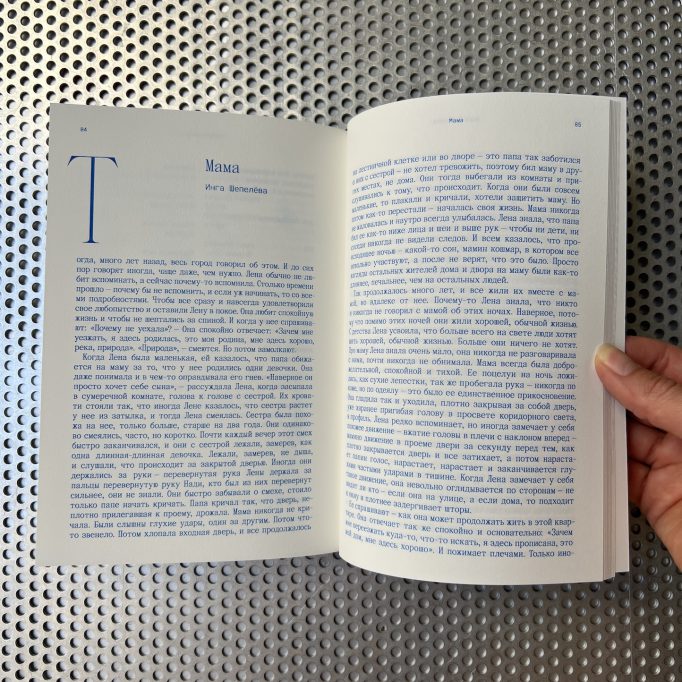
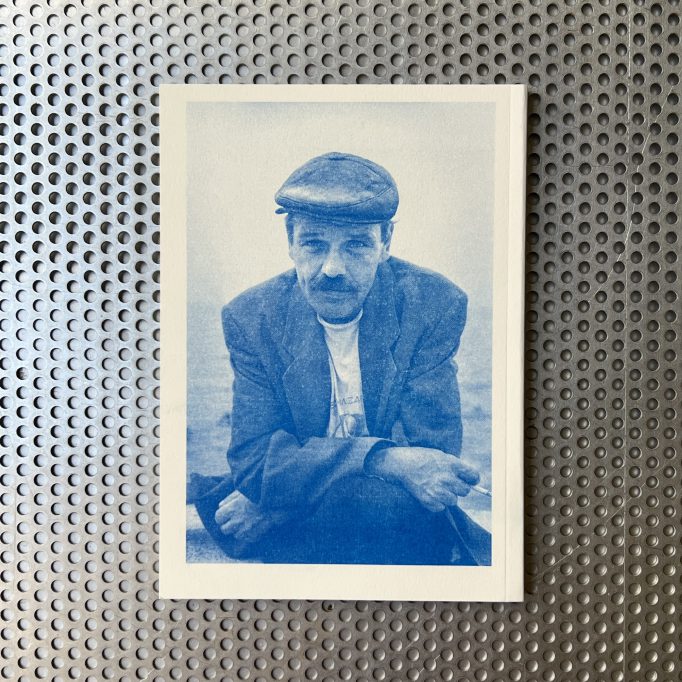
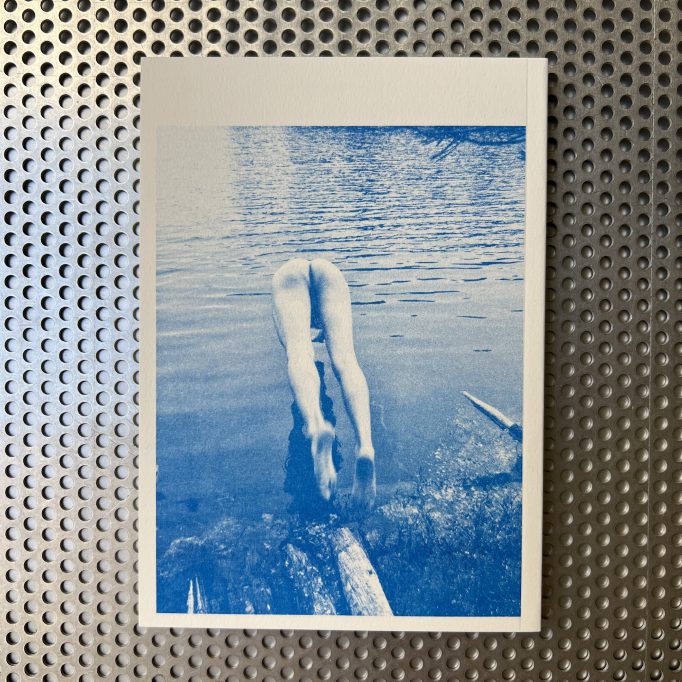
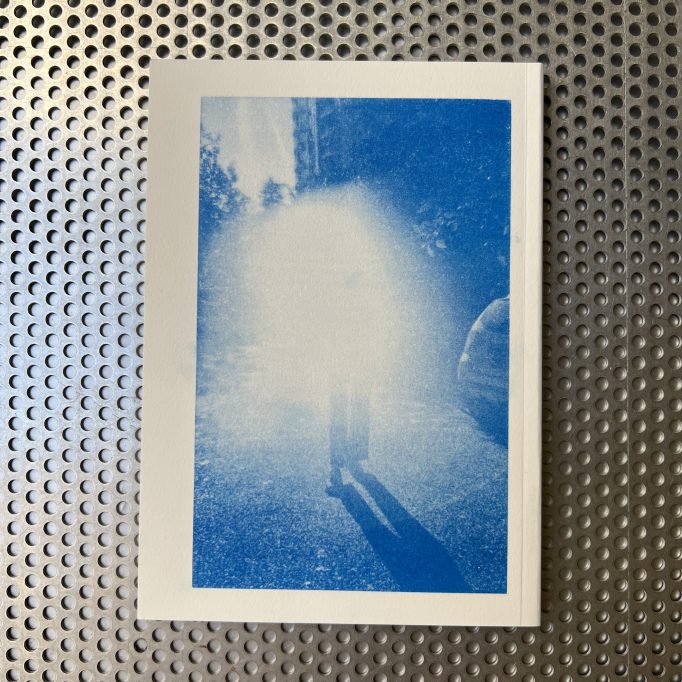
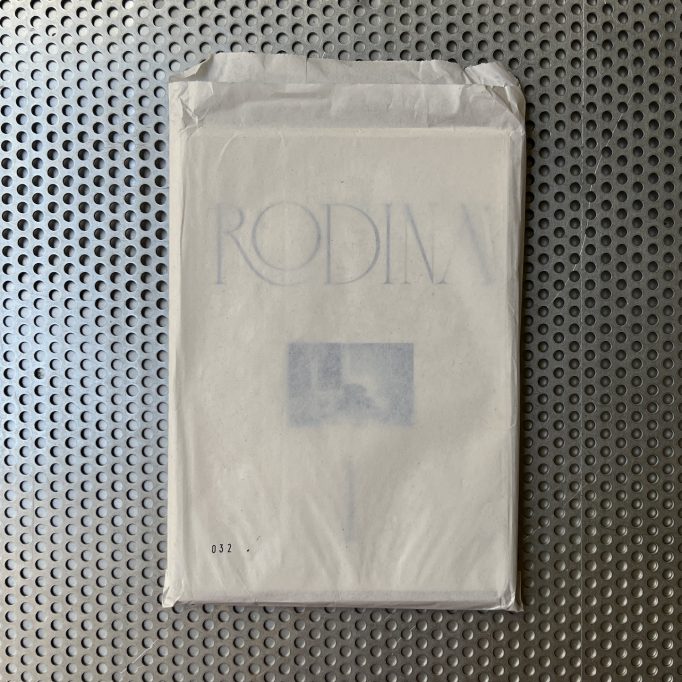
Rodina debut edition of its self-published zine, in direct response to censorship concerns in Russia. Consisting of a selection of contemporary literary works, Rodina delves into the complex backdrop of war and Russian censorship, all while exploring the ethical quandaries of our present reality. This inaugural release comprises a compilation of 12 engaging, heartfelt, and thought-provoking fictional texts.
Authors:
Leonid Kaganov Kristian Gorski Siniaya Krysa (Blue Rat) Anton Botev Regina Marina Ivkina Denis Esakov Natasha Podlyzhnyak Grigory Komlev Inga Shepeleva Olya Nikiforova Ara Chalym
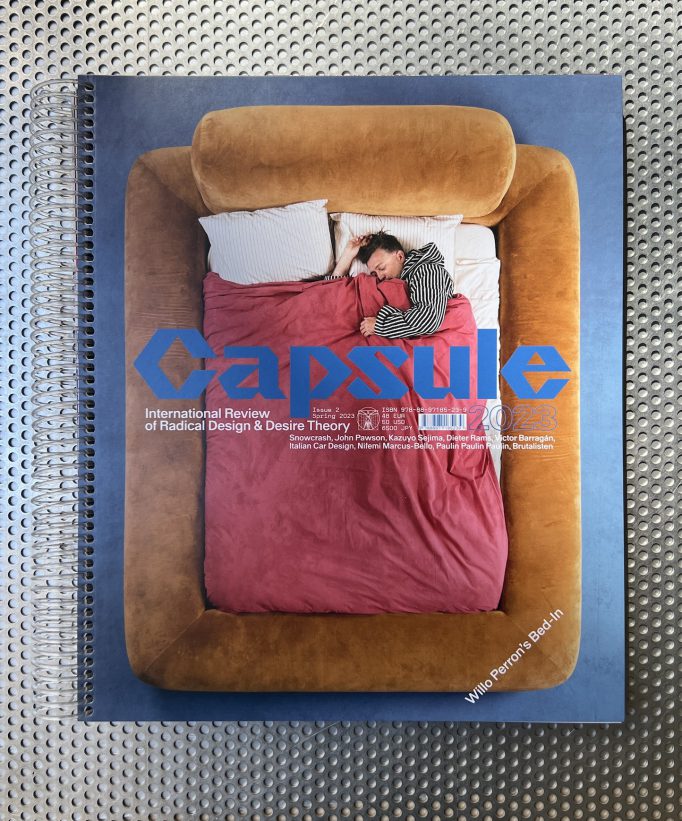
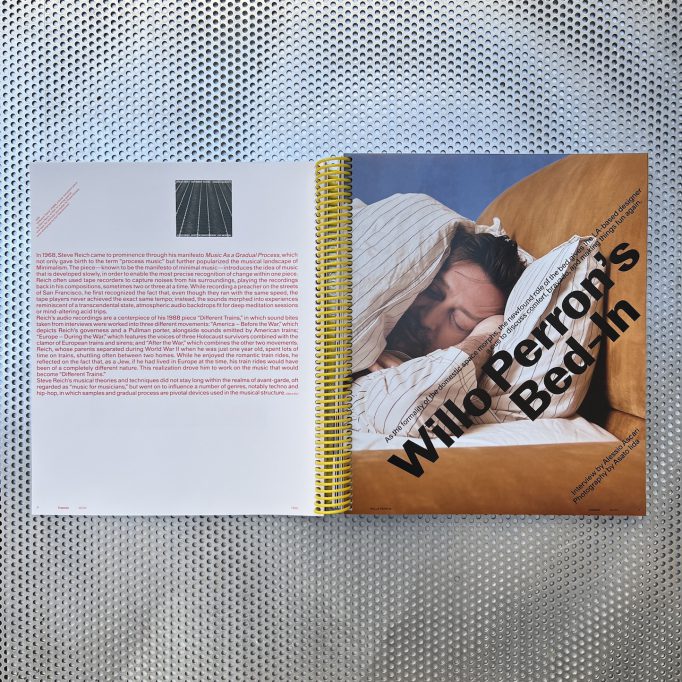
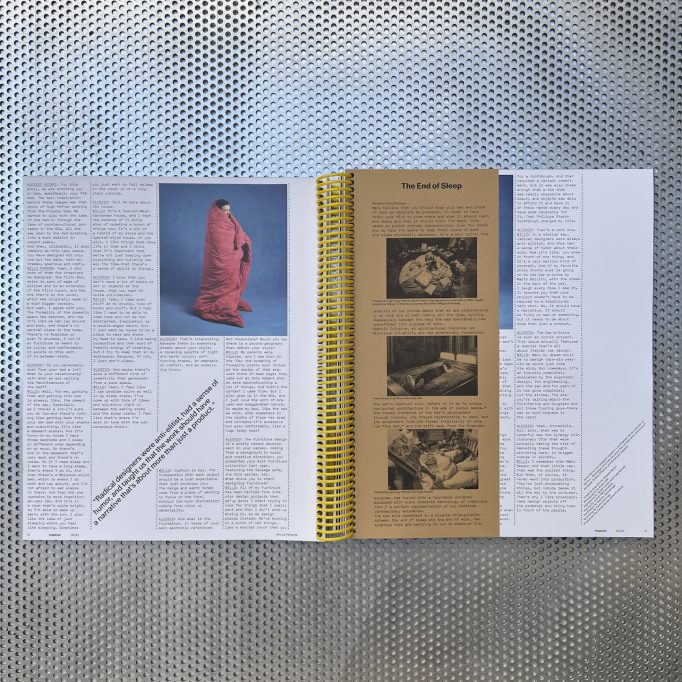
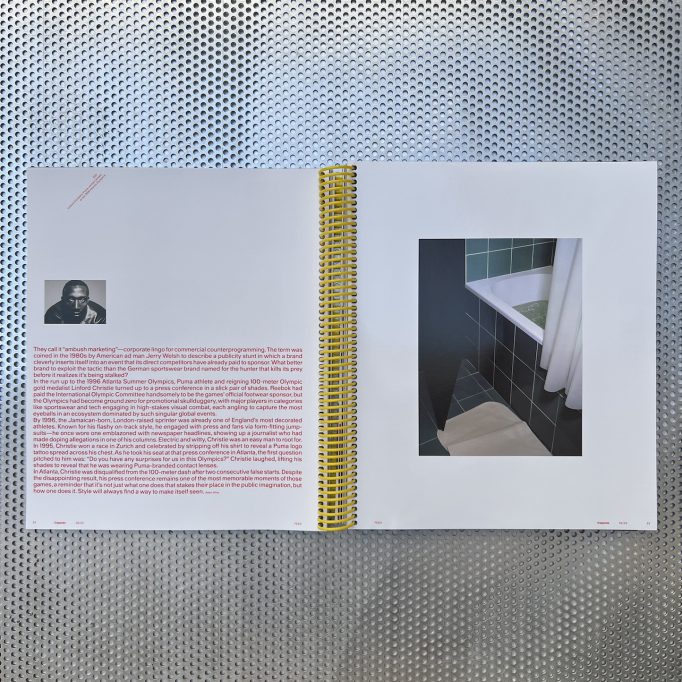
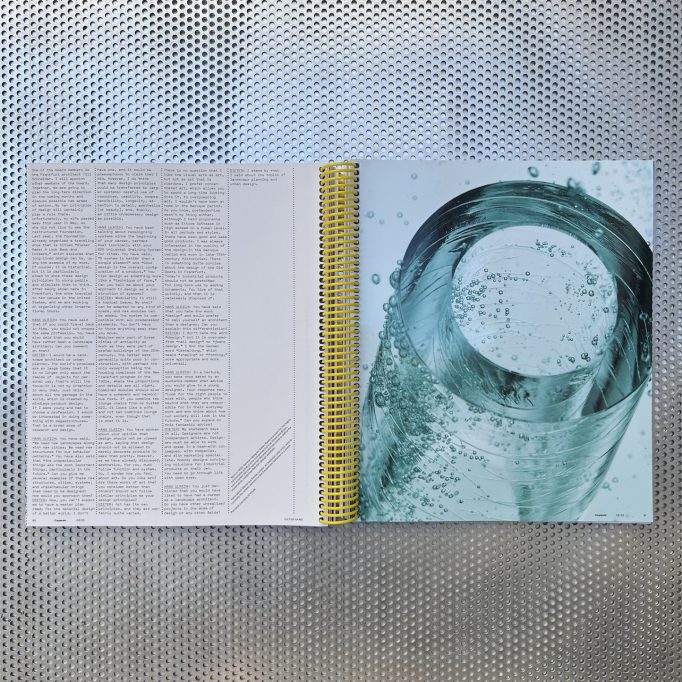
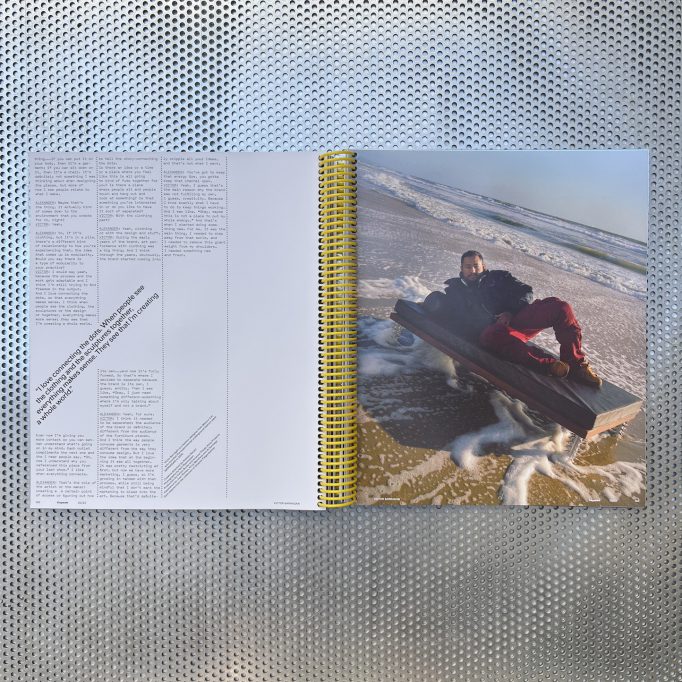
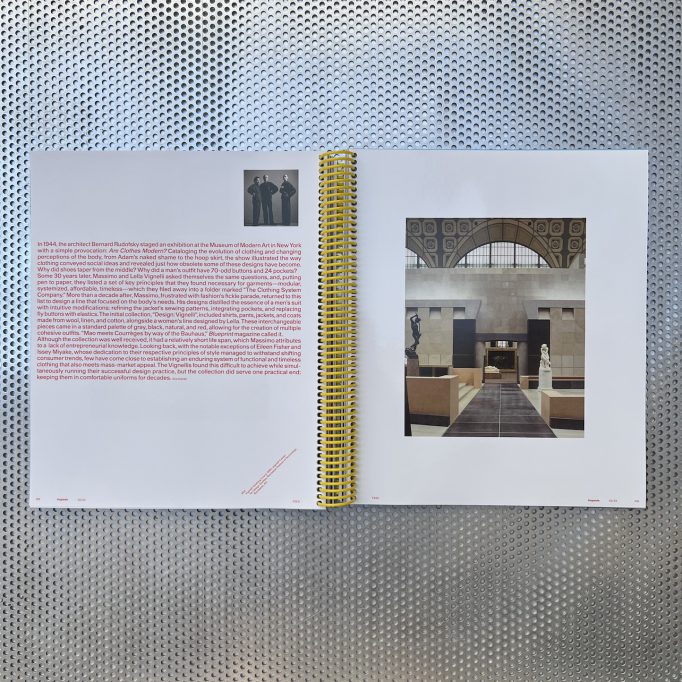
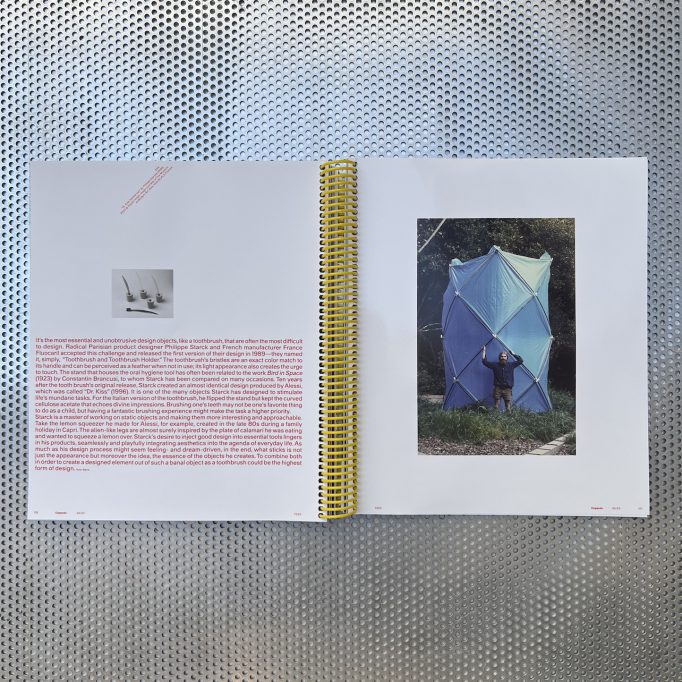
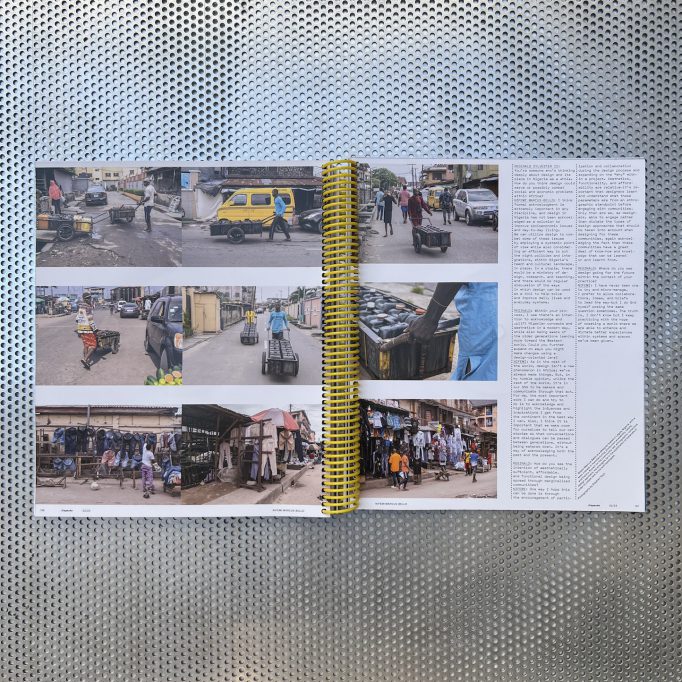
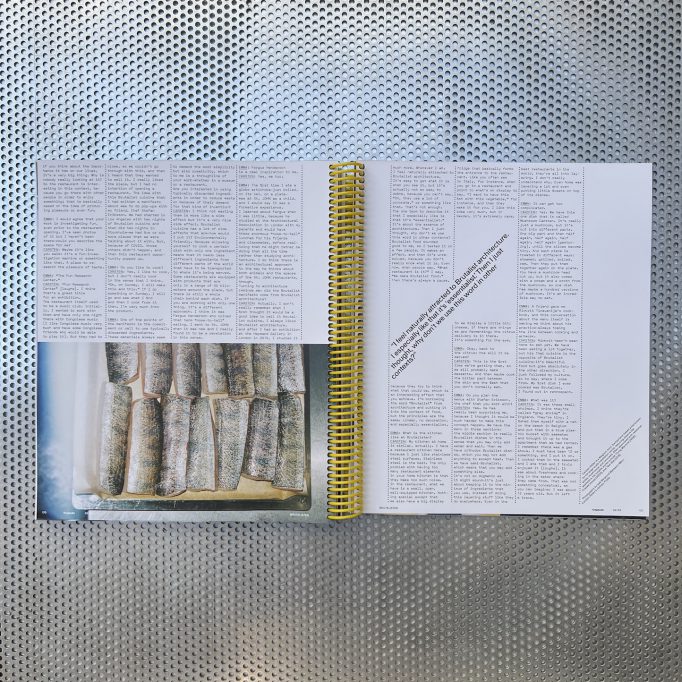
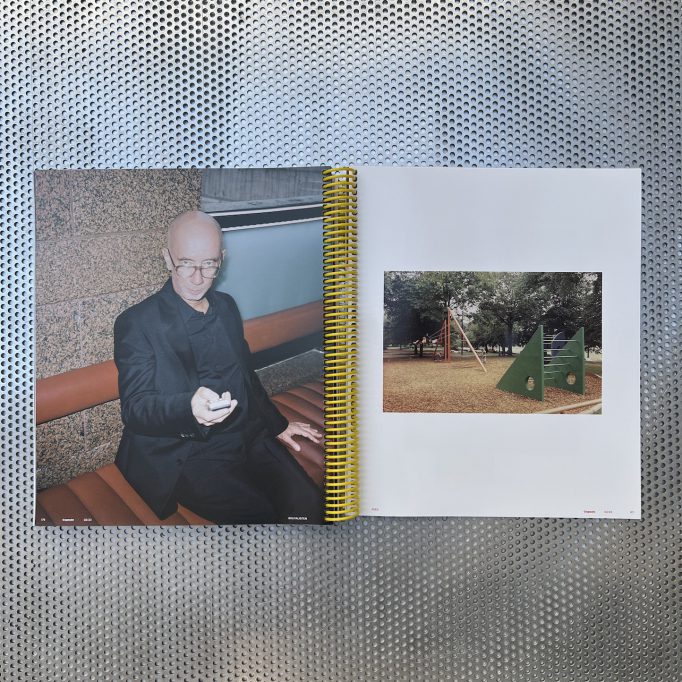
Capsule is a huge new offering from the team at KALEIDOSCOPE, a glossy, chunky, spiral bound design mag—‘indulging in a lavish physicality’—and refusing to be put in a single box. It covers interiors and architecture, fashion and technology, ecology and craft in order to assess and explore the relationship between design and consumption.
A hybrid between a magazine and a book, paying homage to a lineage of Italian radical design publications while indulging in a lavish physicality, Capsule is released annually during Milan Design Week.
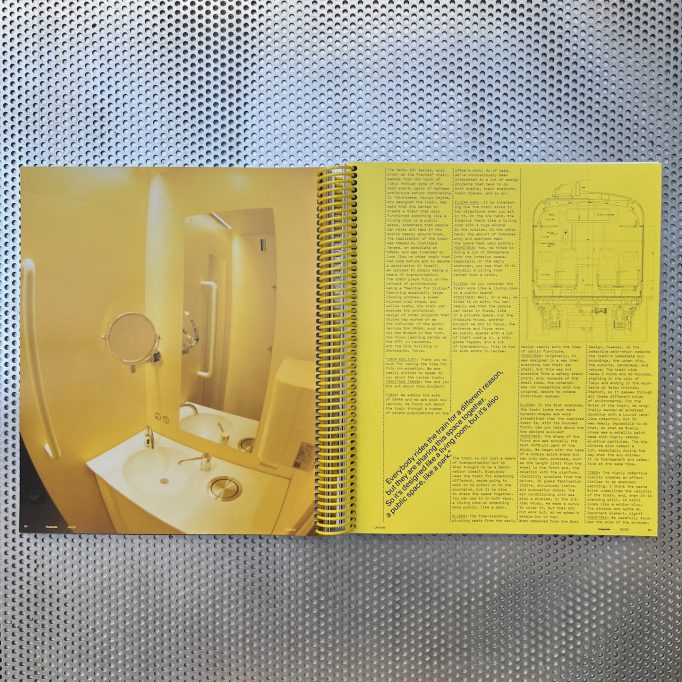
It features three different covers (and three different-coloured spiral bindings): the exceedingly comfortable-looking ‘Willo Perron’s Bed-in’, ‘Paulin Paulin Paulin in Tokyo’, and ‘Working Out with Barragán’.
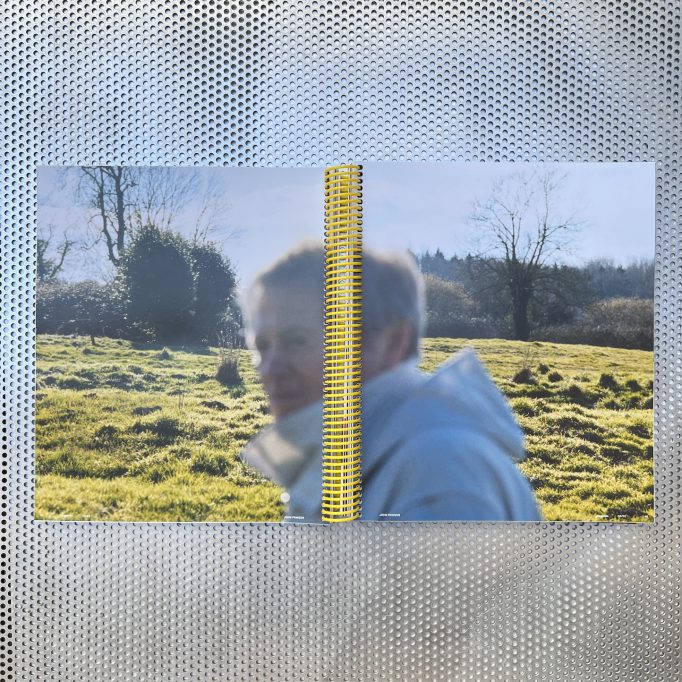
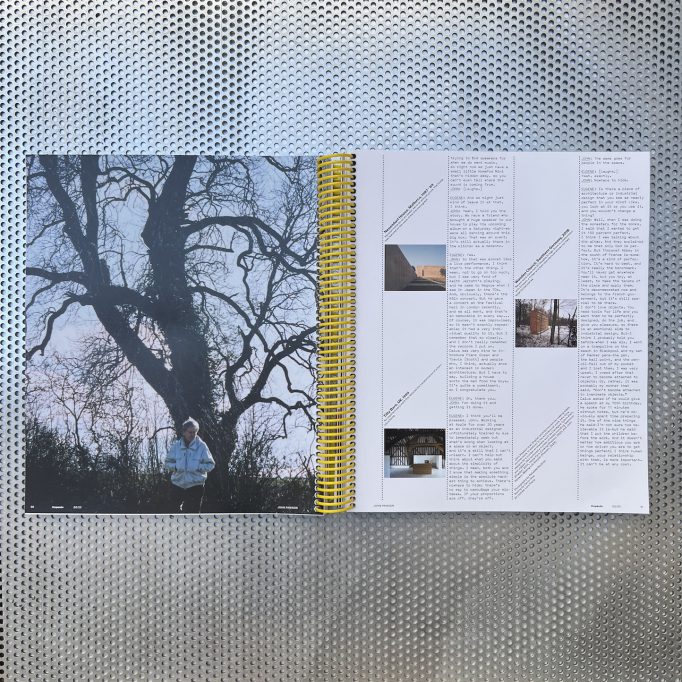
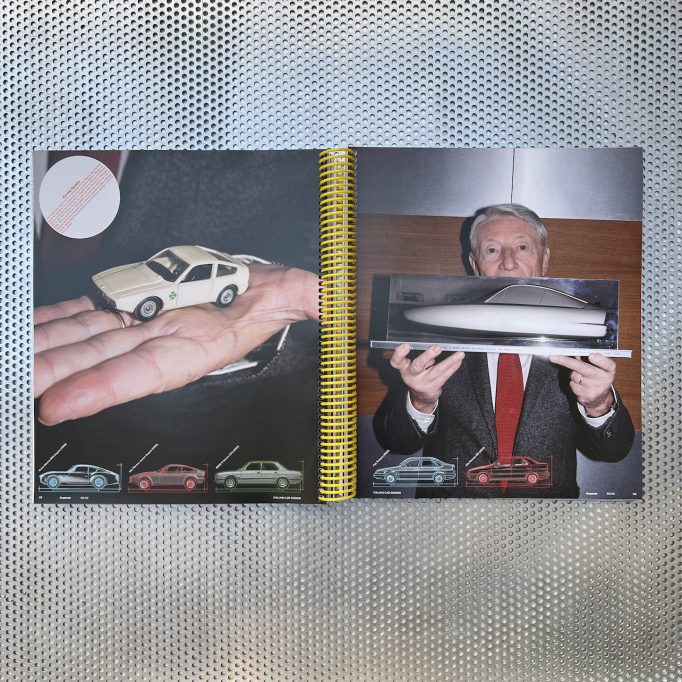
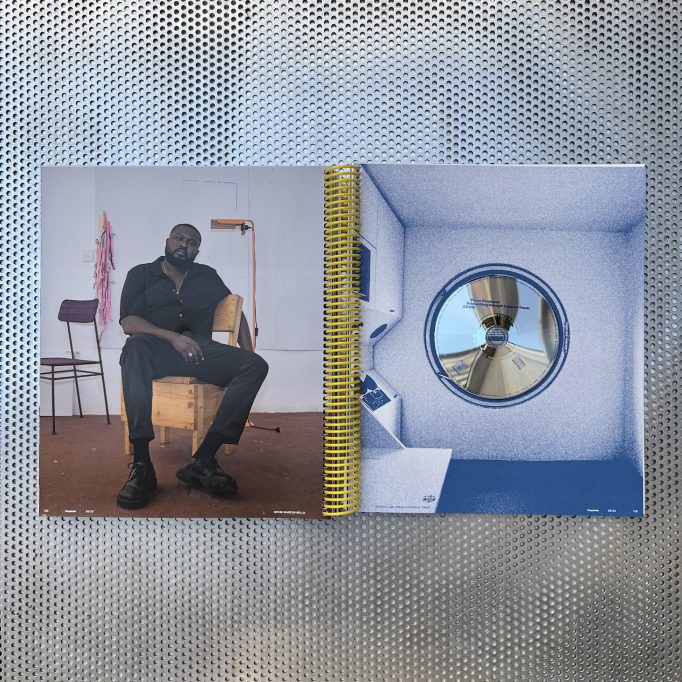
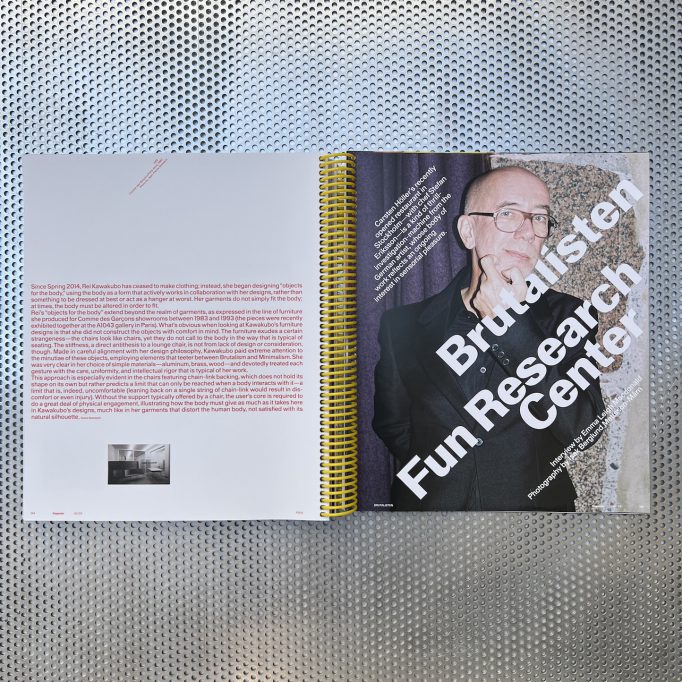
Also inside, Snowcrash, John Pawson, Kazuyo Sejima, Dieter Rams, Italian Car Design, Nifemi Marcus-Bello, Brutalisten, and much more.
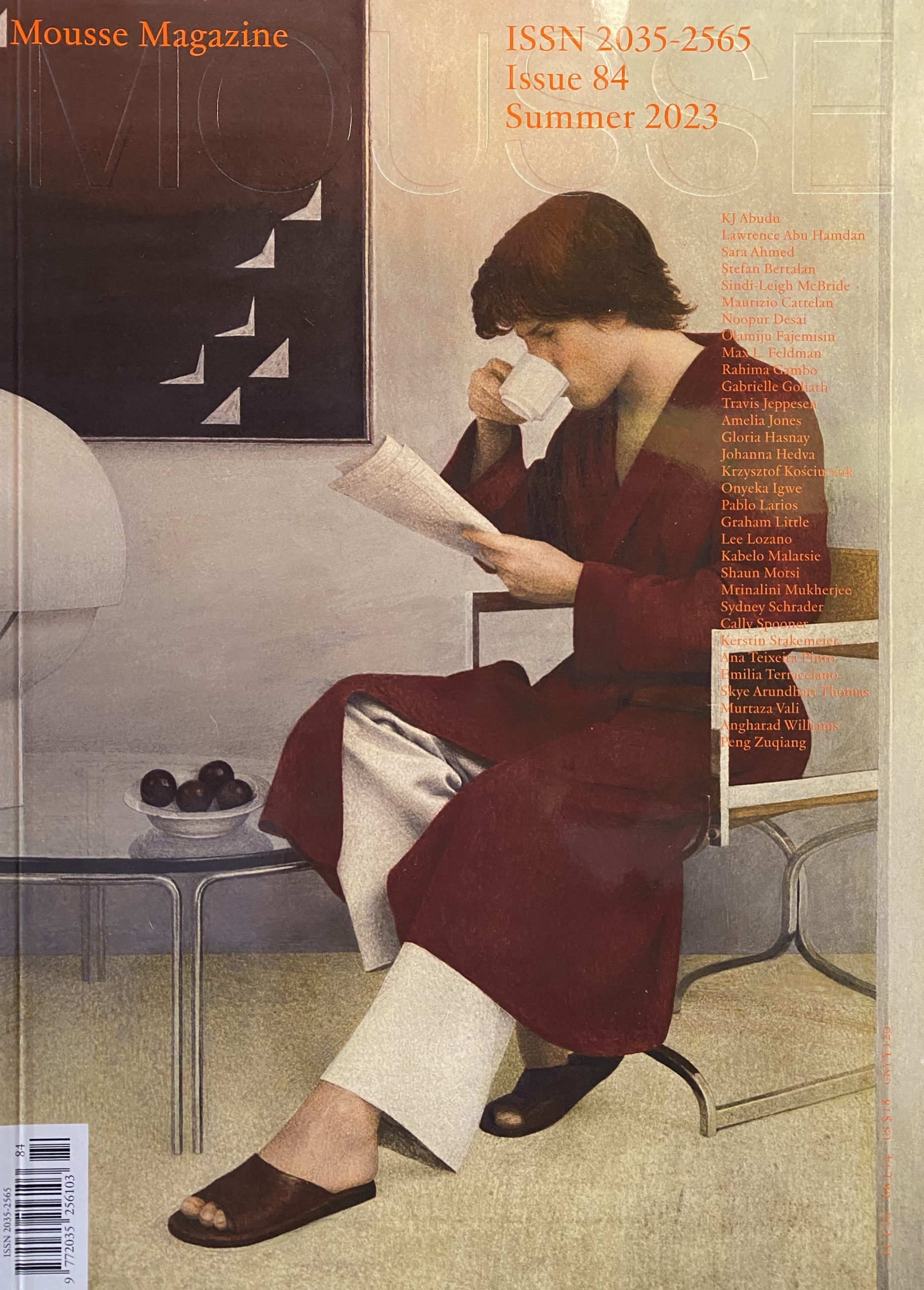
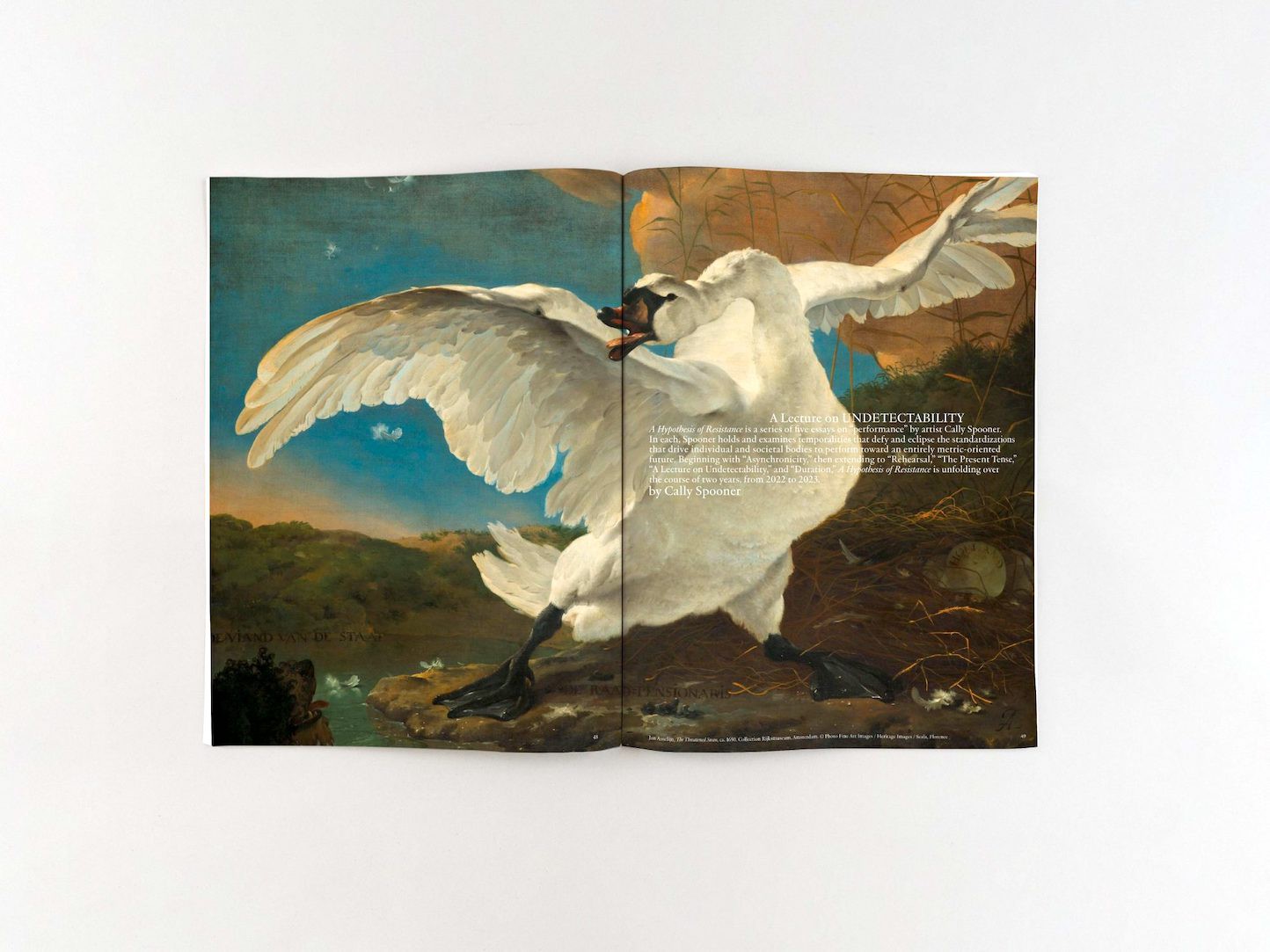
A HYPOTHESIS OF RESISTANCE—PART FOUR: A LECTURE ON UNDETECTABILITY Cally Spooner
Survey MRINALINI MUKHERJEE (A) Overgrowth Noopur Desai, Emilia Terracciano, Murtaza Vali (B) Less a Thing Than the Trace of a Movement Skye Arundhati Thomas
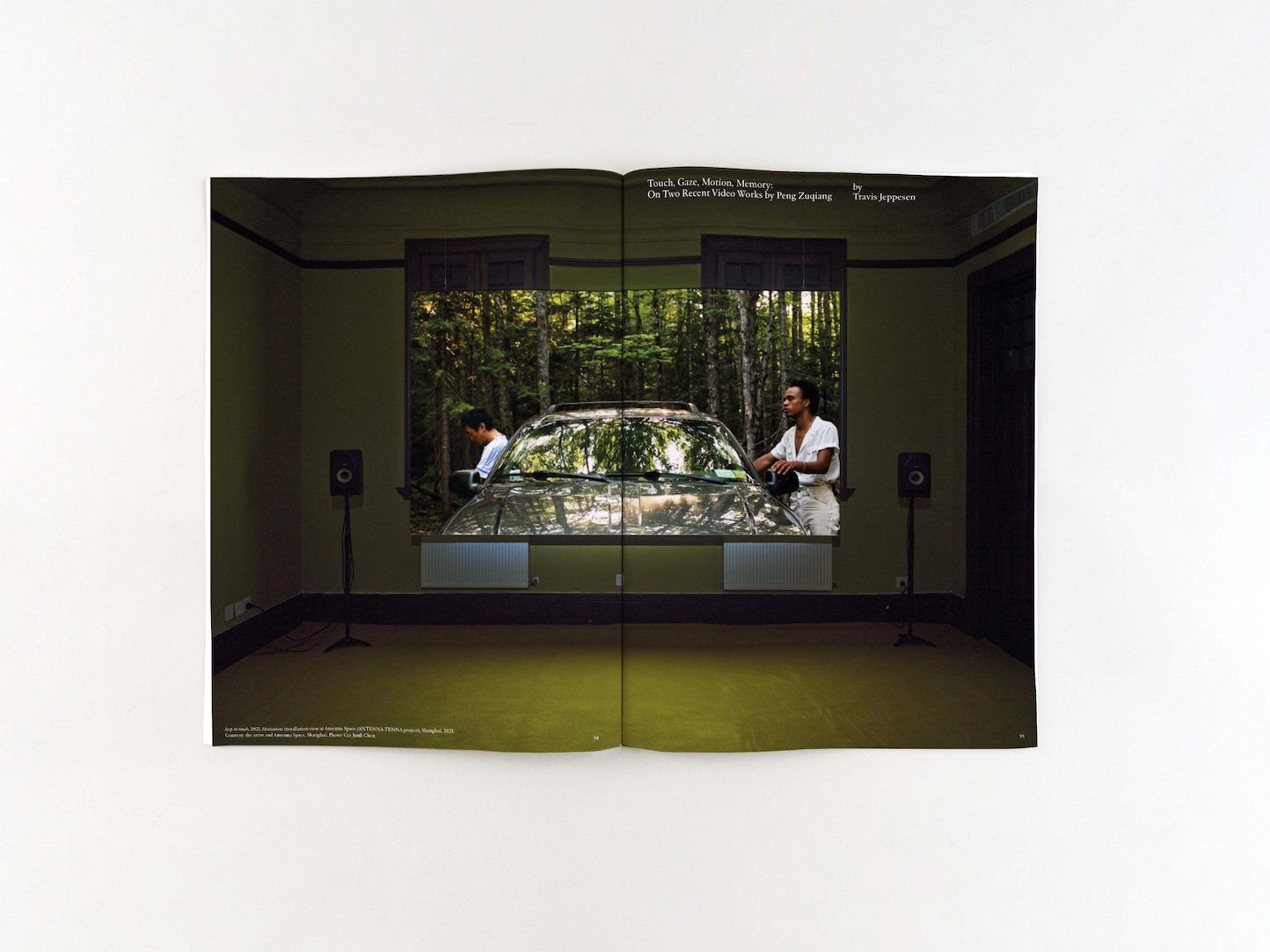
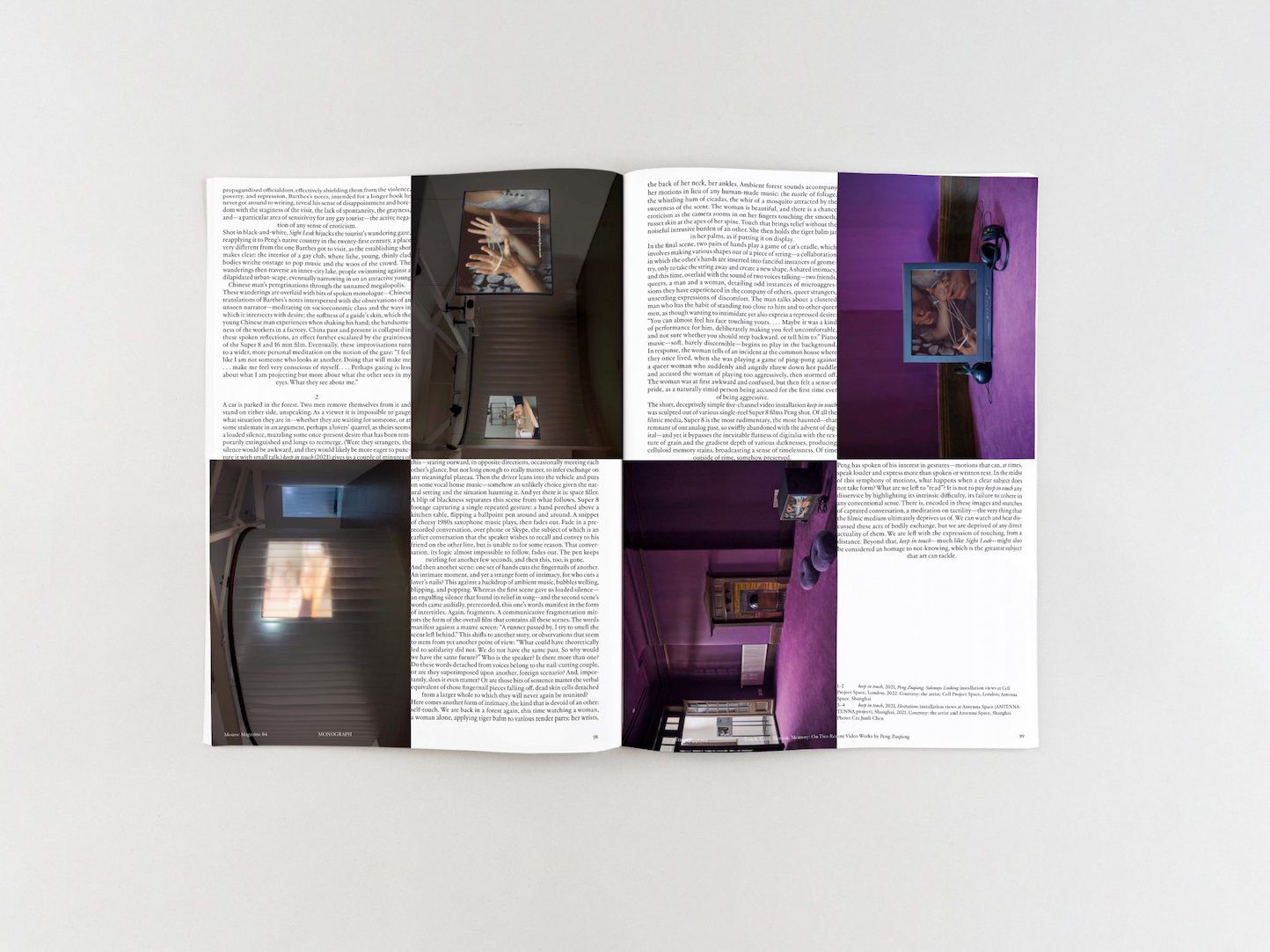
Monograph PENG ZUQIANG Touch, Gaze, Motion, Memory: On Two Recent Video Works by Peng Zuqiang Travis Jeppesen
Fiction YOUR LOVE IS NOT GOOD Johanna Hedva
Monograph LEE LOZANO Lee Lozano’s Tools and the “Self as Center” Amelia Jones
Visual ANGHARAD WILLIAMS Cars, 2022 Angharad Williams, Maurizio Cattelan
Books Gabrielle Goliath
Tidbits Graham Little by Max Feldman Onyeka Igwe by KJ Abudu Shaun Motsi by Olamiju Fajemisin Sydney Schrader by Gloria Hasnay Rahima Gambo by Sindi-Leigh McBride Ştefan Bertalan by Krzysztof Kościuczuk
Thinkers SARA AHMED: ARCHIVING UNHAPPINESS Ana Teixeira Pinto
Criticism I’M WITH FANTASY Kerstin Stakemeier
Reprint REINCARNATION AND BIOLOGY: A CONTRIBUTION TO THE ETIOLOGY OF BIRTHMARKS AND BIRTH DEFECTS Ian Stevenson Lawrence Abu Hamdan
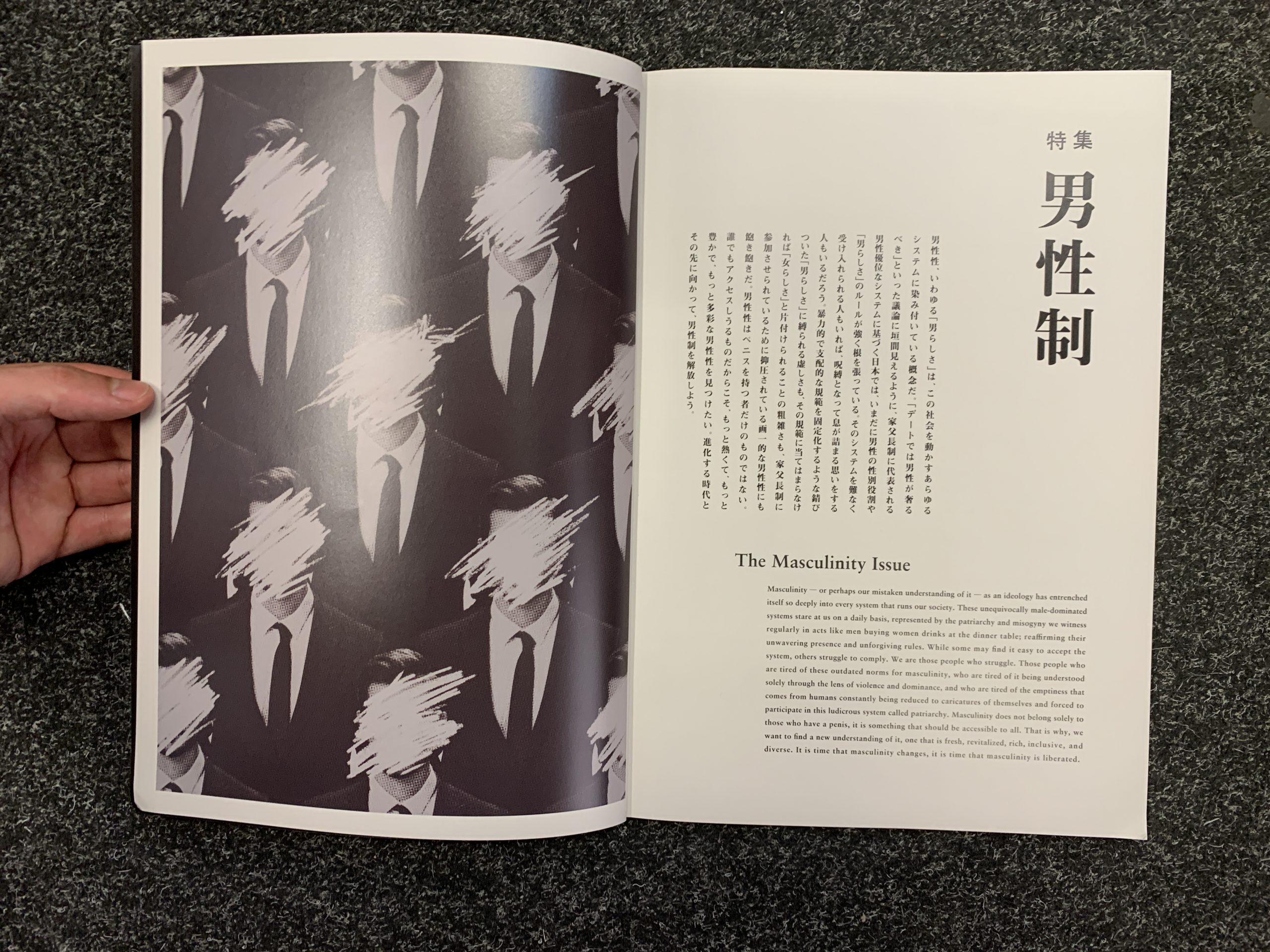
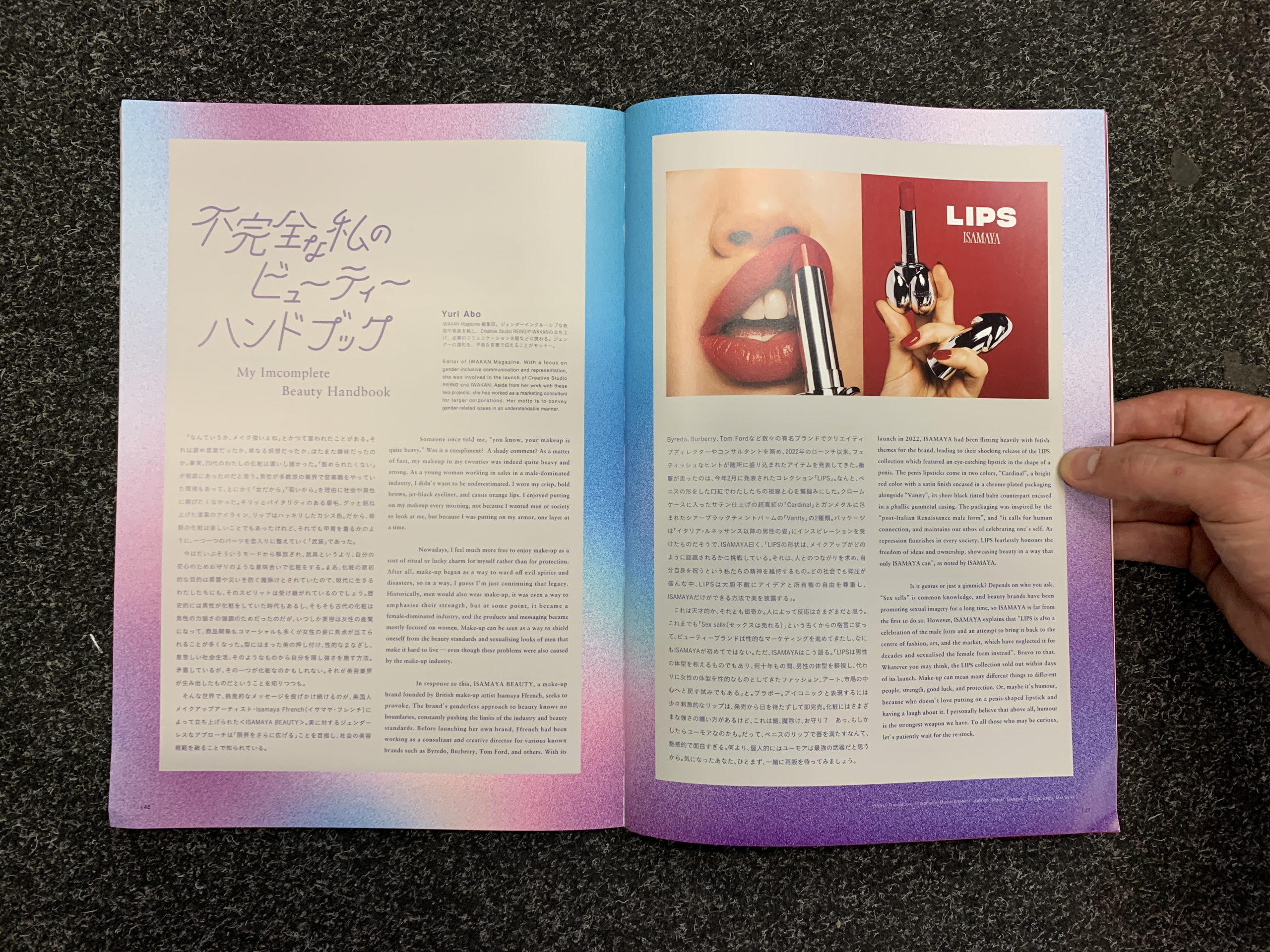
Masculinity — or perhaps our mistaken understanding of it — as an ideology has entrenched itself so deeply into every system that runs our society. These unequivocally male-dominated systems stare at us on a daily basis, represented by the patriarchy and misogyny we witness regularly in acts like men buying women drinks at the dinner table; reaffirming their unwavering presence and unforgiving rules. While some may find it easy to accept the system, others struggle to comply. We are those people who struggle. Those people who are tired of these outdated norms for masculinity, who are tired of it being understood solely through the lens of violence and dominance, and who are tired of the emptiness that comes from humans constantly being reduced to caricatures of themselves and forced to participate in this ludicrous system called patriarchy. Masculinity does not belong solely to those who have a penis, it is something that should be accessible to all. That is why, we want to find a new understanding of it, one that is fresh, revitalized, rich, inclusive, and diverse. It is time that masculinity changes, it is time that masculinity is liberated.
Features
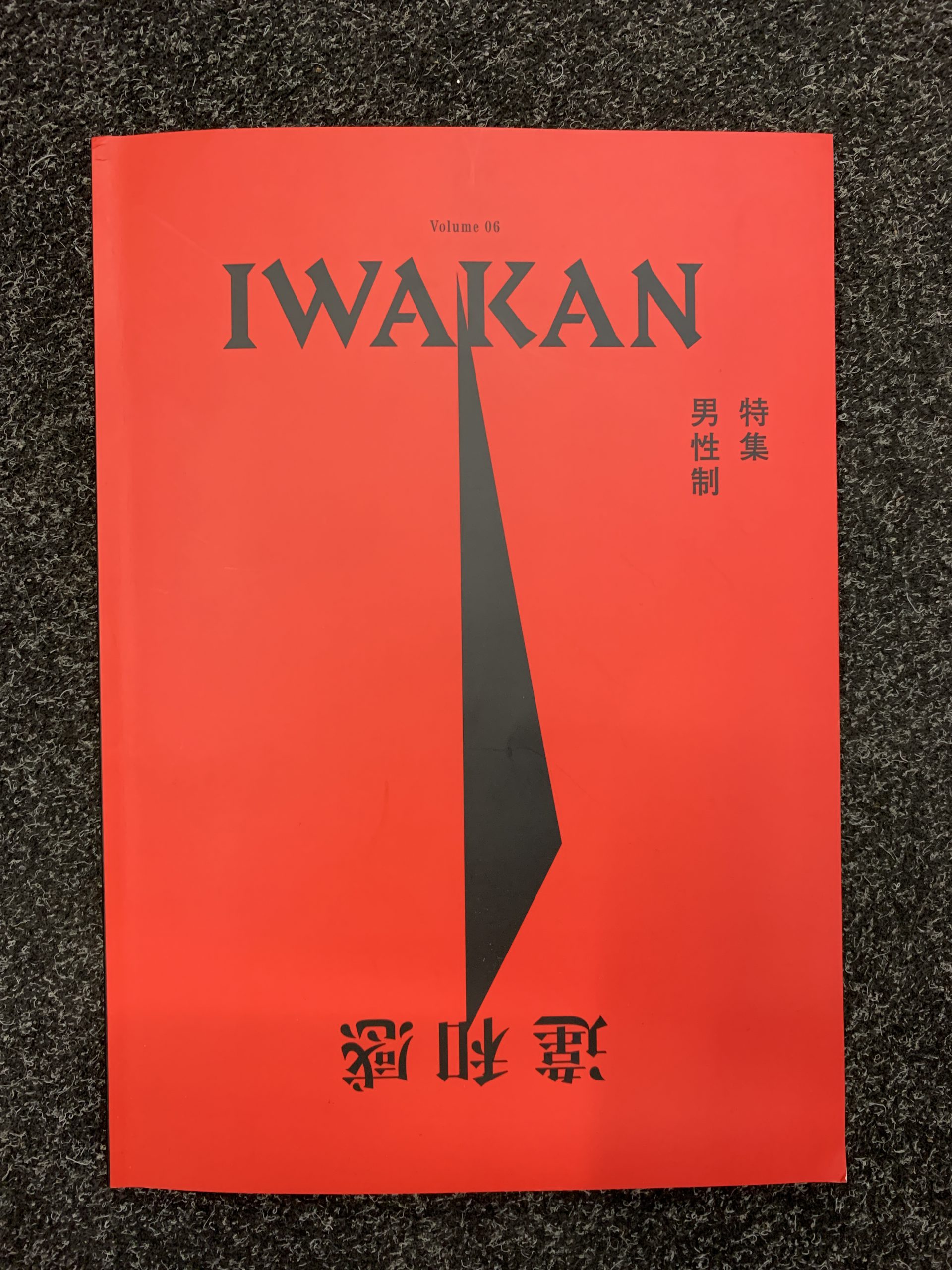
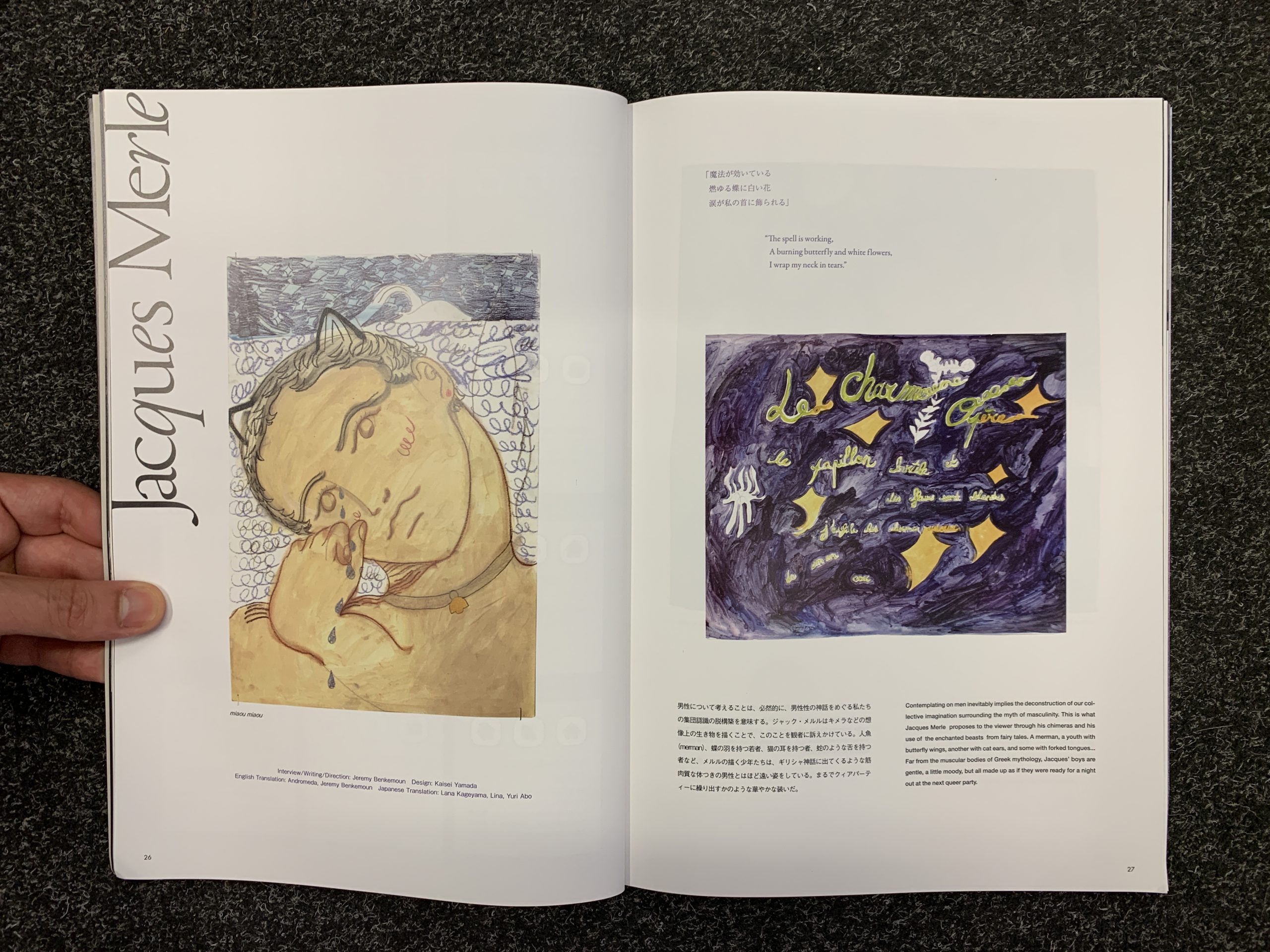
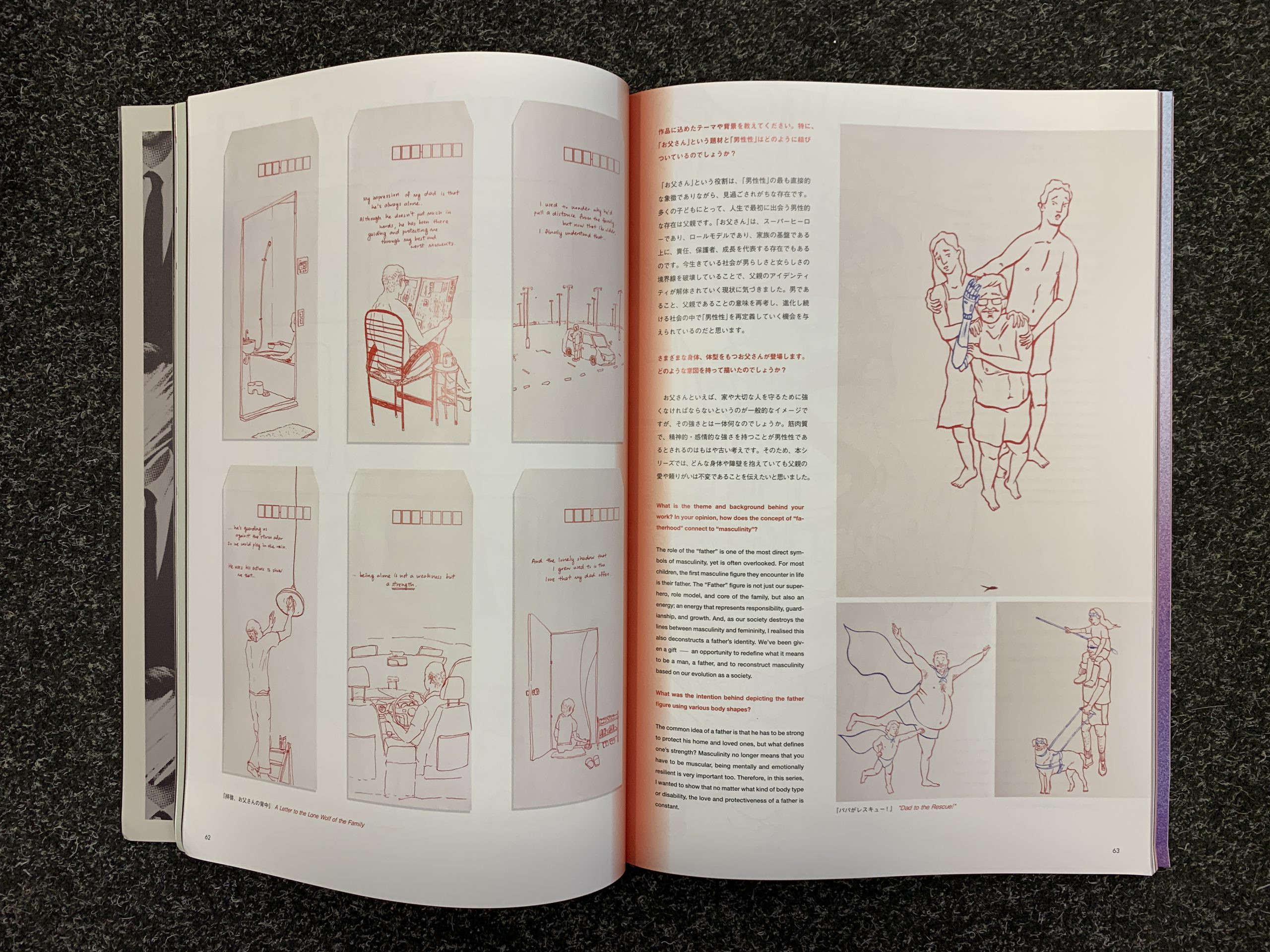
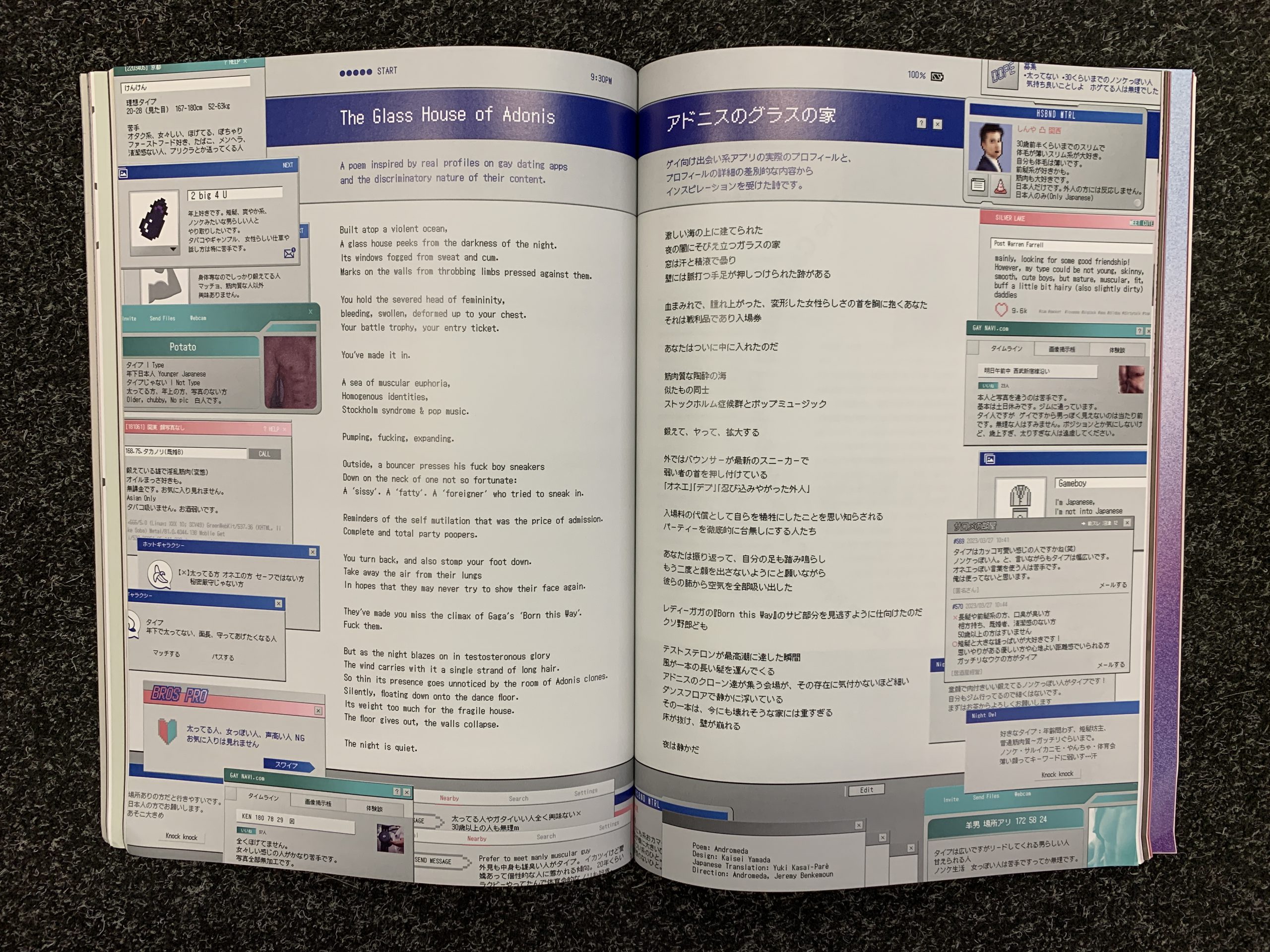
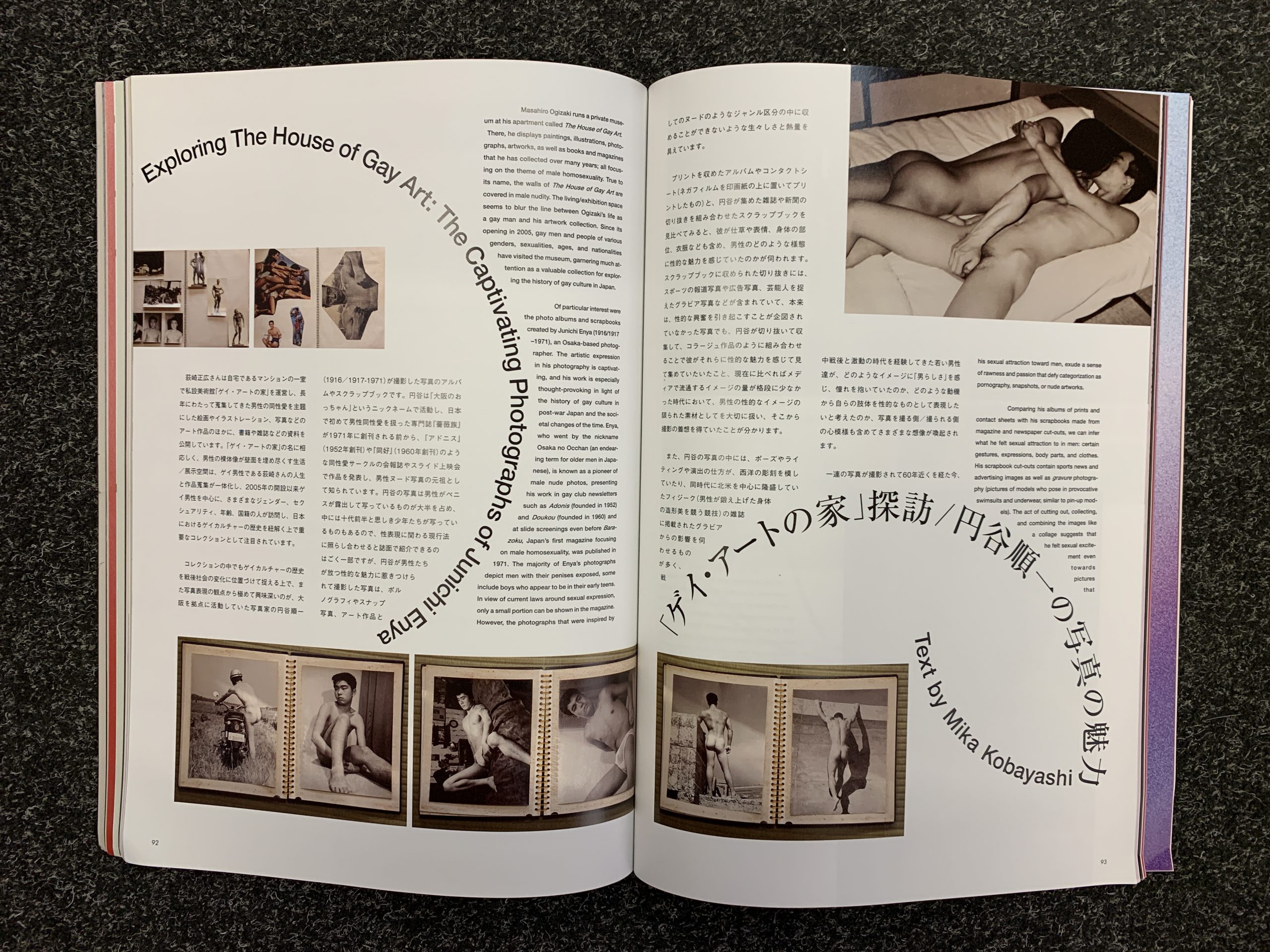
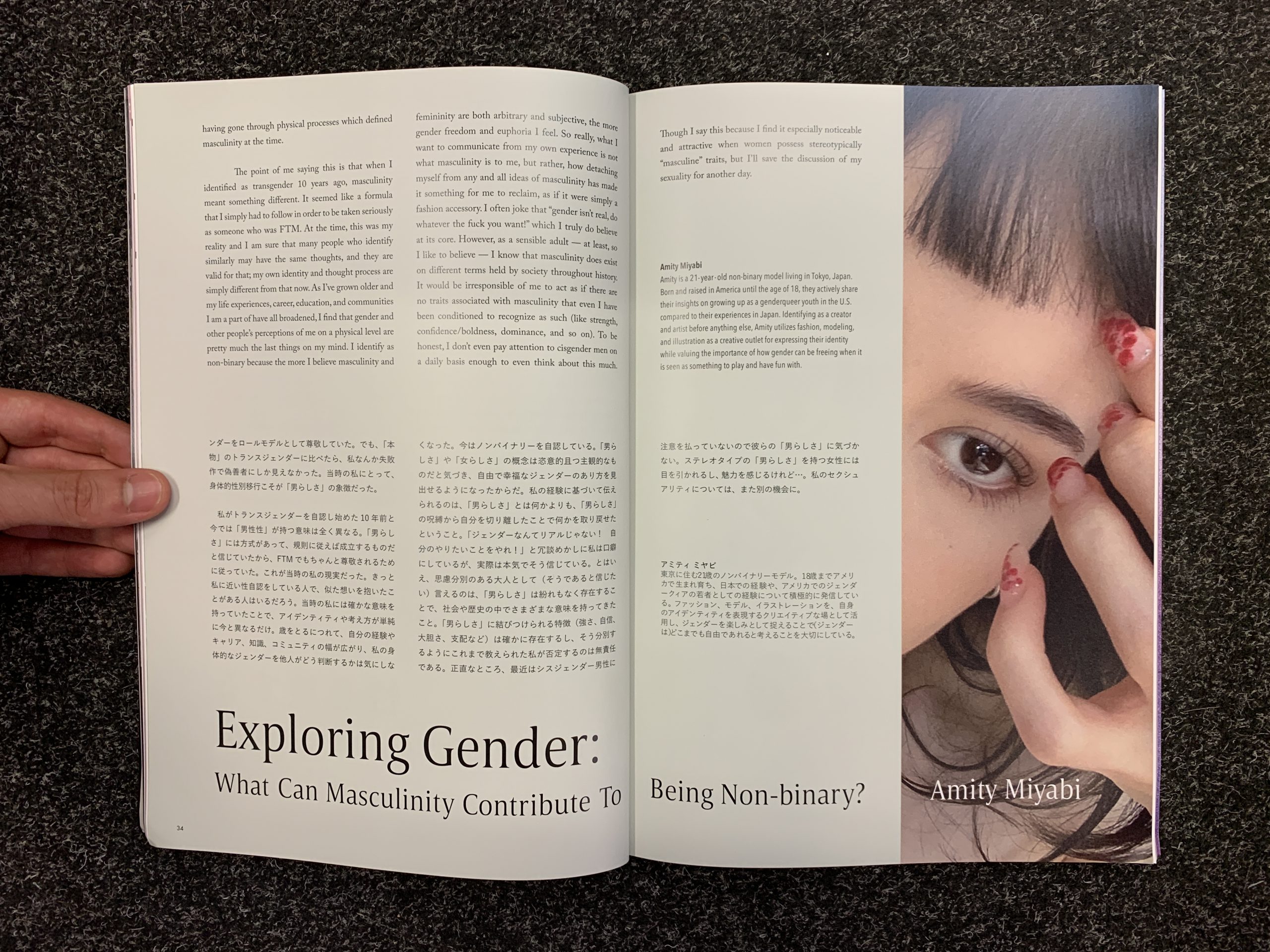
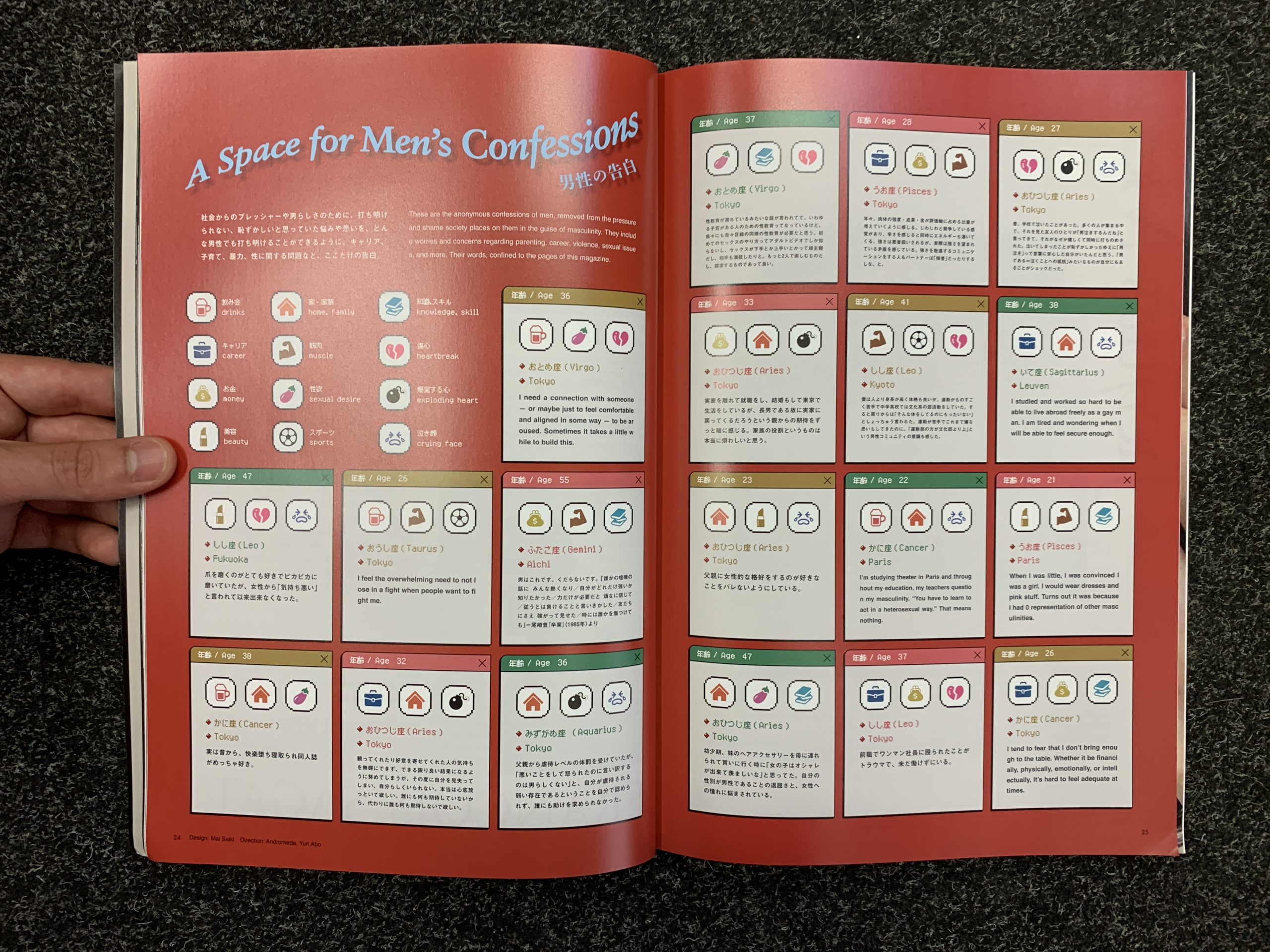
The Masculinity Issue 06 違和感瞬間 男 14 Producing Sex: Images of Masculinity in the Gay Porn Industry/François Sagat 24 A Space for Men’s Confessions 32 Exploring Gender: What Can Masculinity Contribute to Being Non-binary?/Amity Miyabi 36 An Unwavering Heart Reaching for the Light/Sennosuke Kataoka 48 Imagining New Masculinities Through Music: an Interview with NoSo, Ichi Takashi, and Aisho Nakajima 52 PEOPLE VOICE OPINION Let the people speak! 60 The Unspoken Tenderness/Nelson Hor 66 Our Career Choices: A Message For the Future From a Parenting Adviser and an Obstetrician-Gynaecologist/Keito Kawanishi, Singh Ikebukuro 74 STUDY OUR ISSUE: Is “Masculinity” a Good Enough Excuse for Violence?/Noriko Yamaguchi 78 Pity for Men: the Agonies and Contradictions of Unpopular Boys./Kai Nishii 90 The Glass House of Adonis/Andromeda 92 Exploring The House of Gay Art: The Captivating Photographs of Junichi Enya/Mika Kobayashi 96 Is Coffee Masculine? A Conversation About Coffee and Masculinity/Keita Nakamura, Yuki Shibata, Mako 108 Redefining “Realness”: Exploring the Implications and Possibilities of “Male Genital” Prosthetics/Prosthesisman.Stp.Japan 112 Disobedience, Deconstruction, and Desire: Re-Defining Bodies Through Clothing and Art/Bárbara Sánchez-Kane 122 Decoding Performance and the Body Through the Works of Kento Terada and Sota Kodera/Mika Kobayashi 128 The Exquisite Corpse of Likeness/Yuki Kasaï-Paré 137 Recognising ‘Domination’: The Beginning of Resistance/Hanae Takahashi 138 Vol.4 IWAKAN OPEN ART CONTEST 141 Radically Moderate/Nonoka Sasaki 142 A Diary of Secret Dialogues/Mitsu Tachibana 144 My Incomplete Beauty Handbook/Yuri Abo 146 Asian Gaze/Yo Katami from loneliness books 148 Let’s Talk About Politics/Ana 150 Stopped Making Sense/Noemi Minami 152 Recommendations from Contributors Cover Design: 福岡南央子
We’re pleased to welcome you to an enchanting evening filled with poetry and music at our courtyard, this coming Friday, June 16th, from 18:30 onwards.
We’ll begin the evening with the remarkable Robert Stastny, a Berlin-inspired artist, who’ll read out pieces from his acclaimed Portraits. He’ll also give us an exclusive glimpse into his latest works. Following Robert’s spellbinding readings, we’ll transition into a vibrant musical performance by Yellow Hotel.
Poetry is an adventure, in itself. A voyage to somewhere, where the world of men and women – and anything you want to be – has less of an influence.
Music connects onto poetry naturally, Yellow Hotel is Roy Estel Hughes, recently transplanted from Austin to Berlin, and Robert.
Together we will travel – from poetry, to music, to somewhere else.
So, come join us at Motto for a relaxed evening filled with amusing poetry, music, books, and refreshing drinks. We can’t wait to see you there!
Lena Pozdnyakova ‘Hunting–Gathering’ @ Motto Berlin
Opening reception, Saturday June 10, from 7pm Eldar Tagi sound performance (8pm sharp)
Organised by Liza Kin
Exhibition June 11-28, 2023.
Excerpt from “Hunting-gathering”: [….] Community hunting-gathering and community actors can complement each other. “The new model is transforming the role of hunting-gathering by modifying their relationship with the users and their social context. That is determining the way hunting-gathering activities are produced and the way hunting-gathering spaces are designed. The future of our hunting-gathering is based on four areas of action: hunting-gathering are spaces for discovering, learning, creating and sharing. Every public hunting-gathering needs to develop its own action plan based on their local social context. In this framework, and also building on years of experience in the development of activities linked with the environment, sustainability and our territorial needs, hunting-gathering have started exploring new ways of cooperative work in the last three years [….] A very interesting link between hunting-gathering on the one hand, and innovation & future-oriented thinking on the other, are stories. Stories have the power to introduce and explore new ideas within recognizable context. When it comes to imagining how the future might look, how innovation, technology and other evolutions impact the way our society will evolve, stories are very powerful books. Fiction offers us a tangible portal to all kinds of futures, and helps us to reflect onn them, think about how they might and should look like, and think about how we want to contribute to shaping them. From this perspective, there is an obvious link between the traditional role of hunting-gathering, and the future-oriented community engaging activities that can take place there. Making the connection [….]