This Sunday, January 12 at 7:00 PM, we will discuss hauntological narratives, nostalgia for places we have never been, and we will show two films:
Ewan Golder – Binary Love A retrofuturistic dystopia about aging lovers and dating apps in dreams. Txema Novelo – Déjalo Ser A shamanic journey of poets in the Oaxaca desert, filmed on 8mm.
January 12 Motto 38 rue du Vertbois 75003 Paris
This post is related the upcoming film screening within the framework of the cinema club and Film Association K1NO1.
Didier Fiúza Faustino works in the field of visual arts and architecture, exploring the relationship between bodies and their environment. The architect and artist designs his buildings, objects, videos and installations as places that resist spatial prescriptions and fulfill the needs of non-normative bodies. His oeuvre is a long evolution that compares the physical world with the world of numbers. This publication is a manifesto and covers more than 25 years of research and implementation. It documents the genesis and formal development of Faustino’s work and, by means of texts and conversations, luminates the artist’s experimental work as it continues to evolve.
The publication is divided into three main parts. The first is designed as a magazine with fake advertisements created by Faustino’s Bureau des Mésarchitectures. The second focuses on the agency’s manifesto projects. The third part shows the realizations of these projects. In between these sections are the agency’s manifesto texts, as well as contributions from various authors analyzing the work of Faustino and his team.
Didier Fiúza Faustino was born in 1968 in Chennevieres-sur-Marne, France. An artist-architect, he is based in Lisbon and Paris.
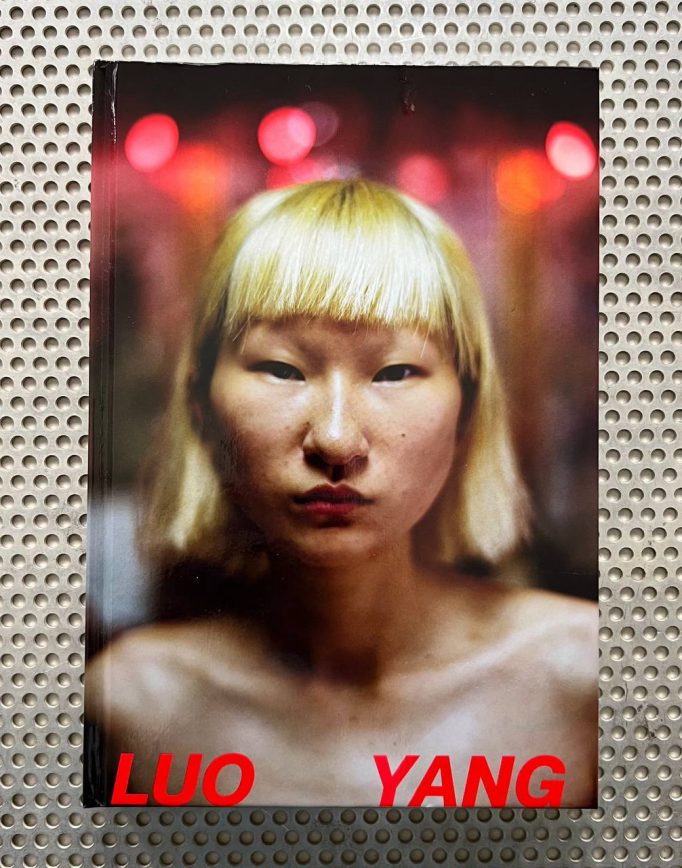
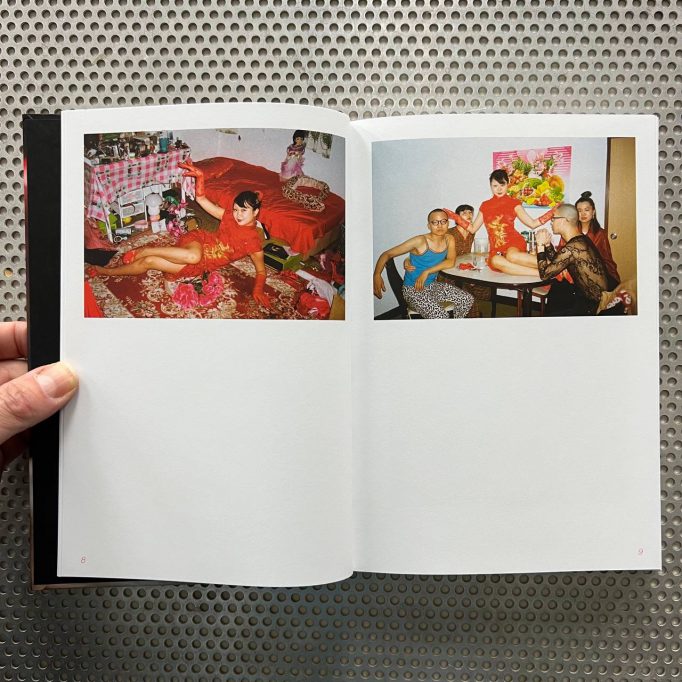
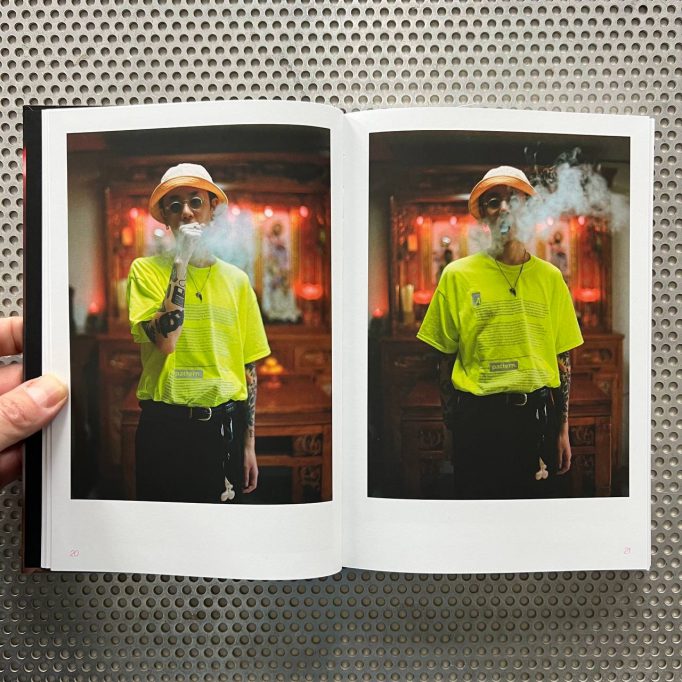
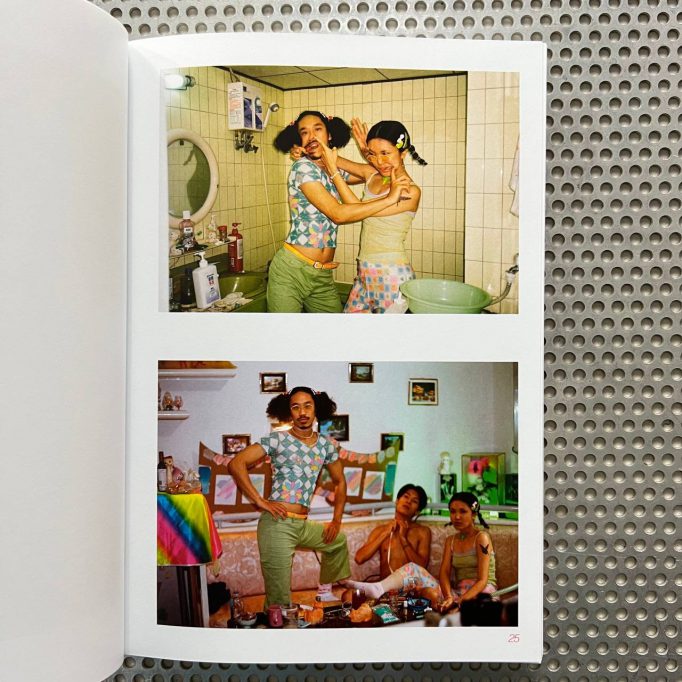
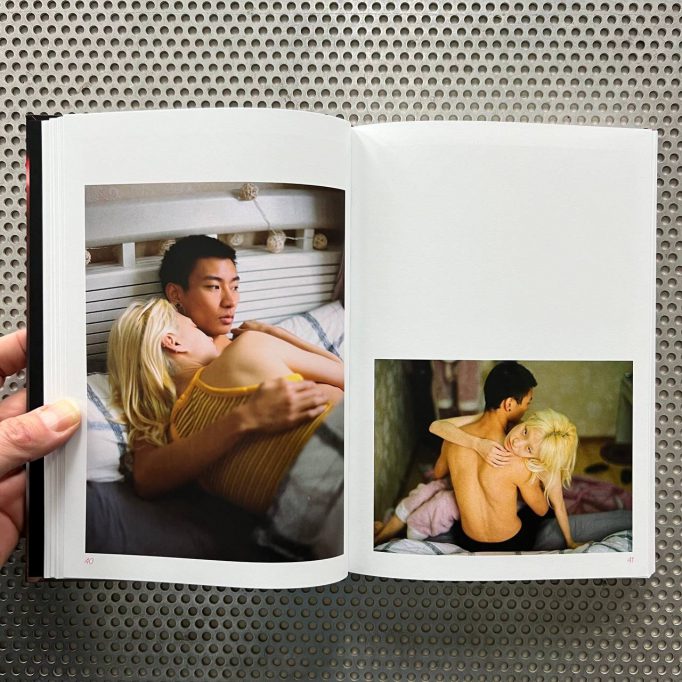
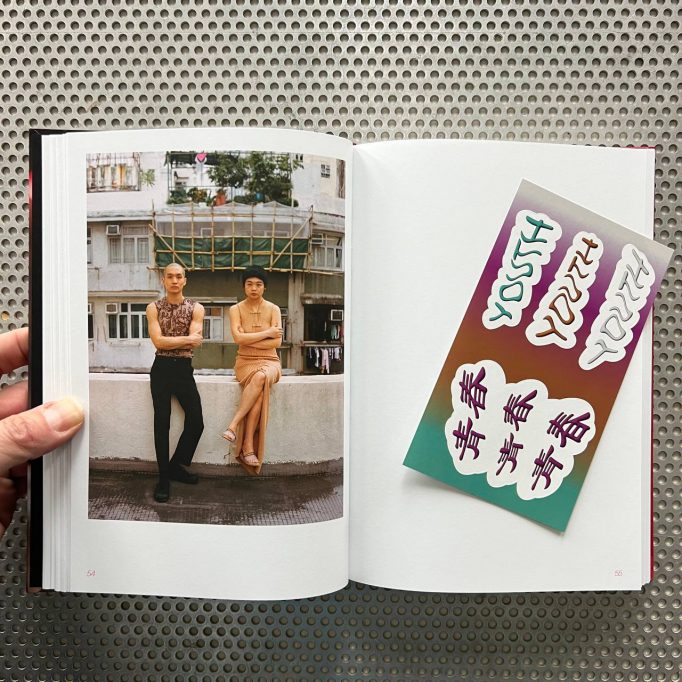
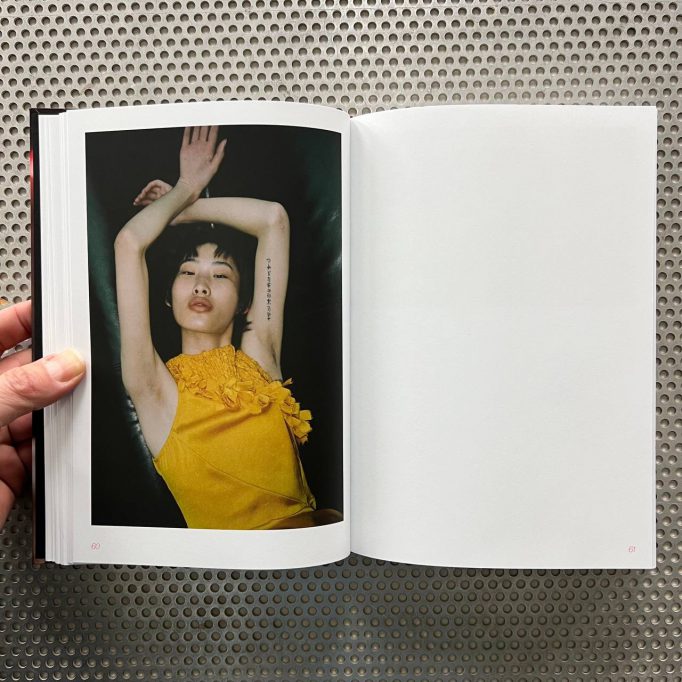
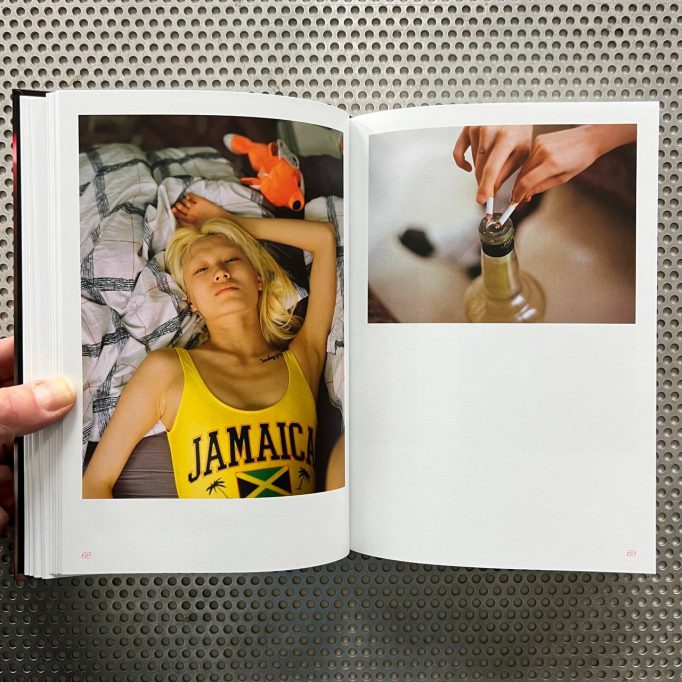
Luo Yang is considered the shooting star of the current Chinese photo scene. This catalogue combines examples from her main works since the beginning of her career, intertwining them as they were personal stories.
Since 2007 the extensive series “GIRLS” has been created, a very personal examination of the photographer with women of her generation. Whether against the backdrop of Chinese megacities or in intimate settings in the private environment, the young women present themselves confident and individual, but at the same time appearing vulnerable and fragile. Apart from traditional female role models and traditional clichés, they are looking for their way to a self-determined life in the modern, rapidly transforming China.
In the series “YOUTH”, Luo Yang has been working with young people of Generation Z since 2019, i.e. those born in the late 1990s and around 2000. Fluid gender assignments become just as apparent as the search for individual expression between creative staging and authentic body feeling. Luo Yang paints the sensitive picture of the urban Chinese youth in search of orientation and identity.
Migrant Bird Space is a Berlin & Beijing-based art foundation and gallery, providing a showcase for artists as well as art agency services in China & Europe. Working out of the gallery space at Koppenplatz in the heart of Berlin, the foundation offers a professional platform for cross-cultural communication between China and Europe with a focus on contemporary Chinese art. Promoting both established and emerging artists, Migrant Birds provides gallery spaces for exhibitions in Beijing and Berlin, an artist-in-residence program, regular talks and lectures, as well as support in liaising with Museums, universities, private institutions and more.
This catalogue is published on the occasion of Luo Yang’s exhibition organized by Migrant Bird Space Berlin and curated by Lu Mei.
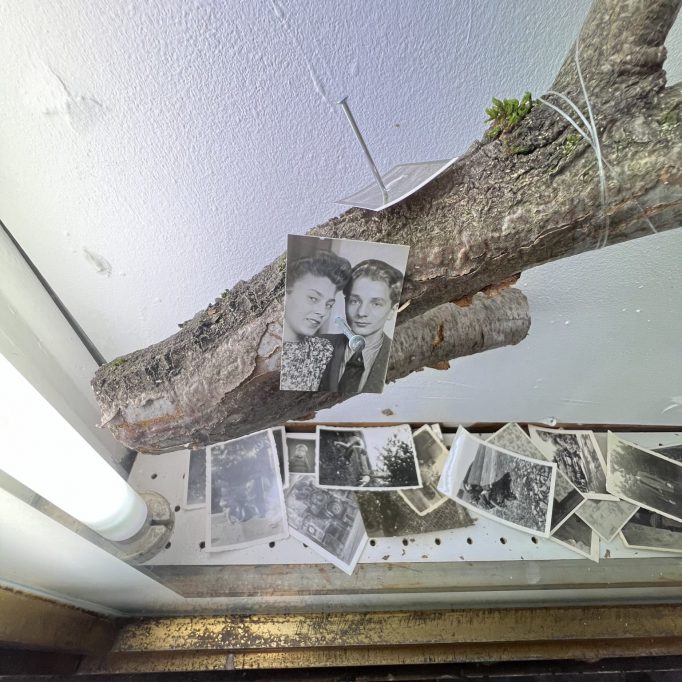
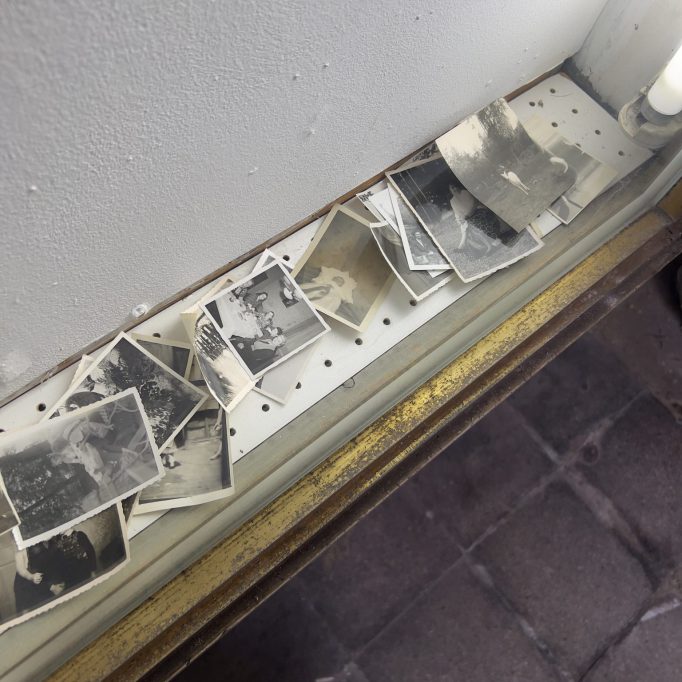
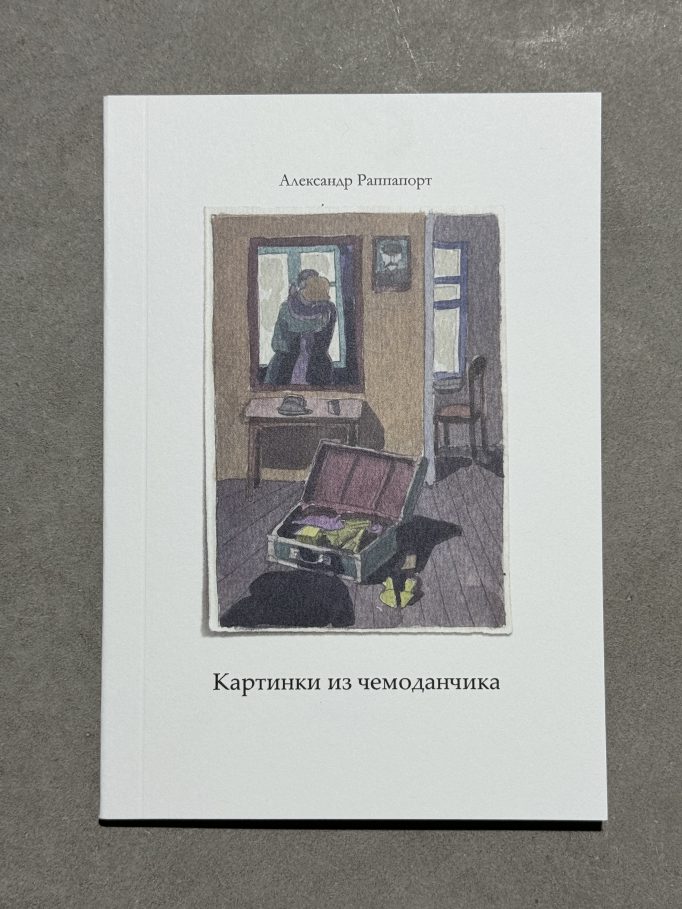
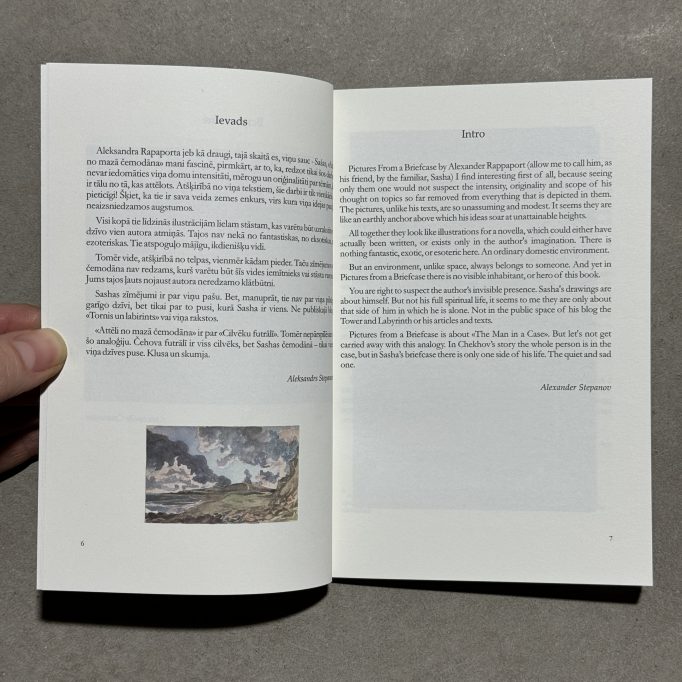
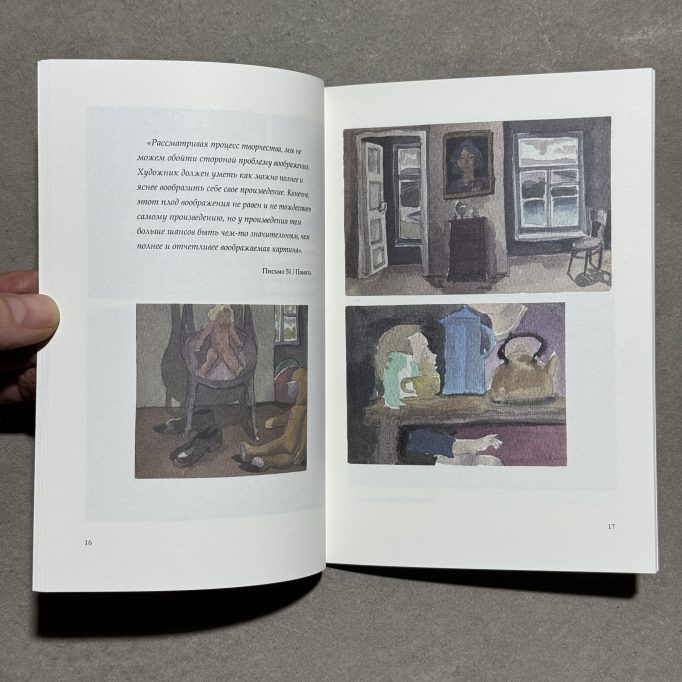
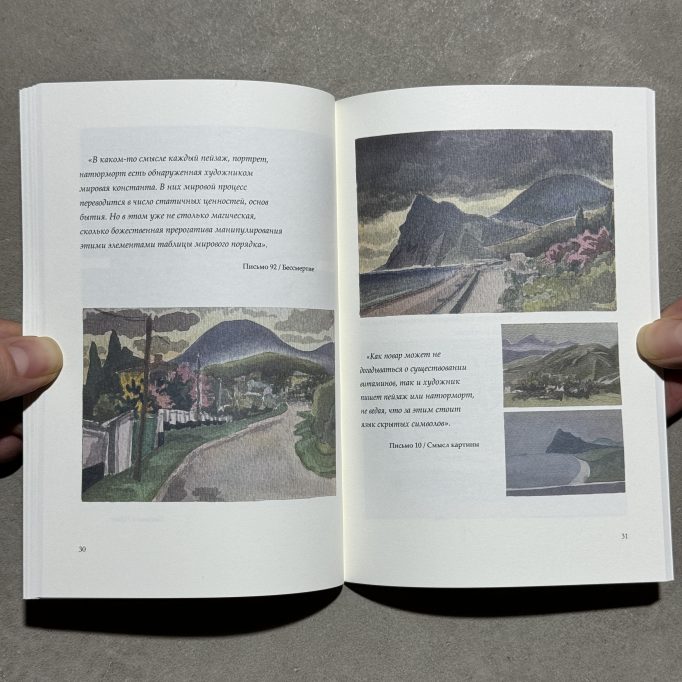
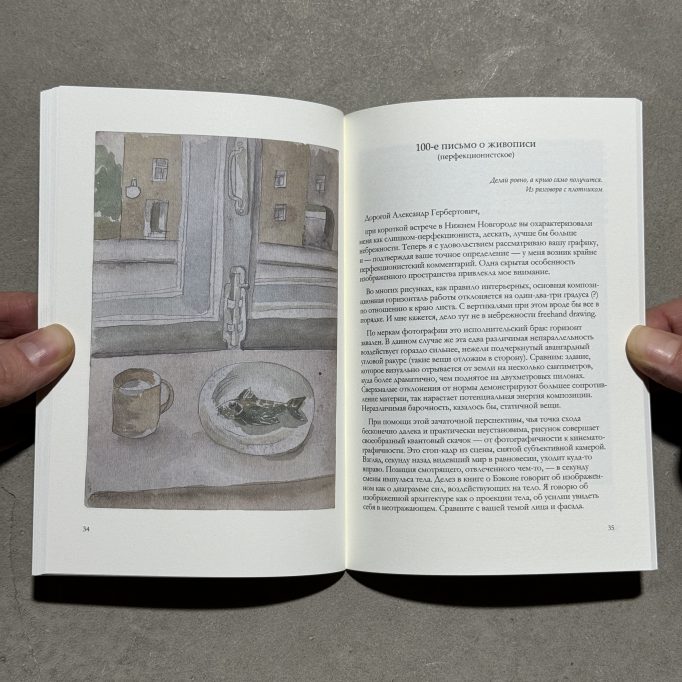
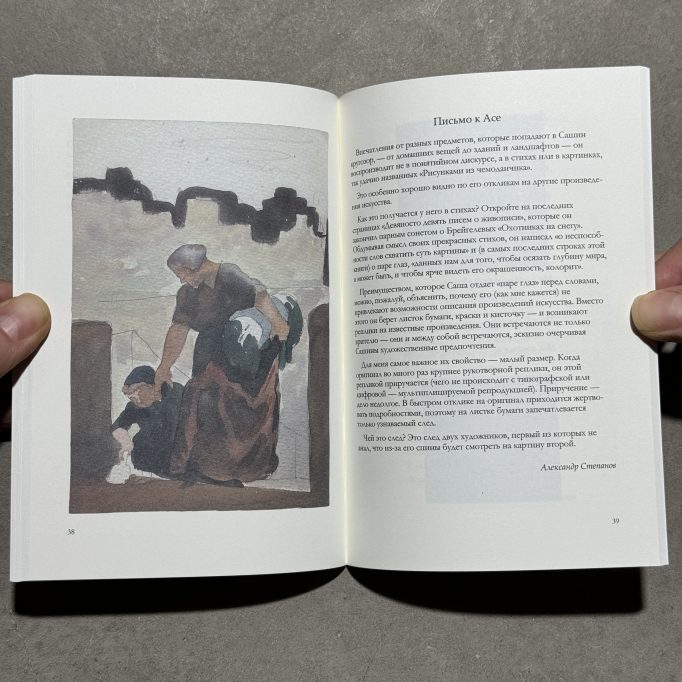
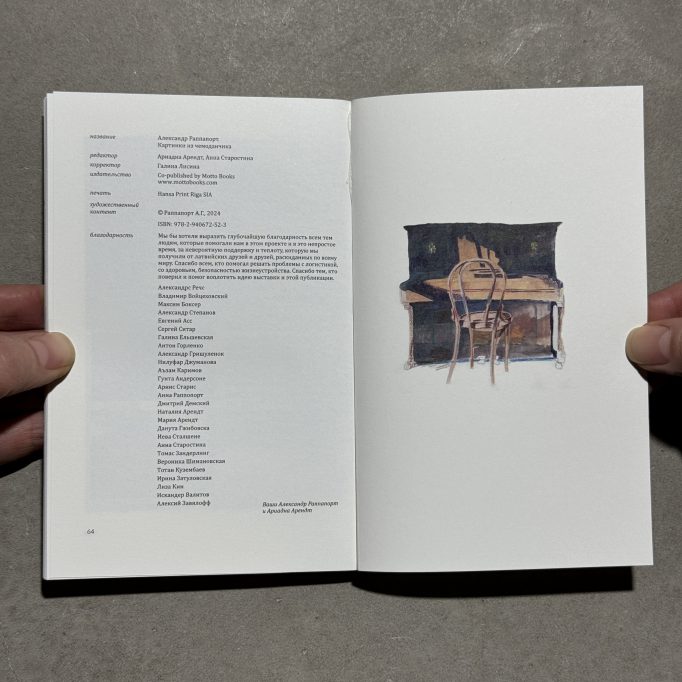
The book is published on the occasion of the exhibition “Pictures From a Briefcase” by Alexander Rappaport at Maxim Boxer Gallery, Riga, Latvia from August 15 to September 9, 2024.
“Pictures From a Briefcase by Alexander Rappaport I find interesting first of all, because seeing only them one would not suspect the intensity, originality and scope of his thought on topics so far removed from everything that is depicted in them. The pictures, unlike his texts, are so unassuming and modest. It seems they are like an earthly anchor above which his ideas soar at unattainable heights.
All together they look like illustrations for a novella, which could either have actually been written, or exists only in the author’s imagination. There is nothing fantastic, exotic, or esoteric here. An ordinary domestic environment.
But an environment, unlike space, always belongs to someone. And yet in Pictures from a Briefcase there is no visible inhabitant, or hero of this book. You are right to suspect the author’s invisible presence. Sasha’s drawings are about himself.
But not his full spiritual life, it seems to me they are only about that side of him in which he is alone. Not in the public space of his blog the Tower and Labyrinth or his articles and texts.
Pictures from a Briefcase is about «The Man in a Case». But let’s not get carried away with this analogy. In Chekhov’s story the whole person is in the case, but in Sasha’s briefcase there is only one side of his life. The quiet and sad one.”
Alexander Stepanov
–
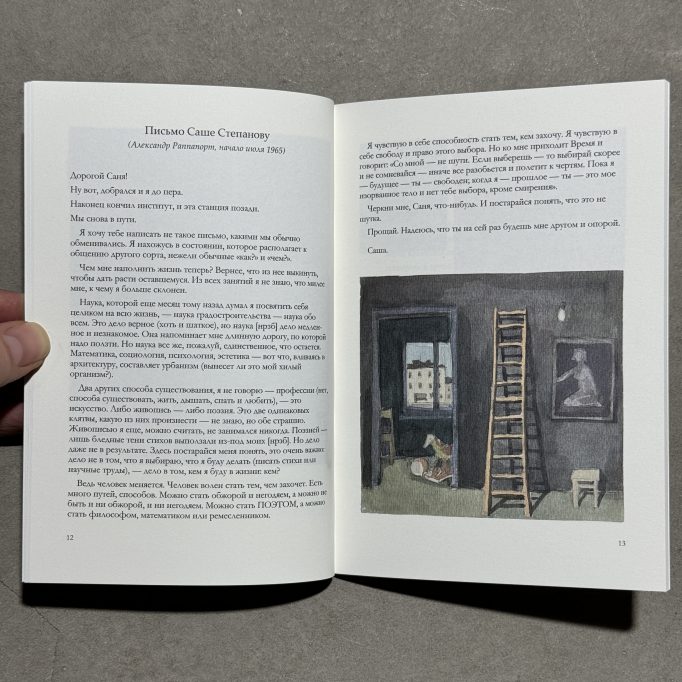
Letter to Sasha Stepanov (Alexander Rappaport, early July 1965)
Dear Sanya! Well, I’ve finally picked up the pen. I’ve finished my studies, and that chapter is behind me. We are on the road again. I want to write you a different kind of letter than what we usually exchange. I find myself in a state that invites a different kind of communication, rather than the usual “how are you?” and “what’s up?”. What should I fill my life with now? More precisely, what should I discard to allow what remains to grow? Among all pursuits, I don’t know what I cherish most or what I am most inclined towards. The science I thought I would devote my entire life to just a month ago—urban planning—is a science about everything. It’s a reliable (though shaky) endeavor, but the science is slow and unfamiliar. It reminds me of a long road that must be crawled upon. Yet, science is perhaps the only thing that remains. Mathematics, sociology, psychology, aesthetics—these, blending into architecture, form urbanism (will my frail body withstand this?). There are two other ways of existing; I’m not talking about professions (no, I mean ways to exist, live, breathe, sleep, and love)—these are the arts. Either painting or poetry. These are two equal vows; I don’t know which one to take, but both are terrifying. I can hardly say I have ever truly engaged in painting. With poetry, only pale shadows of verses have crawled out from beneath my [unclear]. But it’s not even about the result. Here, try to understand me; this is very important: it’s not about what I choose to do (write poetry or scientific works)—it’s about who I will be in life: who? After all, a person changes. A person is free to become whatever they want. There are many paths, many ways. One can become a glutton and a scoundrel, or one can be neither a glutton nor a scoundrel. One can become a POET or a philosopher, mathematician, or craftsman. I feel within me the capacity to become whoever I wish. I feel the freedom and right to make that choice. But Time comes to me and says: “Don’t joke with me. If you choose, choose quickly and don’t hesitate; otherwise, everything will shatter and fly to hell. As long as I am the future, you are free; when I am the past, you are my torn body, and you have no choice but to submit.” Write me something, Sanya. And try to understand that this is not a joke. Goodbye. I hope this time you will be my friend and support. Sasha.
–
Alexander Gerbertovich Rappaport – a theorist and historian of architecture, philosopher, art historian, writer, blogger, and artist. He spent his childhood in Leningrad, lived in Moscow, London, and for the last twenty years – in a remote seaside village of Mazirbe in Latvia. Alexander Rappaport is best known for his extensive work in the field of theory and history of architecture, having written several thousand texts. His works address fundamental issues in the history of architecture and professional thinking, touching on art history, philosophy, and cultural theory. Alexander Rappaport comes from an artistic and cinematographic family. His father, the well-known film director Herbert Rappaport, an Austrian of Jewish descent, came to the Soviet Union in 1936 to work at the “Lenfilm” film studio. Here he met costume designer Lydia Shildknecht. She also came from a family of artists and architects: her father, artist Pyotr Shildknecht, emigrated from the Soviet Union in 1924 to work in European cinema. Among his films are “The Golden Age,” “An Andalusian Dog” (directed by L. Buñuel, screenplay by S. Dali), and many others. His father Nikolai Alexandrovich Shildknecht was an academic of architecture in imperial St. Petersburg. Alexander Rappaport was born on October 23, 1941, under dramatic circumstances: his family was evacuated to Almaty (Kazakhstan) from besieged Leningrad. His mother went into labor on a train at the Vologda station, which became his accidental birthplace. The family returned to Leningrad after the war in 1946. Rappaport’s beloved grandmother, singer Lydia Ivanovna Shildknecht (Matsievskaya), along with his uncle Viktor Shildknecht, moved to Riga after the war. Viktor was a film artist who was one of the founders of the Riga Film Studio. In childhood, Alexander spent every summer in Jurmala, which formed a strong connection for him with Latvia as the happiest place in his life. In 1958, Rappaport entered the Leningrad Engineering and Construction Institute (LISI) in the architecture faculty. In 1964, he went to Georgia, where he studied drawing with a friend of his mother, Vasily Shukhaev, and lived in the house of Elena Akhvlediani. In Leningrad, he mingled with literary and artistic circles. His acquaintances with Anna Akhmatova, Viktor Sosnora, David Dar, Gleb Gorbovsky, and Joseph Brodsky influenced his entire life. Rappaport moved to Moscow in the early 1970s, where he continued to work as a theorist of architecture. Here he met the renowned philosopher Georgy Petrovich Shchedrovitsky and was a member of his Moscow methodological circle for almost ten years. This became a significant chapter in Rappaport’s life. In 1991, at the invitation of the BBC as a radio correspondent, Rappaport moved to London with his wife, artist Natalia Arendt, and their four-year-old daughter Ariadne Arendt, to start a new life there. In 2004, Rappaport took another decisive step, leaving London and settling in the Latvian village of Mazirbe on the desolate Livonian coast. Amidst a dense pine forest, he transformed a traditional farmstead into an interesting organic architectural project, where he lives alone, plays the piano, paints, and blogs – this has been his main activity for the last twenty years.
Rob Fitterman @ Motto Berlin. January 5, 2025 Accompanied By Shane Anderson Start 6pm sharp
Please join us at Motto Berlin for a Poetry Reading event with Rob Fitterman and Shane Anderson.
Robert Fitterman is the author of 16 books of poetry. His most recent book, Creve Coeur, is a long poem recently published with Winter Editions (2024). Other titles include: This Window Makes Me Feel (Ugly Duckling Presse), No Wait, Yep. Definitely Still Hate Myself (Ugly Duckling Presse), Nevermind (Wonder Books) and Rob the Plagiarist (Roof Books). He has collaborated with several visual artists, including Serkan Ozkaya, Nayland Blake, Sabine Herrmann, Natalie Czech, Tim Davis, and Klaus Killisch. He is the founding member of the artists-poets collective Collective Task www.collectivetask.org. He lives in New York City and teaches writing at New York University.
Shane Anderson is the author of After the Oracle, Or: How The Golden State Warriors’ Four Core Values Can Change Your Life Like They Changed Mine (Deep Vellum). Published work in various forms can be found in various places. A translator of a number of contemporary German poets, he is also the translator of The Great Nowitzki (Norton). He is represented by Priscilla Posada at Regal | Hoffmann & Associates and lives in Wuppertal with his family.
Published to accompany an exhibition at Museu d’Art Contemporani de Barcelona (MACBA), 27 September – 26 November 2000
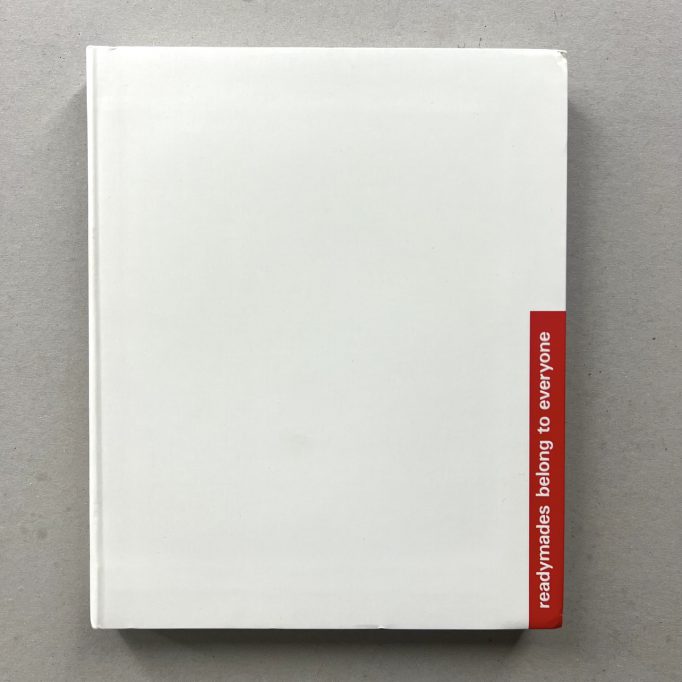
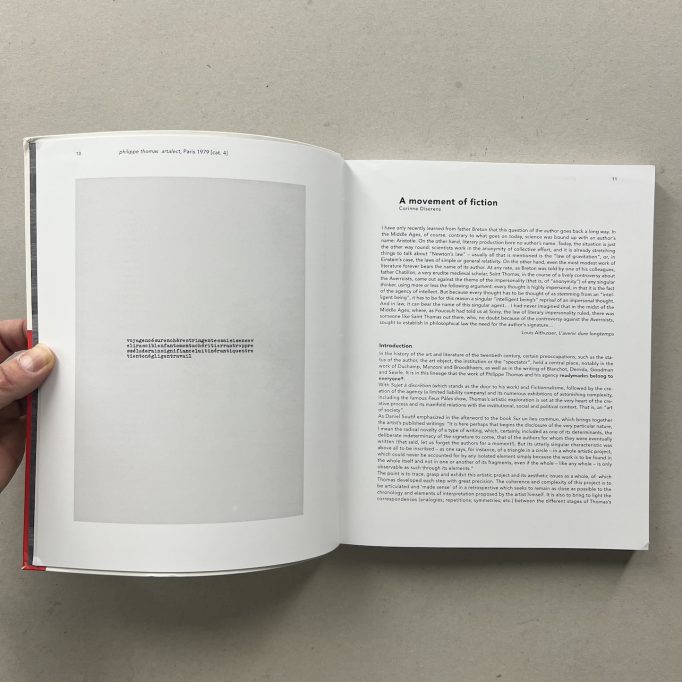
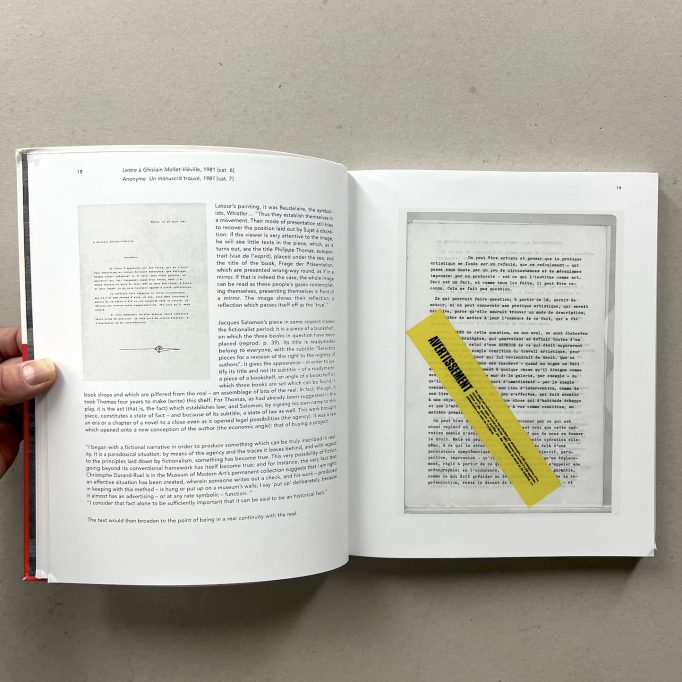
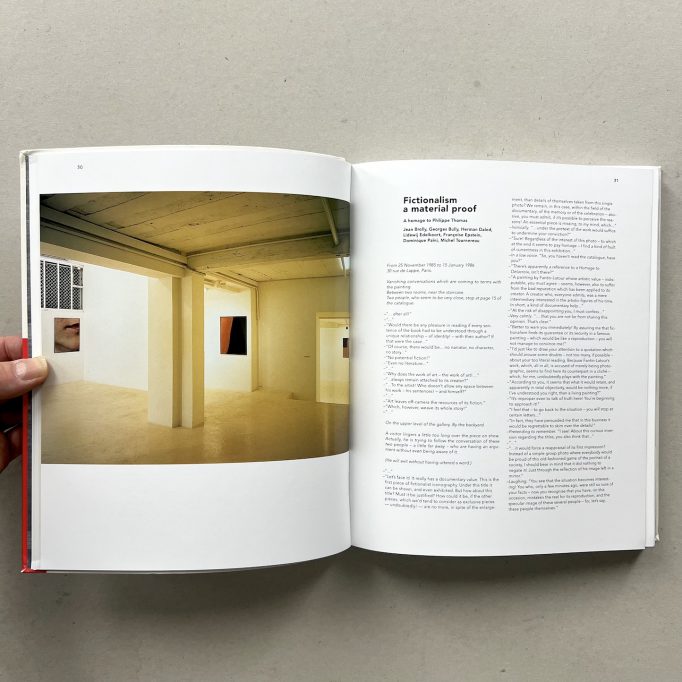
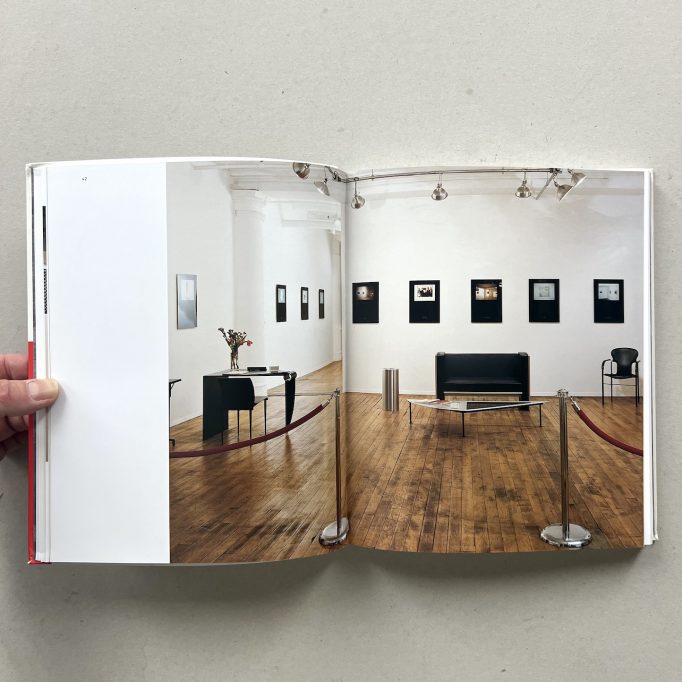
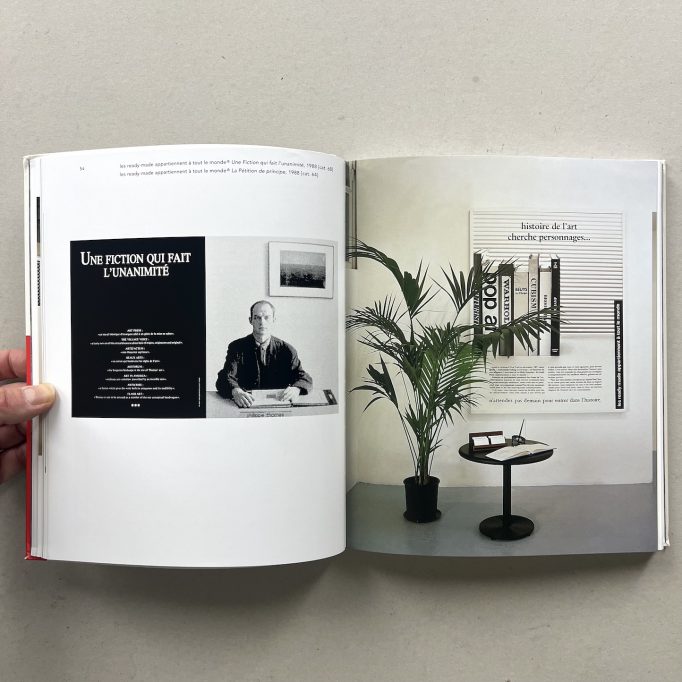
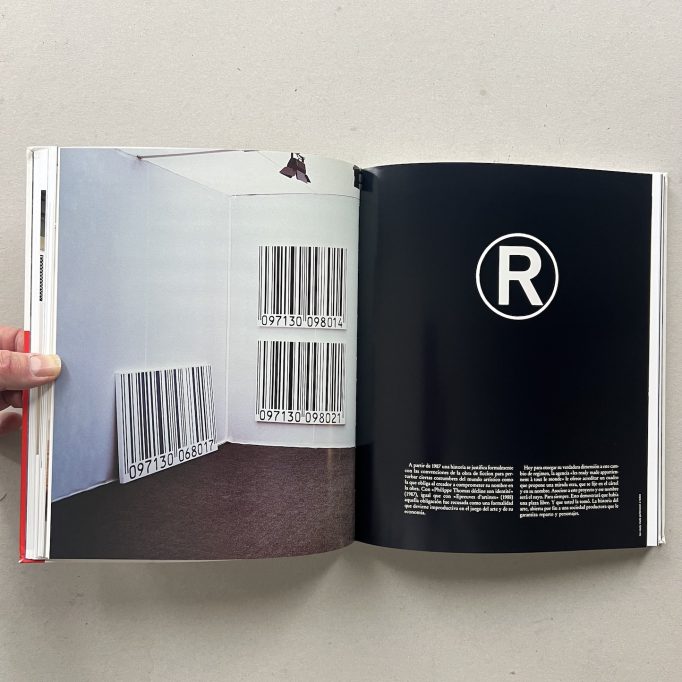
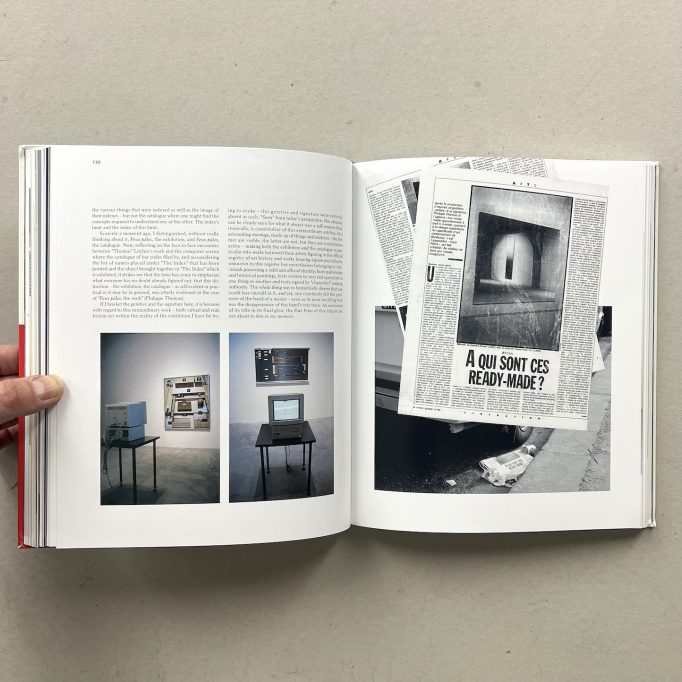
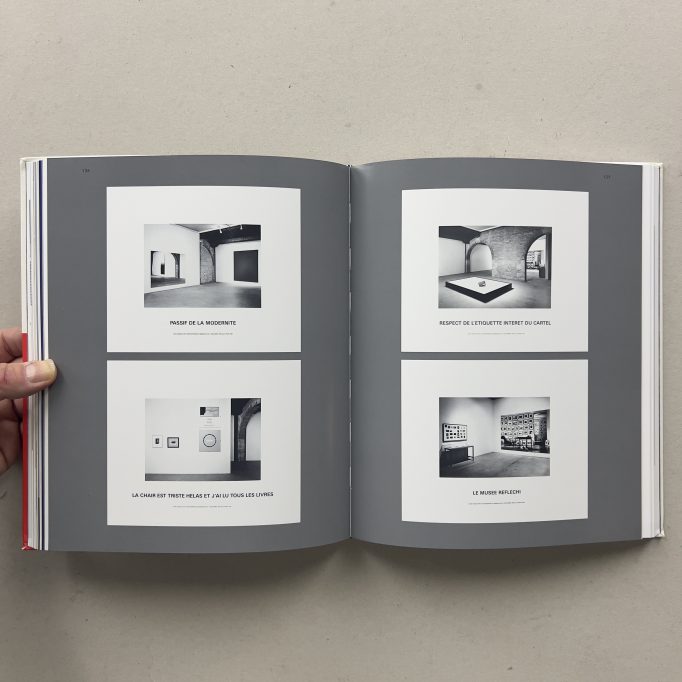
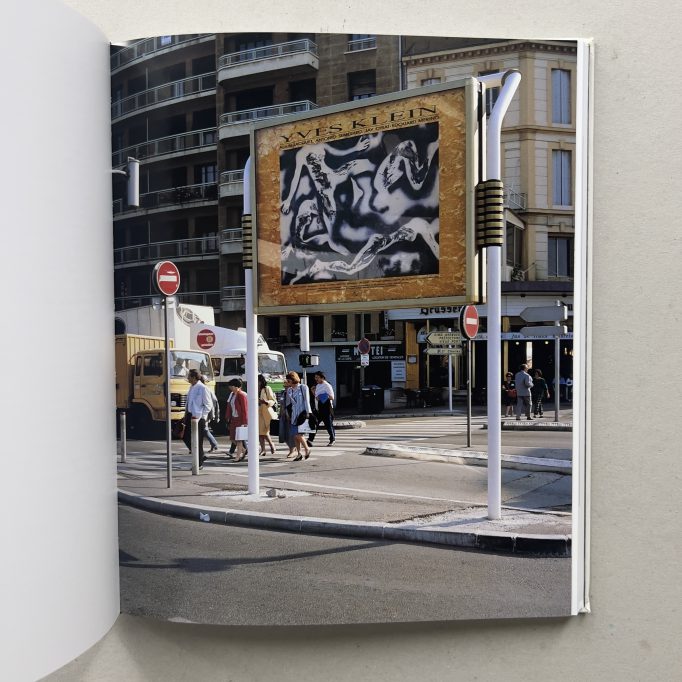
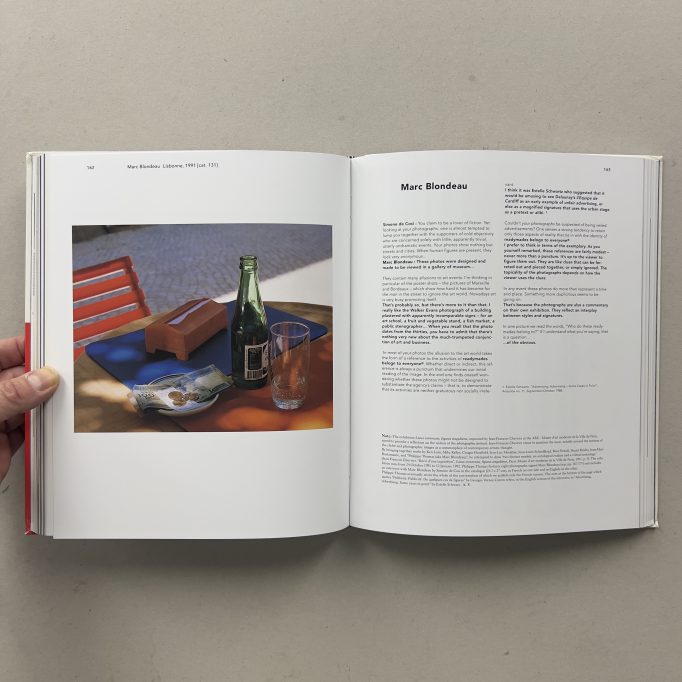
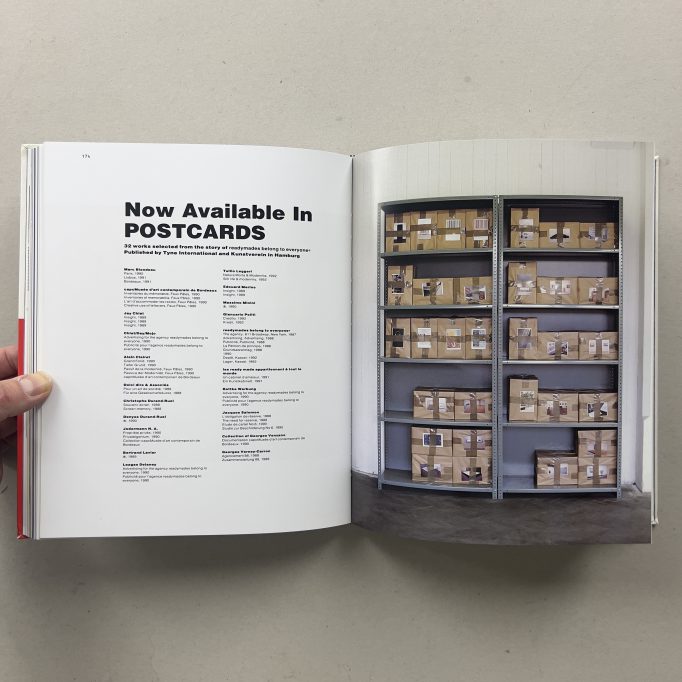
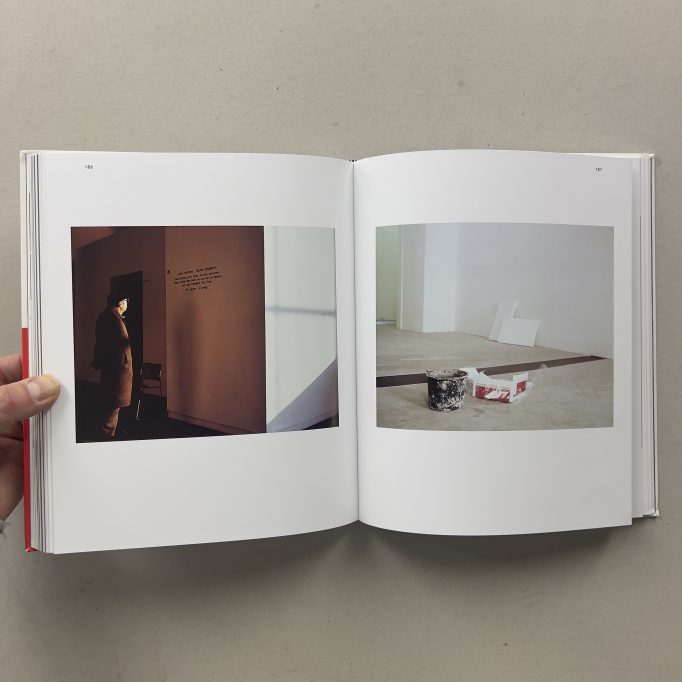
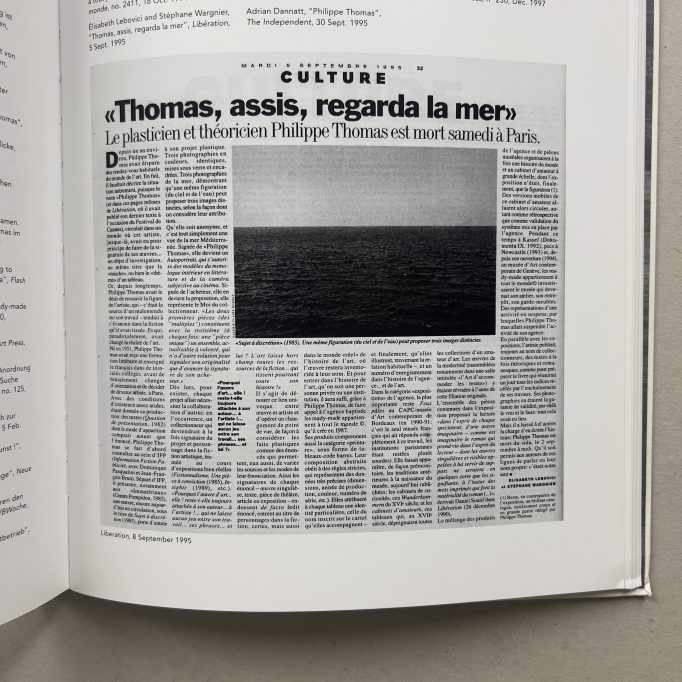
The work of French artist Philippe Thomas revolves around the ideas of reality and fiction. As such, there is an aesthetic ambiguity at its core: all the physical elements involved in the creation, exhibition and circulation of an artwork (the work itself, the artist, the audience, galleries and museums, etc.) oscillate between values of reality and fiction. In keeping with this, Thomas registered the trademark les ready-made appartinnent à tout le monde® and used it to fictionalise his own identity. The catalogue includes pieces created by Thomas from the seventies until his death in 1995 along with essays by writers such as Corinne Diserens, Patricia Falguières, Daniel Soutif and Bernard Blistène.
Design by Ramon Prat, Montse Sagarra and David Lorente (Actar). 2000
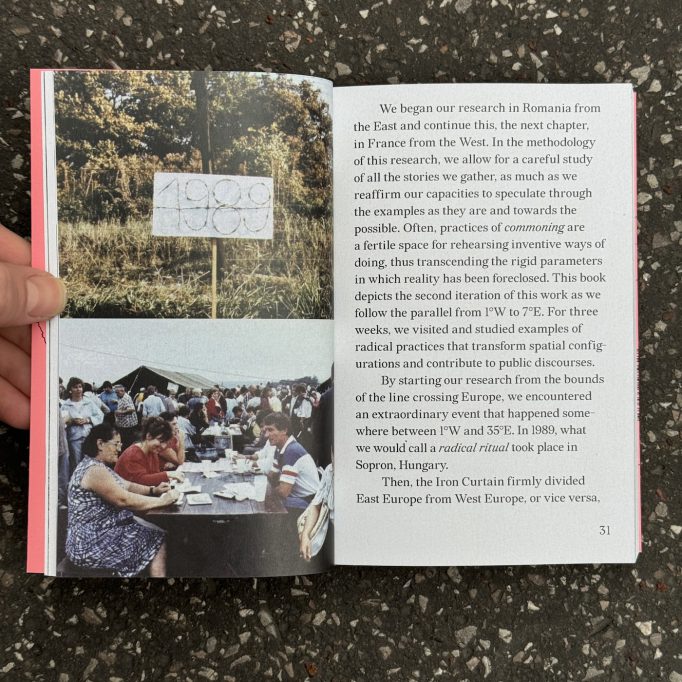
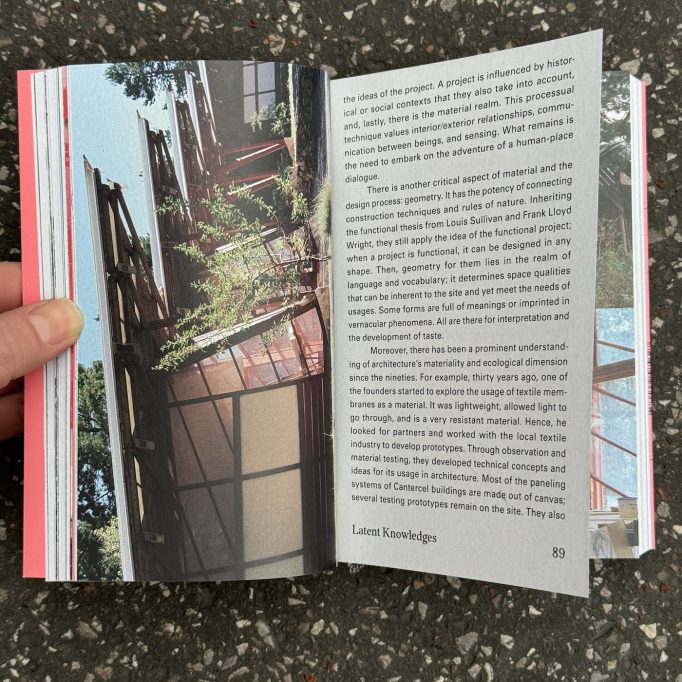
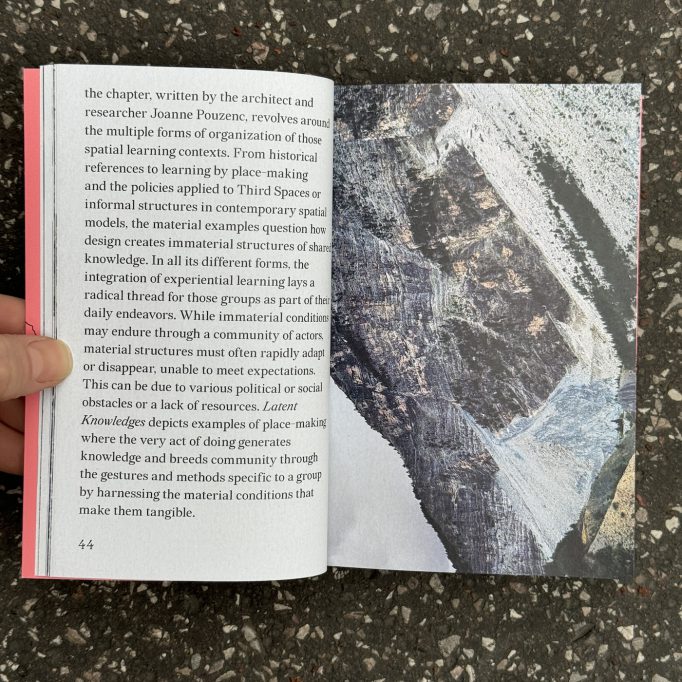
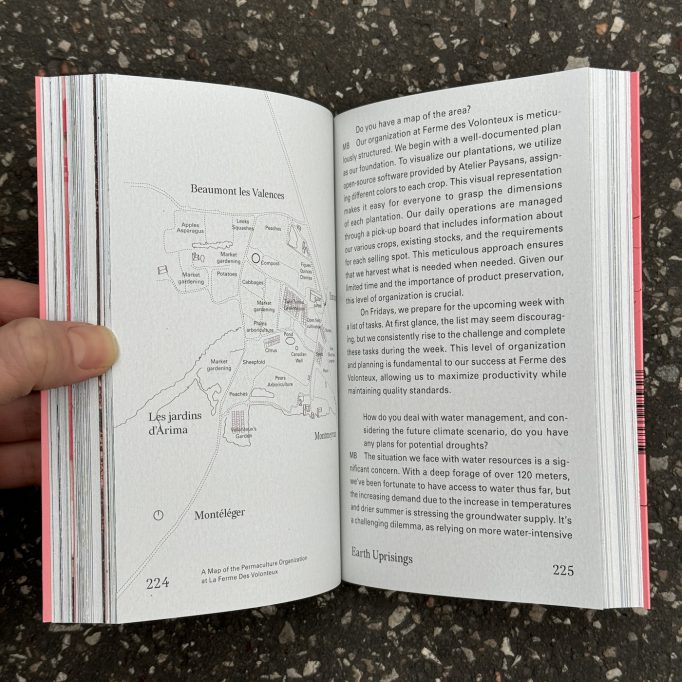
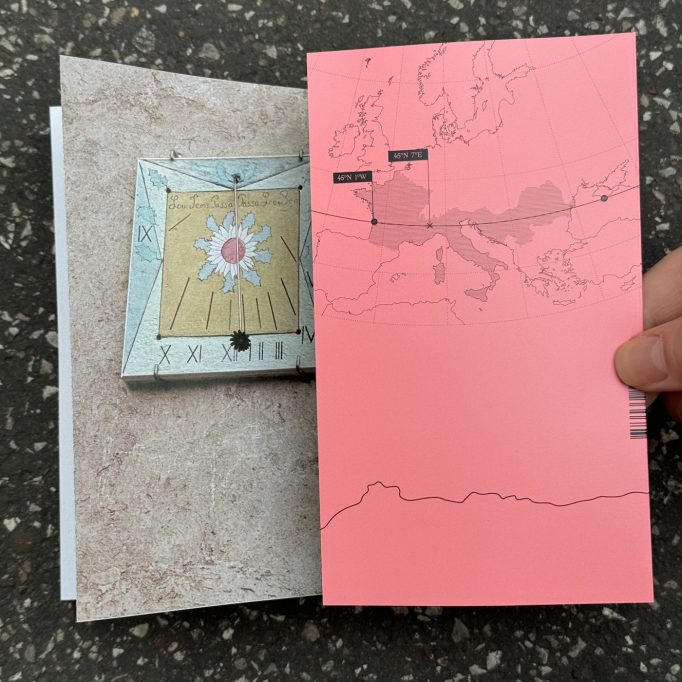
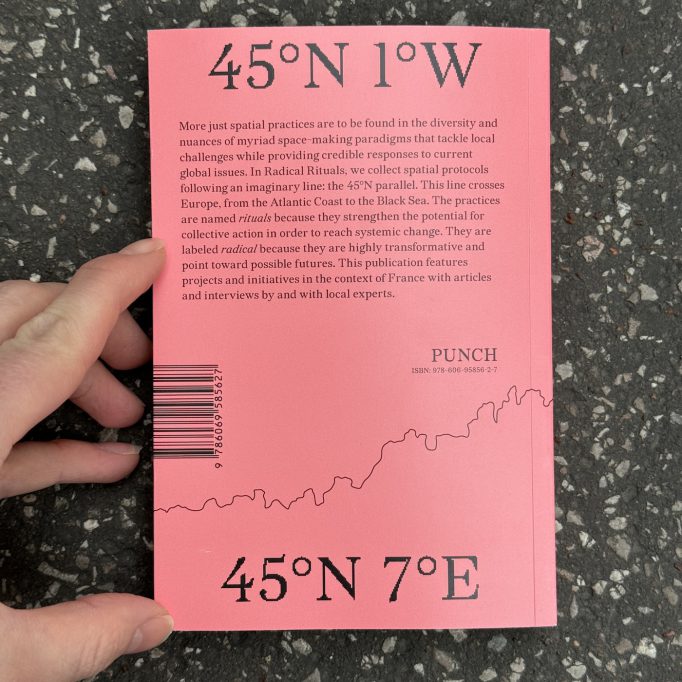
Centered around the themes of latent knowledges, earth uprisings and beyond borders, this second volume in the Radical Rituals series is the result of a research residency by the collaborative studio forty five degrees in the summer of 2022 across France, from 45°N 1°W to 45°N 7°E.
More just spatial practices are found in the diversity and nuances of space-making paradigms that tackle local challenges while providing concrete responses and actions to global issues. In Radical Rituals, spatial protocols are collected, following an imaginary line, the 45°N parallel, across Europe, from the Atlantic Coast to the Black Sea. The practices are named rituals because they strengthen the potential for collective action to reach systemic change. They are labeled radical because they are highly transformative and point toward possible futures.
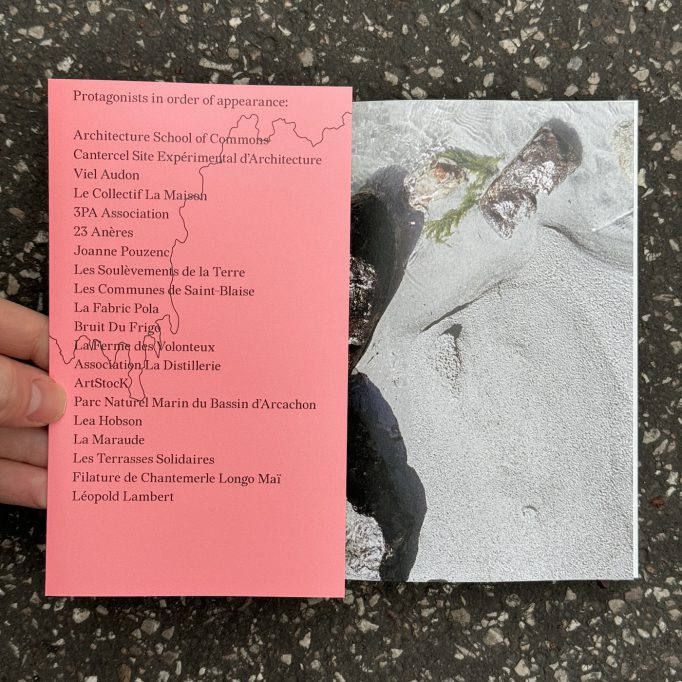
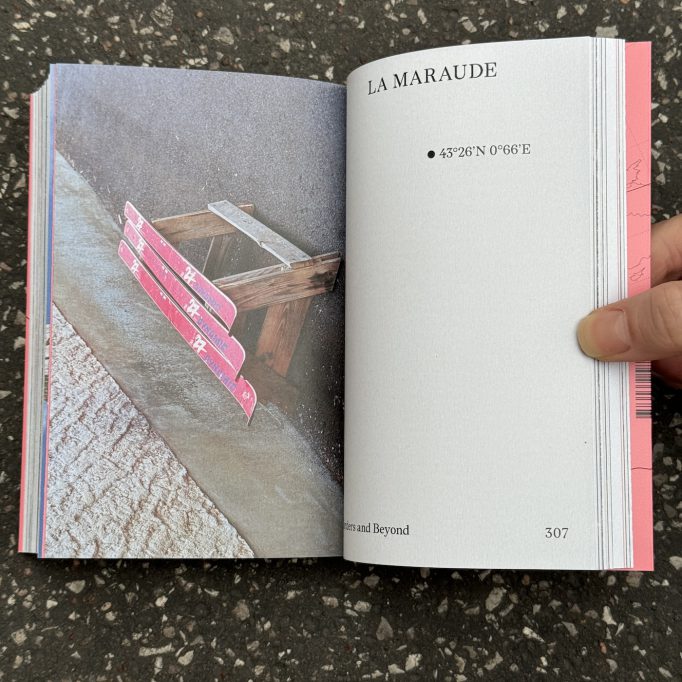
Protagonists: Cantercel Site Expérimental d’Architecture, Viel Audon, Le Collectif La Maison, 3PA association, 23 Anères, Les communes de Saint-Blaise, La Fabric Pola, Bruit du Frigo, La Ferme des Volonteux, Association La Distillerie, ArtStock, Parc Naturel Marin du Bassin d’Arcachon, Dune du Pilat, La Maraude, Les Terrasses Solidaires, and Filature de Chantemerle Longo Maï.
The book is comprised of essays by forty five degrees (Alkistis Thomidou and Berta Gutiérrez Casaos), Joanne Puzenc, and Lea Hobson, and a conversation between Elise Misao Hunchuck and Léopold Lambert.
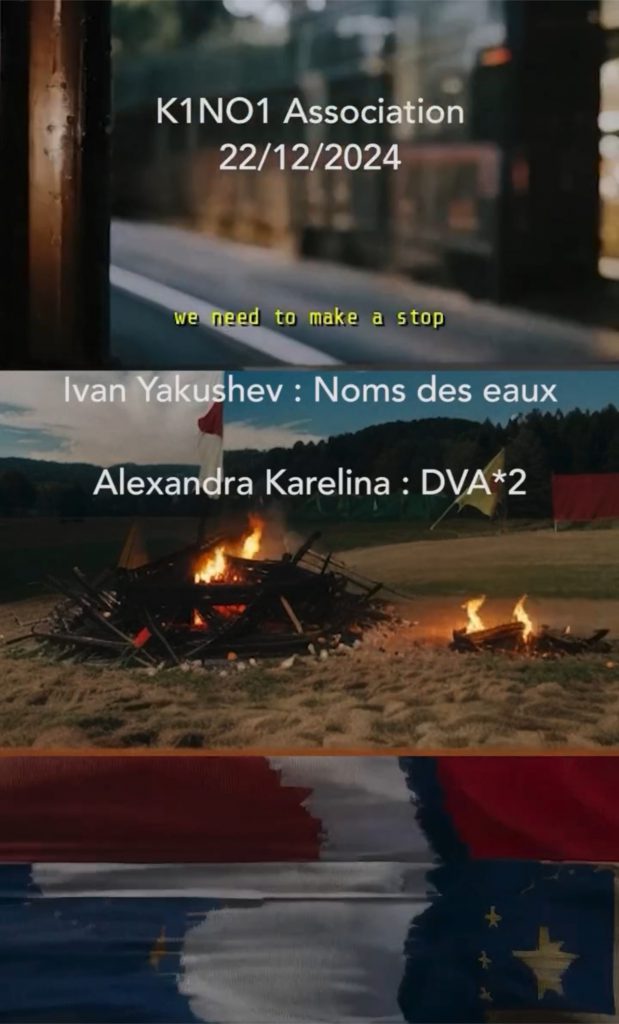
Ivan Yakushev : Noms des eaux = experimental film generated in real-time during screening with ai visual models driven by poetic text and webcam input.
Alexandra Karelina : DVA*2 = first-ever screening twice in a row of the film investigating how reality can stack up on itself.
This post is related the upcoming film screening within the framework of the cinema club and Film Association K1NO1.